
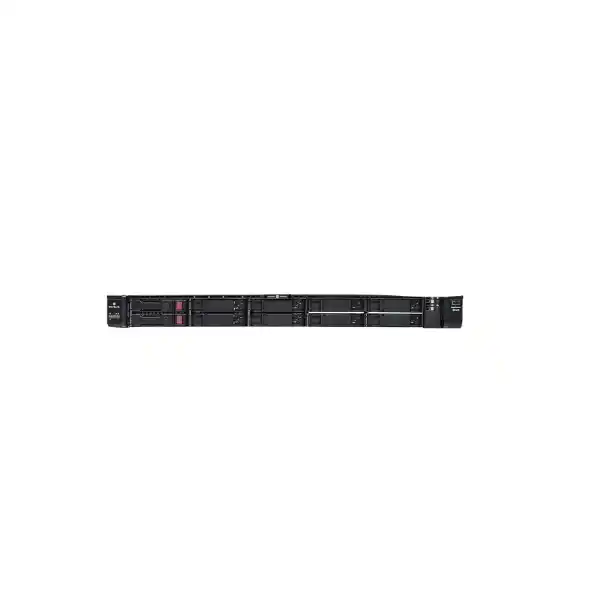
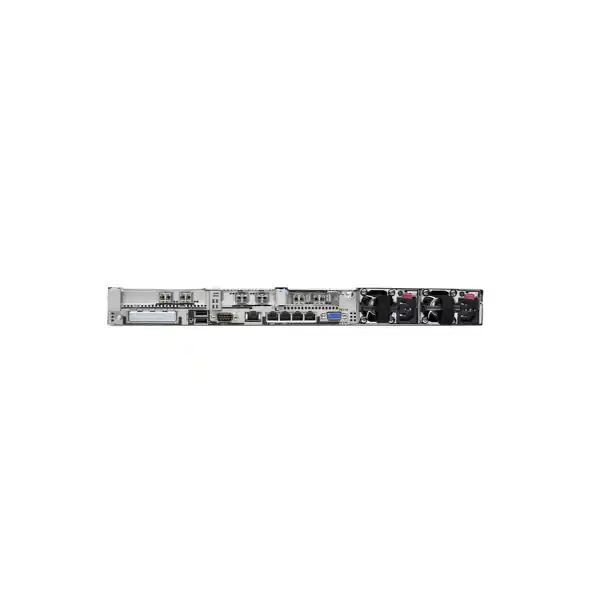
HPE Aruba Networking EdgeConnect EC-L-H SD-WAN Gateway Dubai
A high-capacity 1U EdgeConnect hub gateway for data-center, head-office and regional aggregation designs that need multi-gigabit SD-WAN, fiber-based 1/10 GbE connectivity, centralized orchestration and resilient hardware.
Direct answer for UAE buyers
The EC-L-H is a large-hub appliance in the HPE Aruba Networking EdgeConnect SD-WAN family, built for high-capacity WAN aggregation rather than a small branch.
It is mainly used to terminate and steer multiple WAN transports at a data center, headquarters or major regional hub while applying centrally defined SD-WAN policy.
Enterprises with multi-gigabit hub traffic, fiber handoffs, many branch tunnels, resilient WAN designs and a need for EdgeConnect Orchestrator control.
Confirm real encrypted throughput, required services, optics, licensing and HA architecture against the expected peak and growth load.
FourTeck can help map the exact orderable, interfaces, subscriptions, optics, support and deployment scope to your UAE WAN design.
Where EC-L-H fits in an EdgeConnect design
The EC-L-H is not simply a faster branch router. HPE positions it as a large-hub or data-center gateway, which changes the buying conversation. A hub normally carries traffic from many branches, internet breakouts, private WAN circuits, cloud destinations and sometimes regional data-center services at the same time. That means appliance selection needs to consider aggregate encrypted throughput, tunnel count, concurrent sessions, routing scale, interface speed, high availability, WAN optimization requirements and the policies enforced on the box.
For organizations in Dubai, Abu Dhabi or other UAE locations, the platform is a logical candidate where several branch sites converge on a central location and the hub needs 10 GbE physical connectivity. The six SFP+ cages can be assigned to LAN or WAN roles according to the topology, so the same chassis can accommodate multiple carrier handoffs, core-switch uplinks, redundant paths or segmented connectivity. The exact transceiver type is not included by assumption; optics must match the fiber standard, wavelength, distance and switch or carrier handoff.
HPE states typical bidirectional WAN bandwidth of 2 to 10 Gbps for EC-L-H and up to 2,000,000 simultaneous connections. Those figures make the appliance substantially more suitable for large aggregation roles than smaller branch models, but they should still be treated as sizing references rather than a guarantee for every policy mix. Security inspection, WAN optimization, packet characteristics, encryption, routing design and software configuration can influence practical performance.
Best-fit profile
Suitable when a primary or secondary data center terminates multi-gigabit branch overlays and needs redundant power and fiber uplinks.
Useful for large headquarters carrying multiple carrier circuits, private WAN, internet and cloud traffic across a centralized SD-WAN fabric.
Appropriate where many distributed sites converge on a UAE hub before reaching shared services, cloud connectivity or another geography.
Sites with sub-gigabit requirements and limited interface needs should compare smaller EdgeConnect platforms to avoid unnecessary appliance cost and capacity.
EC-L-H technical specification and buyer meaning
| Area | Published EC-L-H detail | Why it matters when buying |
|---|---|---|
| Typical WAN bandwidth | 2–10 Gbps bidirectional | Size against encrypted peak traffic and growth, not only current circuit speed. |
| Simultaneous connections | Up to 2,000,000 | Useful for large hubs carrying traffic from many users, branches and applications. |
| WAN optimization | Recommended up to 1 Gbps | A higher optimization requirement may shift the shortlist toward a larger platform or different design. |
| LAN/WAN interfaces | 6 × 1/10 GbE SFP+ cages | Confirm SFP or SFP+ optics, fiber type, speed and link distance for every planned connection. |
| Management | 2 × 10/100/1000 management plus console | Plan out-of-band management addressing and cabling separately from production data paths. |
| Storage | 2 × 480 GB SSD, 960 GB total | Redundant storage supports the hub-class resiliency profile. |
| Power | Dual redundant power supplies; 100–240 VAC | Use independent power feeds or UPS paths if the site design requires real power redundancy. |
| Routing | BGP and OSPF supported | Validate route exchange, summarization, failover and coexistence with existing core routing. |
| Data-plane encryption | IPsec with AES-256 | Encrypted overlay performance is central to sizing a multi-gigabit SD-WAN hub. |
| Form factor | 1U rack mount | Confirm rack depth, airflow, PDU access and rail compatibility before installation. |
Connectivity, optics and physical design
The six 1/10 GbE SFP+ cages are a defining characteristic of EC-L-H. They give the appliance the physical interface profile expected at a data-center or major hub, but they also introduce a procurement dependency that must be handled correctly. SFP and SFP+ modules are selected according to link speed, optical standard, fiber type and reach. A 10G short-range multimode connection and a 10G long-range single-mode connection require different optics, while some carrier services may be handed off through equipment that already converts the circuit to an Ethernet presentation. The purchase should therefore list each planned port, its peer device, required speed, cable medium and approximate distance.
The LAN/WAN flexibility is useful when building resilient layouts. For example, a design might dedicate interfaces to two WAN carriers, two core-switch uplinks and separate service or interconnect paths. Another design may use fewer physical ports but separate traffic through VLANs. Neither layout should be copied blindly: the correct approach depends on fault domains, carrier diversity, switch redundancy, routing policy and maintenance requirements.
HPE lists two dedicated 10/100/1000 management interfaces and a console port in addition to the six data-plane cages. This allows management connectivity to be kept separate from production WAN/LAN forwarding where the operations model requires it. In a critical hub, that distinction matters during troubleshooting because out-of-band access can remain available even when production routing or SD-WAN overlays are impaired.
The appliance is 1U high and built for rack deployment. Rack unit availability alone is not enough to confirm physical readiness. Buyers should also verify usable rack depth, front-to-back airflow, cable bend radius for fiber patching, rail support, power-feed diversity and service clearance. A redundant-power appliance connected to a single PDU still has a power-path single point of failure, so the facility design should align with the resilience expected from the network architecture.
SD-WAN control and orchestration
EdgeConnect SD-WAN is designed around centralized orchestration. EdgeConnect Orchestrator provides the control and management layer used to build the SD-WAN fabric, apply business-intent policies, segment traffic and manage application behavior across sites. The EC-L-H therefore makes the most sense as part of an EdgeConnect architecture rather than as an isolated replacement for a conventional router with no wider orchestration plan.
Zero Touch Provisioning can simplify deployment, especially across multiple sites, but hub implementation still deserves deliberate design. The hub often participates in routing with the data-center core, receives overlay traffic from many branches and may provide paths toward public cloud, internet security services, private WAN or shared applications. Routing adjacencies, route redistribution, overlay segmentation and failure behavior should be documented before the appliance is placed into production.
For UAE organizations migrating from traditional MPLS-heavy designs, EdgeConnect can combine MPLS, internet and cellular transports within a policy-driven SD-WAN approach. The business benefit is not that every transport becomes identical; rather, applications can be steered across available paths according to policy and measured conditions. Circuit quality, underlay routing and carrier diversity still matter.
Security capabilities and licensing
The appliance encrypts data-plane traffic using IPsec with AES-256 and protects management-plane communications with TLS. It also supports disk encryption. Those capabilities form part of the secure SD-WAN foundation, but buyers should not assume that every advanced security function is included with every appliance or software entitlement.
HPE has moved EdgeConnect SD-WAN toward tiered subscriptions, and optional security capabilities can depend on the selected subscription or add-on. For example, current HPE guidance describes Dynamic Threat Defense as an optional add-on across EdgeConnect SD-WAN subscription tiers, replacing older Advanced Security licensing for relevant IDS/IPS capability. This makes licensing a design input, not an administrative detail left until purchase order stage.
The quotation should therefore identify which subscription tier is required, the term length, whether advanced threat protection is needed, how Orchestrator will be provided and whether WAN optimization is part of the expected use case. A hardware-only comparison between two appliances can be misleading if the software entitlements needed for the actual operating model are different.
How to size EC-L-H for a Dubai or UAE SD-WAN hub
Start with the traffic that will cross the hub, not only the nominal speed of one WAN circuit. A data-center gateway may carry branch-to-data-center applications, branch internet breakout, cloud traffic, inter-region flows, replication or shared security services depending on the topology. Estimate the aggregate busy-hour throughput in both directions, then account for growth, failure scenarios and the features that will run simultaneously.
Count all active underlays and expected application throughput. Do not size from one carrier link in isolation.
Check what happens when a circuit or a peer hub fails and more traffic is forced through the surviving appliance or path.
Include encryption, optimization, segmentation, routing and any licensed security services that affect the operating profile.
Allow for new branches, cloud adoption, larger internet circuits and application changes during the expected service life.
The published 2–10 Gbps WAN range gives a useful starting point, but the upper edge should not automatically be treated as the right design point for sustained production traffic with every feature enabled. A robust sizing exercise compares expected peak and failover loads with the relevant HPE sizing guidance and desired headroom. If the design is likely to exceed EC-L-H capability or requires substantially more WAN optimization, compare the next larger EdgeConnect option instead of forcing the smaller platform to operate close to its limit.
At the other end, if a site only needs sub-gigabit traffic, a small number of branch tunnels and copper interfaces, EC-L-H may be oversized and physically mismatched. Its value comes from hub-class capacity, 10 GbE SFP+ connectivity and resilient hardware. Correct sizing therefore balances technical headroom with interface needs, operational simplicity and lifecycle cost.
High availability: appliance redundancy is only one layer
EC-L-H includes dual redundant power supplies and redundant SSD storage, which are important characteristics for a hub platform. They protect against some component failures, but they do not by themselves create a fully resilient SD-WAN service. A serious data-center design also considers appliance-level redundancy, switch redundancy, carrier diversity, routing convergence, power-feed diversity and the placement of Orchestrator or supporting management components.
Many enterprises deploy critical WAN hubs as a pair so that maintenance or an appliance failure does not isolate large numbers of branches. The exact EdgeConnect high-availability pattern should fit the surrounding network and business requirements. If two gateways are used, determine how LAN-side routing behaves, how branch overlays prefer or fail over between hubs, whether stateful traffic considerations exist, and how each unit connects to independent switches and WAN circuits.
LAN-side protection options include technologies such as VRRP and BGP, while the EdgeConnect overlay can use multiple link-bonding options and IP service-level monitoring. The important buyer decision is not simply whether those features exist; it is how they fit the current core network. A data center already using dynamic routing may prefer a different adjacency and failover method from a site that currently relies on static routes.
Power design is equally practical. Dual PSUs offer the greatest value when each supply is connected to a separate protected source. If both are connected to the same UPS or PDU, the appliance survives an individual PSU failure but remains exposed to the common upstream power path. This distinction should be captured in the installation scope rather than discovered after racking.
Migration planning from traditional WAN routing
Inventory the underlay
Document MPLS, DIA, broadband, cross-connect and cellular links, including handoff type, routing, public addressing and SLA expectations.
Define overlay policy
Map applications and segments to preferred transports, failover behavior, internet breakout and data-center access rules.
Integrate routing
Plan BGP or OSPF adjacency, route advertisement, summarization and coexistence with current core and firewall routing.
Pilot and cut over
Validate application steering, failover, monitoring and rollback before moving large branch groups through the new hub.
A migration can be phased rather than performed as a single replacement event. Some organizations keep MPLS as one underlay while adding internet transport and EdgeConnect overlays, then adjust circuit mix after operational experience is established. This can reduce risk and preserves a controlled rollback path. The sequence should be driven by routing and application dependencies, not by a generic SD-WAN template.
Where firewalls or SSE services already control internet security, define exactly where those services remain in the traffic path. EdgeConnect can integrate into broader SASE strategies, but an SD-WAN gateway purchase does not automatically remove the need for existing security controls. The desired architecture determines whether internet traffic breaks out locally, is sent to a cloud security service, traverses a centralized firewall, or uses a hybrid of these patterns.
EC-L-H versus nearby EdgeConnect hub options
Model comparison should be based on workload and interfaces rather than the word “large.” HPE also lists EC-M-H for medium hub roles and EC-XL-H or newer extra-large variants for higher-end designs. EC-M-H is positioned around lower maximum WAN capacity, while EC-XL-H adds higher WAN-optimization capability and, depending on the exact orderable, higher-speed SFP28 interface support. This creates a practical three-way decision.
Consider EC-M-H when
The hub requirement is materially below EC-L-H capacity, 10 GbE uplinks are limited, and the organization values a smaller performance tier while retaining hub-class characteristics.
EC-L-H is a strong fit when
The site needs multi-gigabit WAN aggregation, six 1/10 GbE SFP+ cages, resilient power and storage, and up to 1 Gbps of recommended WAN optimization without requiring the extra-large tier.
Evaluate EC-XL-H when
The expected design needs more WAN-optimization capacity, higher-speed 25 GbE interface options on the applicable model, or greater headroom for future hub growth.
The exact comparison should use current HPE orderables because the EdgeConnect portfolio includes legacy and newer hardware identifiers. The familiar EC-L-H product is associated with JZ878A, while current HPE catalogs may also show a newer Large-H NAL variant under S3N76A. HPE identifies NAL variants for China-specific compliance, so a UAE quotation should not substitute a NAL orderable without checking regional validity. This is one reason to distinguish the platform name from the exact purchasable SKU.
Licensing and quotation dependencies to confirm
EdgeConnect hardware should be quoted together with the software entitlement and support model required for the deployment. HPE’s current EdgeConnect approach uses tiered SD-WAN subscriptions, and some security capabilities are optional add-ons. The right subscription depends on the services the customer expects the gateway to provide, the management model and the term length.
Confirm the EdgeConnect SD-WAN tier that enables the required feature set and management model.
Align 1-year or multi-year licensing with procurement policy, support lifecycle and project funding.
Identify whether IDS/IPS or Dynamic Threat Defense is required rather than assuming it is included in the base hardware.
State whether optimization is required and the expected optimized throughput; EC-L-H is recommended up to 1 Gbps for this function.
Specify every SFP/SFP+ module and fiber patch requirement, including speed, reach and media type.
Choose support coverage, response expectations and any installation or migration assistance needed at the UAE site.
A complete bill of materials should therefore contain more than the appliance. Missing optics, wrong power-cord localization or incomplete subscriptions can delay deployment even when the hardware arrives on schedule. For a data-center hub, it is also sensible to confirm spares strategy, support SLA and whether two appliances are required for high availability.
Practical UAE deployment scenarios
Dubai headquarters with dual carriers
A large office may use one MPLS service and one dedicated internet circuit, with EdgeConnect steering applications according to business policy. The EC-L-H can provide the 10 GbE physical connectivity and hub capacity needed where many branch tunnels converge on the headquarters. The design should still validate whether centralized internet security remains on a firewall or moves toward an SSE service.
UAE data-center pair
Two EC-L-H appliances can be evaluated for resilient hub service across separate power and switch paths. Branch sites may establish overlay connectivity that tolerates the loss of an appliance or underlay path. The routing and HA design should be tested under real failover conditions, including the traffic level imposed on the surviving device.
Regional cloud-connectivity hub
An enterprise may aggregate branch traffic at a UAE hub before reaching cloud on-ramps, private connectivity or shared application services. In this scenario, interface speed and route design can matter as much as branch tunnel performance. The project should identify whether cloud traffic is backhauled, locally broken out or sent directly through another regional path.
Buyer questions before ordering EC-L-H
Does the EC-L-H include SFP+ transceivers?
Do not assume that required production optics are bundled. HPE lists the chassis with a minimum of zero and maximum of six SFP/SFP+ transceivers, so the bill of materials should explicitly identify the optics needed for each LAN and WAN link.
Can it handle a 10 Gbps WAN?
HPE positions EC-L-H for typical bidirectional WAN bandwidth from 2 to 10 Gbps. Final sizing must account for features, encryption, traffic pattern, failure-state load and desired headroom rather than relying only on the circuit label.
Is WAN optimization unlimited?
No. HPE recommends WAN optimization up to 1 Gbps on EC-L-H. A design requiring materially more optimized traffic should compare the higher-end EdgeConnect tier.
Is this a branch appliance?
It can technically sit wherever the architecture requires, but HPE positions EC-L-H primarily for data-center or large-hub deployment. Small branches should compare lower-tier EdgeConnect appliances that better match their bandwidth and interface requirements.
Does dual PSU mean the site is fully redundant?
No. Dual power supplies remove one hardware component failure, but real service resilience may also require dual power feeds, switches, WAN circuits and potentially a second EdgeConnect gateway.
Which exact product number should UAE buyers order?
The established EC-L-H orderable is JZ878A. HPE also lists newer Large-H variants such as S3N76A for NAL compliance. The quotation should confirm the current UAE-valid orderable, localization and subscription instead of treating every Large-H identifier as interchangeable.
Decision recap
Use EC-L-H when the location genuinely behaves like a large WAN hub or data-center aggregation point.
Validate expected peak and failure-state traffic within the 2–10 Gbps positioning with appropriate headroom.
Map all six 1/10 GbE SFP+ cages to specific LAN/WAN links and quote the correct optics.
Select the EdgeConnect subscription and any security add-ons required for the intended operating model.
Decide whether dual PSUs are sufficient or whether the service requires paired gateways and independent network paths.
What FourTeck needs for an accurate EC-L-H quotation
A useful quotation is based on the deployment, not just the model name. Share the following inputs so the appliance, optics, subscriptions and services can be aligned to the project.
Plan the EC-L-H as a hub, not just a hardware purchase
For Dubai and UAE deployments, FourTeck can help confirm whether EC-L-H has the right capacity, which regional orderable is appropriate, what optics and subscriptions are required, and whether the design should use a single gateway or a resilient pair.

Reviews
There are no reviews yet.