
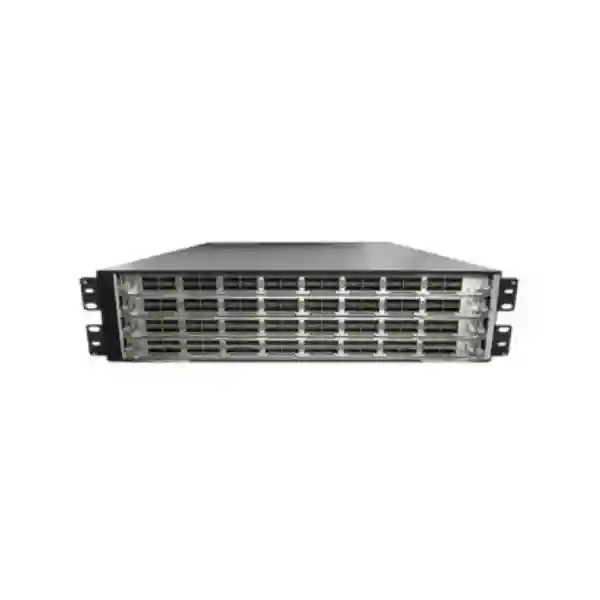
Huawei CloudEngine CE9860-4C-B
The Huawei CloudEngine CE9860-4C-B is commonly searched by buyers planning high-density data-center aggregation, spine or core switching where large 100GE and 400GE uplink capacity, resilient design and structured operational visibility matter. FourTeck can help turn the model name into a complete procurement requirement by checking the exact chassis reference, subcards, transceivers, cabling, airflow direction, power modules, software package and support expectations before a commercial quotation is prepared.
Model verification note: Huawei’s currently published CE9800 material identifies the CE9860-4C-EI platform and the CE9860-4C-EI-B ordering bundle. Because your requested name is Huawei CloudEngine CE9860-4C-B, the quotation should confirm whether that reference maps to the published CE9860-4C-EI-B configuration or to a different regional or project-specific bill of materials. No unsupported equivalence is assumed on this page.
Confirm exact Huawei ordering code and software entitlement.
Define 100GE versus 400GE port density and optics.
Validate rack depth, airflow, power feeds and redundancy.
Share destination, quantity and deployment timing for a quote.
Huawei publicly lists CE9860-4C-EI within its CloudEngine CE9800 data-center switch family.
The published CE9860-4C-EI family reference lists 25.6 Tbps switching capacity and configurations up to 128×100GE or 32×400GE.
Huawei lists four flexible subcard slots with 100GE QSFP28 and 400GE QSFP-DD interface-card options for the CE9860-4C-EI platform.
Do not quote chassis alone when the project also needs subcards, optics, power, software, support and implementation services.
Direct Answer: What Should Buyers Verify Before Ordering?
A search for “Huawei CloudEngine CE9860-4C-B price,” “CE9860-4C-B supplier,” “Huawei 400GE data center switch,” or “CE9860-4C Dubai” usually signals a procurement need rather than a general networking question. The most useful next step is therefore not a generic feature list. Buyers should first verify the exact Huawei ordering code and the intended role of the switch, then define interface cards, transceiver types, fibre plant, rack and airflow orientation, power feeds, software licensing, redundancy method, management platform and support term. A correct quotation should make each of these items explicit so that the delivered system matches the physical and logical design.
Huawei’s public CE9860-4C-EI material lists a four-slot data-center switch capable of up to 32×400GE QSFP-DD ports or 128×100GE QSFP28 ports depending on the installed interface cards. The same family material lists a 25.6 Tbps switching capacity, a 65 MB system buffer, LACP, BFD, VRRP, M-LAG, telemetry, NetStream, sFlow, PFC and ECN. These are useful reference points for architecture discussions, but they must not be automatically applied to an abbreviated model string without validating the actual part number. That distinction is especially important when multiple chassis bundles, airflow variants or factory-installed component combinations exist.
For UAE buyers, FourTeck’s wider technology portfolio can be reviewed at FourTeck UAE IT and networking solutions. For projects spanning East Africa, the region-specific portals for FourTeck Uganda and FourTeck Kenya can help structure local enquiries, while FourTeck Africa networking solutions provides broader regional context. GCC buyers can also review FourTeck Kuwait networking and IT solutions.
Huawei CE9860 Family Reference Specifications
The table below is deliberately labelled as a family reference. It summarizes currently published information for the Huawei CloudEngine CE9860-4C-EI platform, which is the closest official model family found during research. Final commercial documentation for Huawei CloudEngine CE9860-4C-B should identify the exact part code and confirm which values and components apply.
| Reference item | Published CE9860-4C-EI family information | Buyer action |
|---|---|---|
| Switching capacity | 25.6 Tbps | Confirm software and hardware configuration for the quoted unit. |
| Maximum port configuration | Up to 128×100GE or 32×400GE | Select the required interface cards, optics and fibre type. |
| Interface-card examples | CE98-D32CQ: 32×100GE QSFP28; CE98-D8DQ: 8×400GE QSFP-DD | Check current supported cards and version compatibility. |
| Data-center features | M-LAG, PFC, ECN; Huawei also publishes RoCE support for the family | Map features to the intended storage, compute or leaf-spine design. |
| O&M visibility | Telemetry, NetStream, sFlow and ERSPAN-related functions | Confirm the network-management and observability integration plan. |
| Published bundle reference | CE9860-4C-EI-B is described by Huawei as a CE9860-4C-EI mainframe with four AC power modules and five fan modules, port-side intake | Confirm whether this is the bundle intended by the requested CE9860-4C-B name. |
How to Build the Correct CE9860-4C Bill of Materials
High-density data-center switching should be purchased as a system, not as a chassis label. Start with the network role. A spine switch connecting multiple leaf switches may prioritize a large number of uniform 100GE or 400GE links, while an aggregation design may mix interface speeds through the wider architecture. The port plan should therefore identify every local connection, remote interconnect, spare port, breakout requirement, transceiver reach and fibre connector before interface cards are chosen. For 400GE, the QSFP-DD module type, reach and fibre plant must match. For 100GE, the QSFP28 optic or cable must be selected around distance, media and the far-end interface.
Power and airflow deserve equal attention. Data-center switch bundles can differ in the number and type of power modules and fan assemblies, while rack rows may be designed around front-to-back or back-to-front cooling. A technically compatible chassis can still be a poor operational choice if airflow opposes the rack design or if the power distribution units do not provide the expected feeds. Buyers should include rack unit availability, cabinet depth, cable-management space, PDU type, feed redundancy and cooling direction in the request for quotation. If the site has two independent power feeds, state that requirement clearly so the bill of materials and installation plan can be checked against the intended resilience model.
Software and support should also be named, not implied. Huawei’s CloudEngine portfolio uses feature and software packages that can affect the final order. The required software tier, support duration, upgrade expectations, automation integration and management approach should be reviewed against the live Huawei ordering information at quotation time. This avoids a common procurement gap in which the chassis arrives correctly but the project later discovers missing licences, unsupported optics, unsuitable airflow or an incomplete support entitlement.
Use Cases and Architecture Fit
Leaf-Spine Data Centers
Organizations building an east-west traffic fabric can evaluate the CE9860 family as part of a high-speed spine or core layer where many 100GE or 400GE connections are required. Port-count planning should include current leaf links, expansion headroom, cabling routes and whether future migration to higher-speed uplinks is expected.
Private Cloud and Virtualization
Dense compute clusters can create sustained east-west traffic, large VM mobility flows and demanding storage paths. Buyers should map the switching design to hypervisor networks, storage protocols, overlay architecture, convergence goals, ECMP design and failure domains rather than selecting the switch from headline capacity alone.
AI, HPC and High-Bandwidth Fabrics
Where GPU, analytics or high-performance workloads are driving network demand, evaluate lossless Ethernet design requirements, oversubscription targets, latency sensitivity, PFC/ECN policies, RoCE architecture where applicable, cabling density and monitoring. The surrounding server NIC, storage and fabric design matter as much as the switch.
Enterprise Core Refresh
Large organizations replacing an older data-center core should document existing VLANs, routing, LAGs, first-hop redundancy, monitoring, security boundaries and maintenance windows. Migration design should allow parallel operation, rollback and staged testing rather than treating the replacement as a simple physical swap.
Deployment and Compatibility Questions to Answer
Before approving a Huawei CloudEngine CE9860-4C-B quotation, the network team should document the intended software version, routing protocols, overlay design, M-LAG or other redundancy method, transceiver matrix, cable lengths, management network, logging destination, NTP, AAA, configuration backup method and automation interfaces. Compatibility is not only about whether an optic can physically be inserted. It also includes supported firmware, approved module types, breakout behavior, FEC requirements, link partner settings and any version-specific restrictions published by Huawei.
For brownfield upgrades, provide the existing switch models and current uplink speeds. This makes it possible to identify whether temporary interconnects or staged speed conversion are required during migration. If the new switch will connect to firewalls, load balancers, routers, storage arrays or server NICs, list those exact models and interface types. If the design uses EVPN, VXLAN, RoCE or other advanced functions, include the required control-plane and operational model in the scope so software, licensing and compatibility can be checked before equipment is ordered.
The same discipline applies to support planning. Define who will install, who will configure, who owns migration, which team will validate application reachability, what rollback point is acceptable and how post-cutover monitoring will be handled. A clear implementation scope protects the project from hidden assumptions and creates a cleaner handover after commissioning.
Regional Buying Guidance
Search intent for this platform varies by market. Some buyers are comparing a data-center architecture; others need an exact Huawei model, a reseller quotation, project supply, compatible optics, or a replacement for an existing high-capacity switch. The regional sections below focus on procurement questions that help move from a model search to a complete and verifiable bill of materials.
Huawei CloudEngine CE9860-4C-B Dubai
Buyers searching for Huawei CloudEngine CE9860-4C-B Dubai are typically planning a data-center expansion, enterprise-core upgrade, cloud infrastructure build or high-bandwidth interconnect where the switch must fit an existing rack, fibre plant and operational model. The fastest route to an accurate Dubai quotation is to send the exact requested ordering code, quantity, required port speeds, preferred interface-card configuration, transceiver distances and delivery location. Because Huawei’s current public material identifies CE9860-4C-EI and the CE9860-4C-EI-B bundle, a Dubai procurement request should explicitly verify whether the abbreviated CE9860-4C-B description corresponds to that published bundle or another commercial reference. This prevents the purchase order from being built around an incomplete model name.
Data-center conditions in Dubai make physical planning important. Confirm cabinet depth, usable rack units, hot-aisle/cold-aisle airflow, PDU connectors, dual-feed requirements, optical patching and cable-management space before finalising the bill of materials. If the switch will connect to server rows, firewalls, routers, storage or a disaster-recovery link, include those endpoint models and the expected 100GE or 400GE topology. For new builds, provide a port schedule showing day-one links and growth ports so card selection does not create unnecessary stranded capacity. For upgrades, provide the current core or spine models, existing optics, routing design and the migration window so temporary interconnection requirements can be identified.
Commercially, a CE9860 project should separate chassis, cards, optics, cables, software, support and services so stakeholders can see what is included. Ask whether the quoted optics are Huawei-supported for the planned software release, whether airflow matches the rack row, whether redundant power is included, and what installation or configuration work is part of the service scope. Dubai customers should also state whether delivery is to a free-zone facility, office, colocation data centre or project site, since receiving procedures and implementation access can differ. A well-structured request for Huawei CloudEngine CE9860-4C-B Dubai pricing therefore combines technical architecture, physical data-center details and the required commercial package rather than requesting only a unit price.
Huawei CloudEngine CE9860-4C-B UAE
A UAE search for Huawei CloudEngine CE9860-4C-B can represent a single Dubai data-center requirement, a multi-emirate enterprise network, or a central procurement request supporting branches and hosted infrastructure across the country. Begin by deciding whether the switch is intended for a primary data centre, disaster-recovery site, campus core, cloud node or high-capacity aggregation role. Then document the number of 100GE and 400GE links, desired redundancy, oversubscription target and future growth. For projects that span more than one UAE site, use the same template for each location so power, airflow, rack capacity, optics and software requirements are not accidentally assumed to be identical.
UAE enterprise buyers often need procurement documentation that supports both technical review and commercial approval. The quotation should identify the exact Huawei part numbers rather than a shortened product family name, and each optional element should be visible: interface cards, optical modules, DAC or AOC cabling, power modules, support entitlement and software package. If the switch will participate in EVPN/VXLAN, M-LAG, storage networking, RoCE or an automation workflow, state those functions up front so the proposed software and platform combination can be checked. Where the design integrates with existing monitoring, SIEM or network-analytics systems, include telemetry, NetStream, sFlow or other data requirements in the implementation discussion.
For UAE project coordination, clarify whether the scope is supply only, supply plus installation, or a full migration with configuration and validation. Installation planning should include rack position, patching ownership, console access, out-of-band management, addressing, routing, maintenance windows and rollback. If the environment has strict change-management procedures, ask for a method statement and acceptance criteria before the cutover. The result is a UAE Huawei CloudEngine CE9860-4C-B procurement package that can be assessed on fit, completeness and supportability rather than on chassis price alone. This is particularly valuable for organizations that expect the new platform to remain a core part of the data-centre architecture through multiple capacity expansions.
Huawei CloudEngine CE9860-4C-B Uganda
Organizations searching for Huawei CloudEngine CE9860-4C-B Uganda may be supporting a central data centre, telecom environment, financial institution, government platform, university, managed-services facility or private-cloud deployment that requires high-speed east-west connectivity. The technical process should start with the workload rather than the brand name. Document server and storage uplinks, current switching layer, expected traffic growth, resilience target and whether the platform will function as core, spine or aggregation. This allows the 100GE versus 400GE requirement to be justified and makes it easier to determine how many interface cards, optics and spare ports should be included.
Uganda procurement also benefits from careful power and site planning. A high-capacity data-center switch should be matched to the available rack, cooling arrangement, power distribution, grounding, UPS strategy and maintenance process. If the installation is in a shared data centre or technical room, confirm access restrictions and whether the receiving team can inspect part numbers before installation. For fibre links, specify the distance and existing fibre type so the quotation does not substitute short-reach optics where longer reach is required. When cross-site connectivity is part of the architecture, identify carrier handoff speeds and demarcation interfaces separately from internal server or leaf-switch links.
Commercially, Uganda buyers should request a clear bill of materials with the exact chassis bundle, cards, optics, software, support and any professional services shown as separate lines. Ask for verification of regional support entitlement and warranty process before confirming the purchase. If FourTeck is supporting a project that involves Kampala plus another Ugandan city, provide delivery and deployment requirements for each site rather than assuming a single logistics model. A complete Huawei CloudEngine CE9860-4C-B Uganda enquiry should therefore include destination, quantity, topology, port schedule, optic distances, power and airflow expectations, required software functions, support term and deployment scope. This creates a procurement record that can be reviewed by network engineering, finance and project teams without relying on unverified shorthand.
Huawei CloudEngine CE9860-4C-B Kampala
Huawei CloudEngine CE9860-4C-B Kampala searches often come from teams that need enterprise or data-center capacity in the country’s main business and technology hub. A Kampala deployment may sit in a corporate data centre, hosted facility, telecom room or centralized infrastructure site serving multiple offices. The design conversation should therefore include the role of the switch in the wider network. If it is replacing an older core, list every current uplink, VLAN, routing peer and high-availability dependency. If it is part of a new leaf-spine fabric, provide the planned leaf count, uplink speed, redundancy model and expected expansion so the interface-card mix can be sized against the fabric rather than estimated from today’s traffic alone.
For physical deployment in Kampala, verify the cabinet and environmental plan before ordering. High-density QSFP28 and QSFP-DD connectivity can create a substantial number of fibre jumpers, so front-of-rack cable management should be included in the design. State whether the site uses single-mode or multimode fibre and the approximate distance for each link class. Confirm airflow direction with the rack row and make sure the power-module configuration matches the PDU and UPS design. If the project will use redundant feeds, identify the A and B power path expectations in the scope. These details reduce last-minute changes when equipment reaches the site.
A Kampala quotation should also clarify operational ownership. Does the internal team want supply only, remote configuration guidance, onsite installation, migration support or post-cutover monitoring? Will the switch integrate with an existing NMS, syslog platform or automation tool? Are software updates managed centrally, and is a specific Huawei release required for compatibility with other CloudEngine devices? Include these requirements in the procurement brief. The aim is to obtain a Huawei CloudEngine CE9860-4C-B Kampala offer that is technically complete and easy to validate, with the exact model reference confirmed against Huawei documentation before a purchase order is issued.
Huawei CloudEngine CE9860-4C-B Arua
A Huawei CloudEngine CE9860-4C-B Arua requirement is likely to be more project-specific than a general metropolitan data-center search. Buyers may be extending a national network, building a regional processing site, supporting a service-provider point of presence, modernizing an institutional network or creating a resilient aggregation layer for several local systems. In that context, the first question is whether a CE9860-class 100GE/400GE platform is required at the Arua site itself or whether the high-capacity switch should remain at a central data centre with lower-speed regional aggregation. The answer should come from traffic forecasts, redundancy needs, latency requirements and the role of the site in the wider topology.
If the CE9860 is justified in Arua, logistics and operational readiness should be planned alongside the technical bill of materials. Document the rack, cooling, UPS autonomy, generator strategy, grounding, fibre entry, patching and remote-management path. A high-value modular switch should arrive with a receiving checklist so the exact chassis, cards, power modules, fans and optics can be verified before installation. If specialist configuration support will be remote, ensure the site has a console-access procedure and a secure out-of-band management method. If onsite support is required, include access and scheduling expectations in the commercial scope rather than assuming they are bundled with hardware supply.
For procurement, specify destination and quantities early. Long-haul or regional delivery may affect how equipment is packed, received and staged, while support and warranty procedures should be confirmed before shipment. The technical request should identify each optic distance because inter-building, metro or carrier-facing links may require different modules from short in-rack connections. A strong Huawei CloudEngine CE9860-4C-B Arua enquiry therefore combines architecture validation with practical site readiness: model verification, cards, transceivers, software, support, rack and power information, remote-access planning and the exact deployment objective. This prevents an advanced data-center switch from being purchased without the infrastructure needed to use and maintain it effectively.
Huawei CloudEngine CE9860-4C-B Mbarara
Huawei CloudEngine CE9860-4C-B Mbarara buyers should begin by defining the business reason for placing a high-capacity data-center switch in the city. The requirement could support a regional enterprise hub, education or healthcare infrastructure, a private-cloud node, a service-provider aggregation point, or a disaster-recovery environment connected to a primary site elsewhere in Uganda. Each case creates a different traffic profile. A disaster-recovery site may prioritize predictable replication bandwidth and resilient inter-site links, while a local compute cluster may generate more east-west traffic between servers and storage. The port and optics plan should be built from these actual flows.
Mbarara projects should also consider the maintainability of the final design. Dense 100GE and 400GE systems benefit from clear labelling, structured patching, documented optics, and a consistent software baseline. Include spare-port policy, replacement strategy and configuration-backup procedures in the deployment discussion. If the environment is managed partly from Kampala or another central NOC, make out-of-band connectivity and secure administrative access explicit requirements. Monitoring integration should be defined before commissioning so telemetry, flow data, logs and alerts can reach the systems used by the operations team.
The procurement package should identify the exact Huawei part number, because the requested CE9860-4C-B label does not match the full current public Huawei platform name found in research. Ask the supplier to state whether the quote is for CE9860-4C-EI-B or another legitimate commercial variant and to list the included power and fan modules. Then verify each interface card and transceiver against the intended Huawei software release. Include delivery destination, rack constraints, power feeds, installation responsibility and support expectations. A Huawei CloudEngine CE9860-4C-B Mbarara purchase is easier to approve and deploy when technical, logistical and operational details are visible in one bill of materials rather than spread across assumptions and later change requests.
Huawei CloudEngine CE9860-4C-B Gulu
For Huawei CloudEngine CE9860-4C-B Gulu enquiries, the most important early step is capacity justification. A CE9860-class platform is designed for high-speed data-center roles, so project teams should confirm the expected number of 100GE or 400GE links, traffic concentration, resilience objective and growth horizon before selecting cards. Where the Gulu site is part of a larger national network, compare a local high-capacity deployment with alternative architectures that aggregate traffic to a central facility. The right choice depends on applications, local compute and storage requirements, inter-site bandwidth, business-continuity design and the operational impact of a WAN outage.
If the switch will be installed in Gulu, physical readiness becomes part of the procurement decision. Verify rack depth, cooling direction, available PDU outlets, redundant feed design, UPS and generator capacity, grounding and fibre termination. List every link with its speed and approximate distance, including server-facing, switch-to-switch and carrier-facing connections. This allows optics and cables to be chosen deliberately rather than added at the end of the quote. If spare optics or critical replacement components are needed for operational resilience, request them as named line items so project costs and inventory ownership are clear.
Operations should be planned for the full lifecycle. Decide how software upgrades are approved, where configuration backups are stored, which NMS or monitoring tools receive telemetry and logs, and how engineers will gain emergency console access. If remote support is part of the operating model, ensure the management path is independent enough to remain useful during a data-plane outage. For the commercial offer, require exact model verification and distinguish chassis, cards, optics, software, support and implementation. A properly specified Huawei CloudEngine CE9860-4C-B Gulu project should give the local team a supportable platform while also fitting the wider Uganda network architecture and procurement process.
Huawei CloudEngine CE9860-4C-B Kenya
A Huawei CloudEngine CE9860-4C-B Kenya project may support an enterprise data centre, colocation environment, service provider, financial institution, cloud platform, university, large campus or regional headquarters. Kenya buyers commonly need more than a device price: they need confirmation that the exact Huawei part number, interface cards, 100GE or 400GE optics, support coverage and software package align with the intended architecture. Begin with a topology diagram and port schedule. Identify current and future leaf switches, server or storage connections, external routers, firewalls and inter-data-centre links, then classify each link by speed, distance and redundancy. This creates an evidence-based interface-card and transceiver plan.
For Nairobi and other major infrastructure sites, physical integration should be checked at design stage. Confirm cabinet depth, rack units, cold-aisle/hot-aisle direction, PDU feeds, UPS capacity and structured fibre pathways. If the switch will be placed in a colocation facility, include remote-hands requirements, receiving process, cross-connect ownership and any restrictions on scheduled work. Where the network spans Nairobi, Mombasa, Kisumu or other locations, do not treat inter-site links as ordinary local ports. State carrier handoff type, bandwidth, redundancy and expected optical demarcation so WAN and data-center responsibilities remain clear.
Kenya procurement teams should ask for a line-item bill of materials and verify the model-name discrepancy before approval. Huawei’s current public information identifies CE9860-4C-EI and CE9860-4C-EI-B rather than the shortened CE9860-4C-B wording. The supplier should therefore state the exact OEM ordering code on the quote and specify included fans and power modules. Support and implementation should be equally explicit: software version, configuration scope, migration method, acceptance testing and handover documentation. A complete Huawei CloudEngine CE9860-4C-B Kenya request gives engineering teams the detail they need while helping procurement compare offers on completeness instead of comparing only a headline chassis price.
Huawei CloudEngine CE9860-4C-B Kuwait
Huawei CloudEngine CE9860-4C-B Kuwait searches typically indicate a need for high-density switching in a data centre, enterprise core, cloud environment or telecom-grade aggregation layer. Buyers should first confirm the exact requested Huawei ordering reference, because the publicly listed model family found during research is CE9860-4C-EI and the bundle reference CE9860-4C-EI-B. A Kuwait quotation should state the OEM part code in full, identify whether power modules and fans are included, and list each selected 100GE or 400GE interface card. This avoids ambiguity when equipment is compared across distributors or incorporated into a formal tender.
The next step is data-center fit. Kuwait sites should verify rack depth, cooling direction, temperature-management design, available PDU feeds, UPS capacity, grounding and fibre pathways before hardware is ordered. High-density 100GE and 400GE links can concentrate cabling at the front of the chassis, so patch-panel placement and cable management deserve attention. If the switch will connect to another hall, campus building or carrier, provide the actual optical distance and fibre type so appropriate transceivers are quoted. For redundant data-centre architectures, define the peer-switch topology and failure behavior so the selected feature set and software configuration can be evaluated against the resilience objective.
Commercially, Kuwait buyers should request a complete solution view: chassis, cards, optics, software, support, installation and configuration. State whether the project needs onsite commissioning, migration from an existing switch, after-hours cutover, or remote configuration assistance. Where internal governance requires a formal method statement, include that requirement before order placement. Monitoring, logging, configuration backup and software lifecycle ownership should also be agreed. A Huawei CloudEngine CE9860-4C-B Kuwait purchase is strongest when the quote is both technically precise and operationally usable, allowing procurement, engineering and data-centre teams to verify the same scope before shipment and deployment.
Huawei CloudEngine CE9860-4C-B Ghana
A Huawei CloudEngine CE9860-4C-B Ghana requirement can arise from enterprise data centres, telecom operators, banks, universities, managed hosting, government platforms or private-cloud environments that need a high-speed switching layer. The first procurement decision is whether the planned workload genuinely requires a 100GE/400GE modular platform and how that capacity will be distributed across the topology. Provide the number of current leaf switches or server clusters, expected uplink speeds, traffic-growth assumptions and redundancy goals. If the design includes separate production, storage, backup or disaster-recovery fabrics, identify those traffic classes so oversubscription and failure domains can be reviewed.
For installations in Accra or other Ghana locations, physical and logistics planning should be included in the scope. Confirm rack dimensions, airflow, power feeds, UPS design, grounding, fibre media and the distance of each high-speed link. If equipment is destined for a hosted data centre, identify the receiving process and whether installation will be completed by the facility, the customer or an integration team. High-value transceivers should be listed individually where possible so the project can verify quantities and specifications during receiving. If spare optics, power modules or other replacement components are required for resilience, add them deliberately rather than assuming they are included.
Ghana buyers should also protect against model ambiguity. Huawei’s public CE9800 documents currently reference CE9860-4C-EI and CE9860-4C-EI-B, so the exact relationship to a requested CE9860-4C-B name must be confirmed in the supplier’s quotation. Ask for the full OEM part number, software package, support entitlement and card model numbers. Then define the service scope: supply only, rack-and-stack, configuration, migration, testing or ongoing support. A complete Huawei CloudEngine CE9860-4C-B Ghana enquiry gives decision-makers a clear view of both the technical design and the commercial obligations that continue after the hardware arrives.
Huawei CloudEngine CE9860-4C-B Nigeria
Huawei CloudEngine CE9860-4C-B Nigeria buyers may be planning infrastructure for a financial-services network, telecom environment, cloud platform, enterprise data centre, oil and gas operation, government system, managed hosting facility or a large digital-service platform. Such projects usually require a formal technical bill of materials rather than a standalone switch purchase. Start by defining the exact role of the CE9860-class platform, the number of 100GE and 400GE links, expected port growth, routing and fabric design, redundancy method and inter-data-centre connectivity. This information allows hardware selection to follow the architecture instead of forcing the architecture to fit whichever bundle is easiest to source.
Nigeria deployments should pay close attention to site power and resilience. Document A/B power feeds, UPS and generator strategy, grounding, rack airflow and cooling before selecting the chassis configuration. If the equipment will be deployed in Lagos, Abuja, Port Harcourt or another location, provide each site’s delivery and data-centre constraints separately. For fibre connectivity, identify multimode versus single-mode media, link distance, patch-panel design and carrier demarcations. Large projects should also include spare-port and spare-optic policies so operations teams know what capacity and replacement inventory are available after handover.
The commercial quotation should state the full Huawei ordering code and explicitly resolve the naming difference between the requested CE9860-4C-B and the publicly documented CE9860-4C-EI / CE9860-4C-EI-B references. Require line items for cards, optics, power, software and support. If implementation is included, define configuration, migration, rollback, acceptance testing and post-cutover support. Nigerian organizations with structured procurement may also require serial-number records, packing lists, warranty details and service responsibilities; those requirements should be added to the request before ordering. A well-defined Huawei CloudEngine CE9860-4C-B Nigeria project makes both technical validation and commercial comparison more reliable.
Huawei CloudEngine CE9860-4C-B Seychelles
A Huawei CloudEngine CE9860-4C-B Seychelles request is most likely to be associated with a specialized data-center, telecom, hospitality group, financial-services, government, cloud or national infrastructure project where local equipment choices must be planned carefully. Because island logistics can increase the importance of getting the bill of materials right on the first shipment, buyers should validate every component before order placement: exact chassis code, interface cards, fans, power modules, transceivers, cables, software, support and any recommended spares. The requested CE9860-4C-B wording should be mapped to an official Huawei part number on the final quotation rather than treated as sufficient identification by itself.
Technical planning should include both local rack connectivity and any external or inter-island links. List every 100GE or 400GE requirement with its distance and fibre type. If the platform supports a private-cloud or virtualized data centre, document east-west traffic, storage and backup flows, redundancy and expected expansion. If it operates as a central aggregation or core switch, include router, firewall, server and provider handoff details. For the physical site, verify rack depth, airflow, cooling, PDU feeds, UPS runtime, grounding and secure out-of-band management. These checks reduce the risk of discovering a missing optic, incompatible airflow direction or insufficient power arrangement after the equipment has already been transported.
Support planning is particularly important for a remote or island deployment. Decide whether replacement hardware should be kept locally, what support level is needed, how failed components will be handled, and whether remote engineers can securely access the switch during an incident. Include configuration backups, monitoring integration, software lifecycle and maintenance procedures in the operational handover. A complete Huawei CloudEngine CE9860-4C-B Seychelles enquiry should therefore combine architecture, logistics and service continuity. The goal is not simply to source a high-capacity switch, but to ensure the delivered configuration can be installed, supported and expanded without avoidable dependency on emergency shipments or unplanned design changes.
Frequently Asked Questions
Is Huawei CloudEngine CE9860-4C-B the same as CE9860-4C-EI-B?
Do not assume that automatically. Huawei’s currently published material found during research lists CE9860-4C-EI and an ordering bundle called CE9860-4C-EI-B. The requested CE9860-4C-B wording should therefore be checked against the exact OEM part number on a formal quotation.
How many 100GE or 400GE ports can the published CE9860 family support?
Huawei publishes configurations up to 128×100GE or 32×400GE for the CE9860-4C-EI family, using flexible interface cards. The exact card population and supported optics should be validated for the quoted hardware and software release.
What should be included in a price request?
Send the exact model reference, quantity, destination, role of the switch, desired 100GE/400GE port count, optic distances, fibre type, airflow preference, power redundancy, software features, support term and whether you need installation or configuration. This enables a more complete bill of materials than a request for “switch price” alone.
Can the platform be used in leaf-spine designs?
The CE9860 family is positioned as a high-capacity data-center switch, and its 100GE/400GE density can be relevant to spine or core roles. The final architecture should be validated against traffic, oversubscription, redundancy, software and scale requirements.
Do optics and software need to be quoted separately?
They should at least be made explicit in the bill of materials. Transceiver type depends on speed, reach, media and compatibility, while advanced software functions and support can depend on the selected package. A transparent quote lets the buyer verify each element.
Why Contact FourTeck for a CE9860 Requirement?
The value of a supplier in a high-capacity switch project is the ability to translate a product name into a verified, deployable bill of materials. FourTeck can structure the enquiry around the exact Huawei part reference, interface cards, optics, cabling, airflow, power, software, support and deployment scope, helping the buyer identify questions that need to be confirmed before purchase. This approach is useful when the search term is abbreviated or when multiple bundles exist, because commercial documents can be aligned to the manufacturer’s naming rather than to an informal model shorthand.
For multi-country projects, use one central architecture standard but document the physical and operational differences at each destination. Power feeds, rack design, carrier interfaces, support expectations, delivery requirements and implementation resources can vary substantially. A structured regional quotation therefore reduces procurement ambiguity while still allowing the network design to remain consistent.
Decision Recap and Quotation Checklist
1. Verify the model
Ask the quotation to show the exact Huawei OEM ordering code and confirm how it relates to the requested CE9860-4C-B name.
2. Define the port plan
List every 100GE and 400GE link, optic reach, fibre type, breakout need, redundancy pair and planned growth port.
3. Confirm data-center fit
Provide rack depth, airflow direction, A/B power feeds, PDU details, UPS design, cooling approach and cable-management constraints.
4. State software and support
Identify required data-center functions, management integrations, software baseline, support term, upgrade expectations and operational ownership.
5. Define implementation
Clarify supply-only versus installation, configuration, migration, testing, rollback, documentation and post-cutover support.
6. Send destination and quantity
State country, city, site type, quantity, required delivery window and receiving constraints so commercial planning matches the project.
Consultation Panel
For a useful Huawei CloudEngine CE9860-4C-B quotation, send the network role, desired 100GE/400GE port count, topology, link distances, fibre type, rack and power information, software requirements, support term, destination and quantity. FourTeck can then structure the request around an exact bill of materials instead of an ambiguous chassis-only price.

Reviews
There are no reviews yet.