
Enterprise Campus Core & Aggregation Switching
Huawei CloudEngine S6750-S24T16X8Y2CZ Dubai
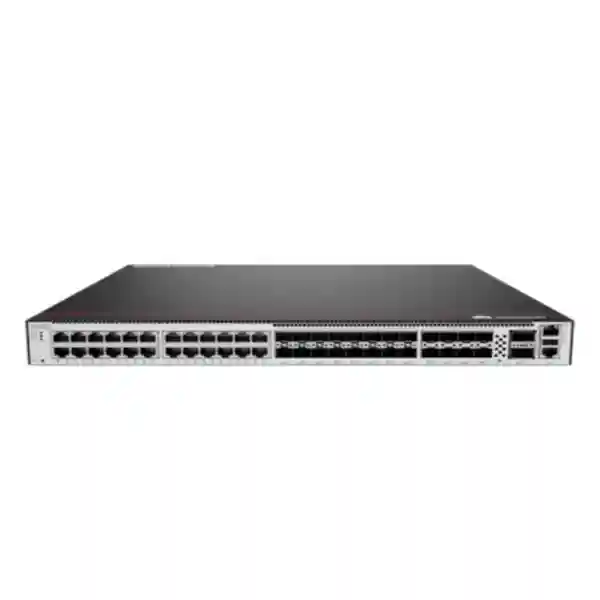
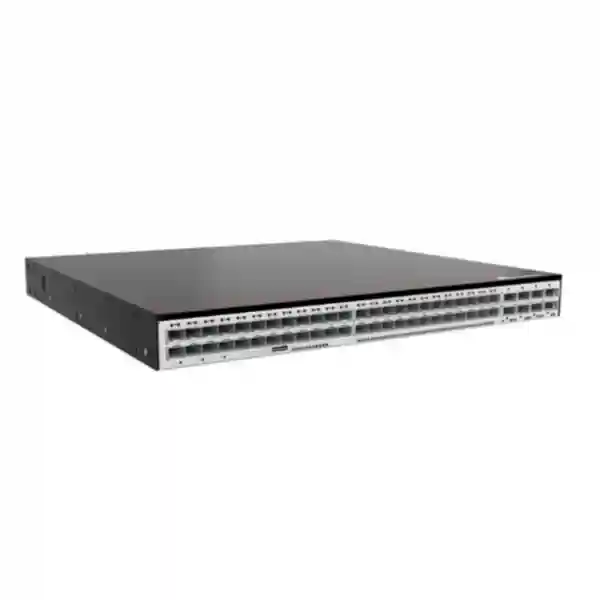
The Huawei CloudEngine S6750-S24T16X8Y2CZ is designed for organizations that need a dense combination of Gigabit copper access, 10GE and 25GE optical aggregation, and 40/100GE high-speed uplinks in a campus switching platform. Huawei positions the CloudEngine S6750-S family for aggregation in large campus networks and core switching in small and midsize campuses. FourTeck supports buyers with model confirmation, bill-of-material review, optics and cabling planning, deployment scoping, and quotation coordination for Dubai, the UAE, GCC projects and selected African markets.
24 × GE Copper
24 fixed 10/100/1000M Base-T Ethernet ports support conventional copper-connected devices, edge switches, management links and mixed campus designs.
16 × 10GE SFP+
A substantial 10GE optical port count supports server, access-switch and aggregation links where fiber density matters.
8 × 25GE SFP28
25GE interfaces provide a practical path for higher-bandwidth access, server-facing or distribution connectivity without jumping every link directly to 100GE.
2 × 40/100GE QSFP28
High-speed QSFP28 uplinks can connect the switch into a resilient campus backbone, data-center edge, core pair or high-capacity aggregation design.
Direct Answer: What Is the Huawei CloudEngine S6750-S24T16X8Y2CZ?
The Huawei CloudEngine S6750-S24T16X8Y2CZ is an enterprise-class campus switch in Huawei’s CloudEngine S6750-S family. Its fixed interface mix is the defining characteristic: 24 10/100/1000M Base-T Ethernet ports, 16 10GE SFP+ ports, 8 25GE SFP28 ports, and 2 40/100GE QSFP28 ports. This gives network designers a single platform that can combine ordinary copper-connected infrastructure with high-density fiber aggregation and very high-speed uplinks. Huawei’s current product materials also identify expansion capability, redundant power support, VXLAN-based campus virtualization and MACsec support as family features. Because Huawei publishes product information across multiple regional pages and software releases, buyers should confirm the exact BOM, software baseline, expansion configuration and performance values in the quotation rather than assuming that every published figure applies to every regional hardware or software release.
For a Dubai or UAE buyer, the practical question is not simply whether the model has enough ports. The purchasing process should establish what those ports will connect to, which transceiver standards and fiber types are required, whether the design expects 10GE, 25GE or 100GE on day one, how redundancy will be implemented, what routing and virtualization features are needed, and whether the network team already operates Huawei switching. FourTeck can help turn the model name into a deployable bill of materials by reviewing optics, patching, power modules, rack requirements, expansion expectations and implementation scope before the order is finalized.
Important procurement note: do not order solely from a summarized online specification. Confirm the exact switch hardware release, power modules, compatible optics, required expansion card, software version, support entitlement and regional part details in the final quotation. This is especially important for a model family whose published performance values can differ across regional Huawei materials and software/product releases.
Verified Interface and Platform Highlights
| Model | CloudEngine S6750-S24T16X8Y2CZ |
| Copper interfaces | 24 × 10/100/1000M Base-T Ethernet |
| 10GE optical interfaces | 16 × 10GE SFP+ |
| 25GE optical interfaces | 8 × 25GE SFP28 |
| High-speed uplinks | 2 × 40/100GE QSFP28 |
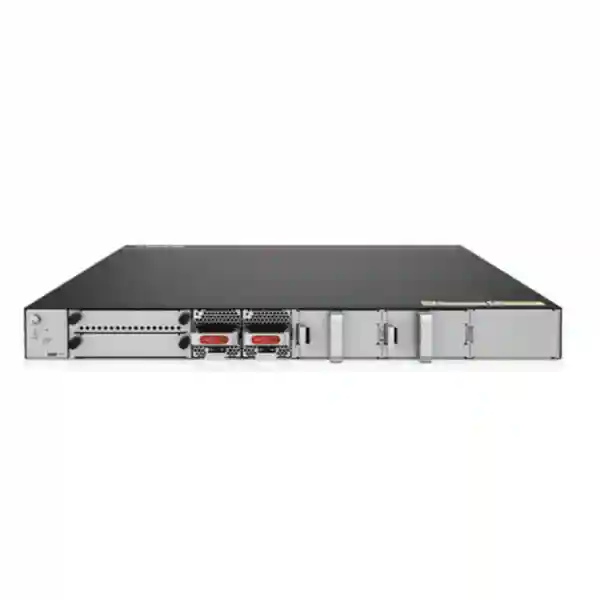
| Expansion | Expansion capability is listed for the platform; exact slot count and supported card combination should be confirmed against the quoted hardware release. |
| Power resilience | Huawei product material lists 1+1 power backup support; confirm the required AC/DC power modules and quantity in the BOM. |
| Campus technologies | Huawei lists VXLAN, BGP EVPN, NETCONF-based configuration, QoS capabilities and MACsec across the S6750-S family; exact software support should be checked for the intended release. |
Why the Port Mix Matters in Real Deployments
A common enterprise switching problem is having to choose between a copper-heavy platform and a fiber-heavy aggregation platform. The S6750-S24T16X8Y2CZ is notable because it combines both. The 24 Gigabit Base-T ports can be used for devices or links that remain copper-based, while the 10GE and 25GE fiber interfaces provide substantially greater density for access-switch uplinks, server connections or distribution links. The two QSFP28 interfaces create a high-speed path toward a campus core, another aggregation switch or an upstream high-capacity network layer. This makes the model particularly relevant where a network is evolving rather than being rebuilt as a uniform greenfield design.
A buyer should still map every planned connection before selecting optics. SFP+, SFP28 and QSFP28 describe form factors and speed families, but the actual optical module must match wavelength, fiber type, distance, connector, remote-end compatibility and vendor support policy. A 10GE uplink across a short equipment room has different requirements from a 25GE inter-building link or a 100GE backbone connection. FourTeck can help prepare a port-by-port requirement list so that switch, optics, fiber patch cords and remote equipment are considered as one system instead of separate purchases.
Campus Core, Aggregation and High-Speed Distribution Use Cases
Huawei positions the CloudEngine S6750-S family as suitable for aggregation in large campus networks and core roles in small and midsize campus environments. In an aggregation role, the switch can collect multiple 10GE or 25GE links from access layers and forward consolidated traffic over higher-speed uplinks. In a smaller campus core role, the interface mix can provide direct connectivity to selected access blocks, servers, security appliances or routing infrastructure while maintaining a high-capacity backbone path. The final architecture should be based on measured traffic, failure-domain design, routing strategy, redundancy targets and operational preferences rather than the port count alone.
The model can also fit environments that are transitioning from Gigabit to multi-speed fiber. An education campus may retain copper connections for management or legacy infrastructure while upgrading building distribution links to 10GE or 25GE. A logistics site may need conventional Ethernet for operational systems while maintaining high-speed fiber between network rooms. A hospitality group may aggregate wireless, voice, surveillance and back-office networks through separate VLANs and routing policies. A multi-floor enterprise can use the switch to consolidate access layers while reserving 100GE capacity for an upstream core or data-center connection. These are design patterns, not automatic configurations; VLANs, routing, QoS, MACsec, VXLAN and redundancy should be planned around the actual topology and software release.
VXLAN, Segmentation and Network Virtualization
The S6750-S family supports VXLAN-based campus network virtualization. VXLAN can help organizations create logical network separation over shared physical infrastructure, which is useful when different departments, tenants, services or device groups require distinct policy boundaries. Huawei also lists distributed and centralized VXLAN gateway approaches and BGP EVPN functions for the family. For a buyer, this is relevant when the project is more sophisticated than conventional VLAN extension and static routing. It can support scalable segmentation, structured campus fabrics and more flexible service placement, but it also increases the importance of controller strategy, routing design, software compatibility, operational skill and change management.
A quotation should therefore identify whether the switch is being purchased for traditional Layer 2/Layer 3 switching or as part of a VXLAN/EVPN architecture. If the latter, the project team should confirm the required software features, management platform, underlay and overlay routing, address plan, gateway model, multicast or ingress-replication design, telemetry and troubleshooting process. FourTeck can coordinate requirement clarification so the hardware purchase does not become disconnected from the design decisions that determine whether the fabric will be supportable in production.
MACsec and Secure Campus Links
Huawei identifies MACsec support across the S6750-S family for end-to-end link encryption designs. MACsec is relevant where organizations want to protect Ethernet traffic on supported links, such as between network devices in different rooms, buildings or trusted infrastructure zones. It can be especially useful when fiber paths leave a tightly controlled equipment room or cross shared physical spaces. However, MACsec deployment is not simply a checkbox: both ends of the link, software versions, key-management approach, interface mode and throughput expectations must be considered.
For procurement, the correct approach is to state whether MACsec is required and on which interfaces. The technical team can then verify end-to-end support rather than assuming that every connected switch, firewall, router or server NIC participates in the same way. The security design should also distinguish MACsec from IPsec or application-layer encryption because each protects a different layer and solves a different operational problem.
Deployment Planning for Dubai and UAE Networks
A successful deployment starts with the rack, power and cabling environment. Confirm rack depth and available RU space, airflow direction, power-feed redundancy, PDU socket availability, grounding, fiber-management capacity and patch-panel locations. Then document every expected connection by speed and medium. The switch has a broad interface mix, but that flexibility is only useful when the optics and remote endpoints are correctly matched. Record whether each link is copper, multimode fiber or single-mode fiber; the expected distance; required speed; connector; and remote-device port type. This avoids the common situation in which a switch arrives before the transceiver plan has been finalized.
FourTeck’s Dubai deployment planning guidance is also useful when the switching project connects to a new or existing firewall. Campus switching and firewall design should be coordinated around VLANs, Layer 3 boundaries, default gateways, routing, high availability, server zones, guest networks, wireless controllers and internet-edge services. Treating each infrastructure device as an isolated purchase can create avoidable rework during implementation.
Huawei CloudEngine S6750-S24T16X8Y2CZ Dubai
Customers searching for Huawei CloudEngine S6750-S24T16X8Y2CZ Dubai are usually not looking for a generic explanation of what an Ethernet switch does. They are trying to confirm whether this exact model fits a campus upgrade, high-speed aggregation layer, enterprise core, building-distribution refresh or mixed copper-and-fiber requirement. In Dubai, that often means the buying team needs a formal quotation that separates the base switch from power modules, transceivers, patching, support and professional services. The model’s combination of 24 Gigabit copper ports, 16 10GE SFP+ ports, 8 25GE SFP28 ports and 2 40/100GE QSFP28 ports can reduce the need for multiple device types in environments where legacy copper and new fiber links coexist. Before purchase, however, the customer should document how many ports are needed at each speed on day one and how much headroom is required for the next refresh cycle.
Dubai projects frequently involve multiple stakeholders: procurement wants a model and commercial quote; network engineers need interface and routing confirmation; facilities teams care about rack, power and cooling; and security teams want clear segmentation between users, servers, wireless, CCTV, voice and internet-facing systems. The S6750-S24T16X8Y2CZ should therefore be reviewed as part of an architecture rather than as a standalone box. If it will aggregate access switches, list every access block, uplink speed and redundancy requirement. If it will act as a smaller campus core, identify the Layer 3 gateways, firewall connections, server networks and upstream WAN or data-center links. If VXLAN or MACsec is planned, confirm software and peer-device support before the bill of materials is approved.
For a Huawei S6750-S24T16X8Y2CZ price in Dubai, FourTeck recommends requesting a configuration-aware quote rather than comparing only the base hardware figure. The commercial difference between a bare chassis and a deployable solution can be significant when multiple 10GE, 25GE or 100GE optics, redundant power modules, support and implementation are included. Buyers can also review broader enterprise technology assistance through FourTeck UAE. Share quantity, required optics, cable distances, preferred power type, support term and deployment scope so the proposal reflects the actual Dubai site rather than a generic online listing.
Huawei CloudEngine S6750-S24T16X8Y2CZ UAE
For UAE organizations, the Huawei CloudEngine S6750-S24T16X8Y2CZ is relevant when the network must serve more than a single office floor. Multi-building campuses, education groups, healthcare environments, hospitality operations, logistics facilities, industrial administration networks and distributed corporate sites may all need an aggregation layer that can mix copper connections with 10GE, 25GE and 100GE fiber. A UAE project can span Dubai, Abu Dhabi, Sharjah, Ajman or other emirates, so the design should consider whether the same switch standard will be repeated across locations or reserved for headquarters and larger sites. Standardization can simplify spares, configuration templates and support, but only if each location actually needs the interface density and software functions of the platform.
Before ordering, the UAE network team should confirm whether the switch will run as a traditional routed core, a Layer 2/Layer 3 aggregation device, part of a VXLAN campus fabric or a hybrid during migration. That decision affects routing protocols, gateway placement, controller or automation requirements, multicast design, failure handling and operational training. If the organization is replacing older switches, collect existing VLANs, spanning-tree dependencies, routing adjacencies, IP helper settings, access-control policies, QoS markings and monitoring configuration. A clean migration plan should identify what must be preserved, what can be simplified, and what will change at cutover. This is more reliable than cloning an old configuration onto a newer platform without reviewing obsolete dependencies.
UAE procurement teams should also ask for a written bill of materials that distinguishes the switch, power modules, expansion components, transceivers, cables, support and installation. Huawei product information can vary across regional documentation and releases, so exact performance, slot population and software support should be confirmed against the quoted part and intended version. FourTeck can coordinate that review and help align the switching project with firewall, wireless, server and structured-cabling requirements. The goal is a solution that is commercially clear and technically deployable, not merely an invoice containing the correct model name.
Huawei CloudEngine S6750-S24T16X8Y2CZ Uganda
Buyers searching for Huawei CloudEngine S6750-S24T16X8Y2CZ Uganda may be planning a national organization, university, financial institution, public-sector campus, large commercial facility or service provider environment that requires high-speed aggregation. The first procurement question should be whether the mixed port layout matches the installed network. The 24 Gigabit copper interfaces can accommodate conventional Ethernet connections, while the 10GE and 25GE optical ports support faster distribution and access-switch uplinks. The 40/100GE QSFP28 interfaces can form high-capacity backbone connections where the rest of the design can use that bandwidth. A practical Uganda deployment should map these interfaces to real buildings, network rooms, servers and uplinks before optics are selected.
For projects that extend between buildings or across larger compounds, fiber type and distance are critical. Buyers should record whether existing links use multimode or single-mode fiber, connector type, number of available strands, patch-panel condition and tested optical loss. New 25GE or 100GE links may expose limitations in older fiber infrastructure, so cabling readiness should be reviewed before the switch is delivered. Power resilience also matters: if the design relies on 1+1 power backup, confirm the required power modules and whether they connect to independent UPS or power feeds. A redundant-capable switch does not create resilience if both supplies ultimately depend on one failing source.
Organizations can use FourTeck Uganda to discuss regional sourcing, project requirements and related infrastructure. For an accurate quotation, provide quantity, preferred deployment city, desired uplink speeds, transceiver distances, power requirements, support expectations and whether installation or configuration is needed. If the network will use VXLAN, BGP EVPN, MACsec or automation, include those requirements explicitly so the technical review can focus on the intended software baseline instead of assuming a basic Layer 2 deployment.
Huawei CloudEngine S6750-S24T16X8Y2CZ Kampala
In Kampala, demand for the Huawei CloudEngine S6750-S24T16X8Y2CZ is likely to come from organizations consolidating network traffic at a headquarters, campus, data room or major branch. A city deployment may have many endpoints but only a small number of high-speed backbone paths, so the design should distinguish edge-device density from aggregation capacity. The S6750-S24T16X8Y2CZ is not a substitute for a large PoE access switch estate; its value is the combination of ordinary Gigabit copper with extensive 10GE and 25GE fiber plus 100GE-capable uplinks. This makes it more appropriate when the network room must bring together multiple access layers, server connections or building links and then move that traffic toward the core or security layer.
A Kampala buyer should prepare a simple topology before requesting a quote. Mark the internet edge, firewalls, routers, server VLANs, wireless controllers, access switches, CCTV networks, voice platforms and any remote-site links. Then identify which interfaces on the new switch will be Layer 2 trunks, routed links or member links in a redundancy design. This exercise usually reveals hidden requirements such as additional optics, different fiber distances, extra patch leads, routing changes or maintenance windows. It can also identify whether 25GE is genuinely required for certain links or whether 10GE is sufficient, allowing the bill of materials to be optimized without reducing future options.
Operational planning is equally important. Decide who will manage the switch, how configuration backups are stored, which monitoring system will collect SNMP or telemetry data, how administrator access is controlled and how software upgrades are approved. If the organization is standardizing Huawei switching, consistent naming, VLAN conventions, routing policies and logging can make support easier across multiple Kampala facilities. If Huawei is being introduced into a mixed-vendor network, interoperability testing should be included in the staging plan, particularly for spanning tree, routing, link aggregation, optical compatibility and management integrations.
Huawei CloudEngine S6750-S24T16X8Y2CZ Arua
Arua buyers may approach the Huawei CloudEngine S6750-S24T16X8Y2CZ from a different angle than a large metropolitan campus. The decision may center on building a strong regional hub that can support future expansion, aggregate multiple local networks and connect efficiently to upstream WAN, data-center or service-provider infrastructure. In that context, the mixed interface design can be useful because the site may contain existing Gigabit copper systems alongside newer fiber distribution. Rather than replacing every connected device at once, the switch can provide a transition point where different generations of connectivity meet.
For Arua projects, physical infrastructure planning deserves particular attention. Confirm the condition of the equipment room, dust control, cooling, stable power, UPS runtime, rack security and fiber pathways. High-speed switching equipment depends on a predictable operating environment. If the location experiences power interruptions, a resilient design should include more than dual switch power supplies; the two supplies should be connected to appropriately designed power sources, and the upstream network devices must also remain available. If the switch is the regional aggregation point, loss of that rack can affect many downstream users, so redundancy should be considered across switch topology, power and uplink paths.
When requesting a Huawei S6750-S24T16X8Y2CZ quote for Arua, describe the current and future network rather than sending only the model number. Include the number of access switches, server links, building connections, expected uplink speed, fiber distances, WAN handoff and whether the design requires two aggregation switches for high availability. If the network uses a central firewall, indicate how many routed or trunk links will connect the security layer. This context helps determine which optics and accessories belong in the quotation and whether the proposed design has enough headroom for later expansion without overbuying unnecessary components on day one.
Huawei CloudEngine S6750-S24T16X8Y2CZ Mbarara
For Mbarara organizations, the S6750-S24T16X8Y2CZ may suit a growing campus that has outgrown a simple flat switching design. Universities, hospitals, commercial groups, manufacturing facilities and regional headquarters often accumulate separate networks for users, servers, wireless, surveillance, voice, guest access and operational systems. As those networks grow, the aggregation layer needs enough interface diversity and routing capability to keep traffic organized. The Huawei model provides Gigabit copper for selected conventional connections, dense 10GE and 25GE optical capacity for distribution links, and QSFP28 interfaces for higher-speed upstream connectivity.
A Mbarara network refresh should use the purchasing process to improve documentation. Before migration, create a list of VLANs, subnets, gateways, routing adjacencies, access-switch uplinks, server trunks, firewall zones and wireless-controller connections. Identify which legacy VLANs are still in use and which can be retired. Verify whether any services depend on Layer 2 adjacency across buildings, because that requirement can influence whether the new design uses simple trunks, routed access, or a more advanced VXLAN approach. The S6750-S family offers advanced capabilities, but the best design is the simplest architecture that reliably meets business and resilience requirements.
Procurement should then translate the design into a complete material list. A switch with many optical ports can require a substantial number of transceivers, and those optics may represent a meaningful part of project cost. List each link by speed, fiber type and distance rather than buying a generic quantity of modules. Confirm power modules, expansion needs, support coverage, rack accessories and implementation scope. If installation services are required, specify whether they include staging, configuration, migration, testing and documentation. This keeps the commercial proposal aligned with the actual work needed to move the Mbarara site from the existing network to the new aggregation platform.
Huawei CloudEngine S6750-S24T16X8Y2CZ Gulu
A Gulu deployment may use the Huawei CloudEngine S6750-S24T16X8Y2CZ as a central aggregation point for a campus, regional office, education facility, healthcare organization or large commercial site. The model is most compelling when several network speeds must coexist. Existing infrastructure may still rely on Gigabit copper, while access-switch uplinks and server connections are moving to 10GE or 25GE. At the same time, the network may need one or two very high-speed connections toward a core, firewall cluster, data center or upstream transport network. The fixed port layout provides room for that combination without forcing every connected system into the same medium or speed.
The Gulu buying process should include a resilience review. If the switch will aggregate many downstream devices, a single-unit design can create a concentrated failure point even when the hardware itself supports redundant power. Organizations with stronger availability requirements should consider whether they need a pair of switches, dual-homed access links and diverse fiber paths. This adds cost and configuration complexity, but it can significantly reduce the impact of planned maintenance or a hardware fault. The right choice depends on the operational consequences of downtime, not simply on whether the product supports a redundancy feature.
Management and support should also be planned before purchase. Define where configuration backups will be stored, how administrators will authenticate, whether remote management traverses a dedicated management network, and which monitoring platform will collect interface, routing and environmental information. If the Gulu location is supported from another city, out-of-band management and clear documentation become more valuable. The quote request should include these operating expectations, plus optics, power, software and support requirements, so the hardware can be staged with a configuration template and acceptance checklist rather than being delivered as an unconfigured component with unresolved dependencies.
Huawei CloudEngine S6750-S24T16X8Y2CZ Kenya
Kenya buyers considering the Huawei CloudEngine S6750-S24T16X8Y2CZ are often evaluating it for enterprise campuses, education networks, hospitality groups, financial services, logistics hubs, government environments or large multi-tenant facilities. The key advantage for such projects is interface flexibility. A network can retain selected copper-based systems while increasing fiber density in the distribution layer, with 10GE, 25GE and 100GE options available within one platform. This can support a staged modernization strategy in which access layers are upgraded over time rather than all at once.
Kenyan organizations should evaluate the switch against their topology rather than a simple port-count checklist. If the campus has multiple buildings, calculate traffic concentration from each building and determine whether 10GE remains adequate or whether 25GE is justified. If the switch connects to a data center, firewall cluster or upstream core, assess whether 100GE uplinks are required immediately or can be introduced later. If the design uses two switches for resiliency, ensure that access devices and upstream systems can connect redundantly without consuming more ports than expected. The design should also account for routing protocols, gateway placement, multicast, QoS and the operational model for upgrades and troubleshooting.
For regional procurement and related infrastructure discussion, buyers can review FourTeck Kenya. A useful quotation request should include the exact model, quantity, site locations, expected installation date, required transceiver speeds, fiber distances, power arrangement, support term and any implementation services. If the network is migrating from another vendor, include the current switching platform and critical protocols so compatibility and cutover risks can be reviewed. This creates a more useful commercial response than asking for a switch price without the optics and deployment context that determine the real project cost.
Huawei CloudEngine S6750-S24T16X8Y2CZ Kuwait
In Kuwait, the Huawei CloudEngine S6750-S24T16X8Y2CZ may be considered for enterprise headquarters, education campuses, hospitality environments, industrial administration networks, government projects and large facilities that require dense fiber aggregation. The model’s mix of Gigabit copper, 10GE SFP+, 25GE SFP28 and 40/100GE QSFP28 interfaces allows a designer to support several network tiers without dedicating a separate switch to each speed class. This is particularly useful during phased upgrades, when some building links may remain at 10GE while newer access or server links move to 25GE and the backbone is prepared for 100GE.
Environmental and rack planning should be explicit. Kuwait projects can involve equipment rooms with demanding cooling loads, so airflow direction, temperature monitoring, rack clearances and redundant power feeds should be checked before deployment. A high-capacity aggregation switch should not be installed without confirming that the cabinet, PDUs and UPS design can support both the device and its neighboring equipment during peak conditions. Fiber-management planning is equally important because a switch populated with many optical links can become difficult to service if patch cords are not labeled, routed and documented properly.
Commercially, ask for a quote that separates hardware, power modules, optics, support and services. Do not assume that a web listing includes all required components. State whether the project needs staging, configuration, installation, migration or documentation, and whether the switch will integrate with existing Huawei networking or a mixed-vendor environment. If MACsec, VXLAN, BGP EVPN or advanced automation is required, identify those functions at the beginning of the discussion so the software baseline and peer compatibility can be checked. The result should be a complete Kuwait deployment package aligned with the design rather than a base switch that still needs major technical decisions after delivery.
Huawei CloudEngine S6750-S24T16X8Y2CZ Ghana
Ghana organizations looking for the Huawei CloudEngine S6750-S24T16X8Y2CZ may be planning an aggregation refresh for a headquarters, university, financial institution, public-sector site, hospitality property or large commercial campus. In these environments, the value of the model lies in how it can bridge current and future network speeds. The 24 copper Gigabit interfaces can support selected conventional connections, while 10GE and 25GE fiber ports provide significantly more bandwidth for access-switch and server-facing links. Two QSFP28 interfaces can then connect the platform into a higher-capacity backbone or core design.
A Ghana deployment should begin with traffic and topology data. Count the access switches or network blocks that will terminate on the aggregation layer, record their uplink speeds, identify any server or storage links, and define the expected upstream connection to firewalls, routers or core switches. If the design is intended to support growth over several years, reserve ports and bandwidth for that growth instead of using every interface at launch. At the same time, avoid treating 100GE as automatically necessary; it should be justified by aggregated traffic, redundancy design and projected demand. Well-sized 10GE or 25GE links can be more appropriate for many current campus segments.
For projects where technical staff are not located at the same site, operational simplicity is important. Standard configuration templates, secure remote access, centralized monitoring, backups and documented recovery procedures can reduce dependence on emergency site visits. If the platform will join a mixed-vendor network, schedule a staging test for optics, link aggregation, spanning tree, routing and monitoring integrations. For procurement, request the full BOM with transceivers, power, support and optional services clearly itemized. FourTeck can help structure those requirements for broader African projects through FourTeck Africa, allowing the Ghana requirement to be discussed in the context of the complete network rather than as an isolated hardware purchase.
Huawei CloudEngine S6750-S24T16X8Y2CZ Nigeria
Nigeria buyers evaluating the Huawei CloudEngine S6750-S24T16X8Y2CZ may need a high-density aggregation or smaller campus-core platform for large offices, financial services, education, hospitality, industrial campuses, regional data rooms or multi-building enterprise networks. The interface mix is attractive where a site has heterogeneous connectivity: ordinary Gigabit copper can coexist with a large number of 10GE and 25GE optical links, while 100GE-capable uplinks provide a path toward a higher-speed backbone. That combination can reduce the number of separate aggregation devices required during a network refresh, provided the switching capacity, software and redundancy model are confirmed for the exact release being purchased.
Nigeria projects should pay close attention to resilient power and fiber-path diversity. A switch with redundant power capability should ideally be connected to separate protected feeds where the site design supports it. Similarly, two high-speed uplinks provide limited resilience if both fibers follow the same physical route. For mission-critical environments, identify single points of failure across switches, optics, fiber routes, power, upstream routers and firewalls. The network may justify a pair of aggregation switches with dual-homed downstream devices, while a less critical site may accept a single switch with spare components and a documented recovery process. The correct design depends on business impact and budget.
When asking for a Huawei S6750-S24T16X8Y2CZ price in Nigeria, provide the target city, quantity and intended network role. Include the number of 10GE, 25GE and 100GE links, approximate fiber distances, required transceiver types, power preference, support expectations and any professional services. If the switch will carry business-critical traffic such as payment systems, voice, surveillance or enterprise applications, also state segmentation and QoS requirements. That information lets the technical and commercial teams evaluate the complete solution and reduces the chance that the delivered hardware is missing optics, power or implementation items needed for production use.
Huawei CloudEngine S6750-S24T16X8Y2CZ Seychelles
For Seychelles customers, the Huawei CloudEngine S6750-S24T16X8Y2CZ can be relevant to hospitality groups, government sites, education, financial services, larger enterprises and centralized IT environments that need a capable aggregation platform with room for fiber growth. Island deployments often place a premium on careful bill-of-material planning because missing optics, power modules or compatibility details can create avoidable project delays. The switch’s broad range of fixed ports makes it flexible, but every optical link still needs the correct transceiver, fiber and remote endpoint. A complete pre-order port map is therefore more valuable than a simple switch quantity.
Hospitality and multi-building sites may combine guest networks, staff systems, voice, surveillance, access control, property-management applications and wireless infrastructure. These services should be segmented intentionally, with routing and security boundaries defined before migration. The S6750-S family supports advanced campus capabilities such as VXLAN and MACsec, but not every Seychelles deployment needs them. Some sites may be better served by clear VLANs, routed distribution and a straightforward firewall policy. The design should select advanced features only when they solve a real scale, mobility, segmentation or security requirement and when the operations team can support them.
Procurement should also plan spares and support according to business impact. If the switch becomes a central point for a resort or enterprise campus, a fault can affect many services at once. Buyers may therefore consider redundant switch architecture, spare optics, appropriate support coverage and documented restoration procedures. For a Seychelles quotation, provide the site topology, link distances, target speeds, quantity, power requirements and any installation constraints. If remote staging is useful, include configuration and testing requirements before shipping so the device can arrive with an agreed software baseline and documented port plan, reducing the amount of work that must be completed during the final site cutover.
Compatibility and Optics Checklist
1. Link speed
Identify which links require 1GE, 10GE, 25GE, 40GE or 100GE and whether the remote device supports the same speed and interface standard.
2. Fiber and distance
Record multimode or single-mode fiber, approximate run length, connector type and expected optical budget before choosing modules.
3. Remote-end support
Check the switch, router, firewall or server at the other end, including supported transceiver type, speed negotiation and breakout design where applicable.
4. Software baseline
Confirm the intended software release for routing, VXLAN, MACsec, automation, telemetry and interoperability requirements.
What to Include in a Quotation Request
A useful Huawei CloudEngine S6750-S24T16X8Y2CZ quotation should be based on enough information to avoid repeated revisions. Provide the model and quantity, but also state the network role: access aggregation, building distribution, campus core, data-center edge or another purpose. List the required 10GE, 25GE and 100GE link counts, approximate distances, fiber types, power preference, support term and target deployment location. If expansion cards are required, state the intended extra interface type rather than asking for an unspecified expansion module.
Also describe implementation services separately. Hardware supply, staging, installation, configuration, migration, testing, documentation and post-cutover support are different scopes. A buyer that needs a fully implemented campus switch should say so at the beginning, while a network integrator that only needs hardware and optics may prefer a supply-only quotation. Clarifying the boundary helps both technical and procurement teams compare proposals accurately.
Integration with Firewalls and Security Architecture
Campus switching and firewall design are closely linked because the location of Layer 3 gateways and security boundaries determines how traffic reaches the firewall. Some networks route between internal VLANs on the core and send only internet or sensitive-zone traffic to the firewall. Others deliberately place more inter-VLAN traffic through a security appliance for inspection and policy control. The S6750-S24T16X8Y2CZ has enough high-speed interfaces to support either architecture, but the correct approach depends on security requirements, traffic volume, failure domains and operational complexity.
For projects in which the switch is being introduced alongside a firewall refresh, review the broader FourTeck Firewall Dubai platform and the company’s network security and deployment approach. The objective should be a coordinated design with documented VLANs, routing, trunking, firewall zones, HA links and management access rather than separate switch and firewall projects that are joined together only during installation.
Frequently Asked Questions
How many fixed ports does the model have?
Huawei lists 24 × 10/100/1000M Base-T Ethernet, 16 × 10GE SFP+, 8 × 25GE SFP28 and 2 × 40/100GE QSFP28 interfaces for the S6750-S24T16X8Y2CZ.
Is it suitable as a campus core switch?
Huawei positions the S6750-S family for aggregation in large campuses and core roles in small and midsize campuses. Final suitability depends on capacity, topology, redundancy and feature requirements.
Does it support 100GE?
The model includes two QSFP28 ports listed for 40/100GE operation. Confirm optics, fiber and remote-end compatibility for the intended 100GE link.
Does it support redundant power?
Huawei product information lists 1+1 power backup support. The exact power modules and quantity should be included and confirmed in the quotation.
Does the S6750-S family support VXLAN?
Yes, Huawei lists VXLAN virtualization, distributed and centralized gateway functions, BGP EVPN and NETCONF-based configuration among family capabilities. Confirm the required software release.
Can I request the switch without optics?
A supply-only switch quote can be requested, but a production deployment normally requires the correct optics, cables and power modules. State clearly what should be included.
Why do some online specifications show different performance values?
Huawei’s regional pages and product releases can publish different capacity or forwarding values. Use the exact quoted hardware/software release as the procurement reference rather than assuming one internet figure is universal.
What information speeds up a quote?
Send quantity, country/city, uplink speeds, optics and distances, power requirements, support term and whether you need staging, configuration, migration or installation.
Decision Recap
Choose the Huawei CloudEngine S6750-S24T16X8Y2CZ when the project genuinely benefits from its mixed port density: Gigabit copper for selected existing systems, a large pool of 10GE and 25GE fiber for aggregation, and 40/100GE uplinks for a high-capacity backbone. Validate the model against the topology, not only the specification sheet. The strongest use case is a campus or enterprise network where multiple access, distribution or server links must converge in a controlled, scalable design.
Before approval, confirm five things in writing: the exact hardware/software release, power-module configuration, optics and fiber requirements, redundancy design, and professional-service scope. This turns a model-based purchase into an implementation-ready project and reduces the risk of discovering missing components during installation.
Quotation Checklist
Model & quantity: Confirm S6750-S24T16X8Y2CZ and the number of units.
Optics: List 10GE, 25GE and 100GE links, distances and fiber types.
Power: State AC/DC preference and redundancy requirements.
Software: Identify VXLAN, EVPN, MACsec, automation or routing needs.
Support: Specify required support term and entitlement expectations.
Services: Separate supply, staging, installation, migration, testing and documentation.
Talk to FourTeck About the Complete Switching Requirement
Send the target country or city, quantity, topology, optics, power and support requirements. FourTeck can help review the request as a complete deployment package and coordinate switching, firewall and related infrastructure considerations before the commercial quote is finalized.
The strongest quotation is the one that describes the network you intend to build, not just the model you intend to buy.

Reviews
There are no reviews yet.