
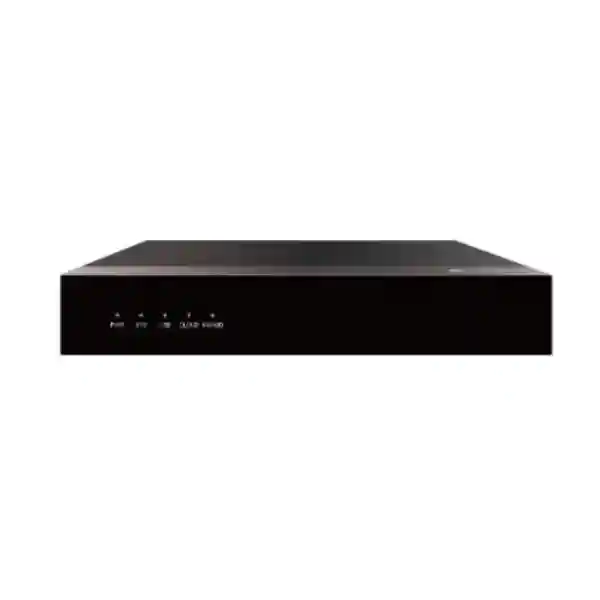
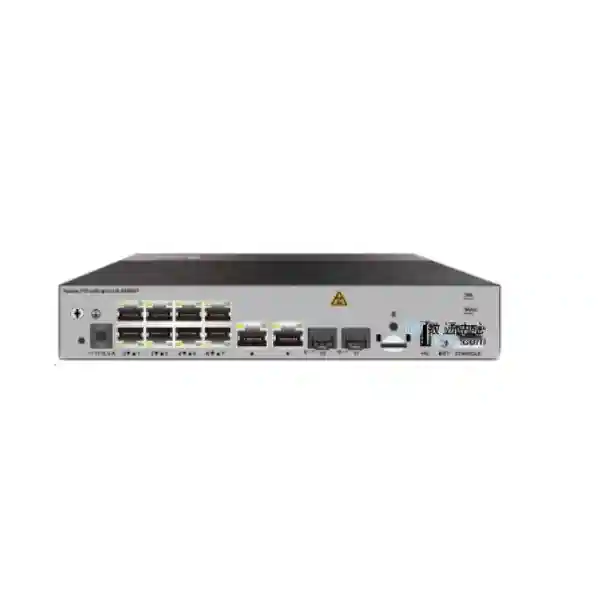
Huawei HiSecEngine USG6500F AI Firewall
A technically focused guide for UAE organizations evaluating the Huawei HiSecEngine USG6500F family for branch security, campus edge protection, internet perimeter control, IPsec and SSL VPN, secure SD-WAN, application-aware policy enforcement, and integrated threat prevention.
Model selection should account for IPS, application awareness, SSL inspection, VPN, session scale, redundancy, interface requirements, logging, licensing, and future traffic growth.
Rack-mount models include USG6525F, USG6555F, USG6565F, USG6585F and USG6585F-B.
Firewall, VPN, IPS, antivirus, application control, URL filtering, bandwidth management and Anti-DDoS functions.
Application-aware path selection and encrypted branch connectivity support distributed UAE operations.
Designed for centralized policy operations, threat visibility, logging integration and structured security administration.
What the Huawei HiSecEngine USG6500F is designed to do
Huawei positions the HiSecEngine USG6500F as a next-generation AI firewall family for small enterprises, industry branches and chain commercial organizations. In practical network design terms, that means the platform is intended to sit where trusted business networks meet untrusted or semi-trusted networks: an internet edge, a branch WAN boundary, an inter-zone segmentation point, a VPN aggregation location, or a security gateway that combines routing and inspection. The value of the family is not a single headline throughput number. Its value comes from consolidating policy enforcement, traffic classification, threat prevention, encrypted connectivity and operational visibility into one security platform that can be sized across several models.
For UAE organizations, the distinction between stateful firewall performance and inspected application traffic is particularly important. A raw firewall benchmark can be materially higher than the rate delivered when intrusion prevention, application identification, antivirus, SSL decryption, URL filtering and logging are enabled. Internet circuits in Dubai and Abu Dhabi are increasingly fast, cloud applications are encrypted by default, branch users rely on SaaS platforms, and hybrid working increases the percentage of traffic that must be inspected rather than merely forwarded. FourTeck therefore recommends sizing the USG6500F against the expected security feature stack, concurrency profile and encrypted traffic ratio instead of matching a device only to the nominal ISP bandwidth.
The USG6500F family combines traditional firewall functions with VPN, intrusion prevention, antivirus, bandwidth management, Anti-DDoS and URL filtering. Huawei also describes application identification for more than 6,000 applications, with policy granularity that can extend to application functions. This is useful when an enterprise wants to differentiate business SaaS, collaboration, social media, streaming, remote administration, cloud storage and other traffic classes without maintaining large collections of destination IP addresses. Application context can then be used alongside users, zones, IP addresses, services, schedules, security profiles and routing decisions to build policies that better reflect real business intent.
USG6500F model family and verified performance ranges
The current Huawei USG6500F rack-mount family includes the USG6525F, USG6555F, USG6565F, USG6585F and USG6585F-B. Performance differs by model and test profile. The figures below should be treated as design inputs rather than guaranteed production throughput because packet size, application mix, enabled security services, logging level, SSL cipher suite, policy complexity and software release all influence real deployment results.
| Metric | USG6525F | USG6555F | USG6565F | USG6585F | USG6585F-B |
|---|---|---|---|---|---|
| IPv4 firewall throughput, 1518/512/64-byte UDP | 2.5 / 2.5 / 2.5 Gbps | 5 / 5 / 3.6 Gbps | 7 / 7 / 3.6 Gbps | 9 / 9 / 4 Gbps | 20 / 18 / 5 Gbps |
| NGFW throughput, HTTP 100K | 1.8 Gbps | 2.1 Gbps | 2.2 Gbps | 2.2 Gbps | 3.3 Gbps |
| Threat protection, enterprise mix | 1 Gbps | 1 Gbps | 1.1 Gbps | 1.2 Gbps | 1.8 Gbps |
| Concurrent sessions | 3,000,000 | 4,000,000 | 4,000,000 | 4,000,000 | 4,000,000 |
| New sessions per second, HTTP/1.1 | 80,000 | 80,000 | 80,000 | 80,000 | 120,000 |
| IPsec VPN, AES-256 + SHA256 | 2.5 Gbps | 3.7 Gbps | 3.7 Gbps | 3.7 Gbps | 5.6 Gbps |
| SSL inspection throughput | 1.5 Gbps | 1.5 Gbps | 1.5 Gbps | 1.5 Gbps | 1.9 Gbps |
Sizing note: the enterprise-mix threat-protection figure is typically more relevant than maximum firewall throughput when IPS, application controls and malware inspection will remain active during normal production traffic.
Hardware platform, interfaces and rack deployment
The principal USG6500F rack appliances use a 1U chassis measuring approximately 442 × 420 × 43.6 mm. That depth is suitable for standard enterprise racks, but a deployment survey should still verify rack depth, rail or shelf requirements, front-to-rear airflow, available power distribution, cable-management clearances and the location of upstream switching. The USG6525F through USG6585F use a fixed-interface layout of 2 × GE RJ45, 8 × GE Combo and 2 × 10GE SFP+ interfaces. The USG6585F-B increases copper interface density with 16 × GE RJ45 while retaining 8 × GE Combo and 2 × 10GE SFP+ connectivity. Combo interfaces require careful documentation because a copper and optical presentation in the same combo pair are alternatives rather than independent simultaneously active ports.
This port mix supports common UAE deployment patterns. The 10GE SFP+ interfaces can be used for high-speed uplinks to a campus core, data-center aggregation layer, high-availability interconnect design, or WAN handoff where compatible optical or direct-attach media are appropriate. GE interfaces can terminate ISP CPE links, DMZ switches, management networks, server VLAN trunks, voice and collaboration zones, guest networks, or dedicated business segments. The correct transceiver choice depends on distance, fiber type, connector standards and the exact optical specification of both link endpoints. A pre-deployment bill of materials should therefore identify each physical handoff and not assume that SFP/SFP+ optics are bundled with the firewall.
Huawei lists optional M.2 SSD capacities of 64 GB, 240 GB and 960 GB for these rack appliances, with hot-swappable support in the current hardware specification. Local storage can be relevant for logs and operational data, but storage should not be confused with a complete retention strategy. Larger organizations commonly forward security events and system logs to a central collector, SIEM or SOC platform so retention is separated from the lifecycle of one firewall appliance. This approach also improves cross-system correlation, searchability and incident investigation.
Power input is specified for 100–240 V AC at 50/60 Hz. Maximum listed power consumption is 36.8 W for USG6525F through USG6585F and 53.2 W for USG6585F-B, with optional dual power modules for 1+1 redundancy. The operating environment is specified from 0°C to 45°C and 5% to 95% relative humidity, non-condensing. In the UAE, data rooms can be exposed to unusually high ambient temperature if cooling fails, so reliable HVAC, environmental monitoring, clean power and correct rack airflow are operational requirements rather than optional refinements.
Application-aware control
USG6500F application identification is designed to classify thousands of applications and support policy decisions beyond TCP or UDP port numbers. This matters because many cloud platforms share HTTPS transport and dynamic hosting. Application-aware rules can help distinguish approved collaboration and business systems from unsanctioned storage, high-bandwidth entertainment, remote-access tools or other traffic that the organization wants to restrict, rate-limit or inspect differently.
Integrated threat prevention
Intrusion prevention, antivirus, web protection and URL filtering operate as security services attached to policy. A good design does not enable every profile indiscriminately. Instead, inspection depth should reflect zone trust, asset sensitivity, application type, traffic direction and the operational ability to respond to alerts. This reduces unnecessary latency and helps analysts focus on high-value detections.
Intrusion prevention and web attack defense
Huawei describes the USG6500F intrusion-prevention capability as covering large numbers of known vulnerabilities and supporting detection for vulnerability exploitation, web attacks such as SQL injection and cross-site scripting, botnet or remote-control traffic, Trojan activity and brute-force attempts. Current product material also references more than 13,000 IPS signatures for the rack-mount USG6500F series and the ability to define custom signatures. Signature count by itself is not a measure of security quality, but it indicates the breadth of the vendor-maintained detection library and highlights the importance of keeping security content subscriptions current.
An IPS deployment should be phased. During initial migration, organizations may first run selected policies in detection or logging mode, establish baselines, identify false positives and understand which applications trigger signatures. High-confidence critical protections can then move to block mode, while ambiguous signatures receive exceptions only when there is a documented business case. This is preferable to broad disabling of categories. Policies protecting internet-facing applications and high-value server segments should generally receive deeper scrutiny than low-risk outbound traffic from controlled systems.
Web attack protection is most effective when the firewall can see the application stream. Encrypted HTTPS creates a design decision: traffic can remain encrypted and bypass content visibility, or it can be decrypted under an organizational SSL inspection policy where lawful and technically appropriate. Decryption should be planned with certificate deployment, endpoint trust stores, privacy exclusions, unsupported application behavior and performance impact in mind. Banking, healthcare portals, pinned-certificate applications and other sensitive categories may require bypass rules depending on corporate policy and legal requirements.
For public web servers, a next-generation firewall provides useful network-level prevention but should not automatically be treated as a replacement for a dedicated web application firewall where business-critical applications require detailed HTTP transaction inspection, bot management, API protection or application-specific virtual patching. A layered design may use USG6500F for perimeter segmentation, network IPS, VPN and access policy while a separate WAF provides deeper application protection. FourTeck can map these controls as part of a broader UAE IT services and security implementation engagement.
Encrypted traffic and SSL inspection planning
The growth of TLS means a firewall that cannot inspect encrypted sessions can miss content that would otherwise be evaluated by IPS, antivirus, URL categorization or data controls. Huawei publishes SSL inspection throughput figures of 1.5 Gbps for USG6525F, USG6555F, USG6565F and USG6585F, and 1.9 Gbps for USG6585F-B under its documented test conditions. These values are a useful ceiling for comparative sizing, but production performance varies with cipher suites, connection rate, certificate validation, session reuse, traffic mix and the number of security engines applied after decryption.
A proper SSL inspection design starts with policy and endpoint readiness. Managed Windows, macOS and mobile devices may need the enterprise inspection CA certificate distributed through device management. Exceptions should be designed for services where decryption creates compliance, privacy, application compatibility or certificate-pinning concerns. Certificate expiry monitoring is critical because an expired inspection certificate can cause a sudden service disruption across many users. Administrators also need a rollback plan that can quickly bypass decryption if a business-critical cloud application changes its certificate behavior.
Capacity planning should estimate the percentage of internet traffic that will actually be decrypted. If an organization has a 2 Gbps internet circuit but plans to decrypt only selected business traffic, the sizing profile is different from an environment that decrypts nearly all outbound HTTPS. The correct model must also have enough headroom for traffic bursts, threat inspection and new-session demand. This is why the published 1.5–1.9 Gbps SSL inspection range must be reviewed together with enterprise-mix threat-protection results and the expected concurrency of the environment.
IPsec VPN, SSL VPN and remote connectivity
USG6500F supports a broad VPN role: site-to-site IPsec for branch interconnection, remote-access use cases, GRE where required, and SSL VPN services. Huawei publishes IPsec VPN throughput using AES-256 and SHA-256 at 2.5 Gbps on USG6525F, 3.7 Gbps on USG6555F, USG6565F and USG6585F, and 5.6 Gbps on USG6585F-B. The family also supports up to 4,000 IPsec VPN tunnels in the published rack-model capacity table. This can support highly distributed branch environments, but practical tunnel scale depends on topology, routing, redundancy, monitoring and change-management overhead in addition to the numeric device limit.
For a hub-and-spoke organization, a central USG6500F may terminate encrypted tunnels from offices, warehouses, retail locations or project sites. Each tunnel should use clear addressing conventions, standardized encryption profiles and consistent routing. Dynamic routing over tunnels can simplify large deployments, while static routes can remain adequate for smaller networks. Route preference, failover timers and asymmetric traffic behavior should be tested because security policies often assume a predictable forward and return path.
SSL VPN capacity is also model dependent. Huawei lists SSL VPN throughput of approximately 300 Mbps on USG6525F, 500 Mbps on USG6555F through USG6585F, and 750 Mbps on USG6585F-B. Default and maximum concurrent SSL VPN user licensing varies by model, with current material indicating 100 users by default and maximums up to 1,000 on USG6525F or 2,000 on the larger rack models. Procurement should confirm the exact license entitlement for the selected software release and region rather than assuming the maximum is included in the appliance base price.
Remote access should be integrated with identity security. Multi-factor authentication, directory integration, role-specific access, posture or endpoint controls where available, and least-privilege network authorization are more important than simply enabling a VPN portal. Administrative access to the firewall itself should be kept separate from general user remote-access services and restricted to dedicated management sources.
Secure SD-WAN for distributed UAE branches
Secure SD-WAN is useful when branches have two or more uplinks and the organization wants path selection to consider application identity, link quality and business priority. A traditional route may fail over only when a link becomes unreachable. SD-WAN can make a more granular decision, such as steering interactive voice and collaboration over the lowest-latency path, sending general web traffic through a secondary link, and moving a business application when packet loss or jitter exceeds a configured threshold.
Huawei publishes secure SD-WAN throughput across the USG6500F rack models from 2.5 Gbps on USG6525F up to 10 Gbps for one of the published packet profiles on USG6585F-B, with a maximum of 200 SD-WAN EVPN tunnels in the referenced performance table. These figures show that the platform can support significant encrypted WAN traffic, but branch design still requires link-specific SLAs and application classification. Without accurate probes and realistic thresholds, frequent path changes can make performance less stable instead of more stable.
In a UAE retail or service network, SD-WAN can combine business broadband, enterprise internet, leased links or wireless backup according to availability and policy. Sensitive business applications can remain inside encrypted overlays even when the underlay uses the public internet. When headquarters and branch environments span multiple countries, policy and underlay planning should also account for carrier latency, regional internet routing and the operational support model. Organizations expanding beyond the UAE can coordinate network standards through FourTeck global infrastructure services while keeping the local security design aligned with UAE requirements.
High availability and resilient security design
A firewall often becomes a critical path for internet access, remote connectivity, cloud services and inter-zone traffic. High availability therefore needs to be designed end to end. Two appliances can protect against a single firewall hardware failure, but they do not by themselves remove upstream switch, ISP, power, optical module or cabling failures. A resilient architecture examines every dependency: dual power feeds where available, redundant switching, separate ISP circuits, diverse physical paths, redundant transceivers, monitored HA links, and documented failover behavior.
State synchronization matters for user experience. If a standby appliance takes over without sufficient session state, active VPN, voice, database or application sessions may reset even though basic connectivity returns quickly. Change procedures should verify synchronization health before planned maintenance. Firmware upgrades should be tested against HA behavior, especially when security engines, VPN features or routing protocols are involved.
The USG6500F rack appliances can be ordered with optional dual power modules for 1+1 redundancy. This feature is useful only when those power supplies are connected to genuinely separate failure domains, such as separate rack PDUs or UPS outputs. Plugging both modules into the same failed power strip provides little resilience. Similar thinking applies to network interfaces: two cables into the same access switch are not equivalent to a dual-switch topology.
Business continuity testing should include controlled ISP failure, upstream switch failure, firewall node failover, VPN re-establishment, DNS dependency checks and validation of monitoring alerts. A design is not considered complete because the secondary unit shows an HA-ready state; the organization should know how applications behave during the transition and how administrators will confirm service restoration.
Routing and segmentation
Use zones and routed or VLAN-based interfaces to separate users, servers, guest access, voice, management, IoT and DMZ systems. Dynamic routing may be appropriate in larger campuses, while static routing remains suitable for simple edges. Security policy should follow the actual trust boundaries rather than merely mirror VLAN numbering.
Identity and least privilege
User-aware policy can reduce dependence on IP addresses when identity integrations are available. Administrative roles should be separated, privileged access should be logged, and management interfaces should be reachable only from controlled networks or secure out-of-band paths.
Policy architecture: from firewall rules to security intent
A modern firewall policy base can become difficult to manage if every business request results in another broad rule. FourTeck recommends an intent-driven structure. Start by defining network zones and asset classes, then map required flows between them. A user zone may need DNS, authentication, internet access and selected application services. A guest zone may require internet only. A server zone may allow inbound traffic only from specific application tiers. A management zone should reach infrastructure interfaces but remain inaccessible from ordinary users.
Rules should be as specific as operationally practical and should carry meaningful names, descriptions, owners and review dates. Broad rules such as any-to-any should be temporary and tracked for removal. Security profiles should be attached based on risk. Outbound user browsing may require URL filtering, antivirus, IPS and application controls, while a tightly controlled backup replication flow between two servers may need a different inspection profile. This reduces unnecessary load and produces logs that are easier to interpret.
Rule order must be planned because many firewalls evaluate policies sequentially. A specific deny or exception can be shadowed by an earlier broad allow rule. Periodic rule review should identify unused objects, expired temporary access, duplicate services and rules that have not matched traffic for a defined period. Cleaning policy does not only improve security; it simplifies troubleshooting because the expected path through the rule set becomes easier to understand.
Organizations with change-control requirements should treat firewall configuration as managed infrastructure. Requests should include source, destination, service, application, business justification, owner, duration and rollback information. Configuration backups should be taken before major changes, and a test plan should verify both the intended access and the absence of unintended access. This approach is particularly important when the firewall also carries routing, NAT, VPN and SD-WAN functions, because one change can affect several dependent services.
NAT, internet publishing and DMZ design
Network address translation remains a central perimeter function. Outbound source NAT allows internal private networks to share public addressing, while destination NAT or server publishing exposes selected services. Publishing should not be confused with security authorization. A DNAT rule can make a server reachable, but a separate security policy must still restrict the source, destination, service and inspection requirements.
Internet-facing services should normally sit in a DMZ or another controlled zone rather than inside the general server network. This limits lateral movement if the public system is compromised. Management interfaces should not be published to the internet unless there is an exceptional, strongly controlled requirement. Safer administration patterns include VPN access, dedicated management networks, jump hosts, multi-factor authentication and source restrictions.
Where multiple public IP addresses or multiple ISPs are used, NAT and routing must be designed together. Return traffic needs to exit through the path expected by the upstream network and by stateful inspection. Policy-based routing or SD-WAN can help, but the design should avoid asymmetric flows that cause sessions to be dropped. Testing should include every published service through each expected provider and failover state.
Logging, reporting and SOC integration
A firewall produces several classes of operational data: traffic logs, threat detections, system events, administrator actions, VPN events, authentication information and hardware or interface alarms. The right logging strategy depends on investigation and compliance requirements. Logging every permitted session can generate substantial volume, so retention, storage and SIEM ingestion costs should be planned. High-value events such as denied administrative access, malware detection, IPS blocks, policy changes and failed VPN authentications should be easy for analysts to find.
Huawei supports management and integration mechanisms such as SNMP, SSH, Syslog and NETCONF interfaces in the current product family material. These enable the firewall to participate in broader operations and automation workflows. SNMP may feed infrastructure monitoring, Syslog can forward events to a SIEM, SSH supports controlled administration, and NETCONF can help standardized configuration management where the organization has automation maturity.
Time synchronization is a deceptively important requirement. If the firewall, domain controllers, servers, endpoints and SIEM use inconsistent time sources, incident timelines become difficult to reconstruct. NTP configuration should therefore be included in the commissioning checklist. Hostnames, interface labels, zone names and log source naming should also be standardized so operators can recognize devices immediately during an event.
A monitoring dashboard should separate availability from security. An interface-up status does not tell the SOC whether attack volume is increasing, and a low threat count does not confirm that WAN links are healthy. Operational teams need device health, CPU and memory trends, interface errors, VPN tunnel states, session utilization, HA status and storage alongside security-event dashboards. This supports both proactive capacity planning and incident response.
A practical UAE sizing methodology
Selecting a USG6500F model begins with traffic characterization. Record each WAN link speed, typical utilization, 95th-percentile utilization and expected growth. Then identify which traffic crosses the firewall internally. In many campuses, the device processes more than internet traffic because it also separates user, server, guest, IoT and DMZ zones. Internal east-west inspection can therefore become a major part of throughput even when the ISP link is modest.
Next, define the enabled security stack. A branch that uses the firewall mainly for routing, NAT and IPsec has a very different performance profile from a headquarters design that performs SSL inspection, IPS, antivirus, URL filtering and application control on most traffic. Compare requirements with enterprise-mix threat-protection and SSL-inspection figures, not only the largest-number firewall benchmark. Maintain headroom for traffic bursts and future features.
Session scale must also be estimated. Hundreds of employees can generate far more than hundreds of sessions because browsers, collaboration clients, cloud synchronization, mobile applications and endpoint agents open many concurrent connections. Retail or guest Wi-Fi environments can have high session churn even at moderate bandwidth. The rack models provide published concurrent-session capacities from three million to four million and new-session rates from 80,000 to 120,000 per second, which is substantial, but session behavior should still be reviewed when the firewall protects public services or large guest networks.
Encrypted connectivity requirements form another sizing dimension. Count site-to-site IPsec tunnels, expected aggregate encrypted throughput, remote-access user concurrency and any large file-transfer or backup flows across the VPN. If secure SD-WAN is planned, list each branch path, overlay tunnel and SLA probe. Where high availability is required, both appliances should be licensed and configured to support the intended services according to the applicable Huawei licensing model.
Finally, review physical requirements: copper versus fiber handoffs, 10GE uplinks, rack space, redundant power, local storage, transceiver types and management connectivity. This turns a model comparison into an implementable bill of materials. FourTeck can help translate this process into a validated UAE quote through its Firewall Dubai security portfolio.
How to interpret each model
USG6525F
The USG6525F is the entry rack model in this group. Its 2.5 Gbps firewall rate across the documented UDP packet profiles, 1.8 Gbps HTTP-based NGFW result, 1 Gbps enterprise-mix threat-protection figure and 1.5 Gbps SSL inspection result make it suitable for organizations whose inspected traffic remains well below multi-gigabit levels. It can be attractive for larger branches, modest headquarters, education sites or server rooms that require rack-mount form factor and dual-power options without the higher capacity of the larger models.
USG6555F
The USG6555F raises stateful firewall throughput to 5 Gbps for larger packet profiles and increases session capacity to four million. Published enterprise-mix threat protection remains 1 Gbps, so buyers should not assume that doubling raw firewall bandwidth doubles fully inspected enterprise traffic. This model can fit locations that need stronger routing and VPN headroom while their content-inspected traffic stays around the lower-gigabit range.
USG6565F
The USG6565F increases large-packet firewall throughput and slightly increases enterprise-mix threat-protection capacity to 1.1 Gbps. It shares the 1.5 Gbps published SSL inspection figure with several neighboring models. It is appropriate where a design benefits from more forwarding headroom or secure SD-WAN capacity but does not require the top-end hardware and port density of USG6585F-B.
USG6585F
The USG6585F provides up to 9 Gbps published firewall throughput with large packets and an enterprise-mix threat-protection result of 1.2 Gbps. It is a stronger option for larger branch hubs and headquarters where routing and encrypted WAN traffic exceed the smaller models but full-stack inspected throughput remains within the documented security-performance range.
USG6585F-B
The USG6585F-B is the highest-capacity member in this rack group, with up to 20 Gbps published IPv4 firewall throughput for the largest packet profile, 1.8 Gbps enterprise-mix threat protection, 1.9 Gbps SSL inspection, 5.6 Gbps IPsec and a 120,000 new-session-per-second figure. It also offers substantially more fixed GE copper interfaces. This combination makes it the strongest choice in the family for sites needing higher aggregate forwarding, heavier VPN use or additional direct copper connectivity.
Selection principle
Choose the smallest model that satisfies the most demanding realistic security profile with adequate headroom, required interfaces, resilience and growth allowance. Do not choose solely by raw firewall throughput. Where expected inspected traffic is near a published limit, step up a model or reconsider the traffic and inspection architecture so production operation does not continuously run close to saturation.
Deployment scenarios in Dubai and the UAE
Corporate headquarters: A headquarters deployment may combine dual ISP links, DMZ publishing, user internet access, site-to-site VPN, remote access and segmentation between departments or server networks. In this scenario, the firewall is a shared infrastructure component and high availability is usually justified. Sizing should account for the full inspected internet rate plus internal segmentation traffic that crosses the appliance.
Retail and chain operations: Stores and branches often require reliable access to ERP, POS, inventory, voice and cloud applications while maintaining guest or customer Wi-Fi separation. Secure SD-WAN can steer traffic across primary and backup links. Central policy templates reduce configuration drift, while application control helps keep limited branch bandwidth focused on business systems.
Education: Schools and training organizations may have large user populations, guest devices and rapidly changing web traffic. URL filtering, application identification, bandwidth management and segmentation between students, staff, servers and IoT systems can be more important than simple stateful firewalling. Session count and new-session rate should be reviewed carefully because many student devices generate a high number of simultaneous connections.
Healthcare and professional services: These environments may prioritize segmentation, encrypted connectivity and controlled internet access because sensitive information is present. Security policy should isolate medical devices, servers, users, guest access and management networks. Logging and administrator accountability require special attention.
Warehouses, logistics and industrial facilities: Operational technology, handheld terminals, CCTV, access control, ERP terminals and guest networks should not automatically share the same trust zone. The firewall can enforce routed segmentation and remote connectivity, but the architecture should respect the operational constraints of devices that may be difficult to patch or restart.
Migration from an existing firewall
A firewall replacement is not a simple copy-and-paste exercise. Existing objects and policies often contain years of temporary changes, stale addresses, duplicate services and exceptions that no longer have owners. Migration is an opportunity to rationalize the policy base before translating it to the USG6500F. The project should inventory interfaces, VLANs, routes, NAT, VPNs, certificates, authentication, security profiles, schedules, published services, administrator access and monitoring dependencies.
Policy conversion should preserve business outcomes, not necessarily the syntax of the previous vendor. Application-aware controls, IPS profiles and URL categories differ between firewall platforms. A rule that referenced one vendor’s application object may need a different classification method on Huawei. During the planning stage, map each policy to source, destination, service, application and security requirement, then rebuild it using the destination platform’s model.
Cutover planning should include a rollback method. Configuration backups, cable maps, ISP details, public IP assignments, upstream ARP behavior and routing dependencies must be documented. If public NAT moves to a new MAC address, upstream equipment may retain stale entries temporarily. DNS TTLs should be reduced in advance when public addresses are changing. VPN peers controlled by third parties need coordinated change windows.
Testing after cutover should be structured rather than anecdotal. Verify internet browsing, business SaaS, inbound published services, site-to-site VPNs, remote access, DNS, email flow, voice, ERP, cloud storage, guest networks, monitoring, log forwarding and failover. Record results before declaring the migration complete. FourTeck UAE can combine firewall deployment with broader network modernization through FourTeck UAE enterprise networking.
Licensing and subscription planning
The appliance hardware is only one part of the procurement. Threat-prevention functions depend on security content, software entitlements and service subscriptions. Huawei ordering information can vary by model, software release and region, and the vendor notes that some sales strategies differ between regions. A quotation should therefore identify hardware, power modules, storage, optics, support, security subscriptions, VPN user entitlements and any performance or feature licenses separately enough that the buyer understands what is included.
Security subscriptions should be aligned to the expected operating period. Letting IPS, antivirus or URL-filtering services expire can reduce the effectiveness of the deployed policy even though the firewall continues forwarding traffic. Renewal dates should be tracked as operational dependencies. If the organization has multiple firewalls, co-terminating subscriptions can simplify budgeting and reduce the risk of one branch silently falling out of support.
Support level is another design decision. A branch that can tolerate a day of degraded service has different support requirements from a headquarters where the firewall carries all external connectivity. Spare strategy should consider whether high availability already provides local hardware redundancy, whether replacement stock is available in the UAE, and how quickly a failed component can be restored under the selected service plan.
Before purchase, FourTeck should validate the exact bill of materials against the intended Huawei channel availability for the UAE. This is especially important for optional M.2 storage, redundant power, transceivers and license bundles. It avoids the common situation where an appliance arrives but the deployment is delayed because a small but critical accessory was not included.
Operations, updates and lifecycle discipline
A firewall provides continuing security value only when it is maintained. Security signatures, URL databases, malware intelligence and system software should follow an update process that balances protection with production stability. Signature updates can generally be more frequent than major firmware changes. Firmware should be reviewed for security fixes, feature changes, compatibility requirements and known issues before deployment.
A staged upgrade approach reduces risk. Where possible, validate a target release in a test environment or on a lower-impact site, confirm configuration compatibility, create a backup, verify HA state and schedule the production upgrade during an approved window. Post-upgrade testing should cover not only internet access but VPNs, routing, policy matches, logging, SSL inspection and threat profiles.
Capacity trends should be reviewed quarterly or more often in rapidly growing environments. Look for increases in session count, CPU, memory, SSL-inspected throughput, WAN utilization and log volume. A firewall that was comfortably sized at installation can become constrained after a new cloud migration, office expansion, guest wireless rollout or security-policy change. Trend data provides time to upgrade or redesign before users experience performance problems.
Configuration governance should also be audited. Review administrator accounts, local credentials, remote-management sources, certificate expiry, unused objects, old VPN peers, emergency rules and log forwarding. The goal is to keep the operational state close to the documented architecture. A technically capable firewall cannot compensate for unmanaged rule growth and forgotten exceptions.
Security design considerations for UAE organizations
UAE businesses often operate a mixture of local data-center services, Microsoft 365 or other SaaS applications, cloud-hosted workloads, remote users and branch networks. That hybrid pattern places the firewall at the intersection of internet access, cloud connectivity and internal trust zones. A perimeter-only mindset is therefore insufficient. The design should identify where sensitive systems live and which users or devices genuinely need access to them.
Segmentation is particularly valuable for guest Wi-Fi, CCTV, building-management systems, access control, phones, printers and IoT devices. These systems may have different patch cycles and security capabilities from managed user endpoints. Routing them through controlled zones allows the firewall to restrict communication to required destinations. For example, a camera network may need to reach NVR servers and time services but not general user subnets.
Cloud adoption changes outbound security requirements. Many applications connect to broad and changing cloud address ranges, so application and domain-aware controls are often more maintainable than static destination IP lists. At the same time, organizations should avoid overbroad exceptions for large cloud providers, because an attacker can also host infrastructure in those environments. Policy should distinguish trusted applications from the provider as a whole wherever the platform allows.
For organizations with compliance obligations, the firewall is one control among many. Access governance, endpoint security, vulnerability management, backups, identity protection, logging, incident response and secure configuration all contribute to the security posture. The USG6500F can enforce and observe network traffic, but it should be integrated into a wider risk-management program rather than treated as a standalone security solution.
Why performance testing must match the real traffic profile
Firewall datasheets use repeatable laboratory conditions so models can be compared. Production networks are less tidy. Packet size varies, applications open and close sessions unpredictably, TLS negotiation consumes compute resources, threat signatures examine content, and log events compete for system resources. As a result, the highest published throughput should never be interpreted as an assurance that every security function can process that rate simultaneously.
The most useful sizing exercise builds a realistic workload. Estimate peak Mbps or Gbps, average packet size, new sessions per second, concurrent sessions, percentage of HTTPS, percentage of HTTPS to be decrypted, VPN traffic, and how much traffic will pass through IPS and antivirus. Add growth for at least the expected deployment horizon. Then compare these requirements with the most relevant published benchmark and retain operating headroom.
For example, a company with a 1 Gbps internet service may incorrectly conclude that any model above 1 Gbps firewall throughput is sufficient. If nearly all business traffic is encrypted and the organization wants SSL inspection plus threat prevention, the 1 Gbps raw number is not the limiting factor. The SSL and enterprise-mix inspection rates matter more. Conversely, a site carrying several gigabits of trusted private WAN traffic with minimal inspection may care more about forwarding and VPN performance.
Headroom also improves operational flexibility. Security teams can enable a new inspection profile, add a branch VPN or survive traffic bursts without immediately approaching the device limit. Running a security gateway continuously near saturation makes incident response harder because attack traffic or unexpected application behavior can become a performance event.
Procurement checklist for Dubai projects
Frequently asked technical questions
Is Huawei HiSecEngine USG6500F one firewall model?
No. USG6500F is a family name. The rack-mount series includes USG6525F, USG6555F, USG6565F, USG6585F and USG6585F-B, with different performance and interface characteristics. A quotation should always identify the exact hardware model.
Can the USG6500F handle a 1 Gbps internet line?
Several models have raw firewall performance above 1 Gbps, but the correct answer depends on security services. If most traffic will undergo threat prevention and SSL inspection, use those benchmark figures to size the appliance. A 1 Gbps circuit can require more than a 1 Gbps firewall rating once growth and internal traffic are included.
Does it support 10 Gigabit Ethernet?
Yes. The rack models listed here provide two 10GE SFP+ interfaces. The exact use can include upstream switching, high-speed internal connectivity or other supported network roles. Optics must be selected separately according to distance and media requirements.
Does it support high availability?
The family is suitable for resilient deployments and supports optional dual power modules on the rack appliances. A complete HA design should include two firewalls when node redundancy is required, plus redundant upstream and downstream connectivity and validated state synchronization.
Can it be used for branch SD-WAN?
Yes. Huawei publishes secure SD-WAN performance and tunnel capacity for the family. The design should define application steering, link SLA thresholds, encrypted overlay topology, failover behavior and central policy management.
What information is needed for an accurate quote?
Provide WAN speeds, user and device counts, expected SSL inspection percentage, required VPN tunnels and remote users, interface media, HA requirement, security subscriptions, rack and power requirements, current firewall platform, implementation scope and support expectations.
FourTeck implementation approach
A successful firewall project begins with discovery rather than configuration. FourTeck reviews the existing topology, ISP circuits, addressing, VLANs, routes, public services, VPNs, authentication dependencies and security requirements. The output should be a target architecture that identifies the exact USG6500F model, interface map, HA design, policy zones, NAT behavior, VPN topology and logging destination.
Configuration is then built against that architecture. Objects and policies receive clear naming, security profiles are attached according to risk, administrative access is restricted, and monitoring is prepared before cutover. For migrations, existing policies are reviewed for obsolete entries instead of being duplicated blindly. This reduces rule count and improves the quality of the new environment.
The deployment phase includes physical installation, software and license validation, interface configuration, routing, NAT, policy, VPN, security profiles, logging and high-availability testing where applicable. A structured acceptance checklist confirms critical applications and failover behavior. Documentation captures interface assignments, addressing, policy logic, administrative access and maintenance guidance.
Organizations can also engage FourTeck for adjacent infrastructure such as switching, servers, wireless networking and ongoing operations. For broader UAE requirements, see the IT Services UAE practice and FourTeck UAE for integrated infrastructure support.
Detailed design notes for architects and network teams
When the USG6500F is placed at the campus edge, interface roles should be documented before configuration. Use consistent conventions for WAN, LAN, DMZ, management, HA and transit links. VLAN trunking can conserve physical ports, but it also increases dependency on switching configuration. Native VLAN behavior, allowed VLAN lists and MTU settings should match on both sides. For routed point-to-point links, use small subnets and document next hops explicitly.
MTU deserves particular attention when IPsec, GRE or SD-WAN encapsulation is used. Additional headers reduce the payload that can traverse a path without fragmentation. Incorrect MTU or MSS handling can produce difficult symptoms such as websites that partially load, file transfers that stall or specific SaaS applications that fail while simple pings succeed. Validation should include realistic TCP and UDP applications rather than relying only on ICMP reachability.
DNS architecture influences security policy and troubleshooting. Internal users may query corporate DNS resolvers that forward externally, while guest users use isolated resolvers. Firewall policy can restrict endpoints from bypassing approved DNS services. DNS logs and URL filtering together can provide useful context during investigations. If encrypted DNS is permitted, the organization should understand how it affects visibility and filtering policy.
IPv6 should be treated deliberately. The USG6500F publishes IPv6 firewall capacity in addition to IPv4. Even organizations that primarily use IPv4 may have endpoints with IPv6 enabled. If IPv6 is not designed, uncontrolled routes or tunnels can create monitoring gaps. Either deploy IPv6 with equivalent security policy and logging or explicitly manage its use rather than ignoring it.
Quality of service and bandwidth controls can protect latency-sensitive applications when WAN capacity is constrained. Classification can use addresses, services or applications. Prioritization is most effective when it reflects a documented business hierarchy; marking every application as high priority defeats the purpose. Voice and interactive collaboration may receive latency protection, while software updates and bulk synchronization are rate-limited during business hours.
For cloud connectivity, distinguish ordinary internet SaaS from dedicated cloud VPNs or private links. Site-to-site IPsec to cloud virtual networks can be terminated on the USG6500F when supported by the cloud architecture. Redundant tunnels should use independent cloud endpoints where possible, and routing failover should be tested. Cloud route tables, security groups and network ACLs remain part of the end-to-end security path; the firewall cannot compensate for an incorrect cloud-side configuration.
Administrative access should use encrypted protocols and dedicated credentials or centralized authentication. Management services should not listen on untrusted zones unless explicitly required. Source IP restrictions, MFA where available, privileged-account review and configuration-change logging should be part of the management plane design. Emergency local accounts may be retained for outage recovery but should be protected and periodically tested.
Backup configuration should be stored securely outside the device and linked to change records. A backup is useful only if the organization knows which software version created it and how to restore it. After major changes, create a new validated backup. During disaster recovery exercises, confirm that required licenses, certificates, VPN keys and external dependencies can also be restored or re-issued.
Security policy examples by zone
Users to internet: Allow business web access with application control, URL filtering, IPS and antivirus according to policy. Apply SSL inspection selectively where approved. Block known risky application categories and log exceptions. Use bandwidth controls for non-business high-volume traffic if the WAN link is shared.
Guest to internet: Permit internet-only access through separate NAT and DNS policy while denying internal RFC1918 destinations and enterprise management ranges. Rate limits can stop one guest device from consuming the entire connection. Guest traffic should not share administrative trust with corporate users.
Users to servers: Permit only required application ports to specific server groups. Avoid broad user-to-server access. Sensitive administrative protocols should originate from management networks rather than ordinary user subnets. Apply IPS where it provides meaningful protection without breaking application behavior.
DMZ to internal: Default deny is appropriate. Public web or application servers may need specific database, directory, logging or management flows, but these should be narrowly defined by source, destination and service. Compromise of a DMZ host should not create unrestricted access to the internal network.
IoT/CCTV to services: Restrict devices to NVR, time, update, DNS or management systems that they genuinely require. Deny lateral movement to user networks. If vendor cloud connectivity is required, document destinations and review them periodically because appliance firmware updates can change cloud dependencies.
Management to infrastructure: Use a dedicated administrative network or secure jump host. Permit SSH, HTTPS, SNMP or other management protocols only to known infrastructure addresses. Log administrator sessions and deny access from general user or guest zones.
Operational troubleshooting framework
When a user reports that an application is not working through a firewall, troubleshoot in layers. First confirm physical and link status, then routing and ARP, then policy match, NAT translation, session establishment and security-profile behavior. Jumping directly to disabling security features may restore service temporarily but can hide the real cause. Logs should show which rule was selected and whether a security engine blocked the session.
For intermittent problems, compare timestamps across firewall, endpoint and application logs. Check WAN packet loss, SD-WAN SLA results, interface errors and session age. A routing flap can resemble an application failure, and an overloaded upstream circuit can resemble a firewall performance problem. Monitoring data helps separate these causes.
VPN troubleshooting adds encryption parameters, peer identity, phase negotiation, selectors or route domains to the investigation. Confirm both peers agree on encryption, authentication, lifetime and traffic selectors. Then verify that routing sends the protected subnet into the tunnel and security policies allow it. For cloud VPNs, check the cloud-side route table and gateway status as well.
SSL inspection problems often involve certificates or application pinning. If a site works when decryption is bypassed, inspect the certificate chain, client trust and application behavior rather than creating a permanent broad exception immediately. A narrow exception for a validated incompatible service is safer than bypassing an entire category without review.
Decision recap: when the USG6500F family fits
Strong fit
Organizations needing an integrated 1U next-generation firewall with multi-gigabit stateful forwarding, application-aware control, IPS, antivirus, URL filtering, IPsec, SSL VPN, SSL inspection and secure SD-WAN across a family of performance tiers.
Size carefully
Sites with internet or internal segmentation traffic close to the published threat-protection or SSL-inspection limits. Real deployment should keep headroom and account for packet size, session churn, enabled profiles and software features.
Plan ecosystem
Licensing, optics, dual power, local storage, centralized logging, SIEM integration, authentication, monitoring and support should be part of the quotation rather than treated as post-purchase details.
Design for lifecycle
Use clear policy naming, backups, change control, regular rule review, firmware governance, security-content renewal, certificate management and tested failover so the platform remains maintainable after initial deployment.
Quotation input checklist
For a technically accurate Huawei HiSecEngine USG6500F quotation in Dubai or elsewhere in the UAE, provide the following project information. This allows the hardware model and licenses to be matched to real requirements instead of relying on a generic bundle.
Plan the USG6500F around your actual traffic and security stack
FourTeck can help UAE organizations select the appropriate USG6500F appliance, validate performance headroom, plan subscriptions and accessories, and build the implementation scope. The objective is a firewall design that remains secure and manageable after the first day of deployment.
For projects involving multiple branches, switching, Wi-Fi, servers or cloud connectivity, the security gateway should be designed as part of the complete network rather than as an isolated appliance. A coordinated approach reduces asymmetric routing, incomplete segmentation, unmonitored links and duplicated policy effort.
FourTeck can translate them into a model recommendation and deployable bill of materials.

Reviews
There are no reviews yet.