
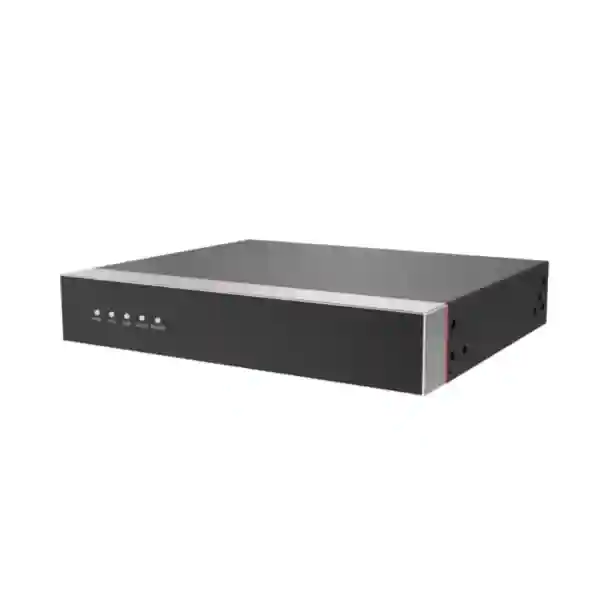
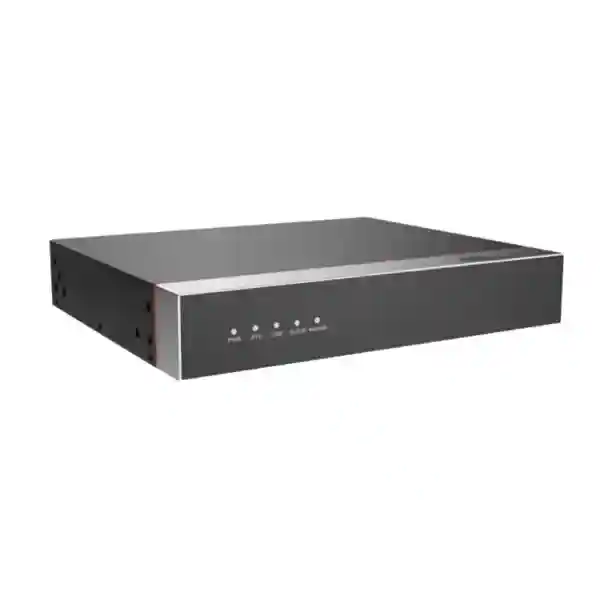
Huawei HiSecEngine USG6530F-D Next-Generation Firewall for Dubai and UAE Networks
The Huawei HiSecEngine USG6530F-D is a compact, desktop-format security gateway designed for enterprise branches, regional offices, retail and service locations, education sites, distributed organizations, and other environments that need high-density Gigabit access with 10 Gigabit uplink capability. It combines stateful firewalling, application-aware security, intrusion prevention, antivirus, URL filtering, bandwidth policy, VPN, encrypted-traffic inspection, threat intelligence integration, and operational visibility in one appliance.
For UAE buyers, the key value is not simply the headline throughput. The correct design depends on inspected traffic, encrypted sessions, WAN architecture, branch-to-head-office VPN load, cloud application usage, user count, growth expectations, and whether the appliance is expected to serve as a converged internet edge or as one control point in a larger security architecture. FourTeck approaches the USG6530F-D as an engineering component that must be sized around real workloads rather than as a generic firewall SKU.
Current model highlights
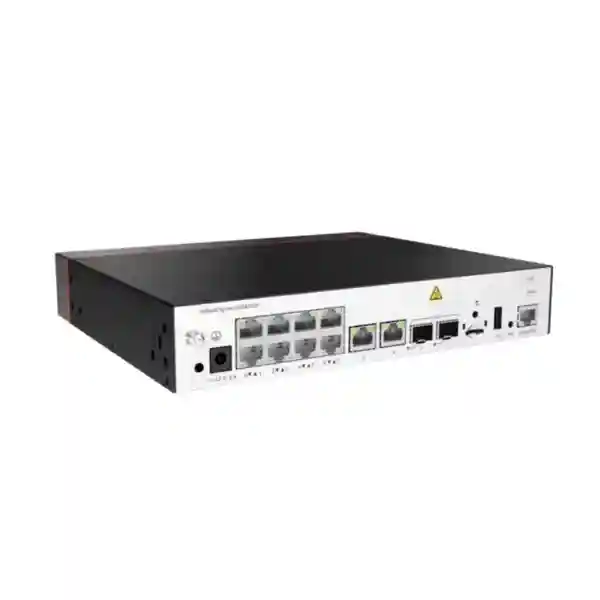
- 10 × GE RJ45 business interfaces
- 2 × 10GE SFP+ uplink interfaces
- Desktop form factor
- 50,000 new sessions per second
- 3.7 Gbps IPsec VPN throughput
- Up to 2,000 IPsec VPN tunnels
- 1.3 Gbps SSL inspection throughput
- 300 Mbps SSL VPN throughput
- 100 default / up to 1,000 SSL VPN users
- Integrated firewall, IPS, AV, URL filtering and bandwidth controls
Two 10GE SFP+ interfaces give the appliance practical headroom for fiber uplinks, aggregation connections and higher-speed routed security zones.
Useful for hub-and-spoke branch links, site-to-site connectivity, cloud interconnect designs and secure connectivity to regional offices.
New-session capacity is especially relevant for user-dense branches, web-heavy traffic, SaaS access and environments with large numbers of short-lived connections.
Encrypted-traffic inspection must be considered separately from raw firewall capacity because TLS decryption is one of the most resource-intensive security functions.
What the Huawei HiSecEngine USG6530F-D is designed to solve
Modern branch security is no longer a matter of allowing trusted LAN traffic out to the internet and blocking unsolicited inbound connections. A typical Dubai office may use Microsoft 365, cloud CRM, hosted ERP, video meetings, browser-based line-of-business systems, IP telephony, remote support tools, cloud storage, guest Wi-Fi, smart building systems and site-to-site connectivity at the same time. Each service creates a different security and performance profile. A firewall at the edge therefore needs sufficient packet handling, session scale, application awareness, VPN capacity and inspection capability to apply policy without becoming a bottleneck.
The USG6530F-D sits in Huawei’s USG6500F family for small enterprises, industry branches and chain-type organizations. Its desktop form factor is appropriate where a full-depth rack appliance is unnecessary or where equipment is installed in a compact communications cabinet. The port mix is particularly useful for organizations that want several directly connected zones or downstream switches while retaining 10 Gigabit uplink options. Ten Gigabit interfaces can be used for high-speed LAN aggregation, a core-switch connection, a fiber handoff through suitable optics, or an internal high-capacity security path, subject to the final network design and supported transceiver selection.
The security engine integrates the functions that would otherwise require multiple devices or software layers: stateful access control, network address translation, application identification, intrusion prevention, malware inspection, web filtering, bandwidth control, anti-DDoS functions, secure remote access and site-to-site VPN. Consolidation is useful only when the platform is correctly sized. Enabling more inspection functions increases processing demand, and encrypted application traffic changes the practical capacity requirement. That is why FourTeck recommends sizing the USG6530F-D against the expected security profile rather than only the ISP circuit speed.
For example, a branch with a 500 Mbps internet circuit can still place heavy demands on a firewall if most traffic is encrypted, users generate many short sessions, multiple VPN tunnels are active, and intrusion prevention and antivirus are applied broadly. Conversely, a branch with a higher nominal WAN speed may have a simpler workload if most traffic is predictable and security controls are applied selectively. The right evaluation considers peak traffic, concurrent sessions, new sessions per second, SSL inspection, IPsec usage, remote users, policy complexity and growth. This engineering approach is more dependable than choosing an appliance only because its basic firewall number exceeds the subscribed bandwidth.
Verified platform specifications and what they mean in practice
| Specification | Huawei USG6530F-D | Engineering relevance |
|---|---|---|
| Fixed business interfaces | 10 × GE RJ45 + 2 × 10GE SFP+ | Supports multiple copper zones and high-speed fiber or aggregation uplinks without requiring an expansion card. |
| Form factor | Desktop | Well suited to compact branch cabinets, wall cabinets and offices that do not need a larger modular chassis. |
| Dimensions | 250 × 210 × 43.6 mm | Allows pre-checking cabinet depth, shelf space, ventilation and cable bend radius before deployment. |
| New sessions per second | 50,000/s | Important for web, SaaS, mobile and transaction-heavy networks where connections are created and closed rapidly. |
| IPv6 new sessions per second | 30,000/s | Provides a reference point for dual-stack and IPv6-forward branch planning. |
| Concurrent sessions | 1,000,000 | Relevant where many clients, applications, cloud endpoints or IoT devices keep simultaneous flows open. |
| IPsec VPN throughput | 3.7 Gbps | A key capacity figure for encrypted site-to-site traffic using the vendor’s stated test profile. |
| Maximum IPsec VPN tunnels | 2,000 | Offers significant tunnel scale for distributed branch, partner or client-to-gateway designs when correctly licensed and configured. |
| SSL inspection throughput | 1.3 Gbps | This number deserves special attention because HTTPS decryption and re-encryption can be the governing sizing metric. |
| SSL VPN throughput | 300 Mbps | Useful for evaluating remote-access scenarios, especially where users access internal applications through encrypted tunnels. |
| Concurrent SSL VPN users | 100 default / up to 1,000 | Highlights the need to verify license entitlement and expected simultaneous remote-user count before procurement. |
| Firewall policies | Up to 3,000 | Suitable for structured branch segmentation while still encouraging disciplined policy design and rule lifecycle management. |
| Virtual firewalls | Up to 20 | Can support logical separation use cases where virtualized firewall contexts are appropriate to the architecture. |
Published performance values are measured under defined laboratory conditions. Actual results depend on packet size, traffic mix, concurrent inspection services, software release, logging, policy complexity, encryption algorithms and deployment design. For procurement, these figures should be treated as engineering references and validated against the intended security profile.
Interface architecture: why 10 × GE RJ45 plus 2 × 10GE SFP+ matters
The USG6530F-D interface layout is one of its strongest practical advantages for branch and edge deployments. Ten Gigabit Ethernet copper interfaces provide sufficient physical separation for common zones without immediately requiring VLAN trunking for every connection. A design can allocate dedicated ports to the WAN handoff, corporate LAN, server segment, voice network, guest network, management segment, CCTV or physical-security network, a secondary ISP, and selected DMZ systems. The exact assignment depends on the topology, but the available copper ports allow designers to choose between physical separation and logical segmentation rather than being forced into one model by a shortage of interfaces.
The two 10GE SFP+ ports are particularly valuable when the firewall connects to a core or distribution switch. Even if the WAN circuit is below 1 Gbps, internal east-west traffic may traverse the firewall for inter-VLAN security. A branch with server workloads, local backup traffic, IP surveillance, high-density wireless, voice and application servers can create more aggregate internal traffic than its internet bandwidth suggests. A 10 Gigabit uplink can prevent the firewall-switch connection from becoming the first physical bottleneck as internal services grow.
Fiber interfaces also help with reach and electrical isolation. In larger offices, warehouses, campuses or multi-floor buildings, the firewall may be separated from a distribution switch by a distance that is inconvenient for copper. With suitable supported transceivers and fiber, the SFP+ uplinks can provide cleaner integration into an optical backbone. Optics selection must be verified for supported transceiver type, wavelength, fiber mode, connector format and distance. FourTeck can coordinate this part of the bill of materials so the firewall, switch, optics and patching are compatible.
For resilient designs, the two high-speed ports can also be considered in dual-uplink architectures. Whether link aggregation, separate routed uplinks, redundant switching or another high-availability method is appropriate depends on the surrounding network. The physical presence of two 10GE interfaces gives the designer options, but redundancy only becomes meaningful when upstream switching, power, cabling, routing and failover behavior are designed as a system. Simply connecting two cables does not automatically create a fault-tolerant edge.
Port planning should therefore happen before the appliance is installed. FourTeck normally maps the intended WAN circuits, LAN zones, VLAN trunks, management access, DMZ requirements and high-speed switch connections into a port allocation plan. This reduces last-minute changes and helps ensure that cable labels, switch configuration, IP addressing, security policies and monitoring all align with the physical design from the first maintenance window.
Security inspection stack: from basic firewalling to application-aware defense
A next-generation firewall earns its value from the controls applied after a connection is permitted. Traditional packet filtering answers questions such as source address, destination address, protocol and port. Those controls remain essential, but modern applications often share common ports, use encryption, connect to dynamic cloud infrastructure and change behavior over time. Application-aware security attempts to identify the service itself and apply policy according to business intent. Huawei states that the USG6500F family can identify more than 6,000 applications and apply control with granularity down to application functions.
This matters in a UAE branch where a security team may want to allow a collaboration platform while restricting specific transfer functions, permit business cloud storage but block unsanctioned alternatives, or apply different bandwidth and security treatment to web conferencing compared with recreational streaming. Application control is most effective when it is combined with identity, network segmentation and an agreed acceptable-use policy. It should not be treated as a substitute for endpoint security or data governance; rather, it adds another enforcement layer at the network boundary.
Intrusion prevention examines traffic for patterns associated with exploitation, malicious payload delivery, command-and-control behavior and other attack techniques. Huawei describes broad CVE coverage, more than 10,000 IPS signatures and support for custom signatures in the USG6500F family. The operational challenge is to enable meaningful protection without creating unnecessary false positives. For that reason, IPS policy should be tied to the exposed services, endpoint types and business applications in each zone. A public web server, employee workstation VLAN, VoIP segment and guest Wi-Fi network do not have identical risk profiles and should not automatically receive identical rules.
Antivirus inspection adds file-based malware detection at the gateway. Huawei’s current product material describes heuristic antivirus capabilities and the ability to inspect deeply compressed files. Gateway antivirus is useful because it can stop known or suspicious content before it reaches some endpoints, but it should complement rather than replace endpoint protection, secure email controls, application allowlisting and backup. Layered security remains important because no single inspection engine sees every attack path or every encrypted application context.
URL filtering and web-category controls add policy around browsing destinations. They can reduce exposure to known malicious, inappropriate or non-business sites and provide a manageable method of controlling broad classes of web access. Cloud URL reputation can change faster than manually maintained allow and deny lists, but policy still needs governance. FourTeck typically recommends defining business exceptions, ownership for policy changes, logging retention expectations and an escalation process before broad web controls are enabled. This prevents the firewall from becoming a collection of undocumented exceptions that are difficult to audit later.
SSL inspection: the sizing factor many firewall projects underestimate
Most modern web and SaaS traffic is encrypted with TLS. Encryption protects confidentiality in transit, but it also hides content from network security controls unless the firewall can inspect the session. SSL inspection works by decrypting supported traffic according to policy, analyzing it, and then establishing protected communication onward. This is computationally expensive because the appliance performs cryptographic operations in addition to normal forwarding, session tracking and security inspection. It also introduces certificate-management and privacy considerations that must be designed carefully.
Huawei’s current R25C10 data for the USG6530F-D lists 1.3 Gbps SSL inspection throughput. That figure is far more relevant than raw port speed if the deployment intends to decrypt a large share of internet traffic. A 10GE physical interface does not imply that the appliance can inspect 10 Gbps of TLS traffic with every security function enabled. The correct comparison is the expected encrypted traffic volume against the SSL inspection capacity, with margin for concurrency, certificate operations, logging, additional security services and future growth.
Selective inspection is often the practical approach. Organizations may choose to decrypt business categories that benefit strongly from security inspection while excluding traffic where decryption is technically unsuitable, contractually restricted or subject to privacy requirements. Financial services, healthcare portals, certificate-pinned applications and some authentication flows may need special handling. The final policy should be approved by the organization’s security, legal and compliance stakeholders rather than being enabled indiscriminately.
Certificate trust is another operational dependency. Managed endpoints typically need the organization’s trusted inspection certificate distributed through directory, mobile device management or endpoint management systems. Unmanaged guest devices cannot always be treated the same way. If certificate deployment is incomplete, users may see browser warnings or applications may fail because they do not trust the inspection chain. A successful project therefore links firewall configuration with endpoint administration.
FourTeck can help define the SSL inspection scope during design. The objective is to identify which traffic should be decrypted, which users and devices are managed, which applications are sensitive to interception, what throughput margin is required, and how troubleshooting will be performed. This up-front work is more effective than turning on full decryption globally and discovering performance or compatibility issues after the change window.
VPN architecture for UAE branches, headquarters and remote users
Site-to-site IPsec
Use encrypted tunnels between Dubai branches, regional offices, data centers, cloud gateways or partner networks. Capacity planning must consider aggregate encrypted traffic rather than the bandwidth of a single tunnel.
Remote user access
SSL VPN can provide controlled access for mobile users and support teams. Verify simultaneous-user counts, licensing, authentication, endpoint policy and application requirements before rollout.
Multi-branch overlays
The platform’s tunnel scale can support distributed organizations, but routing design, failover, addressing and operational monitoring determine whether the result remains manageable as branches grow.
Cloud interconnect
IPsec can extend private connectivity toward supported cloud VPN gateways when dedicated circuits are unavailable or as a backup path, subject to cloud-side compatibility and route design.
The USG6530F-D is listed with 3.7 Gbps IPsec VPN throughput using Huawei’s stated AES-256 plus SHA-256 test profile and supports up to 2,000 IPsec VPN tunnels. Those numbers give substantial room for a branch-class device, but an actual VPN design is governed by topology. A headquarters appliance terminating traffic from many branches sees aggregate load. A branch appliance sending most business traffic through a central security hub may spend a large share of its processing capacity on encryption. A direct-internet-access branch with only selected private routes in the tunnel may have a very different profile.
Routing decisions also matter. Static routes are straightforward for small environments but become hard to manage when the number of sites and failover paths increases. Dynamic routing across supported VPN designs can simplify convergence, but it requires consistent addressing and clear route ownership. Overlapping private IP ranges are especially problematic in acquisitions, temporary project networks and partner connectivity. These issues should be resolved during design rather than hidden with ad-hoc NAT rules.
Remote-access VPN requires a separate sizing discussion. The USG6530F-D has a published SSL VPN throughput of 300 Mbps and a default concurrent user allocation of 100, with a stated maximum of 1,000. A project that expects hundreds of simultaneous remote users should verify the required licenses, authentication workflow and per-user application behavior. A remote user who only accesses an internal web portal consumes far less bandwidth than one who transfers design files, uses remote desktop intensively or accesses video-heavy applications.
Authentication is equally important. VPN access should use strong identity controls and, where supported in the customer’s environment, multi-factor authentication. User groups should map to least-privilege network access rather than placing all remote users into one broad trusted zone. Logging should make it possible to answer who connected, when, from where, and what access was granted. FourTeck can incorporate these controls into a migration plan so the VPN service is not merely functional but operationally supportable.
Application control, bandwidth management and intelligent uplink use
Branch performance problems are not always caused by insufficient ISP bandwidth. They are often caused by competition between critical and non-critical applications, poorly understood cloud usage, backup traffic during business hours, software updates, streaming, or a failed WAN link pushing all traffic through a smaller secondary circuit. The USG6500F family combines application identification with bandwidth and policy controls, which allows network teams to define how traffic should behave rather than simply permitting or denying it.
A practical policy model begins with business categories. Voice, ERP, CRM, payment services, remote support and core collaboration tools may require predictable latency or minimum bandwidth. Bulk software distribution, guest internet access and recreational streaming can usually tolerate lower priority. Backup replication might be allowed at full rate outside working hours but shaped during the day. By linking application awareness with bandwidth control, the firewall can help protect user experience during congestion without buying bandwidth solely to accommodate uncontrolled peaks.
Huawei also describes intelligent uplink selection for the family, including policy-based selection and load-balancing methods based on bandwidth ratio and link health. This is useful in Dubai offices that use dual internet circuits for continuity. A strong dual-WAN design should decide how sessions behave during failure, whether inbound services depend on a particular public address, whether VPN tunnels are duplicated across both ISPs, how DNS records are managed, and what traffic should prefer which link during normal operation.
Health checking must be designed to detect meaningful failure. A physical Ethernet link can remain up while the provider path beyond the local router is broken. Monitoring only link state may therefore fail to trigger a required switchover. At the same time, overly aggressive health probes can cause unnecessary route flapping. Testing should cover complete provider failure, partial reachability loss, DNS failure where relevant, tunnel failure, restored service, and return-to-primary behavior.
FourTeck can integrate the firewall with a broader branch connectivity plan rather than treating WAN failover as an isolated checkbox. That plan can include routing, NAT, VPN binding, DNS dependencies, public services, bandwidth policy and monitoring. For organizations that also need switching, server or infrastructure support, FourTeck’s UAE IT services team can align the security gateway with the surrounding network and operational support model.
Network segmentation: turning one branch into controlled security zones
A firewall delivers more value when it controls meaningful trust boundaries. Many offices still have one large internal network where employee laptops, IP phones, printers, cameras, access-control devices, guest services, servers and management interfaces can communicate too freely. This architecture simplifies initial setup but increases lateral-movement risk. If one endpoint is compromised, the attacker may be able to discover and reach systems that have no business reason to accept traffic from that device.
The USG6530F-D can be used to enforce segmentation between VLANs or physically separated interfaces. A sensible branch model might include a corporate user zone, server zone, voice zone, guest zone, IoT or facilities zone, security camera zone, management zone and DMZ. The exact number of zones should be driven by different trust levels and access requirements. Creating dozens of VLANs without a clear policy model adds complexity, while placing everything together sacrifices security. The design goal is understandable separation that maps to business risk.
Inter-zone policy should follow least privilege. Corporate users may need DNS, directory services, printing and selected application access to servers. Guest devices normally need internet access but no route to internal resources. Cameras may need to reach the video recorder and time servers but not employee workstations. Network equipment management interfaces should accept administration only from authorized management hosts. Voice endpoints may require access to call control and external SIP services while being blocked from unrelated internal networks.
Segmentation also improves visibility. When traffic between zones crosses a policy enforcement point, logs show which group initiated a connection and which service it attempted to reach. This can make troubleshooting easier and gives security teams clearer evidence during an incident. The quality of that visibility depends on time synchronization, meaningful object names, log retention and integration with monitoring or SIEM systems.
For deployments that include on-premises application servers, virtualization hosts, storage or backup systems, the firewall policy should be coordinated with the server architecture rather than designed independently. FourTeck can align edge security with infrastructure planning through its Server Dubai practice, helping ensure that VLAN design, routing, service ports, backup flows and administrative access are documented before cutover.
High availability and business continuity considerations
A firewall is often placed directly in the path of every critical application, which means it can become a single point of failure if resilience is not considered. Business continuity planning therefore starts by deciding how much downtime the site can tolerate. A small branch may accept a short restoration window and keep a configured spare. A revenue-generating location, call center or operational facility may require an active-standby architecture, redundant WAN paths and resilient switching so that a single equipment fault does not disconnect the site.
High availability is more than purchasing a second firewall. The design must address synchronization, interface topology, switch connectivity, WAN circuit handoff, routing, NAT behavior, VPN termination, management addresses, software alignment and failure detection. Power resilience matters as well. If both firewalls, both switches and both ISP handoff devices are connected to one power distribution unit or one UPS, the network still has a common failure point. Physical diversity should be considered where the business case requires it.
Maintenance behavior is another reason to design redundancy. Security gateways require software maintenance, configuration changes and sometimes hardware replacement. A resilient pair can reduce business impact during planned work, but only if failover is tested under realistic conditions. Testing should confirm that established or new connections behave as expected, dynamic routes reconverge, tunnels re-establish, monitored services remain available, and the secondary unit can carry the actual load.
Configuration backup is required even when a second appliance is present. Administrators should maintain versioned backups before significant changes, record license and support information, document interface mappings and keep a recovery procedure that can be followed by someone other than the original engineer. This becomes especially important in multi-branch environments where configurations share a common standard but still contain site-specific addressing and ISP details.
FourTeck can scope the USG6530F-D as a standalone unit, resilient pair or component of a wider continuity plan. The choice should reflect the cost of downtime, available rack or shelf space, power design, provider diversity and support expectations. For broader UAE procurement and infrastructure coordination, customers can also use the FourTeck UAE site as a reference point for related enterprise IT services.
Licensing, subscriptions and support: what should be confirmed before ordering
The appliance hardware is only one part of a complete next-generation firewall purchase. Security services such as intrusion prevention updates, antivirus intelligence, URL categorization, threat feeds, remote-access entitlement, advanced management or support coverage may depend on the selected commercial bundle, software release and service contract. Because vendor packaging can change over time, the correct procurement process is to define the required capabilities first and then quote the exact hardware and subscriptions needed for that use case.
A common procurement mistake is buying the base appliance and assuming every security function will remain fully updated indefinitely. The firewall may be technically capable of running a feature, but signature, reputation or cloud intelligence services can require an active subscription to stay current. Another mistake is assuming the maximum SSL VPN user count is available with the default entitlement. Huawei lists 100 default users and a maximum of 1,000 for this model, so remote-access projects should explicitly confirm the needed user scale in the quote.
Support coverage should match the importance of the site. A non-critical lab can tolerate a different replacement and response model from a customer-facing branch. The quotation should clearly state support duration, renewal expectations, hardware replacement terms and access to software updates. Organizations operating many locations may benefit from aligning subscription expiry dates so renewals can be managed as one planned program rather than as scattered individual events.
Software release planning also belongs in the lifecycle discussion. Firewalls should not remain indefinitely on old firmware merely because the network is stable. Security fixes, interoperability improvements and feature changes need to be reviewed. At the same time, production devices should not be upgraded casually without reading release notes, checking compatibility, taking backups and defining rollback steps. A maintenance policy can define how often releases are assessed, who approves upgrades and how emergency security fixes are handled.
When requesting a FourTeck quote, provide the appliance model, site count, WAN bandwidth, remote-user count, VPN requirements, desired security services, support term and any high-availability requirement. This gives the presales team enough context to propose a complete bill of materials rather than a bare SKU that may omit critical subscriptions or accessories.
Sizing methodology for the USG6530F-D
Firewall sizing should begin with measured or defensible traffic data. Start with current internet bandwidth and peak utilization, but do not stop there. Identify internal traffic that will cross security zones, current concurrent connections, peak new connections, VPN load, encrypted application share, number of users and devices, growth plans, and which inspection profiles will be enabled. If monitoring data is unavailable, use conservative assumptions and include headroom rather than treating the circuit speed as the only requirement.
The first question is whether the platform has enough capacity for the expected security stack. If the site uses basic stateful policy and NAT with limited inspection, the appliance may handle a much higher traffic volume than it can when SSL decryption, IPS, antivirus, application control and extensive logging are active together. Published NGFW and threat-protection results, where available for the relevant software revision, should be compared against the intended profile. The 1.3 Gbps SSL inspection figure is especially important for HTTPS-heavy environments.
The second question is session behavior. A site with 150 users can generate more sessions than a site with 500 users if its applications open many short-lived connections. Browser tabs, cloud APIs, mobile applications, content delivery networks and collaboration tools can create large numbers of parallel sessions. The USG6530F-D’s published one-million concurrent-session capacity and 50,000 new sessions per second provide useful branch scale, but engineers should still consider unusually bursty traffic such as public Wi-Fi, call centers, e-commerce terminals or large lab environments.
The third question is VPN topology. If the unit is used as a central VPN concentrator for many sites, aggregate encrypted throughput can become the dominant load. If it is a branch endpoint with one or two tunnels and mostly local internet breakout, VPN demand may be modest. Remote-access usage adds another dimension because the published SSL VPN throughput is 300 Mbps. Estimate simultaneous users and application behavior rather than counting named users who might connect at different times.
The fourth question is growth. A firewall normally remains deployed for several years. Bandwidth upgrades, additional cloud services, more users, new branches and stronger inspection policies can increase load well before the hardware reaches end of support. A sizing exercise should therefore include realistic growth headroom. Buying the smallest model that barely meets today’s peak can create an expensive replacement cycle after the next ISP upgrade.
FourTeck can help validate this sizing with a structured worksheet covering WAN, users, applications, inspection, VPN, ports, resilience and lifecycle. Customers specifically comparing firewall options in Dubai can review related security offerings through Firewall Dubai, while the final recommendation can be matched to the measured workload rather than to a generic user-count chart.
Deployment topology 1: single-site Dubai office with dual ISP
A common UAE deployment places the USG6530F-D between two internet services and the internal switching layer. One WAN interface terminates the primary business internet circuit while another handles a secondary provider. The corporate LAN reaches the firewall through a high-speed 10GE connection to the core switch. VLANs separate users, servers, voice, guest Wi-Fi and facilities devices. Policies control inter-VLAN communication as well as internet access.
In this topology, the firewall performs NAT, security inspection, application control, URL policy, bandwidth management and ISP failover. The primary circuit can carry normal business traffic while the secondary remains available for failure or selected traffic classes. The health-check policy should verify upstream reachability rather than only local carrier. Business-critical SaaS and voice services may be given higher priority, while guest traffic is rate-limited so it cannot consume the backup circuit during an outage.
Guest Wi-Fi should be isolated from internal networks. Corporate wireless can map to employee VLANs, while infrastructure management is placed in a restricted zone accessible only from authorized administrator systems. Printers and IoT devices can be segmented according to business need. If local servers exist, only the required ports are permitted from user networks. Internet-published applications should reside behind carefully defined inbound policy and, where appropriate, a DMZ rather than on the general user subnet.
The two 10GE SFP+ interfaces are useful when the internal core has fiber or high-speed uplink capability. One can carry a routed or trunked connection to the core, while the second remains available for another high-speed segment, redundant path or future expansion depending on design. Copper interfaces can serve the WAN handoffs and lower-speed zones. This arrangement uses the firewall’s port density efficiently while keeping the high-speed links focused on aggregation.
Before cutover, the migration plan should document public IP addresses, provider gateway information, DNS dependencies, NAT rules, VPN peers, old firewall policies, DHCP services, static routes and monitoring systems. The new appliance should be staged with a known-good baseline and tested in a controlled window. A rollback plan should specify how the original gateway can be restored if an unexpected application dependency appears. This level of preparation reduces the risk of treating the change as a simple cable swap when the firewall is actually involved in multiple application paths.
Deployment topology 2: distributed branches connected to a regional hub
The USG6530F-D is also well suited to organizations that operate multiple branches and need secure connectivity to a central office, data center or cloud environment. Each branch establishes one or more IPsec tunnels to the hub. Business applications use the private encrypted path while selected internet services can break out locally. This hybrid approach can reduce unnecessary backhaul compared with sending every SaaS session through the head office, while still keeping internal systems reachable through controlled routes.
Addressing discipline becomes important as the site count grows. Every branch should receive non-overlapping subnets from a documented plan. Separate ranges for users, voice, servers, management and guest access make security policies easier to standardize. If branches are added through acquisitions and overlapping addresses already exist, the network team should resolve the overlap with renumbering or carefully designed translation rather than allowing a growing collection of exceptions to undermine routing clarity.
Templates can improve consistency. Common object names, zone definitions, logging settings, VPN parameters and application policies make troubleshooting easier across sites. However, templates should leave room for legitimate local differences such as ISP addressing, branch subnets and unique applications. The goal is controlled standardization, not forcing every location into an identical configuration when business requirements differ.
A regional hub must be sized for aggregate traffic from all branches. If many USG6530F-D units are deployed at remote locations, the central firewall may need to be a larger platform with more VPN, session and inspection capacity. Redundancy should also be stronger at the hub because its failure affects multiple offices. This is a common architecture decision: branch firewalls are chosen for local workloads, while the data-center or headquarters firewall is chosen for the sum of all branch traffic plus local users and public services.
Monitoring should provide a per-branch view of tunnel status, latency, packet loss, bandwidth and security events. The operations team needs to distinguish an ISP outage from a firewall problem, remote power issue or routing failure. Clear device naming, site identifiers, synchronized time and standardized alerting help the support team act quickly. FourTeck can include these operational elements in deployment documentation so multi-site growth does not create a management burden that is larger than the technical benefit of the VPN design.
Deployment topology 3: segmented services and small data-center edge
Huawei positions the USG6500F family for both enterprise border and small data-center border scenarios. In a smaller server environment, the USG6530F-D can separate internet-facing services from application tiers and administrative networks while also providing secure remote connectivity. The 10GE SFP+ interfaces are particularly useful when the firewall attaches to high-speed server or aggregation switches. The design must still respect the appliance’s inspected-traffic limits; 10 Gigabit physical connectivity is an interface capability, not a guarantee that every security workload will operate at line rate.
A simple three-zone data-center pattern includes an external or transit zone, a DMZ and an internal application zone. Public services such as reverse proxies, web gateways or VPN endpoints sit in the DMZ. Backend application and database servers remain in more trusted zones and accept only the specific flows required by the application. Administrative access arrives through a management network or approved remote-access method. This model reduces the number of systems directly reachable from the internet and limits the impact of a compromised public server.
Security inspection can be tailored by direction. Inbound traffic to public services may receive IPS and application-aware inspection focused on the exposed protocols. Outbound server traffic can be restricted to software repositories, update services, DNS, NTP and business integrations rather than allowing unrestricted internet access. Management interfaces should generally not be exposed publicly. Logs from the firewall, servers and endpoint controls can be sent to a centralized monitoring system for correlation.
Backup and replication traffic deserve special attention. If large backups cross the firewall between security zones, they can consume significant throughput even when internet usage is low. The same applies to storage replication, virtualization migration and software distribution. These flows should be included in the sizing calculation or routed within an appropriately trusted internal architecture if inspection is not required. Performance issues often occur when a firewall is sized only for WAN traffic but later placed between high-volume internal networks.
For organizations running local compute infrastructure in Dubai, FourTeck can coordinate the firewall design with switching, virtualization, storage and backup architecture. The result is a security boundary that reflects application dependencies and operational needs rather than an isolated device configuration created after the server environment is already in production.
Operations, logging and day-two management
A successful firewall deployment is judged over years, not only on the day of installation. Day-two operations include policy requests, VPN changes, ISP upgrades, user onboarding, application troubleshooting, signature updates, firmware maintenance, incident response and audit evidence. The configuration should therefore be organized so another qualified engineer can understand it without reverse-engineering hundreds of anonymous objects and undocumented rules.
Naming standards are a simple but powerful control. Address objects should indicate the site, zone and purpose. Service groups should describe the application rather than the port number alone. Policy names should identify the source, destination and business purpose. Temporary rules should have an owner and expiration date. Comments should explain exceptions. These practices reduce the risk of security rules accumulating indefinitely because nobody remembers why they were created.
Logging should be selective but sufficient. Denied traffic, administrative actions, authentication events, VPN status, threat detections and important permitted flows can all be valuable. Logging every session at maximum detail may create unnecessary storage and processing overhead, while logging too little can leave investigators without evidence. The appropriate balance depends on compliance requirements, SIEM capacity and incident-response needs. Time synchronization is essential because logs from different systems cannot be correlated reliably if clocks drift.
Policy review should be scheduled. Unused objects and rules can be removed after validation. Broad any-to-any permissions should be reduced where possible. Expired VPN peers and old public NAT entries should not remain indefinitely. Security subscriptions and support dates should be tracked centrally. Configuration backups should be taken before major changes and stored securely outside the appliance.
Centralized operational tooling can be particularly valuable in multi-branch environments. Huawei describes centralized control and unified security management options for the USG6500F family. The suitability of a specific management platform depends on the customer’s installed Huawei ecosystem, software versions, site count and operational model. FourTeck can assess whether local management is sufficient or whether a controller-based approach would produce meaningful operational benefits.
Migration from an existing firewall: a controlled cutover process
Replacing an existing firewall is rarely a one-to-one configuration exercise. Older devices often contain years of accumulated objects, disabled rules, temporary exceptions, outdated VPN peers and undocumented NAT entries. Migrating all of that without review reproduces old risk on new hardware. A better process begins with discovery: export the existing configuration, identify live interfaces, map public and private addresses, document active VPNs, review policy hit counts where available, and list applications that rely on inbound or outbound translation.
The next step is normalization. Duplicate objects are consolidated, obsolete addresses are identified, broad policies are reviewed, and required services are grouped logically. Rules can then be rebuilt in a clearer structure on the USG6530F-D. This is also the right time to introduce segmentation improvements that were previously impossible because of limited ports or an older topology. However, major architecture changes should be staged carefully; replacing the firewall and redesigning the entire LAN in one maintenance window can create too many variables for safe troubleshooting.
VPN migration requires coordination with remote peers. If a site-to-site tunnel uses public IP addresses, pre-shared keys, specific encryption proposals or route definitions, the remote side may need changes at the same time. Where possible, a parallel tunnel can be prepared before the primary cutover. Remote-access VPN requires user communication, client deployment, certificate preparation and authentication testing. A cutover is smoother when users receive instructions before the old service is removed.
The staged firewall should be tested offline with management access, interface configuration, routing, DNS, NTP, logging, administrator accounts and core policies already prepared. During the change window, technicians then move WAN and LAN connections, validate basic reachability, confirm NAT, test business applications, verify VPNs and review logs for unexpected denies. The test plan should list named applications and owners rather than relying on a generic statement that ‘the internet works.’
A rollback plan must remain practical until validation is complete. The old firewall configuration should be backed up, cable locations labeled, and the physical reconnection process understood. Once the new device is stable, post-cutover review can remove temporary diagnostic rules, tighten exceptions created during migration and update network diagrams. This disciplined process turns the firewall replacement into a controlled infrastructure change rather than a high-pressure troubleshooting event.
UAE procurement and deployment considerations
Power and cabinet planning
Confirm available AC power, UPS capacity, cabinet depth, ventilation, shelf or mounting arrangement, patching and access for service before installation.
Optics and cabling
For 10GE SFP+ links, verify supported transceivers, fiber type, distance, switch compatibility and patch-cord connector format as one bill of materials.
ISP handoff
Document whether each provider hands off copper or fiber, static public addresses, routed blocks, VLAN tags, PPP requirements and upstream gateway information.
Lifecycle ownership
Assign responsibility for subscription renewal, firmware review, policy requests, backups, monitoring and incident escalation before the appliance enters production.
Dubai and UAE projects frequently involve coordination between the customer, building IT team, telecom provider, structured cabling contractor, managed-service provider and application vendors. A firewall installation can be delayed even when the appliance is ready if the ISP circuit information is incomplete, fiber optics are mismatched, the core switch port is not prepared or the maintenance window has not been approved. A procurement checklist should therefore cover dependencies outside the firewall box.
Lead time should also be considered for appliances, support contracts and optics. For multi-site rollouts, it may be more efficient to standardize a branch kit containing the firewall, required transceivers, patch leads, console cable, labeling scheme and installation documentation. Staging can then be performed centrally so each site receives a known configuration. This reduces field-engineering time and configuration drift.
Documentation should be part of the delivered solution. A useful handover pack includes the logical network diagram, interface and VLAN table, public IP allocation, routing summary, VPN peer list, security-zone matrix, administrative access method, backup procedure, support details and change-history baseline. Passwords and private keys should be handled securely and not stored in ordinary unprotected project documents.
FourTeck can support the process from design through procurement and implementation. The aim is to make the Huawei HiSecEngine USG6530F-D a controlled part of the customer’s network lifecycle, with clear ownership and a documented path for expansion, upgrades and support.
Security-policy design principles for a maintainable deployment
Firewall security is not improved simply by increasing the number of rules. A strong rule base is small enough to understand, specific enough to enforce business intent, and documented enough to maintain. The best starting point is a zone matrix. List the major zones on both axes, then define which application flows are actually required between them. This reveals unnecessary trust and gives stakeholders a clear structure for approving access.
Rules should be ordered according to the platform’s policy-processing behavior and operational priorities. Highly specific exceptions should not be hidden behind broad rules that match first. Internet egress rules can be separated from inter-zone rules and inbound publication rules. Administrators should avoid objects named after temporary ticket numbers with no business meaning. Instead, object groups should reflect applications, departments or service roles that remain understandable months later.
Change control matters because firewall rules are security-critical production code. Each change should have an owner, purpose, implementation plan, test plan and rollback approach. Emergency rules can be necessary during incidents, but they should be reviewed afterward. Temporary vendor access should expire automatically where possible or be tracked for removal. Over time, this discipline prevents the policy from turning into a permanent set of historical exceptions.
Logging can be tied to risk. Denied traffic at important trust boundaries, administrative actions, threat detections and inbound published services deserve strong visibility. High-volume low-risk flows may need summarized logging so storage remains manageable. The operations team should know where logs are retained and how long they are searchable. If a security incident occurs, a firewall log that rolled over hours earlier provides limited value.
Finally, policy design should match business ownership. The network team can implement a rule, but the application owner should confirm the required sources, destinations and services. This keeps firewall engineers from making business-access decisions in isolation. FourTeck can structure the initial rule base around this method and provide a cleaner foundation for ongoing customer change management.
IPv6 readiness and dual-stack planning
Even organizations that primarily use IPv4 should consider IPv6 behavior during firewall deployment. Operating systems and cloud applications may enable IPv6 automatically, internet providers may introduce IPv6 services, and unmanaged devices can communicate over protocols that administrators are not actively monitoring. A firewall policy should therefore make an intentional decision about IPv6 rather than assuming it is irrelevant because internal addressing documentation only lists RFC1918 IPv4 networks.
Huawei publishes IPv6 session performance for the USG6530F-D, including 30,000 IPv6 new sessions per second in the current data set. This indicates that the platform is designed for dual-stack environments, but operational readiness still depends on address planning, router advertisements, DNS records, VPN requirements and security policies. An IPv4 rule base is not automatically a complete IPv6 rule base; objects and access paths must be reviewed explicitly.
If the organization is not ready to use IPv6, the correct response is controlled handling rather than ignoring it. Unnecessary IPv6 services can be restricted, and monitoring can alert the team if unexpected IPv6 traffic appears. If IPv6 is being introduced, security policy should be created in parallel with routing. Application owners should confirm whether services are reachable over both protocols and whether security controls produce equivalent outcomes.
Dual-stack troubleshooting requires staff awareness because a client may prefer IPv6 even when the administrator expects IPv4. A service failure may therefore follow a different route or DNS record from the one being tested manually. Monitoring, packet capture and logging should make the protocol visible. Change documentation should record whether an application is IPv4-only, IPv6-capable or dual-stack.
Planning this early avoids a future migration where IPv6 has to be added as an afterthought to a firewall configuration built entirely around IPv4 assumptions. The USG6530F-D can be positioned as part of that gradual transition while maintaining explicit security policy on both protocol families.
How to evaluate whether the USG6530F-D is the right model
The USG6530F-D is a strong fit when a branch needs a compact appliance, several Gigabit copper zones, 10 Gigabit uplink capability, integrated next-generation security and meaningful VPN scale. It is particularly attractive when the organization already uses Huawei networking or wants a consistent Huawei security architecture across branches. Its one-million-session scale and 50,000 new sessions per second are substantial for many office environments, while 3.7 Gbps IPsec capacity provides room for encrypted inter-site connectivity.
The model should be examined more carefully when the design expects sustained multi-gigabit encrypted inspection, very high remote-access throughput, large public-service workloads, heavy east-west data-center inspection or rapid growth beyond branch scale. In those cases, a larger platform may provide more comfortable headroom. The correct comparison should use security-service throughput, sessions, SSL inspection and VPN requirements rather than only the number of ports or raw firewall forwarding figures.
Physical constraints also influence the decision. The 250 × 210 × 43.6 mm desktop chassis is compact, but installation still needs ventilation and stable placement. If the customer requires formal rack mounting, redundant internal power supplies or a specific high-availability hardware format, those requirements should be verified against the intended model and accessories. A desktop appliance can be excellent for a branch while still being the wrong physical choice for a standardized data-center rack design.
Licensing and operations are another decision point. If the customer needs the full security stack, threat intelligence and remote-access scale, the quote must include the required subscriptions and entitlements. If the IT team expects centralized management across many branches, the management architecture should be confirmed at the same time. Procurement should therefore compare complete solution cost and operating model, not just the appliance purchase price.
FourTeck can compare the USG6530F-D against adjacent firewall options using the customer’s actual bandwidth, inspection scope, interfaces, VPN topology, branch count and support expectations. This produces a defensible sizing decision and helps avoid both under-sizing and unnecessary over-specification.
Implementation checklist before the change window
Network inputs
- WAN public IPs and gateways
- LAN VLAN and subnet list
- Static and dynamic routes
- DNS, DHCP and NTP dependencies
- Core-switch trunk or routed-link design
Security inputs
- Zone trust model
- Application access matrix
- Inbound NAT requirements
- SSL inspection scope
- IPS, antivirus and URL policy
VPN inputs
- Remote peer public addresses
- Encryption and authentication settings
- Interesting traffic and route lists
- Remote-user groups
- MFA and identity dependencies
Operational inputs
- Admin and management access
- Logging and SIEM destination
- Configuration backup location
- Support and subscription records
- Monitoring and alert ownership
A pre-change review should confirm that each item has an owner. Missing information does not always justify postponing a project, but it should be identified as a risk with a clear workaround. For example, if an application owner cannot confirm required ports, a temporary observation rule may be safer than an unrestricted permanent rule. If a VPN peer cannot be changed during the firewall window, migration may need a staged public IP or parallel tunnel. Good implementation planning converts uncertainty into explicit decisions.
Why buy and deploy through FourTeck
A firewall purchase has two outcomes: the appliance arrives, and the security architecture works. FourTeck focuses on the second outcome. The presales process can validate whether the USG6530F-D has the right port density, inspection headroom, VPN capacity and licensing for the site. The implementation process can then map those requirements into zones, interfaces, routes, policies, logging and migration steps.
For new sites, FourTeck can coordinate firewall deployment with the broader network build. For replacement projects, the team can review the current configuration, identify dependencies and create a cutover plan. For multi-site organizations, the design can establish branch standards so every site does not become a unique configuration. This standardization improves support because engineers know where to look for common objects, VPN settings and monitoring conventions.
Customers should also consider post-deployment support. A firewall that is well configured on day one can still degrade operationally if subscriptions lapse, policy changes accumulate or firmware is never reviewed. FourTeck can help customers define a support approach that includes backups, change control, health checks, upgrade planning and escalation. The scope can be aligned to the customer’s internal IT capability rather than forcing every organization into the same service model.
The broader FourTeck ecosystem is useful when a security project overlaps with servers, switching, voice, wireless, cabling or managed IT requirements. This can reduce coordination effort because the firewall design is considered alongside the systems it protects. For organizations with regional requirements beyond the UAE, the FourTeck global site provides an additional reference for wider technology engagement.
To receive an accurate USG6530F-D quotation, share the site location, number of users and devices, internet circuit speeds, VPN requirements, desired security subscriptions, remote-access user count, interface needs and support term. If replacing an existing firewall, include the current make and model plus any known limitations. These details allow the proposal to address the actual network rather than relying on a generic product bundle.
Decision recap: what the USG6530F-D brings to a Dubai branch
Compact but well connected
Ten GE RJ45 interfaces plus two 10GE SFP+ ports give the platform flexibility for multiple zones, dual WAN and high-speed switch integration in a desktop chassis.
Strong VPN profile
A published 3.7 Gbps IPsec figure and up to 2,000 tunnels make the appliance practical for branch interconnect, regional private access and distributed enterprise topologies.
Integrated NGFW controls
Firewalling, application control, IPS, antivirus, URL filtering, bandwidth management and encrypted-traffic inspection allow one policy point to enforce multiple security layers.
Needs workload-based sizing
SSL inspection, threat protection and remote-access requirements should drive model selection. Physical 10GE ports do not remove the need to calculate inspected throughput.
For many small and mid-sized enterprise branches, the USG6530F-D offers a balanced combination of interface density, session capacity, VPN scale and integrated inspection. Its suitability should still be confirmed against the customer’s security profile, especially where most traffic is HTTPS, remote access is heavy or the firewall is expected to inspect high-volume internal traffic between server and user networks.
Quotation input checklist
Providing the information below allows FourTeck to prepare a more accurate hardware, subscription and implementation proposal for the Huawei HiSecEngine USG6530F-D.
Site and bandwidth
- Dubai/UAE site location
- Primary and backup ISP speeds
- Number of users and devices
- Expected annual growth
- Any internal 10GE requirement
Security scope
- IPS and antivirus requirement
- URL filtering requirement
- Application-control requirements
- SSL inspection percentage
- Logging or SIEM destination
VPN scope
- Number of site-to-site tunnels
- Aggregate encrypted bandwidth
- Remote-user count
- Required authentication method
- Cloud VPN peers if any
Commercial scope
- Single unit or HA pair
- Required support term
- Security subscription duration
- Optics and accessories
- Installation or migration service
Plan the USG6530F-D around your real traffic, not a generic user count
FourTeck can review your WAN circuits, branch topology, VLANs, security inspection profile, VPN requirements, remote-user count, current firewall configuration and growth targets. The result can include the correct Huawei model, required subscriptions, optics, implementation scope, migration steps and support plan for your Dubai or UAE deployment.
Model validation • license scope • interface map • VPN design • migration plan • rollout support • lifecycle guidance


Reviews
There are no reviews yet.