
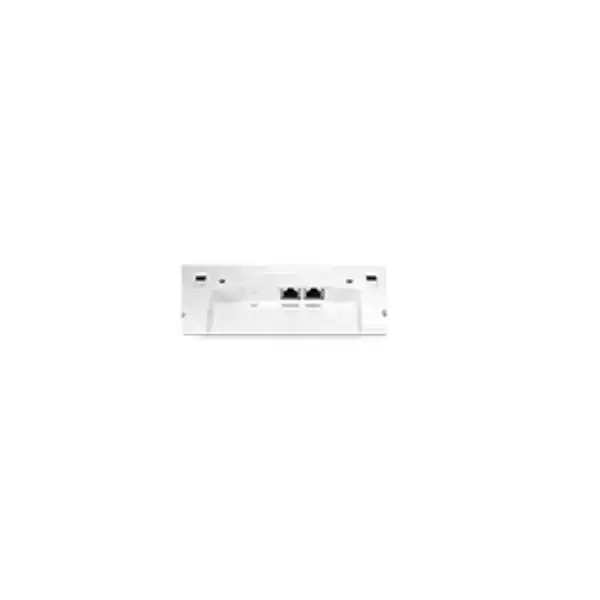
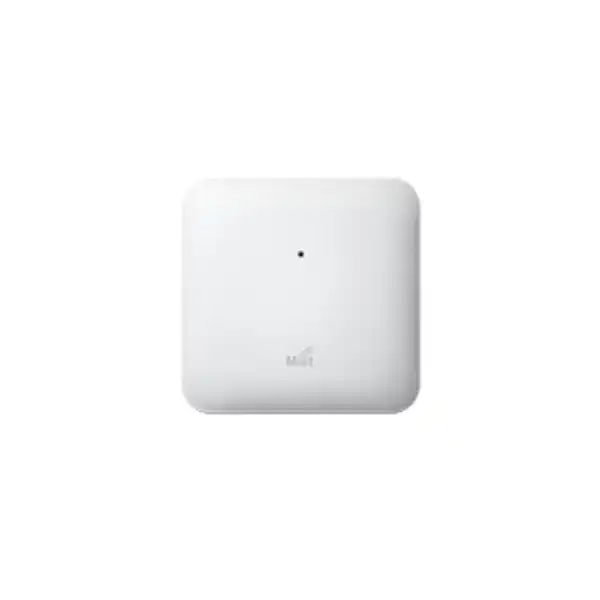
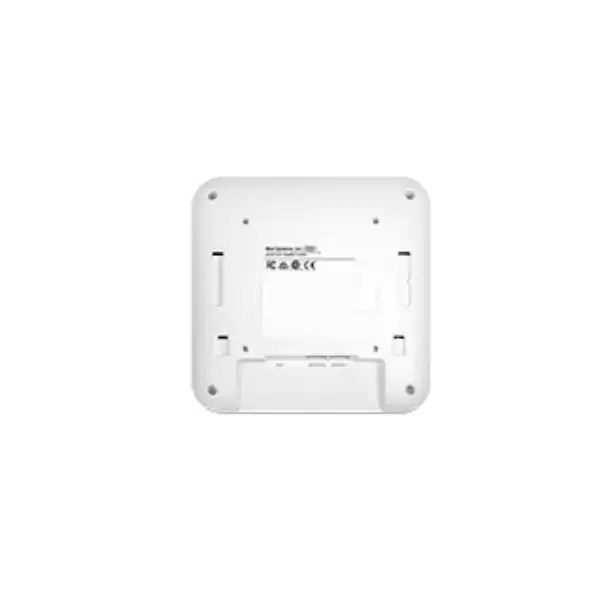
Juniper BT11 Bluetooth Access Point Dubai
The Juniper BT11 is a purpose-built indoor Bluetooth Low Energy access point for Juniper Mist location services. It is designed for organizations that need virtual beacons, wayfinding, asset visibility, zone analytics or mobile engagement in areas where Wi-Fi coverage from an access point is not required.
Direct answer: what is the Juniper BT11?
The Juniper BT11 is an indoor enterprise Bluetooth Low Energy access point that uses a dynamic virtual Bluetooth LE antenna array and Juniper Mist cloud services to deliver location-based capabilities. Its role is different from a conventional wireless LAN access point: the BT11 does not provide Wi-Fi client access. Instead, it strengthens Bluetooth location-service coverage where a business needs location intelligence but does not need another Wi-Fi radio.
It is mainly used for indoor wayfinding, mobile engagement, Bluetooth asset visibility, zone-level analytics and other location-aware workflows. Organizations such as hospitals, universities, malls, hotels, offices, logistics environments, venues and large campuses may consider it when Bluetooth location coverage must be designed independently from Wi-Fi coverage.
The most important factor to confirm before ordering is the overall Juniper Mist location-service design. Hardware quantity alone does not determine the result. Floor plans, expected location use case, supported mobile application or BLE tags, PoE availability, Ethernet reach, cloud connectivity, mounting positions and the required Mist subscription all influence the final architecture.
FourTeck can help buyers in Dubai and the wider UAE determine whether the BT11 is the correct location-only device, whether an integrated Juniper Wi-Fi access point with vBLE would be more appropriate, how many units are likely to be required, what PoE and switching resources are needed, and which licensing and integration requirements should be included in the quotation.
Why the BT11 exists: separate Bluetooth location coverage from Wi-Fi coverage
Many enterprise wireless designs begin with Wi-Fi coverage, user density and application throughput. Location services create a different design problem. The places where an organization needs accurate Bluetooth location signals are not always the same places where it needs another Wi-Fi access point. A building may already have adequate wireless LAN coverage in rooms and work areas but still require stronger Bluetooth location geometry in corridors, transition areas, public zones, storage areas or specific operational spaces. Adding a full Wi-Fi access point only to improve location coverage may complicate radio-frequency planning and introduce unnecessary WLAN radios. The BT11 addresses this gap by providing the Juniper virtual Bluetooth LE function without adding Wi-Fi radios.
This distinction matters in procurement. A buyer searching for a “Bluetooth access point” can easily assume that the device also supplies normal Wi-Fi. The BT11 should not be purchased as a replacement for a Wi-Fi 6 or Wi-Fi 6E access point. It is a location-services component. The hardware connects to the wired network, receives PoE, reaches the Juniper Mist cloud and participates in a location architecture. Client laptops and phones do not use it as their ordinary Wi-Fi connection.
For a Dubai site, this makes the BT11 particularly relevant when an existing WLAN is already satisfactory but a new location project is being introduced. Examples include digital wayfinding in a large facility, visibility of Bluetooth-tagged equipment, guest engagement through a mobile application, or analysis of movement through defined zones. In these cases, the location requirement can be designed on its own technical merits instead of forcing the Wi-Fi topology to solve two different coverage problems at once.
The design still needs coordination with the switching and network-security teams. Each BT11 requires network connectivity and power. It also needs appropriate outbound connectivity for Juniper Mist cloud management. The benefit is architectural separation: Wi-Fi AP placement can continue to prioritize WLAN performance, while BT11 placement can prioritize Bluetooth location performance.
Core BT11 capabilities and what they mean for a buyer
Virtual Bluetooth LE
The BT11 uses Juniper virtual Bluetooth Low Energy technology to create software-defined beacon behavior from its antenna system. Virtual beacons can be placed and adjusted through the platform rather than requiring a technician to physically move large numbers of battery-powered beacons. For buyers, this can reduce ongoing beacon maintenance and make location changes easier when floor layouts or workflows change.
Dynamic antenna array
Juniper documents a dynamic directional vBLE antenna design with multiple antenna elements. This is central to the BT11 value proposition because the platform uses the RF information to support location estimation. The practical design concern is placement: location accuracy depends on deployment geometry, floor-plan quality, environment and the behavior of the devices or tags being located.
Mist cloud management
The BT11 is managed as part of the Juniper Mist cloud environment. Once it is powered, connected and properly onboarded, the device can receive configuration and software management through the cloud workflow. Procurement therefore needs to include the Mist organization, site, subscription and administrative requirements rather than treating the BT11 as an isolated standalone Bluetooth appliance.
Asset visibility
For compatible Bluetooth-tag use cases, the BT11 can contribute to asset-location workflows in the Mist platform. This can help organizations locate mobile equipment or understand where tagged assets are within a facility. The tag technology, placement density, required accuracy, reporting workflow and business process should all be confirmed before selecting quantity.
Mobile engagement and wayfinding
Juniper provides mobile SDK support for iOS and Android location-service integration. This is relevant where an organization wants an application to provide indoor navigation or contextual engagement. The access-point hardware is only one layer of such a solution; application development, maps, user permissions, privacy requirements and the selected Juniper service are equally important.
PoE pass-through capability
The platform documentation identifies Gigabit Ethernet connectivity with PoE input and a second Gigabit Ethernet interface capable of 48 V PoE output. This can matter when planning cabling and downstream devices. The available PoE budget, switch capability and supported deployment arrangement should be checked rather than assuming the output can power any arbitrary endpoint.
Juniper BT11 technical specifications
The following values are based on Juniper’s published BT11 hardware documentation. Because vendor specifications, regulatory references and subscription packaging can change over a product lifecycle, the current datasheet and quotation should be checked for the exact unit being supplied.
| Specification | Published BT11 detail | Buyer relevance |
|---|---|---|
| Deployment | Indoor | Do not treat the standard BT11 as an outdoor-rated device. Environmental conditions and mounting location must fit the indoor operating specification. |
| Wireless function | 2.4 GHz Bluetooth Low Energy with dynamic antenna array | The radio function is for BLE location services, not conventional Wi-Fi client access. |
| Wi-Fi radios | None | If the project also needs WLAN coverage, evaluate a suitable Juniper Wi-Fi AP with the required radio generation and location capabilities. |
| Power | 802.3af or 802.3at PoE | Confirm switch PoE availability, port budget and cabling distance for every planned BT11 location. |
| Ethernet | 10/100/1000BASE-T RJ-45 PoE input plus 10/100/1000BASE-T RJ-45 with 48 V PoE output | Useful for wired integration and potential downstream PoE design, subject to power-budget validation. |
| Dimensions | 203 mm × 203 mm × 40 mm | Check ceiling, wall and architectural placement before cable termination and mounting work. |
| Weight | 0.636 kg | Mounting surfaces should be suitable for the device and selected bracket arrangement. |
| Operating temperature | 0 °C to 40 °C | Important for UAE facilities where ceiling voids, warehouses or non-conditioned spaces may exceed normal room temperature. |
| Operating humidity | 10% to 90% maximum relative humidity, non-condensing | Avoid locations where condensation or environmental exposure falls outside the specification. |
| Operating altitude | Up to 3,048 m | Normally not a constraint for Dubai, but relevant for standardized regional designs. |
| Indicator | Multicolor status LED | Supports local visual status checks during installation and troubleshooting. |
| UAE ordering model | BT11-WW, internal antenna | Juniper lists BT11-US for the United States and BT11-WW for the rest of the world. UAE buyers should quote the correct regional SKU. |
Location accuracy: understand the published figure and the real design dependencies
Juniper has published mobile-device location accuracy in the range of approximately one to three metres in the context of its virtual Bluetooth LE architecture, with room or zone-level accuracy for Bluetooth LE assets. This is useful as a design reference, but it should not be interpreted as a universal guarantee for every building, tag, phone and placement. Indoor location performance is influenced by RF propagation, device orientation, floor-plan accuracy, antenna geometry, obstructions, walls, reflections, ceiling height, density of location-capable APs, mobile operating-system behavior and the characteristics of third-party BLE tags.
A hospital tracking portable equipment has different requirements from a shopping centre providing turn-by-turn wayfinding. A warehouse may care about zone-level asset location, while a corporate campus may need visitor navigation between meeting spaces. Those requirements affect what “accurate enough” means. Buyers should therefore define the business outcome first. The design target might be “show the user which corridor to take,” “identify which treatment zone contains an asset,” or “trigger engagement after a visitor enters a defined area.” These are different measurement problems.
Floor plans are another important input. Location systems are spatial systems, so the quality and scale of the building map matter. Before deployment, the implementation team should obtain current floor drawings and identify walls, doors, lifts, atriums, voids, restricted rooms and other architectural features that affect both installation and map interpretation. Major refurbishments can invalidate an old drawing even when the Wi-Fi network itself still works acceptably.
The best procurement process therefore avoids promising a single accuracy number before the location objective is understood. FourTeck can help translate the buyer’s use case into design inputs, but final performance should be assessed against the real site, selected tags or mobile application, and the current Juniper Mist location-service capabilities.
Licensing and subscription planning
The BT11 should not be quoted as hardware only when the intended result depends on Juniper Mist location services. Juniper’s architecture uses cloud-delivered capabilities for management and location workflows, and the vendor has offered services such as User Engagement, Asset Visibility and Premium Analytics. Exact subscription names, included features, data-retention periods, entitlement terms and bundling can evolve, so the current commercial package must be validated at the time of quotation.
This matters because two customers can buy identical BT11 hardware but need very different software outcomes. A wayfinding project may require mobile application integration, maps and user-engagement functionality. An asset project may require compatible BLE tags, asset-visibility functionality and workflow integration. A reporting-heavy customer may need analytics beyond the base service. The quotation should reflect the complete use case rather than assuming that every location capability is automatically included with the appliance.
Subscription term is also a budgeting decision. A business that standardizes on a three-year or five-year network lifecycle may want cloud licensing aligned with that period. A pilot project may use a shorter commercial horizon if the vendor’s current licensing allows it. Renewal ownership should be assigned internally so that location services do not unexpectedly lose entitlement after the hardware has been installed.
When requesting a FourTeck quote, state whether the requirement is hardware replacement, a new Mist site, an expansion of an existing Juniper Mist organization, asset visibility, user engagement, wayfinding, analytics or a combination. That information allows the licensing discussion to begin from the required business service rather than from a generic access-point SKU.
Network, PoE and cloud-connectivity requirements
The BT11 is a cloud-managed network device, so its installation involves more than fixing hardware to a ceiling. Juniper documents an onboarding flow in which the AP obtains an IP address from DHCP on the untagged VLAN, performs DNS resolution for the Mist cloud service and establishes HTTPS connectivity to the cloud. This means the wired network must provide appropriate IP addressing, DNS and security-policy access before the device can become fully operational.
For a new Dubai project, network engineers should identify the access-switch ports that will serve BT11 locations and confirm PoE capacity at both the individual port and switch level. A switch may support PoE but still have a limited total power budget when many cameras, phones, wireless APs and other endpoints are attached. Large location deployments should therefore include a power-budget review instead of checking only that the switch model has PoE in its feature list.
Cabling should be treated as structured network infrastructure. Each BT11 needs a suitable Ethernet path to the switch. The installed cabling, patch panels, terminations and link length should meet the relevant Ethernet requirements. Ceiling installations should leave appropriate service loops and labeling so that technicians can identify the device and switch port later. If a project intends to use the BT11 PoE output for another endpoint, the design should confirm the supported topology and available power rather than assuming pass-through power is unlimited.
Network-security teams should review the current Juniper Mist firewall and cloud-connectivity requirements. Corporate firewalls, proxies, DNS controls, TLS inspection or restricted management networks can prevent onboarding when they are not planned correctly. In sites with strict segmentation, the BT11 management VLAN and outbound access policy should be documented before the installation team arrives.
These dependencies are straightforward when planned early. They become expensive when discovered after dozens of units have been mounted. A procurement package that includes switch capacity, VLAN design, DHCP, DNS, cloud egress and subscription readiness is more reliable than a hardware-only bill of materials.
Where BT11 fits well — and where another Juniper AP may be better
BT11 is a strong fit when
- The building already has adequate Wi-Fi coverage but needs additional Bluetooth location coverage.
- The project is primarily about indoor wayfinding, asset visibility, zone analytics or mobile engagement.
- The design benefits from placing location-service radios independently of Wi-Fi AP placement.
- PoE Ethernet is available at the planned indoor mounting positions.
- The organization is prepared to operate the solution through Juniper Mist cloud services and the required subscriptions.
Evaluate another option when
- The same location also requires new or upgraded Wi-Fi client service.
- The deployment environment is outdoors or outside the BT11 operating conditions.
- The project needs wireless capabilities that are not part of the Bluetooth-only BT11 platform.
- There is no suitable wired PoE network path and the project cannot add one.
- The organization is not planning to use the Juniper Mist location-service ecosystem or needs a different third-party architecture.
Juniper’s wider access-point family includes models that combine Wi-Fi and virtual Bluetooth LE. For a greenfield wireless refresh, using integrated Wi-Fi APs with vBLE may reduce hardware count in areas where both functions are needed. BT11 becomes especially useful when location geometry needs extra coverage points beyond the Wi-Fi design. A mixed architecture can therefore be more sensible than choosing one device type for the entire building.
Use case: indoor wayfinding and visitor navigation
Large indoor spaces are difficult to navigate because satellite-based GPS positioning is often weak or unavailable inside buildings. A Bluetooth location architecture can provide an indoor reference that a mobile application uses to understand where the user is relative to a digital floor map. The BT11 is intended to support this class of experience through Juniper Mist location services and mobile SDK integration.
A successful wayfinding project is not simply an access-point installation. The organization needs accurate floor plans, a mobile application, map content, routing logic, a defined user journey and a process for maintaining the digital map when the building changes. The application also needs appropriate permissions and should explain why location access is requested. In a hospital, for example, the route may need to avoid staff-only corridors. In a university, it may need to differentiate floors and buildings. In a mall, navigation may need to direct users from entrances or parking access to shops and services.
The BT11 contributes the Bluetooth radio and location infrastructure, while the cloud and application layers translate the observed location into an experience. For procurement, this means the owner should identify who is responsible for each layer. A networking team can deploy BT11 hardware, but an application team may own the mobile SDK. Facilities may own the floor plans. Security and legal teams may review privacy. Marketing may own engagement content. Without this cross-functional ownership, a technically sound location network can still fail to produce a useful visitor experience.
When FourTeck scopes a BT11 wayfinding requirement, useful inputs include the number of buildings and floors, approximate floor area, current Juniper AP estate, existing Mist organization, intended mobile platforms, map availability, areas requiring navigation and any spaces that should be excluded. These inputs produce a more realistic solution discussion than simply asking for a price per BT11.
Use case: Bluetooth asset visibility
Asset visibility is another major reason to consider the BT11. In this model, Bluetooth tags associated with equipment or other assets transmit signals that can be observed by the location infrastructure. The Juniper platform uses the collected information to estimate where tagged assets are within the covered environment. The business value is operational: staff spend less time searching for movable equipment, supervisors gain better visibility of asset distribution, and organizations can analyze how resources move through a facility.
The correct design depends on the asset. A hospital may track wheelchairs, infusion devices or other mobile equipment. A warehouse may track tools, returnable containers or material-handling assets. A university may want visibility of shared technical equipment. Each case has different expectations for tag attachment, battery maintenance, update frequency, zone accuracy and application workflow. The BT11 is therefore one component in a broader asset solution rather than a complete asset-management platform by itself.
Tag selection deserves careful attention. The tags must be compatible with the intended Juniper Mist asset-visibility workflow and suitable for the asset’s physical environment. Form factor, battery life, mounting method, replaceability and expected movement all matter. A tag suitable for office equipment may be inappropriate for harsh operational conditions. Procurement should also account for spare tags, replacement batteries where applicable, labeling and the process used to associate each tag with the correct asset record.
Coverage design should follow the operational zones where assets actually move. Installing BT11 units only in public areas is insufficient when assets spend time in storerooms, treatment rooms, workshops or service corridors. Conversely, deploying location hardware in every area can be unnecessary if the business process only needs room or zone-level visibility in selected spaces.
A useful quotation request describes the number and type of assets, the required location precision, the zones that must be covered, the existing network and whether tags are already standardized. This lets the technical team assess the complete tracking workflow instead of treating the project as a simple count of access points.
Use case: user engagement and zone analytics
Location-aware engagement can be useful when a mobile application needs to respond to where a user is inside a building. Examples include presenting contextual information, helping a visitor discover nearby services, or measuring movement through defined zones. The BT11’s role is to provide the Bluetooth location infrastructure that supports these interactions through the Juniper Mist ecosystem.
The technology should be designed with user value and privacy in mind. A mobile application should not request location permissions without a clear reason. Organizations should define what data is collected, how long it is retained, who can access it and how consent is handled. These policies can be especially important in healthcare, education, hospitality and public-facing environments. Network equipment does not remove the need for governance around application data.
Analytics requirements should also be stated precisely. A business may want to understand how long visitors remain in selected zones, compare activity patterns between areas or evaluate how a facility is used over time. Juniper has offered analytics capabilities with different data-retention and reporting options, including premium services. Because packaging can change, a current subscription review is necessary if analytics is a major objective.
The implementation team should agree on zone definitions before deployment. A “zone” may represent a room, department, waiting area, shop section or another logical space. Poorly defined zones produce confusing reports even when the radio network is working correctly. Digital maps should match the physical environment and operational language used by the business.
For a Dubai retail, hospitality or venue project, this is a useful point to involve both IT and the business owner of the customer experience. The technical team can deploy and monitor the BT11 infrastructure, while the business team defines the interactions, reporting questions and success criteria that justify the investment.
Deployment planning for Dubai and UAE sites
UAE buildings can present a wide range of indoor RF and environmental conditions. Modern glass-and-steel offices, large retail centres, hotels, warehouses, hospitals and older concrete buildings behave differently. Bluetooth Low Energy shares the 2.4 GHz band with other technologies, so the local RF environment and building materials influence propagation. The deployment plan should therefore start with the actual floor plan and use case rather than a generic “one AP per area” rule.
Temperature deserves explicit attention. Juniper publishes a BT11 operating range of 0 °C to 40 °C. Normal air-conditioned office and retail spaces are usually consistent with that range, but ceiling voids, unconditioned service areas and some warehouse spaces can become substantially hotter. A device may be physically indoors but still sit in an environment that exceeds its operating specification. Site survey work should identify such areas before the mounting design is finalized.
Mounting positions should be practical for both RF performance and maintenance access. Locations should avoid unnecessary obstruction while remaining serviceable. The cabling route, ceiling type and bracket arrangement should be known before installation. Where the building uses specialist ceilings, decorative finishes or restricted architectural areas, facilities approval may be needed.
For multi-floor environments, floor separation and vertical RF propagation also matter. A location system should not be designed as though each floor exists in isolation when signals can propagate through atriums, stairwells and open voids. Accurate maps and sensible placement help the platform distinguish the user or asset location more reliably.
A phased deployment can be useful in large sites. One representative floor or operational zone can be implemented first, allowing the organization to validate maps, application behavior, tag performance, network access, reporting and user workflow. Lessons from the pilot can then inform the wider rollout. This is often more valuable than ordering the full building quantity before the intended location experience has been tested.
Installation workflow and project responsibilities
A clean BT11 rollout usually follows a structured sequence. First, the Juniper Mist organization and site should be ready. Administrative ownership, subscriptions and access permissions should be established before field technicians begin work. Second, the access points should be claimed or otherwise associated with the correct Mist environment using the supported Juniper workflow. Third, the wired network should be prepared with the required VLAN, DHCP, DNS, PoE and cloud egress.
Physical mounting comes next. The approved floor plan should identify each BT11 location and its asset name so that the installed device can be matched to the digital map. Cable labels and switch-port records should use the same naming convention. This simple discipline makes later troubleshooting much easier because the team can move from a map object to a physical device and switch port without guessing.
After power-on, Juniper documents an automatic onboarding process through DHCP, DNS and HTTPS connectivity to the Mist cloud. If a unit does not appear as expected, troubleshooting should begin with power, Ethernet link, addressing, DNS, firewall policy and the device claim state rather than immediately assuming a hardware fault. The multicolor status LED can assist local checks.
Once devices are connected, the location-service configuration needs to match the floor map and intended use case. Virtual beacons, zones, application integration or asset workflows are configured at the software layer. This stage should include functional testing from the perspective of the actual mobile app or asset tag, not only a dashboard check that the AP is online.
Responsibility should be assigned across networking, facilities, application, security and business teams. A location project crosses traditional boundaries. Networking owns connectivity, facilities owns physical spaces, application teams may own SDK integration, security owns access policy, and business teams define the outcome. A named project owner should coordinate these dependencies so that the BT11 installation becomes a usable service rather than a collection of online devices.
Sizing the BT11 deployment: what affects quantity?
Floor area and geometry
Large open floors, long corridors, subdivided offices, dense room layouts and multi-level atriums create different placement needs. Square metres alone are not enough to determine quantity.
Required location outcome
Room-level asset visibility may be a different design from turn-by-turn mobile wayfinding. The business accuracy target should therefore be defined before hardware count.
Existing Juniper APs
Some Juniper Wi-Fi access points already provide virtual Bluetooth LE capability. Existing vBLE coverage can reduce the number of dedicated BT11 units needed for a location expansion.
Walls and obstructions
Concrete, metal, lifts, service cores, shelving and other materials change 2.4 GHz propagation. Floor-plan analysis must reflect real construction.
Tag or mobile behavior
Asset tags and smartphones do not behave identically. The selected client type, update interval and application workflow affect how the design should be validated.
PoE and cable availability
Ideal RF positions still need practical Ethernet and power. Cabling constraints can affect final placement or increase the project installation scope.
For these reasons, a request such as “quote 50 BT11 units for a building” is commercially possible but does not prove that 50 is the correct design quantity. FourTeck can supply a quantity requested by the buyer, but when design assistance is needed, floor plans and the intended service should be reviewed first. The objective is to avoid both under-deployment, which can produce location gaps, and over-deployment, which increases hardware, cabling, switch-port and subscription costs without corresponding business value.
Integration with mobile apps and business systems
Juniper documents mobile SDK support for iOS and Android and identifies APIs related to virtual BLE beacons, indoor location and zone analytics. This is important because the BT11 itself does not present a finished branded navigation or engagement application to users. The organization needs an application layer that consumes the relevant location capabilities and turns them into a business experience.
For an existing enterprise mobile app, the application team should review the current Juniper SDK requirements, supported operating-system versions and integration approach. Release planning matters because Apple and Google periodically change mobile privacy controls, Bluetooth behavior and permission models. A location project should include application maintenance after initial launch, not only a one-time integration.
System integration can also extend beyond the mobile app. Asset visibility may need to exchange information with an asset-management, maintenance or workflow platform. Zone events may feed analytics or operational dashboards. The current Juniper API capabilities and the third-party system’s interfaces should be evaluated before promising automated workflows. API authentication, rate limits, data model, event timing and error handling are all integration questions.
Testing should use the real target devices. A developer’s test phone in an empty office is not sufficient validation for a production hospital, mall or warehouse. The team should test representative mobile devices or tags, expected user movement, different times of day and important physical zones. Map changes should also be tested because a location app that relies on outdated room boundaries can appear inaccurate even when the RF estimate is reasonable.
When requesting implementation support, tell FourTeck whether the project includes only infrastructure supply, Mist configuration, mobile app integration, API integration, third-party BLE tags or complete commissioning. This separates the network scope from software-development responsibilities and helps prevent assumptions between vendors.
Security, privacy and operational governance
Location technology creates operational value, but it also introduces governance questions. Infrastructure teams should secure the BT11 as a managed network device, while application and data owners determine what location information is collected and how it is used. These are related but distinct responsibilities.
At the network layer, the BT11 should connect through an appropriately controlled management or AP network. Access-switch configuration, VLAN segmentation, DHCP, DNS and outbound cloud access should follow the organization’s security standards. Administrative access to the Juniper Mist organization should be role-based, and privileged accounts should follow the enterprise identity and authentication policy. Operational teams should know who can change location maps, virtual beacons, zones and device configuration.
At the application layer, user consent and privacy depend on the specific service. A wayfinding application may request location permission from a phone. An engagement application may process zone presence. An asset platform may associate a tag with equipment. Organizations should define the lawful and business-appropriate use of this information, retention periods, reporting access and data-sharing rules. The exact requirements depend on the jurisdiction and application, so legal or privacy teams should review sensitive use cases rather than relying on network configuration alone.
Operational governance also includes change control. Moving a wall, renaming a department or changing a visitor route can affect digital maps and zone definitions. The facilities team should have a process to notify the location-service owner when the physical environment changes. Similarly, replacing a tag or mobile application version should be recorded when it could affect observed performance.
A well-governed deployment treats BT11 infrastructure as part of a business service with owners, access controls, change management and monitoring. That approach is more sustainable than viewing the units as passive beacons that require no ongoing administration.
Migration and expansion scenarios
The BT11 can appear in several migration scenarios. One common case is an organization with an established Juniper Mist Wi-Fi network that wants to add location services after the WLAN is already optimized. Existing vBLE-capable Juniper APs may provide part of the required location coverage, while BT11 units can fill areas where more Bluetooth geometry is needed without adding Wi-Fi radios.
Another scenario is replacement of a legacy physical-beacon deployment. Virtual beacons can reduce dependence on battery-powered beacon hardware, but migration still requires planning. Existing mobile applications may be coded around particular beacon identifiers or zones. Physical beacon removal should not occur until the new Juniper location design and application behavior are validated. A staged approach can reduce the risk of breaking a live visitor or operational service.
A third scenario is expansion into a new building or floor. The new area should not automatically copy the BT11 density of the old site. Construction materials, ceiling height, room layout and business use may differ. The existing deployment provides useful lessons, but the new area deserves its own map and design review.
Organizations also need to consider lifecycle alignment. If the existing Wi-Fi estate is near a major refresh, the project team should evaluate whether a new generation of integrated Wi-Fi APs with location capabilities could serve both purposes in some areas. Buying dedicated BT11 units immediately before replacing the surrounding WLAN may still be appropriate, but the combined five-year architecture should be examined first.
The migration plan should therefore answer three questions: what location capability already exists, what coverage gap remains, and what infrastructure changes are planned over the same lifecycle. A clear answer prevents unnecessary hardware purchases and makes the resulting Mist environment easier to manage.
Procurement details that should appear in a BT11 quotation
For Dubai and UAE buyers, the regional hardware model is a primary procurement detail. Juniper lists BT11-WW as the rest-of-world model with an internal antenna, while BT11-US is the United States model. The quotation should therefore identify BT11-WW where appropriate rather than using only the generic product family name.
The quote should also identify required subscriptions separately from the hardware. Depending on the project, this may include current Juniper Mist location-service entitlements and analytics capabilities. Subscription term, quantity and renewal dates should be clear. If the organization already has Mist licenses, those entitlements should be checked before duplicate services are purchased.
Mounting accessories and cabling scope should be explicit. A product box may not represent the complete installation bill of materials. Ceiling type, bracket requirements, cable length, patching, labeling, access equipment and installation labor can materially affect project cost. Sites with high ceilings or restricted working hours may also need specialist access or scheduling.
Switching infrastructure should be reviewed when the quantity is substantial. Each planned location consumes a switch port and PoE budget. If the existing access switches lack enough ports or power, the project may need additional switching capacity, higher-capacity PoE supplies or topology changes. The BT11 price is only one component of total deployment cost.
Professional services should be separated into defined tasks: design review, floor-map preparation, Mist configuration, mounting, cabling, commissioning, application integration, tag integration and acceptance testing. Clear scope protects both buyer and supplier because everyone understands what “installation” includes.
Finally, support expectations should be stated. Some organizations require business-hours assistance, while critical facilities may want stronger operational coverage. The buyer should identify its support window, escalation process and internal technical ownership so that the commercial offer reflects the intended operating model.
Buyer questions about the Juniper BT11
Does BT11 provide Wi-Fi?
No. Juniper identifies the BT11 as a Bluetooth Low Energy access point without Wi-Fi radios. It is intended for location services. If you also need WLAN coverage, select a suitable Juniper Wi-Fi AP for that requirement.
Which BT11 model is appropriate for UAE?
Juniper lists BT11-WW for regions outside the United States and BT11-US for the US domain. UAE procurement should therefore be based on the current BT11-WW ordering information unless the vendor’s regional guidance changes.
How is it powered?
Juniper publishes 802.3af and 802.3at PoE support. The wired access-switch design should confirm available PoE budget for the number of BT11 devices and any intended use of the PoE-out interface.
Does it need the Mist cloud?
Yes, the BT11 is part of the Juniper Mist cloud architecture. Cloud onboarding, configuration and the required location services should be planned as part of the deployment rather than as optional afterthoughts.
Can it replace physical BLE beacons?
Virtual beacon functionality is designed to reduce dependence on physical battery-powered beacons for supported engagement and location use cases. Whether every existing beacon can be removed depends on the current application, identifiers, workflow and migration design.
How many BT11 units are required?
There is no responsible universal number based only on square metres. Quantity depends on floor plan, accuracy requirement, existing vBLE-capable APs, walls, zones, tag or mobile behavior, ceiling geometry and cabling possibilities.
Can it work for asset tracking?
It can support Juniper Mist asset-visibility workflows using compatible Bluetooth tags. The tag type, required accuracy, attachment method, battery strategy and business application should be validated as part of the overall solution.
Can it support indoor navigation?
Yes, indoor wayfinding is a core location use case, but the BT11 hardware is only one part. A mobile application, current SDK integration, digital floor maps, routing logic and the appropriate Mist service are also required.
Operational monitoring, maintenance and lifecycle
After installation, the BT11 should be operated as a managed infrastructure component. The Mist platform provides centralized visibility and software-management workflows, but someone inside the organization or its support partner still needs ownership of alerts, changes, device status and subscription renewals. Cloud management reduces repetitive manual work; it does not eliminate operational responsibility.
Teams should keep an inventory that maps each BT11 serial or asset record to its building, floor, map position, switch and port. This information speeds fault isolation. If a unit goes offline, operations can determine whether the problem affects PoE, cabling, network access, cloud connectivity or the hardware itself. Consistent naming between the Mist site, floor plan, switch configuration and physical labels is one of the simplest ways to improve support quality.
Firmware and service updates should follow the organization’s change-management process. Juniper’s cloud architecture supports software management, but production environments may still require maintenance windows and validation for significant changes. Location applications should also be regression-tested after major mobile operating-system or SDK updates because the user experience depends on more than the AP firmware.
Battery maintenance may be lower than with a dense physical-beacon architecture, yet asset tags can still require batteries. Operations should distinguish between the infrastructure layer and tag fleet. A site can have perfectly healthy BT11 coverage while a particular asset becomes invisible because its tag battery has failed or the tag has been removed.
Lifecycle planning should include future WLAN refreshes. If an organization later deploys Juniper Wi-Fi APs with integrated vBLE in additional areas, the role and quantity of dedicated BT11 units may change. Periodic design review can keep the location architecture efficient as buildings, Wi-Fi networks and business workflows evolve.
Total cost considerations beyond the hardware unit
The purchase price of a BT11 is only part of the project cost. A realistic budget may include Juniper Mist subscriptions, access-switch ports, PoE capacity, Ethernet cabling, mounting accessories, installation labor, floor-plan preparation, design services, application integration, third-party BLE tags, testing and ongoing support. In some projects, these surrounding elements cost more than the access-point hardware itself.
This is not a disadvantage unique to BT11; it is a normal characteristic of location systems. The business result comes from the complete service. A low-cost hardware purchase that omits software, mapping or integration can leave the organization with devices that are online but do not solve the intended operational problem.
Virtual beacon technology can reduce a different category of cost: the deployment and ongoing maintenance of large fleets of battery-powered physical beacons. The economic benefit is strongest when the organization would otherwise need many beacons and frequent physical changes. However, the project should compare real lifecycle costs. Asset tags may still need batteries, and mobile application work still exists. The saving is not simply “no batteries anywhere”; it is the ability to virtualize supported beacon functions and manage them through the platform.
PoE infrastructure can also produce cost tradeoffs. Using the existing enterprise cabling and switches simplifies power distribution, but a large rollout consumes switch resources. Older access switches may require upgrades. If a building has difficult ceiling access, cable installation can become a major workstream. These costs should be identified during design, not after purchase.
A good commercial comparison therefore evaluates total project cost over the intended lifecycle: hardware, licensing, installation, integration, operations and maintenance. This allows buyers to compare the BT11 architecture fairly with physical-beacon solutions or integrated Wi-Fi AP alternatives.
Decision recap for Dubai buyers
Model fit
Choose BT11 when the requirement is dedicated indoor BLE location coverage. It is not a Wi-Fi AP.
Regional SKU
For UAE procurement, use the current rest-of-world BT11-WW ordering model.
Licensing
Confirm the current Mist location-service subscription required for the intended use case and term.
Connectivity
Plan Gigabit Ethernet, PoE, DHCP, DNS and permitted cloud connectivity for every unit.
Placement
Use the actual location objective and floor geometry to size the deployment; do not use a generic AP-per-square-metre rule.
Integration
Wayfinding and engagement require application and SDK planning; asset visibility requires suitable tags and business workflow integration.
What FourTeck needs for an accurate BT11 quotation
A precise quotation can usually be prepared faster when the buyer provides the technical context with the quantity request. The following inputs help distinguish a straightforward hardware order from a full location-services project.
Plan the Juniper BT11 deployment around the location outcome
The right BT11 order starts with a clear use case, the correct BT11-WW regional model, a realistic floor-plan design, adequate PoE and Ethernet, the appropriate Juniper Mist subscription and a defined integration path. FourTeck can help Dubai and UAE organizations turn those inputs into a practical bill of materials and deployment scope without confusing Bluetooth location coverage with ordinary Wi-Fi capacity.

Reviews
There are no reviews yet.