
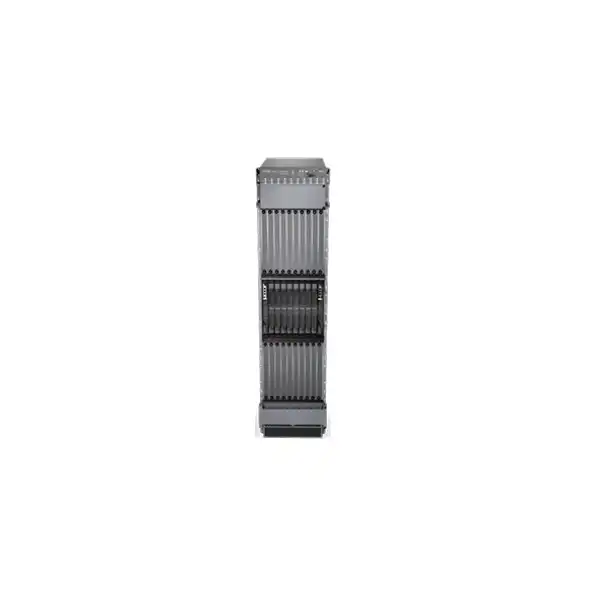
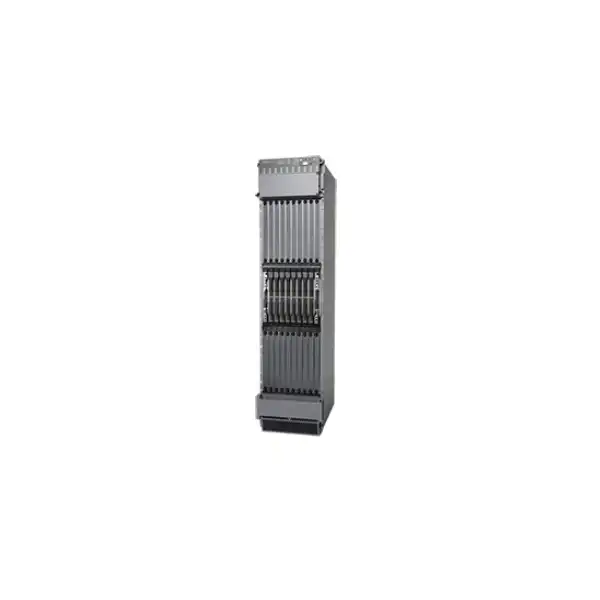
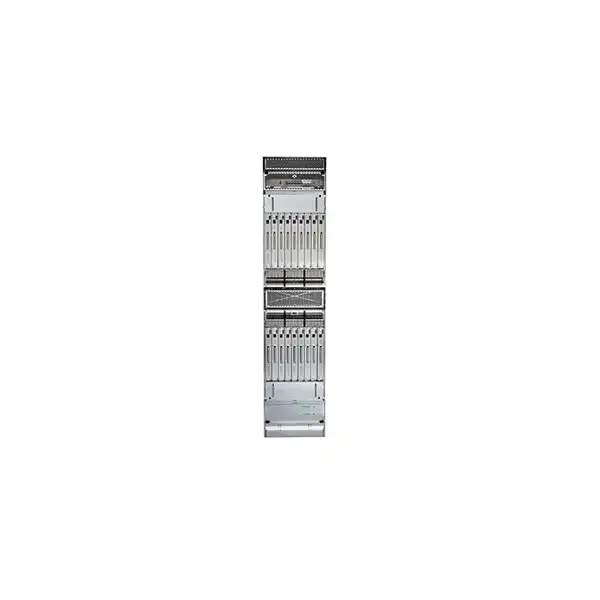
Juniper MX2020 Universal Routing Platform Dubai
The Juniper MX2020 is the 20-slot chassis in the MX2000 family, built for operators that need exceptional interface density, resilient forwarding and long-term scale at the service-provider edge, core, data-center interconnect or converged edge-and-core layer. Supported current configurations provide up to 80 Tbps of system capacity, with density reaching 800 100GbE or 160 400GbE interfaces when the appropriate fabric and line cards are selected.
Up to 80 Tbps system capacity
45U four-post rack chassis
Junos OS multiservice routing
Direct answer: what should a buyer know about the MX2020?
The Juniper MX2020 Universal Routing Platform is a modular, Ethernet-optimized, carrier-grade router intended for large-scale edge, core and converged routing. It is mainly used where traffic volumes, interface density, service scale and availability requirements are far beyond ordinary enterprise branch or campus routing.
Service providers, cloud operators, large data-center networks, internet peering environments, broadband networks, mobile transport operators and very large enterprises should consider it when they need a chassis platform that can grow through modular line cards and high-capacity fabric rather than replacing a fixed router every time demand increases.
The most important factor to confirm is the exact target configuration. MX2020 is a chassis platform, not a single fixed-port appliance. Actual capacity, port mix, feature support, power draw, optics, redundancy and licensing depend on the selected Routing Engines, switch-fabric generation, MPCs, MICs, transceivers and Junos software feature set.
FourTeck can help determine whether MX2020 is correctly sized for the requirement, which chassis bundle and line-card architecture are appropriate, what interfaces and optics are needed, what licensing applies, whether the available rack and power environment can support the design, and whether a smaller MX platform would deliver the same outcome with lower infrastructure overhead.
Where the Juniper MX2020 fits in a network architecture
The MX2020 sits at the high-capacity end of Juniper’s modular MX routing portfolio. Its role is not simply to forward a large number of packets; it is designed to combine very high throughput with the service intelligence expected at major network boundaries. Typical positions include provider edge, peering edge, core, converged edge/core, broadband edge, data-center interconnect and large aggregation points. That breadth is important because many large networks now want to reduce the number of separate platforms required for IP transport, subscriber services, business VPNs, interconnection and traffic engineering.
Juniper identifies the MX2020 as a 20-slot platform. With the current high-capacity fabric and MPC11E generation, the system can reach 4 Tbps per slot and 80 Tbps across the chassis. Maximum line-rate density with that architecture can reach 40 x 100GbE or 8 x 400GbE ports per MPC11E, giving an MX2020 maximum of 800 x 100GbE or 160 x 400GbE interfaces. These are platform maximums, not a statement that every shipped chassis automatically includes those ports. A quotation must identify the actual MPCs, optical modules, fabric boards and licensing required for the intended port density.
This distinction matters in Dubai and UAE infrastructure projects because the chassis can represent only one part of the engineering scope. Rack space, structured fibre, cross-connects, optical reach, power feeds, cooling capacity, management integration and migration sequencing can be as important as the router itself. A well-designed MX2020 deployment therefore begins with traffic, interface and service requirements rather than with a chassis-only price comparison.
MX2020 architecture and modularity
20 MPC slots
The chassis provides 20 dedicated line-card slots. Supported Modular Port Concentrators can be installed according to required service and interface density, allowing the platform to be built for present demand and expanded later.
Redundant control
The host subsystem uses Control Board and Routing Engine components. Premium bundles can include redundant Routing Engines, which should be considered for production networks where control-plane resiliency and maintenance flexibility are required.
High-capacity fabric
Switch Fabric Boards connect the forwarding components across the chassis. Fabric generation is a major sizing dependency because the chosen SFB type determines supported per-slot capacity and must be compatible with the selected line cards.
MPC and MIC flexibility
Many MPCs support Modular Interface Cards, while newer high-density MPCs provide fixed interfaces. This lets a design mix media and speeds where supported rather than forcing every slot to use the same physical interface pattern.
Front-to-back cooling
The chassis uses front-to-back airflow. Rack layout, hot/cold aisle planning and clearance therefore need to match the data-center cooling design rather than being treated as an afterthought during installation.
Power-zone planning
A fully built MX2020 can have substantial electrical and thermal requirements. Power feeds, PDM/PSM options and redundancy must be engineered against the exact FRU population, not estimated from chassis size alone.
Verified platform specifications
The table below summarizes platform-level values that are useful for early-stage design. They describe the MX2020 chassis and published high-capacity configurations; final engineering still depends on the selected hardware generation and software release.
| Specification | MX2020 detail |
|---|---|
| Chassis class | Modular carrier-grade Universal Routing Platform for edge, core and converged roles |
| Line-card slots | 20 dedicated MPC slots |
| Published maximum system capacity | Up to 80 Tbps with appropriate 4 Tbps-per-slot fabric and line-card configuration |
| Published maximum high-speed density | Up to 800 x 100GbE or 160 x 400GbE with supported MPC11E configuration |
| Rack height | 45 rack units |
| Mounting | Four-post rack or cabinet installation |
| Airflow | Front to back |
| Fan trays | Four |
| Operating environment | 0°C to 40°C; 5% to 90% relative humidity, noncondensing, under published normal operating conditions |
| Software | Junos OS; feature entitlement depends on hardware and licensing |
Understanding the 80 Tbps capacity figure
The 80 Tbps headline is most useful when understood as a chassis-scale design ceiling for supported high-capacity configurations, not as the throughput of every possible MX2020 bill of materials. Juniper publishes 20 slots at up to 4 Tbps per slot for the current high-capacity architecture. Achieving that level requires compatible switch fabric and line cards. Older MPC generations can remain valuable for specific interface or service requirements but may operate at lower per-slot capacity.
This gives network architects an important choice. A deployment can be engineered around the latest high-density 100GbE and 400GbE interfaces where bandwidth growth is the priority, or it can combine other supported MPC/MIC generations where the network needs a different mix of speeds, legacy media, service features or migration compatibility. The right choice is not always the maximum-density choice. It is the configuration that meets projected traffic, oversubscription policy, service scale, failure-domain design and budget without creating unnecessary operational complexity.
For quotation purposes, the traffic model should therefore include current peak throughput, expected three-to-five-year growth, desired headroom, number of physical links, required link speeds, LAG design, redundant path assumptions and any future DCI or peering expansion. Those inputs let the chassis capacity figure translate into an actual slot and port plan.
Interface planning: MPCs, MICs and optics
MX2020 flexibility comes from its modular forwarding architecture. The chassis can support a range of Modular Port Concentrators, and many MPCs can accept up to two Modular Interface Cards where that combination is supported. Newer fixed-port MPCs simplify very high-density deployments. Because the physical interface is determined by the line-card design, a chassis order that omits the correct MPC/MIC combination is incomplete even if the base chassis itself is available.
Optics are another separate engineering decision. Fibre type, distance, connector, wavelength, breakout requirements, DCI architecture and third-party interoperability all influence the transceiver selection. A 100GbE or 400GbE port specification alone does not tell a procurement team whether the link needs short-reach multimode optics, single-mode data-center reach, longer-reach optics, coherent transport integration or a breakout arrangement. Supported optics should be checked against the exact line card and current Juniper hardware compatibility data.
For migrations, it is often useful to build a port inventory that maps every existing connection to its new MX2020 interface. Include circuit identifier, peer device, current speed, target speed, fibre type, optic, VLAN or routed handoff, LAG membership and resilience role. That simple document prevents a high-value chassis project from being delayed by overlooked transceivers, patch leads or incompatible peer interfaces.
Where MX2020 can deliver business value
Internet peering and IP transit
High interface density and large forwarding capacity make the platform suitable for networks aggregating multiple 100GbE or 400GbE peering and transit connections. Routing policy, telemetry, capacity headroom and maintenance design remain as important as raw port count.
Broadband edge
MX Series platforms support broadband service architectures where subscriber scale, policy, QoS and service licensing need to be planned together. The required subscriber functions and scale licenses should be confirmed before treating a hardware configuration as complete.
Data-center interconnect
Organizations with multiple facilities can use the MX platform for high-capacity routed DCI. The design should consider optical reach, failure domains, route scale, traffic engineering, encryption requirements and whether an external optical transport layer is present.
Business VPN and services edge
The MX family is widely used for multiservice provider-edge roles. A design can consolidate routing and service functions, but VPN scale, QoS, control-plane requirements and service feature licensing need to be validated for the intended Junos release and hardware.
Mobile transport and timing
Juniper positions the MX2020 for mobile-related applications requiring sophisticated timing and resilient multiservice transport. Exact timing interfaces, synchronization design and feature support should be matched to the mobile architecture rather than assumed from the chassis alone.
Core and converged edge/core
Large networks can use MX2020 where the economics and operational model favor a common high-capacity platform. Convergence should be assessed carefully because combining roles can increase the importance of redundancy, software change control and failure-domain planning.
Resiliency and high-availability design
Juniper designs the MX2020 with redundancy across major chassis systems, including power, cooling, control and switch fabric. That hardware foundation is valuable, but high availability is achieved only when the entire architecture is built around failure scenarios. A redundant chassis component cannot protect against a single upstream fibre path, a shared power source, a common rack-level cooling event or an operational change that affects both control planes.
Premium chassis bundles are relevant when redundant Routing Engines are required. For networks needing device-level redundancy, Juniper also supports Virtual Chassis technology on the platform, allowing two routers to be managed as a single element in supported designs. Whether that is preferable to independent routing nodes depends on the operational model, convergence requirements, software strategy and fault isolation objectives.
A UAE deployment plan should document which failures must be survived without service impact: Routing Engine failure, switch-fabric failure, line-card maintenance, optical path loss, PDU feed loss, facility power event, peer failure and whole-chassis outage. That fault matrix then drives the quantity of routers, link diversity, power-feed diversity and maintenance method. This is a more reliable way to select redundancy than simply ordering duplicate hardware.
Junos OS, automation and operations
MX2020 runs Junos OS, giving operators a consistent routing and automation environment across much of the Juniper portfolio. For large networks, that consistency can reduce operational friction because routing policy, configuration management, telemetry and troubleshooting workflows can follow established Junos practices rather than introducing a completely different network operating model for the highest-capacity nodes.
Automation value is strongest when the network team has clear configuration standards and source-of-truth data. A chassis with hundreds of high-speed interfaces can become difficult to manage if port descriptions, routing policies, QoS templates and service activation are performed as ad-hoc manual tasks. Teams should decide how configuration is generated, reviewed, deployed and rolled back; how telemetry is collected; how software versions are governed; and how inventory is reconciled with the intended design.
When evaluating software releases, check the exact hardware and feature compatibility for every selected MPC, MIC, Routing Engine and fabric board. A migration from an older MX platform may appear straightforward at the configuration level but still require software sequencing because newer line cards or fabric generations can have minimum Junos requirements. Release notes and hardware compatibility information should therefore form part of the implementation plan.
Security, MACsec and protected interconnects
The MX2020 platform supports inline MACsec on supported 10GbE, 40GbE and 100GbE interfaces without the performance penalty normally associated with adding a separate encryption appliance. This can be valuable for metro interconnect, provider links or other Ethernet paths where organizations want link-layer confidentiality and integrity. Support depends on the specific interface hardware and software combination, so MACsec requirements should be included in the line-card design from the beginning.
Licensing also matters. Juniper introduced bandwidth-based MACsec licensing for listed MX platforms in Junos OS 23.1R1, with the licensed bandwidth required to cover the configured MACsec-enabled port capacity. Because licensing policies can change over product and software lifecycles, the quotation should identify the Junos release strategy and exact feature entitlement rather than assume all security functions are included with the chassis.
MACsec is only one layer of a secure routing design. Management-plane access, authentication, configuration control, logging, routing-policy protection, control-plane policing, infrastructure ACLs, key handling and out-of-band management should be addressed as a coherent operating model. For internet-facing or peering deployments, the route-policy and operational controls around the MX2020 are often more important to overall risk than any single hardware security capability.
Licensing is part of the architecture, not an afterthought
A base MX2020 chassis should not be interpreted as containing every software feature a project may require. Juniper uses software licensing across MX Series functions, and newer MPC families can use Flex licensing. Examples of licensable capability areas include advanced feature tiers, subscriber functions, broadband policy functions, Virtual Chassis and certain MACsec bandwidth entitlements. The exact requirements depend on the services being delivered and on the Junos version.
For broadband deployments, subscriber scale is a particularly important commercial input. Juniper publishes tiered subscriber access licenses for MX platforms, with different session limits. A chassis can therefore be physically capable of supporting an architecture while the production entitlement still depends on selecting the correct subscriber scale. Similar care is needed for policy, charging or LNS functions where the business service design relies on specific software capabilities.
A quotation request should list required features explicitly: internet routing only, L2/L3 VPN services, QoS, subscriber edge, MACsec, Virtual Chassis, timing, telemetry and any advanced service functions. FourTeck can then map those requirements to the current Juniper licensing model and avoid a common procurement problem in which a hardware BOM is approved before the feature entitlements have been costed.
Physical footprint, rack engineering and site readiness
The MX2020 is a very large chassis. Juniper lists it at 45U high, requiring a four-post rack or cabinet. Published dimensions are approximately 200 cm high, around 92 cm deep and approximately 44.45 cm wide in the datasheet view, while the hardware guide gives additional measurements that vary with cable-management and power arrangements. The chassis can also become extremely heavy when fully populated. These facts make delivery-route planning, rack load rating and installation handling essential parts of the project.
A data-center team should confirm door widths, lift capacity, loading-bay access, raised-floor or slab loading, cabinet depth, cable-management clearance, front and rear service space, rack anchoring requirements and the ability to safely move the chassis into position. For existing facilities, the physical route from delivery point to final rack can become the critical constraint even when rack space appears available on a floor plan.
Cooling must match front-to-back airflow. Juniper specifies normal operation at 0°C to 40°C and 5% to 90% relative humidity, noncondensing, and recommends a clean restricted equipment environment. The maximum thermal output listed for the platform is substantial, so HVAC capacity should be validated against the actual loaded chassis rather than simply allocating a generic per-rack cooling figure.
These requirements make MX2020 best suited to properly engineered data centers, telecom facilities and large network rooms. It is generally not a suitable choice for a normal office IT closet, even if the electrical supply and nominal floor space appear sufficient.
Power design: why the exact hardware population matters
MX2020 power consumption is configuration dependent. The chassis power system supports different power-distribution and power-supply arrangements, and Juniper publishes calculation methods that add the requirements of fan trays, Routing Engines, switch-fabric boards, MPCs, MICs and optics. High-capacity line cards and newer fabric boards can materially increase the electrical load, which means a legacy power plan may not be suitable for a modern high-density configuration.
For AC designs, Juniper recommends provisioning based on the applicable PDM/PSM limits so that future growth does not require the site electrical system to be redesigned. High-voltage universal AC/DC options have their own feed and redundancy considerations. The correct approach is to calculate the intended configuration, include redundancy policy, check the maximum and typical consumption figures, then derive input current and thermal output for the data-center facilities team.
Fabric selection can affect power redundancy as well as throughput. For example, Juniper documents specific MX2020 power-resiliency limitations and population guidance for SFB3/MPC11E combinations with certain existing power supplies. This is a good illustration of why line-card capacity cannot be planned independently from the power subsystem.
For a Dubai project, the purchase order should therefore identify the site power architecture, feed voltage, number of independent feeds, PDU availability and required failure tolerance. A configuration engineer can then verify whether the selected PDM/PSM population supports both the initial build and realistic expansion.
Sizing the MX2020 correctly
1. Traffic growth
Measure real peak and 95th-percentile traffic, then model planned services and growth. Capacity headroom should survive both normal growth and the reduced capacity available during maintenance or component failure.
2. Port map
Count interfaces by speed, media and reach. Include LAG members, standby links, future circuits and breakout requirements. This turns a bandwidth target into a real MPC, MIC and optics plan.
3. Service scale
Route scale, VPN scale, subscriber sessions, QoS policy, tunnels and other services can affect platform sizing independently of aggregate throughput. Validate the required scale against the chosen hardware and Junos release.
4. Resilience model
Decide whether capacity must be maintained after a link, line card, Routing Engine, power feed or whole-chassis failure. Resilience often increases required ports and chassis count more than steady-state traffic does.
5. Facility envelope
Check the rack, power and cooling envelope before finalizing the line-card plan. A configuration that is technically supported by the chassis may still exceed the available facility resources.
One useful test is to compare the required slot count against the chassis for the first three years. If the design uses only a small fraction of 20 slots and has modest growth, a smaller MX model may be economically and operationally preferable. If the plan already requires many high-speed ports, independent service roles or significant growth capacity, the MX2020’s larger slot count can reduce the number of separate chassis and interconnects required.
Dubai and UAE deployment considerations
For UAE organizations, the network requirement is often distributed across carrier hotels, data centers, internet exchanges, cloud on-ramps, enterprise facilities and regional WAN sites. An MX2020 design should identify where each high-capacity interface terminates and whether the optical path is within one facility, across a metro network or over a longer transport system. The optics and DCI architecture can substantially change the bill of materials.
Facility readiness deserves particular attention because the MX2020 occupies 45U. A full-height chassis can consume most of a standard rack, so co-location pricing and rack allocation can become material operating-cost items. If a design is intended for a shared data-center suite, confirm cabinet dimensions, floor loading, remote-hands procedures, power-feed availability, cross-connect lead time and the ability to deliver and install a chassis of this size.
For networks that need geographic resilience across Dubai, Abu Dhabi or other Emirates, avoid concentrating both logical redundancy and physical connectivity in the same facility risk zone. Diverse upstreams are not truly diverse if their fibres follow the same path or enter the same meet-me room. Similar thinking applies to power: redundant supplies only deliver facility-level resilience when they are connected to suitably independent sources.
FourTeck can assist with requirement capture and a UAE-focused bill of materials, but final site engineering should involve the customer’s data-center and network teams. The most accurate quotation is produced when the technical BOM and facility constraints are reviewed together rather than as separate procurement activities.
Migration planning from an existing routing platform
Moving services onto an MX2020 is usually a network migration project rather than a simple hardware replacement. The safest starting point is an inventory of routing adjacencies, interfaces, VRFs, VLANs, LAGs, routing policies, QoS policies, filters, management services, telemetry, authentication and monitoring. Each item should have an owner and an acceptance test so that the migration can be validated service by service.
Where the existing network already uses Junos, configuration translation may be easier, but hardware differences still matter. Interface names change, port speeds can be different, service scale may move to different line cards, and a new Junos release may change defaults or feature behavior. Where the old platform is from another vendor, routing policy and operational semantics need additional review; a literal line-by-line configuration translation is rarely the best method.
A phased migration can reduce risk. New backbone or peering links can be brought up first, routing can be observed in parallel, and services can move in controlled groups. Maintenance windows should include rollback criteria, route convergence expectations and monitoring checkpoints. For a major peering or broadband edge, the rollback plan must account for both control-plane state and the physical cabling changes required to restore the previous path.
The benefit of this disciplined approach is that the MX2020 becomes an opportunity to simplify architecture rather than merely duplicate historical configuration on a larger chassis.
When MX2020 may be too large
A platform capable of 20 modular line cards and 80 Tbps is not automatically the best choice simply because growth is expected. If a network needs only a small number of 100GbE or 400GbE connections, has limited service complexity, or cannot justify a 45U chassis, a smaller MX platform may provide a better balance of capital cost, power, cooling and rack efficiency. The important comparison is not maximum specification; it is the cost and operational burden of meeting the actual requirement.
The MX2010, for example, is a 10-slot member of the same MX2000 family and is published at up to 40 Tbps with current 4 Tbps-per-slot architecture. That can be attractive where the network needs high-capacity modular routing but not 20 slots. Other MX models may fit lower-density roles, distributed edge sites or facilities where rack and power constraints are more important than very large chassis scale.
Conversely, multiple smaller routers are not always cheaper or simpler. They can require more inter-chassis links, more management objects, more rack units in aggregate and more complex traffic distribution. A fair design comparison should consider total required ports, redundancy model, growth, power, software licensing, support, sparing strategy and operational labor over the expected lifecycle.
MX2020 vs MX2010: a practical shortlist comparison
| Decision area | MX2020 | MX2010 |
|---|---|---|
| Line-card slots | 20 | 10 |
| Published maximum capacity | 80 Tbps | 40 Tbps |
| Published maximum 100GbE density | 800 ports with supported MPC11E configuration | 400 ports with supported MPC11E configuration |
| Published maximum 400GbE density | 160 ports | 80 ports |
| Rack height | 45U | 34U |
| Best fit | Very large scale, high slot demand, long-term expansion, consolidation of major edge/core roles | High-capacity modular routing where 10 slots and 40 Tbps ceiling provide adequate growth |
This comparison is deliberately platform-level. The final choice should be made against the actual MPC, fabric, power and redundancy configuration because those components determine usable port density, service support and lifecycle cost.
Procurement risks to avoid
Buying a chassis-only BOM. An MX2020 purchase can require Routing Engines, switch fabric, MPCs, MICs, optics, power components, cables, licenses and support. A low chassis price is not meaningful until the complete working configuration is defined.
Mixing incompatible hardware generations. Fabric boards, line cards and Routing Engines have compatibility rules. Juniper documentation also specifies cases where all switch fabric boards must be the same type. Every proposed combination should be checked before order placement.
Ignoring power growth. A partially populated chassis may fit the current electrical budget while later expansion does not. Plan for the expected future MPC mix and redundancy level so the facility does not become the limiting factor.
Assuming optics are interchangeable. Optical support depends on interface hardware and software. Peer device capability, fibre plant and distance must also match. Validate both ends of each high-speed link.
Leaving licensing until final acceptance. Subscriber, advanced, MACsec or other feature requirements can change the commercial scope. Feature entitlement should be confirmed alongside hardware.
Underestimating installation logistics. A 45U chassis is a facility project. Delivery route, rack strength, safe handling, cabling, airflow and power feeds should be ready before the equipment arrives.
Recommended implementation journey
Define services and traffic
Document edge/core role, traffic baseline, growth, routing scale, subscriber requirements, VPNs, DCI, timing and security functions.
Build the port map
Translate every existing and planned connection into speed, media, reach, redundancy and optic requirements.
Select hardware generation
Choose compatible Routing Engines, fabric boards, MPCs, MICs and power architecture based on throughput and services.
Validate site infrastructure
Confirm rack, floor loading, delivery path, power feeds, cooling, fibre plant, cross-connects and maintenance clearance.
Map software and licenses
Verify Junos release, feature support, subscriber or advanced licenses, MACsec entitlement and support subscription requirements.
Stage, migrate and test
Pre-stage configuration, test hardware, execute a rollback-ready migration plan and validate routing, services, telemetry and redundancy.
Operations, sparing and lifecycle planning
A platform of this scale is normally expected to remain in service for years, so the procurement decision should include an operating model. Decide which components will be held as onsite spares, which failures can be covered by vendor support response times, and how replacement parts can reach the facility. High-speed optics, fan trays, power supplies and selected line cards may have different sparing economics, and the most critical component is not always the most expensive one.
Software lifecycle is equally important. Establish a Junos upgrade cadence, a laboratory or validation process, rollback procedures and a method for tracking hardware compatibility with target releases. Large routing nodes often carry many services, so software changes should be treated as engineering events with route-scale, convergence and service validation rather than as routine patching.
Capacity review should also be continuous. Track slot occupancy, port utilization, fabric demand, routing scale, subscriber scale, power usage and facility headroom. The value of a 20-slot chassis is strongest when expansion is intentional: the organization should know what triggers the next line-card purchase, when a second chassis becomes necessary and which facility resources must be reserved before that point.
Frequently asked questions about Juniper MX2020
Is the MX2020 an enterprise router or a service-provider router?
It is primarily a carrier-grade, high-capacity platform for service-provider, cloud, data-center and very large enterprise environments. A normal enterprise WAN does not usually need its 20-slot scale. Large enterprises may still use it for major peering, DCI, private backbone or service-edge roles where density and resilience justify the platform.
Does every MX2020 provide 80 Tbps?
No. 80 Tbps is the published maximum system capacity for supported high-capacity configurations. Actual throughput depends on the selected switch fabric and line cards. A BOM using older or lower-capacity MPCs can have a lower effective slot and chassis throughput while still being valid for a specific service requirement.
Can it support 400GbE?
Yes. Juniper publishes support for up to 160 x 400GbE interfaces in an MX2020 using the appropriate high-density MPC11E configuration. The exact optic type, reach, breakout and peer compatibility still need to be selected for each link.
Can it support 100GbE at high density?
Yes. Juniper publishes a maximum of 800 x 100GbE interfaces with the supported MPC11E architecture. Treat that as a maximum platform density. A real design should include resilience, spare slots, power headroom and the practical distribution of links across failure domains.
Are line cards included with the chassis?
The MX2020 is sold through defined base or premium bundles and separate options. The exact included components depend on the selected part number. Production interfaces require appropriate MPCs/MICs and optics, so buyers should request a complete BOM rather than assume a chassis part number represents a working port configuration.
What is the difference between base and premium bundles?
Published MX2020 base bundles include a chassis package with one Routing Engine and required platform components, while premium bundles add redundant Routing Engine capability. Current part numbers and included FRUs should be verified at quotation time because bundle definitions can evolve.
Does MX2020 support AC and DC power?
Yes, Juniper provides MX2020 configurations and power subsystems for AC and DC environments, including newer high-voltage universal options. Power design must match the installed FRUs, feed voltage, redundancy policy and future expansion. It should be calculated rather than estimated.
How much rack space does MX2020 require?
The chassis is 45U high and uses four-post mounting. Because a standard rack is commonly 42U or 45U, the MX2020 can effectively require a dedicated full-height cabinet arrangement. Confirm cabinet geometry, service clearance, power distribution and delivery access with the facility before ordering.
Does the platform support MACsec?
The platform supports inline MACsec on supported 10GbE, 40GbE and 100GbE interfaces. Hardware compatibility and software licensing must be checked. From Junos OS 23.1R1, Juniper documents bandwidth-based MACsec licensing for MX2020 and other listed MX platforms.
Can existing MX line cards be reused?
Some MPCs are shared across multiple MX chassis families, which can provide investment protection, but reuse is not automatic. Check the exact MPC or MIC against the MX2020 hardware compatibility matrix, switch-fabric generation, adapter requirements, power budget and Junos release before planning a migration around existing cards.
Is MX2020 suitable for a new 400GbE core?
It can be a strong candidate where a modular 20-slot chassis, very high aggregate capacity and long-term density are justified. Compare it with newer or smaller platforms based on port count, failure-domain strategy, power efficiency, rack availability and software requirements rather than choosing by maximum throughput alone.
What information is needed for a Dubai quotation?
Provide the required chassis quantity, target interface speeds and counts, optics/reach, traffic and growth, redundancy model, required software features, subscriber scale if relevant, power type, rack environment, support term, installation needs and migration scope. These inputs allow the quote to reflect a deployable system rather than a bare chassis.
Decision recap for MX2020 buyers
What FourTeck needs for an accurate MX2020 quotation
A complete requirement lets the quote cover the usable system rather than only the chassis. The most helpful inputs are:
Plan the right Juniper MX2020 configuration for your UAE network
The MX2020 is most valuable when its chassis capacity, fabric, line cards, optics, licenses and site infrastructure are engineered as one system. Share your port map, traffic target, service requirements and facility constraints with FourTeck to build a practical Dubai/UAE bill of materials and compare the MX2020 with nearby MX alternatives before purchase.

Reviews
There are no reviews yet.