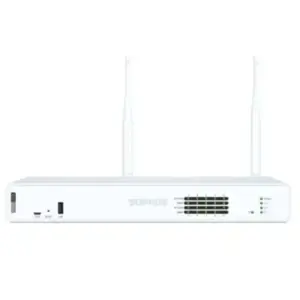
Compact wired network edge
MikroTik hEX refresh E50UG in Dubai, UAE
The hEX refresh brings a modern ARM platform and more memory to MikroTik’s familiar five-port wired router format. It is designed for buyers who want capable RouterOS control in a compact device without paying for an integrated wireless radio they do not need.
Plan the right configuration
Share your internet service, VLAN plan, VPN needs, user count and required installation scope for a more accurate quotation.
Wired LAN and WAN flexibility
Modern E50UG platform
More room for RouterOS tasks
Flexible routing and management
Use separate access points when required
Direct answer for buyers
The MikroTik hEX refresh E50UG is a compact wired router with five Gigabit Ethernet ports, a dual-core 950 MHz ARM processor, 512 MB RAM, 128 MB NAND storage, a USB 2.0 port and RouterOS v7. It is mainly used as an internet gateway, VLAN router, firewall, VPN endpoint or small branch edge device where wireless coverage is supplied separately. Small offices, technical home users, retail sites, labs and integrators may consider it when they need flexible configuration at an accessible hardware level. Before proceeding, confirm expected routed throughput, VPN encryption demand, number of firewall rules, required ports, power method, administrator experience and whether SFP, PoE output or Wi-Fi is needed.
What the E50UG does
The hEX refresh sits between an internet connection and the devices or switches on a local network. RouterOS allows it to route traffic, translate private addresses through NAT, apply stateful firewall policies, create VLAN interfaces, manage DHCP services, shape bandwidth, establish supported VPN connections and provide detailed administrative control. Because the device has no integrated radio, it can be placed in a cabinet, communications corner or desk location while separate wireless access points are positioned where coverage is actually required.
Its five Gigabit Ethernet interfaces can be assigned according to the design. A common small-site layout uses one port for the internet service and the remaining ports for a switch, access point, server, point-of-sale segment or management network. More advanced designs can use VLAN trunks and logical segmentation, although actual performance depends on the configuration, packet sizes, enabled services and traffic pattern.
Who should consider it
The model is well suited to buyers who deliberately want a wired RouterOS appliance and understand that wireless connectivity is a separate design decision. It may fit a small professional office, a compact retail branch, a lab, a serviced apartment network, a remote monitoring location or a technical home environment. It can also act as a learning platform for RouterOS because it provides many of the same software concepts used on larger MikroTik systems.
It may be less suitable when the project requires an integrated SFP port, multi-gigabit copper, extensive PoE output, built-in Wi-Fi, large-scale encrypted VPN throughput, heavy application inspection or the operational simplicity of a centrally managed security subscription. In such cases, FourTeck can discuss a different MikroTik platform or another network and security architecture.
Business challenges the hEX refresh can address
The value of the E50UG comes from how RouterOS is configured for the site, not from a single headline feature.
Separating business traffic
VLANs and firewall rules can separate staff devices, guest access, cameras, payment equipment and management systems. The VLAN plan must also be supported by connected switches and access points.
Controlling internet use
Queues, address lists, schedules and policy rules can help administrators allocate bandwidth or apply different treatment to selected users and services. Results depend on correct policy design and realistic capacity expectations.
Connecting remote locations
RouterOS supports several VPN technologies for remote administration, user access and site connectivity. The protocol, encryption level, public addressing and expected throughput should be confirmed before deployment.
Replacing basic ISP routing
The E50UG can provide more configurable firewall, routing and logging functions than many basic provider routers. Compatibility with the ISP handoff, VLAN tagging, PPPoE or static addressing must be checked.
Product-fit decision matrix
| Requirement | Suitable when | Confirm before ordering |
|---|---|---|
| Compact wired gateway | Five Gigabit ports are sufficient and Wi-Fi is delivered by separate access points. | WAN handoff, LAN port allocation and switch requirements. |
| VLAN segmentation | The administrator can design tagged and untagged networks and maintain firewall policy. | Switch and access-point VLAN support, DHCP plan and inter-VLAN rules. |
| VPN connectivity | The VPN workload is appropriate for a compact dual-core platform. | Protocol, tunnels, users, encryption, peer compatibility and throughput target. |
| Advanced RouterOS control | The buyer values granular control and has RouterOS expertise or configuration support. | Management responsibility, backup process, update policy and documentation scope. |
| Fibre or PoE-heavy deployment | Usually requires external devices or a different model. | SFP need, PoE budget, powered-device standards and alternative model selection. |
Verified technical information
The following details correspond to MikroTik product code E50UG. Performance remains dependent on configuration and traffic conditions.
| Brand | MikroTik |
|---|---|
| Product name | hEX refresh |
| Product code | E50UG |
| Product type | Compact wired Ethernet router |
| Architecture | ARM 32-bit |
| Processor | EN7562CT, two cores, two threads, 950 MHz nominal frequency |
| Switch chip | EN7523 |
| Memory | 512 MB RAM |
| Storage | 128 MB NAND |
| Ethernet ports | 5 × 10/100/1000 Ethernet |
| USB | 1 × USB Type-A, USB 2.0, maximum USB current 1 A |
| Operating system | RouterOS v7 |
| RouterOS license | Level 4 |
| Power inputs | DC jack and passive PoE input |
| Input voltage | 12–28 V |
| Maximum power consumption | 10 W; 4 W without attachments |
| Cooling | Passive |
| Dimensions | 113 × 89 × 28 mm |
| Tested ambient temperature | -40°C to 70°C |
| Wireless | Not integrated |
| SFP port | Not included |
| Availability and warranty | Contact FourTeck for current UAE options and applicable terms. |
Important model and dependency notice
The hEX refresh E50UG should not be confused with the hEX S or hEX S (2025). The E50UG has five Gigabit Ethernet ports and USB but does not provide an SFP cage or PoE output. Buyers who need a fibre module connection, 2.5G SFP uplink or powered-device output should evaluate the correct hEX S generation or another model rather than assuming those features are present.
RouterOS provides a broad feature set, but the practical capacity of firewalling, queues, VPNs, dynamic routing and other services depends on configuration complexity. Licensing, remote-access design, public IP availability, ISP restrictions and interoperability with third-party equipment can also affect the result. A requirements review is recommended for business-critical deployments.
A sensible purchase and deployment journey
Define the edge role
Confirm whether the router will handle internet access, VLAN routing, VPN termination, policy routing, bandwidth controls or a combination of functions.
Map interfaces and services
Document the ISP handoff, switch uplinks, access points, servers, cameras, guest networks and any equipment requiring dedicated segmentation.
Confirm product fit
Check that five Gigabit ports, available processing capacity, no SFP and no integrated Wi-Fi are appropriate for the intended design.
Build and test configuration
Apply secure administration, firewall policy, updates, backups, monitoring and controlled testing before moving the site into production.
Document and maintain
Keep interface maps, address plans, credentials, configuration exports, recovery access and an agreed software maintenance process.
Routing and segmentation without unnecessary hardware
For a small network, the ability to create several logical networks on a compact router can be more valuable than simply having many physical ports. RouterOS allows an administrator to define VLAN interfaces, bridges, IP subnets, DHCP servers and firewall zones. A business might separate corporate laptops from guest devices, keep surveillance equipment away from general user traffic and isolate management interfaces from ordinary endpoints. This improves control and can reduce the impact of accidental cross-network access, but segmentation is only effective when the complete path is designed correctly.
The E50UG can connect to a managed switch through a tagged trunk, allowing many VLANs to pass over one physical port. Access points can then broadcast separate staff and guest SSIDs mapped to those VLANs. The router applies policy between the networks and toward the internet. This arrangement preserves physical ports while giving the business a clearer logical structure. However, the switch and access points must support the chosen VLAN approach, native VLAN behaviour must be documented and management access must be protected from untrusted segments.
Buyers should avoid treating VLANs as a complete security solution. Firewall rules still need to define which traffic is permitted, DNS and DHCP behaviour must be planned, and administrative services should be restricted. A poorly documented bridge or VLAN configuration can also create outages that are difficult to diagnose. FourTeck can help translate the intended business separation into a practical interface and policy plan, including the configuration tasks that should be part of the quotation.
RouterOS flexibility and operational responsibility
RouterOS v7 gives the hEX refresh a substantial software toolkit. Depending on the use case and configuration, administrators can work with static and dynamic routing, firewall filters, NAT, DHCP, DNS forwarding, VPN technologies, quality-of-service controls, scripts, monitoring tools and remote management options. This flexibility lets one compact device serve several roles, which can be attractive for technical teams that want direct control over the network edge.
The same flexibility also means the buyer must decide who will own the configuration. A basic setup may be straightforward, while a multi-VLAN branch with dual WAN logic, remote-access VPN, scheduled policies and detailed logging requires disciplined administration. Businesses should identify an internal administrator or include professional configuration and documentation in the purchase scope. Default settings should be reviewed, unnecessary management services should be disabled or restricted, strong credentials should be used and RouterOS updates should be assessed as part of an ongoing maintenance process.
Configuration backups are essential. A binary backup can help restore a device in a similar hardware context, while an exported configuration provides readable documentation and may support controlled rebuilding. Sensitive files must be protected. The organisation should also retain the IP addressing plan, VLAN list, ISP details and a record of changes. These operational practices often matter more to business continuity than the initial purchase alone.
Performance planning for real workloads
A Gigabit port specification does not guarantee that every routed or encrypted workload will sustain one gigabit per second. Packet size, connection count, firewall rules, queue structure, bridge settings, fast-path eligibility, VPN encryption and additional RouterOS services all affect throughput and CPU use. The hEX refresh offers a stronger platform than the earlier classic hEX generation, but it remains a compact router intended for appropriately sized deployments.
For ordinary small-site NAT and firewall use, the device can be a strong value when the configuration is efficient. A site expecting many simultaneous VPN users, complex traffic shaping, extensive dynamic routing, large address lists or intensive logging should be evaluated more carefully. It may be better to choose a higher-capacity router before deployment rather than operate the E50UG continually near its limits. Capacity planning should consider peak traffic, not only the average internet usage observed during quiet periods.
The internet access method can also influence results. PPPoE adds processing requirements, while unusual provider VLANs, MTU constraints or modem bridge behaviour may require specific settings. Remote VPN throughput depends on both ends of the tunnel and on the selected protocol. FourTeck can review the intended workload and help determine whether the hEX refresh is a reasonable fit or whether a model such as an hEX S (2025), L009, RB5009 or another platform should be considered. Alternative selection must be based on the exact port, performance and feature requirement rather than product name alone.
Ideal business environments and use cases
Small professional office
Use the E50UG as a wired internet gateway while separate access points provide Wi-Fi. Staff, guest and voice networks can be segmented when the switching design supports VLANs.
Retail or service branch
A branch may separate point-of-sale equipment, staff systems, cameras and guest access. Confirm remote support, logging, failover expectations and any compliance obligations before deployment.
Technical home office
Home professionals can use RouterOS for policy control, lab VLANs, remote access or multiple local networks. The owner should be comfortable maintaining a configurable business-style router.
Network learning lab
The device can support hands-on learning with routing, firewalling, VPNs and VLANs. Lab experiments should be isolated from production services and backed up before major changes.
Remote equipment location
A compact wired router can connect monitoring, control or surveillance equipment. Environmental conditions, secure remote administration, power stability and recovery access need attention.
Managed network edge
Integrators may standardise selected small sites on a documented RouterOS configuration. Monitoring, software version control, credential management and spare-device processes should be defined.
Integration and operational considerations
The router is one component in a complete network. Before installation, confirm how the ISP presents the service. The connection may use DHCP, PPPoE, a static IP block, a provider VLAN or an upstream modem that remains in router mode. Double NAT can interfere with inbound services and some VPN scenarios, so modem bridge mode or a clear addressing plan may be needed. Provider support and account credentials should be available during commissioning.
Switch integration should be planned at the same time. An unmanaged switch can expand basic connectivity, but a managed switch is normally required when several VLANs need to be carried and assigned to different ports. Access points must also support the intended SSID-to-VLAN mapping. The E50UG does not power downstream devices through PoE output, so access points, cameras and other powered devices need suitable injectors or a PoE switch. Power standards and budgets must be verified rather than assumed.
For remote management, exposing administrative services directly to the internet is generally undesirable. A restricted VPN, trusted source addresses or a managed access approach should be used. Logging can be retained locally for limited troubleshooting or forwarded to an external syslog or monitoring platform when longer retention and central visibility are required. Time synchronisation, DNS behaviour and alerting should be included in the operational design.
The USB port may support selected storage or modem-related use cases under RouterOS, but compatibility and intended function should be confirmed. A USB accessory also affects power consumption. Buyers should not assume that every modem, storage device or peripheral will work without checking RouterOS support and testing the exact combination.
Questions to resolve before requesting a quotation
Provide the speed, handoff type, addressing method, provider VLAN and whether the modem will operate in bridge mode.
List staff, guest, voice, CCTV, server, payment, IoT and management networks, including which groups may communicate.
Confirm site-to-site or user access, peer platforms, protocol preference, concurrent users and realistic encrypted throughput.
Account for WAN, switch uplinks, access points, servers and dedicated equipment. Include a managed switch where expansion is required.
The E50UG has no SFP cage and no PoE output. Confirm whether another model or external infrastructure is necessary.
Decide who manages updates, backups, firewall changes, monitoring, recovery and documentation after handover.
Procurement checklist for the E50UG
How FourTeck can assist
FourTeck can help buyers convert a general request for a compact router into a defined bill of materials and implementation scope. Assistance can include confirming whether the E50UG is the intended model, reviewing port requirements, discussing VLAN and VPN objectives, identifying the need for managed switches or access points and coordinating a quotation based on quantity and destination.
Where configuration support is required, the scope can cover agreed interface assignments, IP addressing, DHCP, NAT, firewall policy, VLANs, VPN parameters, management restrictions, backups and handover documentation. The exact deliverables should be written into the quotation. For broader projects, explore FourTeck’s network and security services, review related technology products, or use the FourTeck contact page to share the requirement.
Useful details to send
Model and quantity
ISP and bandwidth
Network diagram
VLAN and VPN needs
Required services
Destination and timeline
UAE availability and support guidance
Contact FourTeck to confirm current UAE availability for the MikroTik hEX refresh E50UG. Availability may vary according to quantity, vendor supply, shipping schedules and the exact accessories or services included with the request. A quotation should identify the product code clearly so that the E50UG is not substituted with an older hEX or confused with an hEX S model. Warranty terms and return conditions should also be confirmed against the offered supply at the time of purchase.
Delivery and project coordination can be discussed after the requirement is defined. For a standalone hardware order, provide the quantity and destination. For an installed solution, include the ISP handoff, switch and access-point details, site access arrangements, desired configuration and testing expectations. Installation and configuration are variable services and should appear explicitly in the quotation when required. Buyers can also learn more about FourTeck firewall and networking assistance or review the FourTeck company overview.
Dubai, Abu Dhabi, Sharjah and Ajman coverage
FourTeck can coordinate product enquiries and defined project requirements for organisations in Dubai, Abu Dhabi, Sharjah and Ajman. The practical process begins with the exact model, quantity and deployment objective. A simple supply request differs from a multi-site rollout that includes configuration templates, managed switching, wireless access points, VPN integration or onsite tasks. Site access, travel, installation windows and technical dependencies should therefore be discussed before dates are agreed. No delivery or service schedule should be assumed until availability and scope are confirmed in the quotation.
GCC availability
Businesses planning a MikroTik hEX refresh deployment elsewhere in the GCC can contact FourTeck for requirement review and quotation coordination. Support may include checking the E50UG model identity, discussing the number of sites, reviewing network and VPN objectives, identifying accessories or complementary switching and defining whether configuration assistance is required. Enquiries may relate to the United Arab Emirates, Saudi Arabia, Kuwait, Qatar, Bahrain or Oman, but product supply and service arrangements are assessed for the specific destination rather than assumed across the region. Availability, licensing considerations for related software, delivery schedules, service visits and vendor lead times can vary by country, model, quantity and project scope. Buyers should provide the destination country, required quantity, intended installation environment, preferred timeline and any configuration or support expectations. For Kuwait-related coordination, the FourTeck Kuwait resource may also be relevant. Customs handling, local certification and fixed delivery timing should be confirmed separately where applicable.
Africa availability
Organisations evaluating the E50UG for African branch networks, technical labs, retail sites or remote facilities can share their requirements with FourTeck for regional procurement guidance. The review can cover exact product code, quantity, power arrangements, ISP connectivity, VLAN design, VPN needs, supporting switches, wireless access points and the desired configuration scope. Fulfilment may depend on the destination, available transport route, vendor lead time, power standards, local regulatory requirements and conditions at the deployment site. Projects in East Africa and other regions should therefore be planned using confirmed information rather than assumptions about local inventory or immediate shipment. Buyers should state the destination country, expected deployment schedule, installation responsibilities and support needs. FourTeck resources for technology enquiries in Kenya, Uganda project coordination and wider Africa technology requirements can help begin the discussion. Shipping, customs outcomes and onsite coverage must be confirmed for each project.
Related products and services to consider
hEX S (2025)
Consider the newer hEX S generation when a 2.5G SFP uplink, PoE output or USB 3.0 is required. Confirm exact product code and power needs.
Managed Gigabit switch
A managed switch can expand port count and carry VLANs to users, access points, cameras and other systems. Select the switch according to port and PoE requirements.
Business wireless access points
Because the E50UG has no radio, separate access points are required for Wi-Fi. Coverage, capacity, roaming and VLAN support should guide selection.
RouterOS configuration service
Professional configuration may cover routing, firewalling, VLANs, VPNs, secure management, backups and documentation based on an agreed scope.
Higher-capacity MikroTik router
Larger branches, multi-gigabit services or demanding VPN workloads may require L009, RB5009, CCR or another platform after capacity assessment.
UPS and power planning
A suitable UPS and protected power arrangement can improve continuity. Runtime, load, plug type and the complete network power requirement should be calculated.
Why businesses contact FourTeck
The most useful assistance often comes before the order is placed. FourTeck can help clarify whether the hEX refresh is the correct model, identify missing switches or access points, review the intended network role and structure the quotation around real deliverables. This reduces the chance of ordering a router that lacks an expected SFP port, PoE output or wireless function.
For configured deployments, the discussion can cover interface mapping, addressing, VLANs, firewall policy, remote access, backups, testing and handover. For multi-site requirements, a repeatable template and documented exceptions may be more important than configuring every location independently. FourTeck can also coordinate related product selection, installation planning and support expectations without making unverified promises about stock, lead time or project outcomes.
Frequently asked questions
Is the hEX refresh E50UG a wireless router?
It is a wired router and does not include Wi-Fi. Wireless access requires separate access points, which can be selected and positioned according to coverage and capacity needs.
How is the E50UG different from the hEX S?
The E50UG hEX refresh has five Gigabit Ethernet ports and USB but no SFP cage or PoE output. hEX S models add different connectivity features, and the original and 2025 hEX S generations also differ from each other. Confirm the exact model.
Can it be used with a Gigabit internet connection?
It can connect through Gigabit Ethernet, but usable routed throughput depends on packet size, firewall complexity, queues, VPN encryption and other settings. The complete workload should be reviewed rather than relying only on port speed.
Does RouterOS require an additional license?
The hardware is specified with a RouterOS Level 4 license. Third-party services, external management tools or other products may have separate terms. Confirm the offered package and any related software requirements.
Can the router create VLANs?
RouterOS supports VLAN configuration. The connected switch and access points must also support the intended VLAN design, and firewall policy is required to control communication between segments.
Can it provide VPN access?
RouterOS supports multiple VPN methods. Suitability depends on the chosen protocol, number of users or tunnels, encryption requirements, peer compatibility, public addressing and expected throughput.
Does the hEX refresh power access points or cameras?
The E50UG does not provide PoE output. Powered devices need a compatible PoE switch, injector or another router model with suitable PoE-out capability and adequate power budget.
What information is needed for a quotation?
Provide the E50UG model name, quantity, destination, ISP details, required network segments, VPN needs, related switches or access points and whether configuration, installation, testing or documentation is required.
Is the MikroTik hEX refresh available in Dubai?
Contact FourTeck to check current UAE availability. Supply can vary by quantity and vendor lead time, so stock and delivery should be confirmed in the quotation.
Can FourTeck configure the router?
Configuration assistance can be discussed based on the required routing, firewall, VLAN, VPN, management, backup, testing and documentation scope. Deliverables should be agreed before the work begins.
Confirm whether the E50UG fits your network
Send FourTeck your bandwidth, port, VLAN, VPN and deployment requirements for product-fit guidance, current availability information and a quotation tailored to the requested scope.