

Long-range environmental and event monitoring
MikroTik TG-LR92 in Dubai, UAE
The TG-LR92 is a configurable LoRaWAN sensor tag for collecting temperature, humidity, movement, orientation and magnetic-switch events across distributed IoT environments. Its real value is not simply the sensor hardware; it is the ability to apply local rules, selectable reporting profiles and event-based telemetry so that monitoring traffic can be shaped around the operational situation.
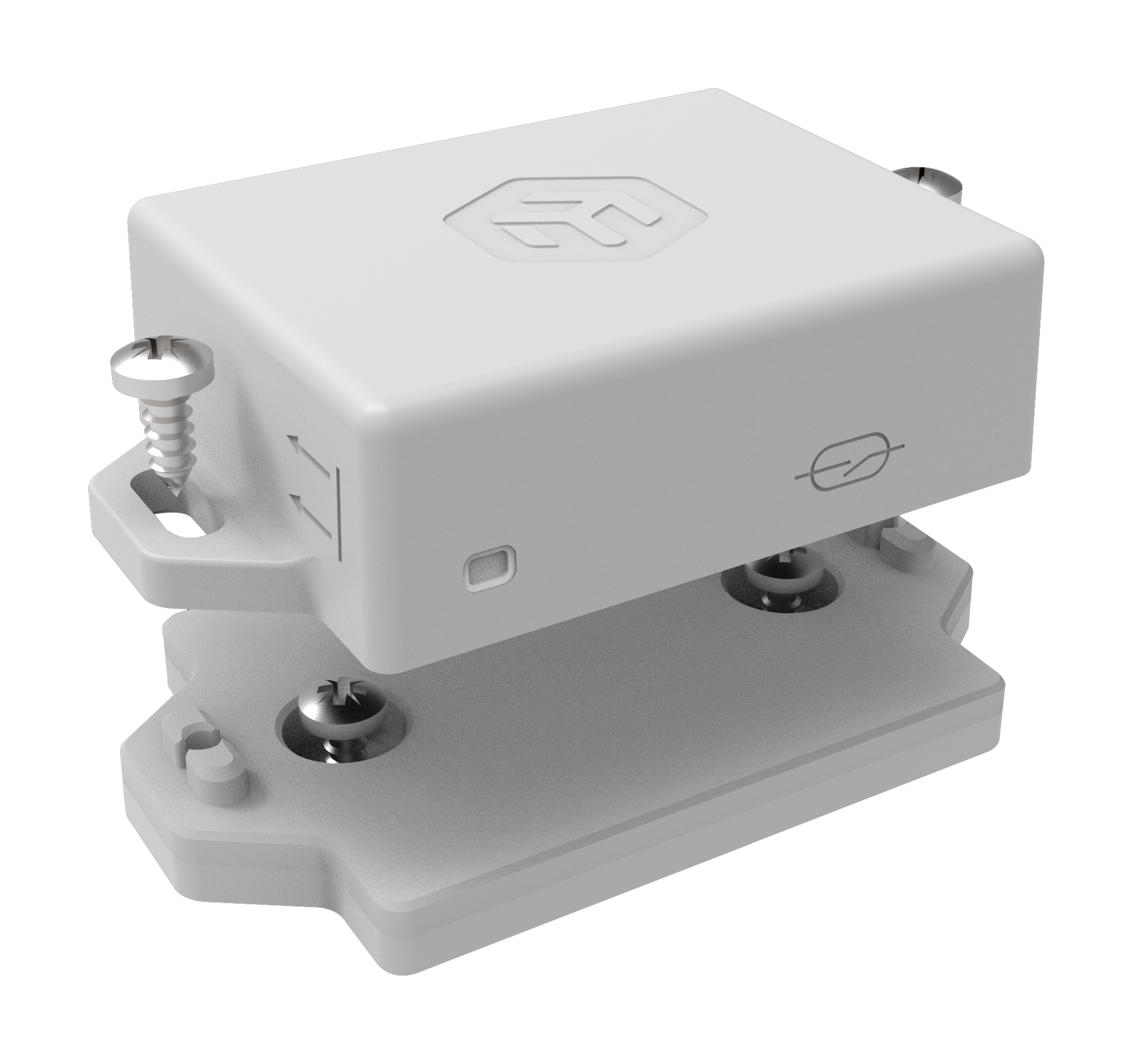
Buyer note: TG-LR92 is the 902–928 MHz model and also supports 2.4 GHz LoRa. Confirm UAE frequency-plan suitability, gateway compatibility and project design before procurement.
Direct answer for buyers
MikroTik TG-LR92 is a compact LoRaWAN node that can monitor environmental conditions and physical events, then report the resulting data through a compatible LoRaWAN network. It is mainly used where organisations need low-power sensing over wider areas than ordinary short-range wireless systems can conveniently cover. Facilities, logistics operations, equipment owners, storage operators, integrators and IoT project teams may consider it. Before proceeding, buyers should confirm that the selected radio region is permitted and supported at the deployment site, that a suitable LoRaWAN gateway and network server are available, and that reporting intervals, sensor rules, mounting, battery expectations and data integration have been designed for the intended use case.
What the TG-LR92 does
The sensor collects measurements and status changes that can be transformed into useful operational telemetry. It can support temperature and humidity reporting, movement and orientation monitoring, threshold-triggered updates, impact or free-fall logic, and magnetic reed-switch events for doors, lids or cabinets. The device can apply rules locally and choose among multiple profiles, helping the deployment send more data when conditions matter and fewer updates during routine operation.
That local decision capability is important in LoRaWAN projects because radio airtime, battery use and backend processing all benefit when the sensor reports with purpose rather than transmitting continuously. The project designer can create different behaviours for routine checks, active transport, alarm conditions, equipment movement or scheduled environmental summaries.
Who should consider it
The TG-LR92 may suit organisations building a managed LoRaWAN monitoring environment rather than buyers seeking a standalone display or consumer alert device. Typical evaluators include system integrators, warehouse operators, facilities teams, cold-room and storage managers, research groups, maintenance departments, logistics planners and organisations responsible for distributed equipment.
It is most appropriate where a compatible gateway and network server can be provided, the data payload can be decoded and visualised, and the project team is prepared to configure reporting logic. It may be unsuitable where the local radio plan does not match the selected unit, where instant high-bandwidth telemetry is required, or where a fully managed monitoring service is needed without any integration effort.
Business challenges the sensor can help address
Limited visibility between inspections
Manual checks may leave long gaps in which temperature changes, door openings or equipment movement are not recorded. A configured sensor network can provide time-stamped data between physical visits, subject to gateway coverage and application design.
Too much unnecessary telemetry
Fixed reporting intervals can waste airtime and battery capacity. Multiple profiles and event rules allow the device to alter its behaviour when conditions change, such as moving from infrequent health updates to more frequent reports during activity.
Monitoring remote or dispersed assets
The LoRaWAN approach is designed for low-power data across broad areas. Actual coverage depends on frequency, gateway antenna, building materials, terrain, interference, installation height and the selected data rate.
Detecting physical state changes
Magnetic-switch and orientation-related events can support simple state awareness for cabinets, enclosures, doors or movable equipment. The final mechanical arrangement and thresholds must be tested in the real environment.
Core capabilities in a practical deployment
Product-fit matrix
| Requirement | Suitable when | Confirm before ordering |
|---|---|---|
| Long-range low-power sensing | Small telemetry payloads are sufficient and gateway coverage can be planned. | Site survey, band plan, antenna position and expected reporting interval. |
| Temperature or humidity monitoring | The application can ingest LoRaWAN payloads and interpret the required sensor data. | Accuracy requirement, calibration policy, alert thresholds and record retention. |
| Door, lid or cabinet events | A magnetic arrangement can reliably operate the reed-switch logic. | Magnet placement, mounting tolerance, debounce logic and tamper risks. |
| Movement and tilt monitoring | Rules can be tuned to distinguish meaningful activity from normal vibration. | Orientation baseline, threshold testing and event frequency. |
| International or mobile use | The project deliberately uses supported 2.4 GHz LoRa infrastructure or a verified regional sub-GHz plan. | Legal frequency use, gateway support, roaming design and destination-country requirements. |
Verified product information
| Brand | MikroTik |
|---|---|
| Product name | TG-LR92 |
| Product type | Configurable LoRaWAN environmental and event sensor tag |
| LoRaWAN support | LoRaWAN 1.0.4, Class A and Class B |
| Sub-GHz radio | 900–928 MHz family support; regional configuration must be verified |
| Additional LoRa band | 2.4 GHz |
| Sensors | Temperature, humidity and motion/orientation sensing hardware; magnetic reed-switch functionality |
| Temperature accuracy | Up to ±0.3°C maximum across the documented operating range, with NIST traceability stated by the manufacturer |
| Temperature range | Manufacturer documentation lists -20°C to +70°C for the sensor range; the product page lists tested ambient temperature of -10°C to +70°C. Confirm the relevant limit for the installation. |
| Battery | 1000 mAh LiMnO2 according to the official manual |
| Expected battery life | Up to five years under suitable conditions; strongly dependent on profiles, airtime, signal quality, event activity and environment |
| Enclosure rating | IP67 |
| Dimensions | 74 × 45 × 19 mm |
| Mounting | Strapping or M4 screw mounting; bracket and screw set are listed as included parts |
| Certifications shown by manufacturer | FCC and IC |
| Configuration method | LoRaWAN downlinks and magnetic-switch command interaction, depending on the task |
| UAE availability | Contact FourTeck for current options and regional suitability review |
| Important note | Do not assume the TG-LR92 sub-GHz plan is automatically suitable for a Dubai deployment. Confirm local regulations, gateway capability and the chosen regional profile before purchase. |
Frequency, compatibility and scope dependencies
The TG-LR92 is not a universal substitute for every regional LoRaWAN sensor. The manufacturer positions it as the 902–928 MHz version and also documents support for selected regional plans within that range plus 2.4 GHz operation. A Dubai project must therefore confirm the legally permitted band, the exact network-server region, the gateway concentrator and its configured channels. Where a different sub-GHz plan is required, the TG-LR82 or another suitable sensor may need to be considered instead.
Compatibility also extends beyond radio frequency. The application must register the device credentials securely, decode its payload format, store the telemetry, apply alarms and present the information to users. A gateway alone does not create a complete monitoring solution. Buyers should decide whether data will flow to an existing LoRaWAN server, The Things Stack, a private platform or a custom application, and who will maintain payload decoders, dashboards, alert rules and user access.
Battery life is configuration dependent. Frequent confirmed uplinks, difficult radio conditions, repeated join attempts, aggressive event thresholds, regular downlinks and extreme temperatures can reduce service life. The quoted maximum should be treated as a planning reference, not a guaranteed interval.
A practical purchase and deployment journey
Define the monitoring outcome
Specify what must be measured, how quickly an event matters, which alerts are required and how long records must be retained.
Validate the radio plan
Confirm the permitted regional frequency, channel plan, gateway hardware, antenna design and expected indoor or outdoor coverage.
Design profiles and rules
Choose reporting periods, thresholds, event triggers, orientation logic and fallback behaviour for poor connectivity or unusual conditions.
Build the data path
Register credentials, apply the payload decoder, connect storage and dashboards, then set notifications and role-based access.
Pilot in the real location
Test radio coverage, temperature response, event accuracy, mounting, false positives, latency and power assumptions before scaling.
Document and operate
Record device identity, location, profile, installation date, service procedure, alert owner and replacement plan for each deployed unit.
Local processing reduces unnecessary radio traffic
A valuable characteristic of the TG-LR92 is its ability to process sensor information before transmission. In a simple sensor, every reading might be sent at a fixed interval whether or not the information has changed. That approach can be inefficient in a battery-powered LoRaWAN environment. The TG-LR92 can instead work with rules, profiles and locally calculated data such as averages or histograms, allowing the project designer to decide what information is operationally meaningful.
For a storage area, the normal profile might send a compact health update several times per day. If temperature crosses a defined threshold, the device could change profile and report more frequently. For movable equipment, a quiet profile might be used while the asset remains stationary, with activity events generating a different reporting pattern. This kind of behaviour can reduce backend logic because part of the decision is made at the edge.
The advantage depends on careful configuration. Thresholds set too tightly may produce excessive traffic. Thresholds set too broadly may hide important changes. A pilot should compare the device output with reference instruments and actual operating procedures. Reporting logic should also account for network delay, missed packets and the fact that LoRaWAN is not intended to replace high-speed or safety-critical control systems.
Flexible profiles support different operational states
The device documentation describes six configurable profiles. Each profile can hold independent sensor and uplink behaviour, which creates a practical way to adapt one physical unit to several operating states. A profile can be selected through device commands, magnet interaction or evaluated rules. This matters for projects in which the same asset alternates between storage, movement, inspection and exception conditions.
Consider a reusable transport container. During storage, a low-frequency profile may be sufficient. Once movement is detected, the device can use a more active profile that captures orientation or environmental changes more often. If a door or lid is opened, the magnetic event can create an immediate record or change the active profile. When the container returns to a stable state, the reporting pattern can reduce again. This model is more efficient than maintaining a single aggressive interval for the entire lifecycle.
Profile design should be documented and version controlled. Operations teams need to know what each profile means, how it is triggered, how long it remains active and what data should appear. Without that discipline, sensor behaviour can become difficult to interpret. FourTeck can help translate the business process into a configuration brief, but the final rules should be accepted by the customer’s operational owner and tested under realistic conditions.
Integration turns telemetry into operational information
The TG-LR92 produces data; the surrounding platform turns that data into something useful. A complete design normally includes one or more LoRaWAN gateways, a network server, device registration, payload decoding, a time-series or application database, dashboards, alerting and user access. The manufacturer references modern monitoring stacks and The Things Network as possible integration paths, but the best architecture depends on the customer’s security policy, cloud preference, existing applications and support model.
The payload decoder deserves special attention. It must correctly interpret sensor frames, event flags, battery status and timestamps. A software update or configuration change can affect the expected payload. The project should therefore include decoder validation, sample-data testing and a method to identify malformed or missing telemetry. Alerts should be based on sustained conditions or well-defined events rather than every isolated reading, especially in radio environments where occasional packet loss is expected.
Security planning should protect AppKeys and device credentials, restrict administrative access, separate IoT services where appropriate and maintain backups of configuration. Device onboarding and decommissioning should be documented. The operational team also needs a process for replacing a sensor, transferring an asset, changing a gateway or investigating a missing device without losing traceability.
Ideal environments and use cases
Warehouses and storage areas
Monitor environmental conditions, doors or cabinets where a gateway can cover the site and where measurements support operational review rather than certified process control.
Transport assets and containers
Use movement, orientation and environmental events to build a history of asset conditions. International operation requires deliberate frequency and network planning.
Facilities and equipment rooms
Add remote visibility in locations where wired monitoring is difficult, provided the sensor accuracy, mounting and alert process meet the facility requirement.
Research and field monitoring
Collect environmental and activity data from distributed points, with appropriate calibration, metadata, site notes and retrieval procedures.
Cabinet and enclosure status
A magnetic reed-switch arrangement can register opening or closing events where the mechanical fit is repeatable and false triggers are tested.
Maintenance and asset activity
Movement or tilt data may indicate handling or service activity, but it should be interpreted with context and not treated as proof of a specific action without validation.
Operational considerations
Installation location affects both sensing and radio performance. A sensor mounted near a heat source, external wall, ventilation outlet or direct sunlight may not represent the wider space. Metal cabinets can attenuate radio signals. A gateway that appears close on a floor plan may still be blocked by reinforced concrete, machinery, insulated panels or stacked inventory.
The mounting method should keep the enclosure secure while allowing access for service. Where a magnetic event is used, the magnet and sensor must remain aligned through vibration, door movement and normal wear. Labels should identify the device and its logical asset name without exposing security credentials.
The customer should define who receives alarms, who investigates missing telemetry, who approves configuration changes and how device health is reviewed. Monitoring without an operational response process often creates dashboards that are visible but not actionable.
When another option may be better
Choose another model or technology where the required sub-GHz plan does not match TG-LR92, where cellular connectivity is needed without a local LoRaWAN gateway, or where the application requires live high-frequency data. A wired industrial sensor may be more suitable for control loops or installations that already have power and cabling.
A calibrated data logger may be preferable when a formal compliance process requires a specific certificate, audit workflow or local display. A GPS-enabled tracker is required when true location is needed, because the TG-LR92 does not provide GNSS scanning according to the official manual.
FourTeck can compare the monitoring objective with nearby MikroTik options, gateways and alternative architecture patterns before a bill of materials is prepared.
Questions to resolve before requesting a quote
Define temperature range, humidity needs, motion, tilt, impact, free fall, door or lid events and any derived metrics.
Confirm UAE regulatory requirements, gateway channels and whether sub-GHz or 2.4 GHz LoRa is intended.
Set realistic latency expectations based on class, reporting profile, coverage and application processing.
Identify the LoRaWAN server, decoder, database, dashboard, alerting channel and integration owner.
Quantity planning should include coverage, redundancy, spares, growth and the physical distribution of assets.
Assign responsibility for device onboarding, profile changes, dashboard maintenance, incidents and replacement.
Procurement checklist
☐ Confirm the exact model TG-LR92 and required quantity.
☐ Confirm the permitted frequency plan at every destination.
☐ Identify compatible LoRaWAN gateway hardware and antenna design.
☐ Define network-server region and device onboarding method.
☐ Document required sensor readings and event thresholds.
☐ Agree reporting intervals and battery-life assumptions.
☐ Confirm mounting bracket, screws, straps and magnet arrangement.
☐ Plan payload decoding, dashboards, alerts and data retention.
☐ Decide whether a pilot, site survey or coverage test is required.
☐ Include configuration and integration scope in the quotation.
☐ Confirm delivery destination, project timeline and acceptance tests.
☐ Request current warranty and availability guidance before purchase.
How FourTeck can assist
FourTeck can help turn a broad monitoring idea into a clearer procurement requirement. The discussion can cover the number of sensing points, environmental limits, asset movement, desired event response, gateway placement, LoRaWAN server choice, reporting frequency, data visualisation and operational ownership. This requirement review helps reduce the risk of buying sensors before the network and application path have been defined.
For customers already operating MikroTik infrastructure, FourTeck can review how the TG-LR92 may fit with relevant LR9 or 2.4 GHz gateway options, subject to regional and technical compatibility. Assistance can also include quotation coordination, bill-of-material guidance, configuration-scope planning, pilot design and the identification of required services. Visit the FourTeck technology products catalogue to explore related infrastructure, or review available technology planning and configuration services.
The final quotation should state the exact product, quantities, gateway items, accessories, configuration work, installation responsibility, delivery coordination and any integration deliverables. For a tailored discussion, use the FourTeck contact page.
UAE availability and support guidance
Contact FourTeck to confirm current UAE availability for the MikroTik TG-LR92. Availability may depend on model, quantity, vendor lead time and regional suitability. Because the TG-LR92 is associated with 902–928 MHz operation, the quotation process should include an explicit review of the intended UAE radio plan and gateway architecture. A product being available for procurement does not automatically mean its sub-GHz mode is appropriate for the planned location.
FourTeck can coordinate requirement review, quotation preparation, delivery planning and discussion of installation or configuration scope after the exact deployment is understood. Warranty terms, included components and any project services should be confirmed in the formal quotation. No assumption should be made about immediate stock, same-day delivery or a fixed installation date.
Dubai, Abu Dhabi, Sharjah and Ajman coverage
FourTeck can discuss TG-LR92 requirements for organisations planning deployments in Dubai, Abu Dhabi, Sharjah and Ajman as part of one coordinated UAE requirement. The conversation may include site type, number of sensors, gateway placement, reporting objectives, network-server integration, dashboard needs and installation responsibilities. Delivery and project coordination are considered after model suitability, quantities and scope are confirmed. For multi-site projects, buyers should provide a location schedule and note whether each site shares the same network architecture or requires separate gateways, credentials and support arrangements.
GCC Availability
FourTeck can assist organisations evaluating the MikroTik TG-LR92 for projects across the GCC, including requirements in the United Arab Emirates, Saudi Arabia, Kuwait, Qatar, Bahrain and Oman. Regional planning is especially important for a LoRaWAN sensor because permitted sub-GHz bands, channel plans, gateway configurations and certification expectations may vary. Buyers should not assume that a unit selected for one country can be moved to another country and used with the same radio settings.
FourTeck can support requirement review, model selection, quotation coordination, gateway planning, configuration-scope definition and delivery discussions. Product availability, licensing of surrounding platforms, delivery schedules, service visits and vendor lead times can vary by country, quantity and project. Share the destination country, exact sensor quantity, intended frequency plan, gateway model, deployment location and target timeline so the proposed bill of materials can be reviewed. For Kuwait-related technology coordination, buyers may also visit FourTeck Kuwait.
Africa Availability
FourTeck can help organisations planning LoRaWAN sensing projects in Africa evaluate the TG-LR92, associated gateways, configuration requirements and support expectations. The first step is to confirm the destination country and permitted frequency plan. A 902–928 MHz sensor may be appropriate in some environments and unsuitable in others, while 2.4 GHz LoRa may require a different gateway design and coverage expectation. Power standards, shipping arrangements, local installation conditions and access to project sites should also be discussed.
Availability and fulfilment may depend on the exact model, quantity, vendor lead time, destination, regional regulation, gateway architecture and service scope. Buyers should provide the project country, sensor count, preferred deployment schedule, monitoring objective and required installation or integration support. FourTeck can then coordinate practical guidance without promising local inventory or a guaranteed delivery date. Regional resources include FourTeck Africa technology support, FourTeck Kenya and FourTeck Uganda.
Related products and service options
MikroTik TG-LR82
Consider the alternate sub-GHz version where the required regional band falls within its supported range. Exact region compatibility must still be confirmed.
MikroTik LR9 gateways
Relevant gateway options may provide the network bridge for compatible 915 MHz LoRaWAN deployments. Select the gateway according to backhaul, coverage and regional plan.
MikroTik 2.4 GHz LoRa gateways
A 2.4 GHz gateway architecture can be evaluated where global-band flexibility is required, with coverage expectations tested in the target environment.
LoRaWAN design assistance
Requirement review, coverage planning, gateway placement, payload integration and dashboard design can be scoped as project services.
Installation and configuration
Sensor mounting, device onboarding, profile setup and acceptance testing can be discussed when locations and responsibilities are known.
Monitoring platform integration
Payload decoding, storage, dashboards and alerting may be included in a separate integration scope based on the customer’s platform.
Why businesses contact FourTeck
Buyers often need help deciding whether a sensor model fits the wider project rather than simply confirming that it exists. FourTeck can assist with requirement clarification, radio-band review, quantity planning, gateway selection, bill-of-material preparation, configuration scope and delivery coordination. This is particularly useful for the TG-LR92 because regional radio suitability and backend integration are central to a successful deployment.
The aim is to create a quotation that reflects the complete requirement: sensors, gateways, accessories, application integration, installation responsibilities and support expectations. Learn more about the company through the FourTeck business technology profile or discuss a specific requirement with the sales team.
Frequently asked questions
What is the MikroTik TG-LR92 used for?
It is used to collect and transmit environmental and event data over a LoRaWAN network. Common scenarios include temperature and humidity monitoring, movement or tilt detection, cabinet or lid events, logistics visibility and equipment activity monitoring.
Is TG-LR92 automatically suitable for Dubai?
No. The model is associated with 902–928 MHz operation and also supports 2.4 GHz LoRa. The intended UAE frequency plan, gateway channels, legal requirements and network-server configuration must be confirmed before ordering.
What is the difference between TG-LR92 and TG-LR82?
The principal difference is the supported sub-GHz frequency range. TG-LR92 is the 902–928 MHz version, while TG-LR82 covers the 863–870 MHz range. The correct model depends on the deployment country and network plan.
Does the sensor work without a LoRaWAN gateway?
Not as a complete remote-monitoring solution. It requires compatible LoRaWAN infrastructure, including a gateway, network server and application path that can decode and present its telemetry.
How long does the battery last?
The manufacturer states an expected life of up to five years. Actual life depends on reporting intervals, radio quality, join attempts, downlinks, event frequency, profile design and temperature, so it should be validated against the proposed configuration.
Can it detect door opening?
The integrated magnetic reed-switch functionality can be used for door, lid or cabinet events when the magnet and sensor are mounted in a reliable geometry. The installation should be tested for alignment and false triggers.
Can it report motion, tilt or impact?
Yes, the product supports motion and orientation-related sensing and can be configured for activity, tilt, impact or free-fall scenarios. Thresholds and rules must be tuned for the actual asset and environment.
Is configuration included with the product?
The hardware supports configuration, but project configuration and integration services should be quoted separately unless explicitly included. The scope may cover onboarding, profiles, rules, payload decoding, dashboards and testing.
What information is needed for a quotation?
Provide the deployment country, quantity, monitoring objectives, required frequency plan, gateway preference, site layout, reporting interval, application platform, mounting conditions and any installation or integration requirement.
How can I confirm UAE availability?
Contact FourTeck with the exact model and project details. Current availability, lead time, warranty guidance, delivery coordination and model suitability can then be addressed in the quotation process.
Plan the sensor, gateway and data path together
Share the required monitoring points, destination, frequency plan, gateway preference and application platform. FourTeck can review model suitability and prepare a quotation that reflects the complete deployment rather than the sensor alone.

Reviews
There are no reviews yet.