

Palo Alto Networks PA-415-5G ML-Powered Next-Generation Firewall in Dubai, UAE
The PA-415-5G combines application-aware firewalling, branch connectivity, selected PoE ports and an integrated cellular interface in one compact platform. It is designed for organisations that need secure edge connectivity and a practical alternative to relying on one wired internet circuit.
Direct answer for business buyers
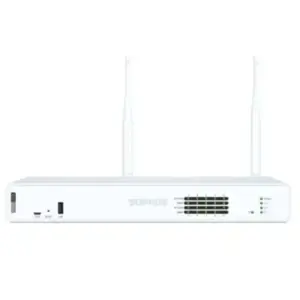
The PA-415-5G is a Palo Alto Networks PA-400 Series next-generation firewall for small organisations, enterprise branches, retail locations and midsize businesses. It uses PAN-OS for application identification, security policy, threat inspection, VPN connectivity and management integration. Its defining feature is an integrated 5G cellular module that can support a primary, backup or selected SD-WAN path. Buyers should confirm traffic volume, concurrent sessions, decryption requirements, local operator compatibility, SIM and APN arrangements, subscription terms, PoE demand, mounting, power resilience and central management before ordering.
What it does
The appliance enforces security policy by identifying applications, users and content rather than relying only on network addresses and ports. It can protect internet access, create encrypted site-to-site links, support remote-access designs, segment local systems and send logs to supported management platforms. The cellular interface provides an additional WAN choice without requiring a separate external modem.
Who it suits
The PA-415-5G may suit a branch that needs moderate inspected throughput, several 1GbE connections, selected PoE and a built-in cellular option. It is relevant to retail, professional services, remote facilities, temporary offices and continuity projects. Large campuses, dense data centres and very high-bandwidth sites should be assessed against larger models rather than assuming this compact appliance is sufficient.
Business problems it helps address
Single-circuit dependency
A wired outage can interrupt access to cloud systems, payment platforms and central applications. The cellular interface can be designed as an alternate path, subject to mobile coverage, carrier policy and correct failover configuration.
Inconsistent branch controls
Distributed sites often accumulate different rules and unmanaged exceptions. Central policy and template-based administration can help teams apply more consistent standards across branches.
Limited application visibility
Conventional routers may show addresses and ports but provide little context. Application identification supports policies based on the actual service in use and its business relevance.
Too many edge components
Selected PoE ports and integrated cellular connectivity can reduce separate injectors or routers in compact locations, provided the total power and connectivity design remain suitable.
Core capabilities
Control applications with greater context than basic port-based filtering provides.
Use supported 4G or 5G service as a primary, backup or selected branch transport.
Add the security services required by the organisation’s risk and compliance profile.
Integrate the appliance into a wider Palo Alto Networks operational model.
Product-fit matrix
| Requirement | Suitable when | Confirm before ordering |
|---|---|---|
| Branch performance | Expected inspected traffic is within the published operating range. | Application mix, decryption, VPN, logging and active services. |
| Cellular continuity | 5G or 4G can provide a viable alternate or primary link. | Bands, signal, APN, SIM plan, addressing and data limits. |
| PoE edge devices | Connected devices fit within supported port and total power budgets. | Power class, cabling and redundancy requirements. |
| Central management | Several sites need common policy and administration. | Management platform, licensing, logs and administrator roles. |
| High availability | Two appliances are justified by business impact. | Duplicate hardware, subscriptions, switching and power design. |
Verified technical information
| Brand | Palo Alto Networks |
|---|---|
| Model and part number | PA-415-5G / PAN-PA-415-5G |
| Product family | PA-400 Series ML-Powered Next-Generation Firewall |
| Firewall throughput | 1.5 Gbps using published app-mix methodology |
| Threat prevention throughput | 0.8 Gbps |
| IPsec VPN throughput | 0.65 Gbps |
| Concurrent sessions | 64,000 |
| New sessions per second | 11,400 |
| Traffic interfaces | Eight RJ-45 10/100/1000 Mbps ports |
| PoE | Ports 6, 7, 8 and 9; confirm per-port and total budget |
| Cellular | Integrated 4G/5G module, dual SIM and four multi-band antennas |
| PAN-OS | PAN-OS 11.1 and later, subject to vendor lifecycle policy |
| Power | One 150W adapter supplied; optional second adapter for redundancy |
| Rack mounting | Compatible 1RU rack tray required |
| Weight | Approximately 7.85 lb / 3.56 kg |
| Availability | Contact FourTeck for current UAE options and lead time |
Published figures are sizing references rather than guarantees for every deployment. Results vary with packet size, traffic mix, decryption, enabled subscriptions, logging, policy complexity, software release and network design.
Licensing, carrier and compatibility dependencies
The appliance SKU does not automatically describe a complete security package. The final bill of materials may include support and selected services such as Advanced Threat Prevention, Advanced URL Filtering, Advanced WildFire, DNS Security, IoT Security, GlobalProtect, SD-WAN or management subscriptions. License names, bundles and commercial terms can change. Each quotation should therefore show the exact SKU, quantity and term rather than using a generic bundle description.
The cellular design also needs local validation. Coverage at the site, indoor signal, supported bands, APN settings, data plan, static or dynamic addressing, SIM policy and local regulatory conditions can affect the outcome. A strong coverage map does not guarantee the same result inside a communications room. Antenna placement and a practical signal test should be part of the deployment plan.
Purchase and deployment journey
Measure the branch
Record users, applications, peak traffic, VPN demand, encrypted traffic and growth.
Design the WAN
Decide whether cellular service is primary, backup or part of SD-WAN.
Select subscriptions
Map security and remote-access needs to the appropriate license terms.
Confirm accessories
Check rack tray, second adapter, antennas, SIMs and PoE devices.
Configure and test
Build routing, zones, NAT, VPN, cellular profiles, logging and failover tests.
Integrated 5G for practical WAN resilience
The integrated cellular interface is the main distinction between this model and a conventional compact branch firewall. A separate 5G router can provide similar transport, but it introduces another device, another power source and another configuration surface. Bringing cellular connectivity into the firewall can simplify physical deployment and make path status, routing and security policy easier to coordinate.
Cellular service is variable by nature. Bandwidth and latency change with coverage, building materials, congestion and operator conditions. A business should not assume that a 5G connection will always reproduce the behaviour of a dedicated fibre circuit. Critical applications should be identified and prioritised. Large backups, software distribution or media traffic may need to be limited during failover, especially where the mobile plan includes data caps or different charging rules.
Dual-SIM capability can improve operator flexibility, but each SIM may use a different APN, addressing method and commercial policy. The intended switchover process should be documented and tested. Inbound services may require special handling where the carrier uses private addressing or carrier-grade NAT. These details should form part of the implementation scope rather than being left for the day of installation.
Application control and security inspection
PAN-OS identifies applications so policy can be linked to business purpose rather than only a port number. This helps a team permit approved collaboration tools, control unsanctioned file sharing and apply stronger treatment to unknown or risky traffic. User and device context can also improve policy where the required identity and integration services are available.
Threat inspection depends on the subscriptions and configuration included in the project. A buyer should map each proposed service to a real requirement. Some organisations need broad web, DNS and malware controls, while others may also need IoT visibility, remote access or SD-WAN. Purchasing every available service without an operating plan can increase cost without creating proportional value. Conversely, buying hardware alone may leave important controls unavailable.
TLS decryption is a major sizing consideration because much business traffic is encrypted. Selective decryption can improve inspection but introduces privacy, certificate, compatibility and performance implications. Buyers should estimate how much traffic will be decrypted, identify legal or policy exclusions, plan certificate deployment and create an exception process for applications that do not tolerate inspection. This analysis is more useful than sizing from internet circuit speed alone.
PoE and compact branch integration
Selected interfaces can deliver Power over Ethernet to compatible endpoints. This may simplify a small location where the firewall connects directly to a few access points, phones, cameras or other edge devices. The value is practical rather than universal: where a site needs many powered devices or richer switching functions, a dedicated managed PoE switch is usually the better design.
PoE planning should use the endpoint’s maximum requirement and supported class, not only typical consumption. Cable quality, distance and startup demand matter. The combined load must remain within the appliance’s allowed budget, and the effect on UPS runtime should be understood. Connecting several powered endpoints means that a firewall power event may also affect wireless, voice or surveillance services.
An optional second power adapter can improve appliance resilience. It should be connected to a meaningful power design, ideally with appropriate UPS protection and separate upstream sources where available. Two adapters connected to the same unprotected extension do not remove the main electrical risk. Power design should be documented alongside the network design.
Ideal environments and use cases
Retail locations
Use wired connectivity for normal operation and cellular backup for selected payment, inventory and cloud services. Segmentation, logging and compliance scope still require careful design.
Distributed branches
Standardise security policy and VPN connectivity while retaining a local cellular option for continuity.
Temporary offices
Use a cellular-first approach while a fixed circuit is being arranged, subject to coverage and data-plan suitability.
Remote facilities
Combine firewalling, VPN, selected PoE and cellular connectivity where space and local IT support are limited.
Continuity links
Maintain selected cloud and operational services during a wired outage through tested failover and prioritisation.
IoT edge sites
Segment connected devices and add optional IoT-related visibility where the business requires deeper context.
Operational and integration considerations
Document the existing network before migration: VLANs, IP addressing, routing, DHCP, DNS, NAT, VPN peers, authentication, certificates, logging and administrator access. Decide whether the new firewall will replace the current gateway in one change, be introduced through a staged migration or be installed at a new site. A rollback plan and approved maintenance window should accompany the cutover.
For multi-site operation, clarify whether administration will remain local or use Panorama or Strata Cloud Manager. The choice affects templates, device groups, logs, administrator roles and working procedures. Teams should also define who monitors cellular signal, data usage, failover events and recurring carrier charges.
High availability is supported as a design option, but it requires two appliances and matching commercial components. A single device with cellular backup protects against one type of circuit failure; it does not protect against appliance failure. Buyers should separate these risks and decide whether the branch’s business impact justifies an HA pair.
Questions to resolve before ordering
Procurement checklist
☐ PAN-PA-415-5G model confirmation
☐ Quantity and HA decision
☐ Throughput and session estimate
☐ Decryption scope
☐ Cellular operator and bands
☐ SIM, APN and addressing
☐ Security subscriptions and term
☐ Support level
☐ PoE device power demand
☐ Second power adapter
☐ Rack or desktop placement
☐ Management and logging
☐ Migration and testing scope
☐ Destination and preferred schedule
How FourTeck can assist
FourTeck can help translate a branch requirement into a clearer bill of materials. Assistance may include model sizing, subscription and support-term review, cellular and PoE dependency checks, mounting and power accessories, quotation coordination and implementation planning. This is useful because the appliance SKU alone rarely represents the whole project.
Buyers can review the FourTeck firewall product collection, explore installation and configuration services, or submit the project details through the FourTeck contact page. Nearby PA-400 Series models can also be compared where traffic, ports or growth make a different appliance more appropriate.
UAE availability and support guidance
Contact FourTeck to confirm current PA-415-5G availability in the UAE. Availability may depend on quantity, license term, support package, accessories, regional SKU policy and vendor lead time. Delivery and project coordination can be discussed after the final configuration is agreed. Installation, configuration, migration and testing should be stated separately in the quotation when required.
For organisations operating across Dubai, Abu Dhabi, Sharjah and Ajman, FourTeck can coordinate requirement review, destination details and implementation scope through one commercial discussion. Site conditions, rack readiness, power, access permissions, cellular signal and maintenance windows should be shared early. A delivery or installation date should not be treated as fixed until equipment, licenses, destination and services are confirmed.
GCC availability
FourTeck can assist GCC organisations evaluating the PA-415-5G for branch, retail, remote-site or continuity projects. The discussion can cover model validation, security subscriptions, support terms, cellular dependencies, accessories, configuration scope, installation planning and regional quotation coordination. Projects may involve the United Arab Emirates, Saudi Arabia, Kuwait, Qatar, Bahrain or Oman, but commercial and technical conditions differ by destination. Product availability, cellular compatibility, delivery schedules, service visits and vendor lead times can vary according to country, quantity and bill of materials. Buyers should provide the destination country, number of appliances, required subscriptions, support duration, site count and target schedule. For Kuwait-related coordination, the FourTeck Kuwait resource may be relevant. Current options must be confirmed before purchase.
Africa availability
Organisations planning branch-security projects in Africa can contact FourTeck for product evaluation, licensing guidance, accessory review, subscription planning and deployment coordination. The PA-415-5G may be relevant where cellular connectivity is strategically important, but suitability depends on radio bands, carrier service, power, import requirements, support expectations and business applications. Availability and fulfilment vary by destination, quantity, license region, vendor lead time and shipping arrangement. Buyers should share the destination country, exact appliance requirement, subscription term, number of sites, preferred schedule and any remote or on-site assistance needs. Regional information is available through the FourTeck Africa portal, FourTeck Kenya and FourTeck Uganda. Local stock, customs outcomes and onsite coverage must be confirmed for each project.
Related options and services
PA-415 without integrated 5G
Consider the standard PA-415 where cellular connectivity is unnecessary or will be provided separately.
Higher-capacity PA-400 models
Review larger models where traffic, sessions, ports or future growth exceed this platform’s design target.
Security subscriptions
Choose threat, malware, DNS, URL, IoT, remote-access or SD-WAN services according to need.
Installation and migration
Plan mounting, interface mapping, policy build, VPN migration, cellular setup, testing and documentation.
Why businesses contact FourTeck
Business buyers need more than a model number. They need to know whether the appliance can handle expected traffic, whether the subscription list matches security objectives, whether 5G will work with the selected carrier, whether PoE is sufficient and which accessories are needed. FourTeck centres the discussion on these procurement details so ambiguity is reduced before a purchase order is issued.
Assistance may include requirement clarification, model comparison, license-term selection, bill-of-material review, compatibility questions, quotation preparation and implementation planning. More information is available on the FourTeck Firewall Dubai company page.
Frequently asked questions
Is the PA-415-5G suitable for a branch office?
Yes. It is positioned for small organisations, branches, retail locations and midsize businesses, subject to traffic, sessions, VPN, decryption and service sizing.
Can 5G be used as the primary WAN?
It can be configured for primary or backup connectivity, subject to coverage, carrier support, APN settings, addressing and data-plan conditions.
Does it support dual SIMs?
Yes. Dual-SIM operation and switchover are supported, but both carrier services should be validated before production use.
Are security subscriptions included?
Do not assume all services are included. The quotation should list hardware, support and every required subscription with its term.
Which ports support PoE?
Ports 6, 7, 8 and 9 support PoE. Confirm endpoint class, total load, cable quality and the supported power budget.
Can it be rack mounted?
Yes. A compatible rack-tray accessory can mount the appliance in a standard 19-inch rack using 1RU.
Does it support redundant power?
It ships with one 150W adapter and can use an optional second adapter. Upstream power and UPS design still matter.
What is needed for a Dubai quotation?
Provide quantity, location, traffic, subscriptions, support term, mobile carrier, PoE requirements, accessories and service scope.
How should it be sized for decryption?
Assess encrypted traffic, application mix, subscriptions, sessions, policy complexity and growth rather than relying only on headline throughput.
Confirm the right PA-415-5G configuration
Share your site count, bandwidth, 5G purpose, subscriptions, PoE devices and support expectations for a clearer UAE quotation and deployment scope.

Reviews
There are no reviews yet.