

Palo Alto Networks PA-520 ML-Powered Next-Generation Firewall in Dubai, UAE
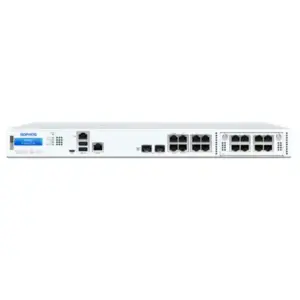
The PA-520 gives distributed organisations a compact platform for enforcing application-aware security policy, controlling access by users and devices, supporting secure branch connectivity and applying Palo Alto Networks security services at the network edge. It is intended for buyers who need stronger visibility and policy consistency than a conventional firewall can normally provide.
Plan the correct PA-520 order
Confirm appliance quantity, security subscriptions, support term, high-availability design, interfaces and implementation scope before requesting a final quotation.
Direct answer for buyers
The Palo Alto Networks PA-520 is a compact hardware next-generation firewall for small organisations, branch offices, retail locations and distributed enterprise sites. It is mainly used to identify applications, users and content, enforce granular access policy, inspect traffic for threats and provide secure connectivity between locations. Buyers should consider it when they need a consistent PAN-OS security model at a branch without selecting a larger data-centre appliance. Before proceeding, confirm measured traffic volume, expected security inspection, VPN requirements, interface and transceiver needs, subscription bundle, support term, high-availability design, rack or desktop installation, power redundancy and central-management requirements. Final performance and suitability depend on enabled services, traffic mix and configuration.
What the PA-520 does
The appliance places application, identity and content context at the centre of network policy. Rather than relying only on IP addresses and ports, a properly configured deployment can distinguish business applications, sanctioned services, risky behaviour and user groups, then apply controls appropriate to each traffic flow. It can also participate in site-to-site and remote-access security designs, although the exact design, licenses and client requirements must be reviewed before ordering.
Who it may suit
The PA-520 may be suitable for distributed offices, retail branches, professional firms, clinics, education sites, hospitality locations and midsize organisations that want consistent firewall policy across multiple sites. It is also relevant where an IT team already operates Palo Alto Networks technology and wants common policy, logging and operational methods. It should not be selected solely from an internet circuit speed; encrypted inspection, east-west traffic, VPN usage, security profiles and future growth also affect appliance sizing.
Business challenges the PA-520 can help address
Limited application visibility
Traditional rules can permit traffic without clearly identifying the business application using it. The PA-520 can support application-aware control so policy reflects actual application use, not only ports and protocols.
Inconsistent branch policy
Organisations with many sites often struggle with policy drift. A standard PAN-OS platform, combined with suitable central management, can improve repeatability, template use and operational oversight.
Encrypted and evasive threats
Security teams need to inspect more than unencrypted web traffic. Decryption and advanced security services may improve control, but they require policy planning, certificates, privacy review and careful capacity assessment.
Complex remote connectivity
Branches require secure communication with headquarters, cloud resources and remote users. The appliance can form part of a VPN and segmentation design, subject to topology, licensing and resilience requirements.
Core capability band
Create policy around identified applications and risk instead of relying only on network ports.
Connect access decisions with directory identities and groups where integrations are correctly configured.
Apply licensed prevention, malware analysis, URL, DNS and other security services according to the chosen subscription package.
Support high-availability designs and optional power redundancy when the architecture and bill of materials include them.
PA-520 product-fit matrix
| Requirement | Suitable when | Confirm before ordering |
|---|---|---|
| Branch perimeter security | A small or midsize site needs application-aware firewall policy and threat inspection. | Actual inspected traffic, internet circuits, internal routing and growth headroom. |
| Multi-site standardisation | The organisation wants common PAN-OS policy and operational practices across branches. | Panorama or cloud-management approach, template strategy and logging retention. |
| Encrypted traffic inspection | Security policy requires visibility into approved encrypted sessions. | Performance impact, certificate rollout, exclusions, legal and privacy controls. |
| High availability | The branch cannot rely on one firewall appliance. | Two matching appliances, HA cabling, licensing, switching and power design. |
| Power resilience | A second adapter is required for load sharing or power redundancy. | Optional second power adapter, UPS capacity and site electrical layout. |
Verified product and technical information
The following table separates confirmed platform facts from items that must be established in the final configuration. Performance should be validated against the latest official data sheet and the buyer’s enabled security services because real results vary with traffic mix and policy.
| Brand | Palo Alto Networks |
|---|---|
| Product | PA-520 ML-Powered Next-Generation Firewall |
| Part number guidance | PAN-PA-520; confirm regional ordering code and complete bill of materials. |
| Product family | PA-500 Series |
| Intended environments | Distributed enterprise branches, retail locations, small organisations and midsize businesses. |
| Operating platform | PAN-OS; first supported release for PA-520 is PAN-OS 12.1.2. |
| Security hardware | TPM module for PAN-OS key storage and security. |
| Zero-touch provisioning | ZTP functionality is supported within the PA-500 Series deployment model. |
| High availability | Active/passive and active/active HA are supported; design and licenses must be confirmed. |
| Form factor | 1U compact appliance; suitable rack installation hardware should be confirmed. |
| Dimensions | 1.74 x 8 x 10.4 inches (44.2 x 203.2 x 264.16 mm), height x width x depth. |
| Appliance weight | 5.8 lb (2.6 kg). |
| Input power | External adapter, 100–240V AC, 50–60Hz; adapter converts to 12V DC. |
| Maximum power consumption | 30W. |
| Power redundancy | A second adapter may be installed for load sharing and power redundancy; sold separately. |
| Firewall throughput | Confirm against the latest official PA-500 Series data sheet and intended software release. |
| Threat prevention throughput | Configuration and subscription dependent; confirm using the current vendor specification. |
| Interfaces and optics | Confirm required copper, fibre, management, HA and console connectivity in the bill of materials. |
| Subscriptions | Security service subscriptions are selected separately according to requirements and term. |
| UAE availability | Contact FourTeck to confirm current model, quantity, lead time and regional ordering options. |
Licensing, subscription and compatibility dependencies
The base hardware is only one part of a complete PA-520 deployment. Advanced Threat Prevention, Advanced URL Filtering, Advanced WildFire, DNS Security, SD-WAN, remote-access functions, support and other cloud-delivered services may require separate licenses or subscriptions. Product names, bundles and entitlement structures can change, so buyers should not reuse an old bill of materials without validation.
Compatibility also includes PAN-OS release planning, Panorama or Strata Cloud Manager requirements, transceivers, rack accessories, power adapters, switching design, authentication services, certificate infrastructure, logging destinations and the chosen VPN architecture. A migration from another firewall should include rule analysis, object clean-up, NAT validation, routing review and application testing. Optional features should never be assumed to be included with the appliance unless they are explicitly listed in the quotation.
A practical purchase and deployment journey
Define the branch profile
Document internet links, user count, applications, encrypted traffic, VPNs, public services, internal zones and expected expansion.
Size inspected traffic
Estimate throughput after threat prevention, decryption and other enabled services rather than relying on raw circuit speed.
Build the order
Select appliances, support, subscriptions, power redundancy, optics, rack items and central-management requirements.
Prepare implementation
Create interface, routing, NAT, security policy, VPN, logging, authentication, backup and rollback plans.
Test and hand over
Validate business applications, failover, alerts, logging, VPNs, security profiles and operational procedures before closure.
Application control that reflects business use
A branch firewall should help the organisation understand what is traversing the link and whether that traffic is appropriate for the user, device and destination. The PA-520 can identify applications and support policy decisions that are more specific than a rule permitting all traffic on a familiar port. This matters when a sanctioned collaboration platform, an unsanctioned file-sharing service and a tunnelling tool can all use encrypted web traffic but represent very different risks.
Application-aware policy can improve control only when the rule base is designed carefully. Teams should begin by observing current traffic, identifying business owners, classifying essential applications and agreeing how unknown or newly discovered applications will be handled. Broad allow rules should be reduced gradually rather than removed without testing. Policy also needs a process for exceptions, temporary access and emergency changes.
The operational value is clearer reporting, more meaningful controls and fewer decisions based solely on port numbers. The limit is that visibility depends on traffic inspection, software capabilities, licensing and the quality of policy design. Buyers should include configuration workshops and post-cutover tuning where internal staff do not already have PAN-OS experience.
Threat prevention and encrypted-traffic planning
Modern branch traffic is heavily encrypted, which protects privacy but can also conceal malicious content. The PA-520 can participate in a decryption and threat-prevention strategy, but the decision is not simply a checkbox. Decryption requires certificate management, browser and application testing, privacy exceptions, legal review and a clear policy for traffic that must not be inspected. Some applications use certificate pinning or other mechanisms that require bypass rules.
Security subscriptions should be selected against the actual threat model. An organisation may require advanced malware analysis, intrusion prevention, malicious URL control, DNS-layer protection, SaaS visibility or data-protection capabilities. Each service has its own entitlement and operational considerations. A quotation should identify the term, renewal date and support level for every license rather than presenting one unexplained bundle.
Capacity planning must use the expected inspected traffic mix. A firewall that is adequate for basic policy may not provide the same headroom when decryption, threat prevention, logging and VPN services are all heavily used. FourTeck can assist with a requirements review, but the buyer should provide realistic peak traffic data, application types and future growth assumptions.
Branch resilience, management and lifecycle control
Branch security fails when hardware is treated as an isolated purchase. The PA-520 supports high-availability designs, and the PA-500 Series can use dual power adapters on applicable models such as the PA-520. However, resilience depends on the full path: two firewalls, independent power, suitable switches, correctly configured HA links, redundant WAN circuits where required and tested failover procedures. A second appliance does not automatically eliminate every single point of failure.
Management should also be planned before rollout. A few sites may be managed locally, while a larger estate often benefits from central templates, shared objects, software governance and consistent logging. Panorama or a suitable cloud-management option may be relevant depending on the organisation’s architecture and licenses. The chosen approach should define who can approve policy, how local exceptions are controlled, how backups are retained and how changes are audited.
Lifecycle planning covers PAN-OS upgrades, content updates, certificate renewal, subscription renewal, support entitlement, spare strategy and replacement planning. Buyers should verify the currently supported software release and review release notes before each upgrade. A controlled maintenance process, test plan and rollback path are essential for business-critical branches.
Ideal business environments and use cases
Distributed corporate offices
Use common policy and secure connectivity across regional branches while retaining local segmentation and internet breakout controls.
Retail and hospitality sites
Separate business systems, staff access, guest services, payment-related networks and connected devices according to the organisation’s compliance design.
Professional and financial offices
Apply identity-based policy, secure access to cloud services and branch-to-head-office VPN controls where sensitive information is handled.
Healthcare and education branches
Segment users, operational systems and connected devices while supporting controlled access to central applications and internet resources.
Managed multi-site environments
Provide a repeatable firewall platform for central operations teams or service providers, subject to management and support scope.
Branch modernisation projects
Replace legacy firewalls during network refresh projects that also involve segmentation, SD-WAN, identity integration or cloud migration.
Integration and operational considerations
The PA-520 will normally interact with routing, switching, wireless, identity, DNS, DHCP, PKI, monitoring and logging systems. The design should establish which device owns each function and how changes will be coordinated. VLANs and security zones should reflect business trust boundaries rather than copying an old topology without review.
Directory integration can improve user-aware policy, but service accounts, group mapping, remote users and shared devices require attention. Logging should be sized for investigation and compliance needs, with decisions on local retention, Panorama logging, cloud logging or SIEM forwarding. Time synchronisation, naming standards and alert routing should be established before production use.
For migrations, collect the existing configuration, interface details, NAT rules, VPN parameters, public IP addresses, certificates, route tables and application dependencies. A change window should include validation owners from the business, not only the network team. Services that fail after cutover are often caused by undocumented dependencies rather than firewall defects.
Buyer questions to resolve before ordering
Provide peak and average traffic, encrypted percentage, east-west flows and expected growth.
Define threat, URL, DNS, malware, SaaS, DLP and other controls rather than buying an unexplained bundle.
Confirm copper or fibre links, transceivers, WAN handoffs, HA connections, console access and rack layout.
Assess acceptable downtime, dual-firewall topology, switching dependencies, power and WAN redundancy.
Choose local, Panorama or cloud-based management and define roles, templates, logging and change control.
Clarify design, migration, configuration, testing, documentation, training and post-cutover support.
Procurement checklist for the PA-520
✓ Confirm the exact PAN-PA-520 ordering code and regional variant.
✓ State the required appliance quantity and whether an HA pair is needed.
✓ Record internet, MPLS, SD-WAN and internal traffic expectations.
✓ Identify security subscriptions and the required term.
✓ Select the vendor support level and renewal period.
✓ Confirm copper, fibre, transceiver and cabling requirements.
✓ Decide whether a second power adapter is required.
✓ Confirm rack shelf, mounting and physical installation needs.
✓ Validate PAN-OS, Panorama and logging compatibility.
✓ List VPN, authentication and certificate dependencies.
✓ Define configuration, migration and testing responsibilities.
✓ Confirm delivery destination and preferred project schedule.
How FourTeck can support the requirement
FourTeck can help convert a general firewall request into a clearer procurement package. The process can include reviewing site details, traffic levels, required security services, interfaces, resilience objectives and management preferences. This helps identify whether the PA-520 is appropriately sized and which subscriptions, support entitlements and accessories belong in the quotation.
Where required, installation and configuration scope can be discussed separately. That scope may include base setup, software review, interface and zone configuration, routing, NAT, application-aware security policy, threat profiles, VPNs, logging, authentication, HA setup, migration assistance and handover documentation. The final activities depend on the information available and the agreed statement of work.
For broader cybersecurity planning, explore FourTeck’s firewall and security services, review the network security product range, or use the FourTeck contact page to share the project brief.
UAE availability and support guidance
Contact FourTeck to confirm current UAE availability for the Palo Alto Networks PA-520, requested subscriptions, support term and optional accessories. Availability may depend on the exact ordering code, quantity, license region, vendor lead time and the completeness of the bill of materials. Delivery and project coordination can be discussed after the requirement is confirmed.
For projects covering Dubai, Abu Dhabi, Sharjah and Ajman, provide the installation addresses, number of sites, preferred rollout sequence and whether remote or on-site assistance is expected. Installation and configuration should be stated in the quotation when required; they should not be assumed to be included with the appliance. Warranty and replacement processes follow the selected vendor support and regional terms, which should be reviewed before purchase.
GCC Availability
FourTeck can assist organisations planning PA-520 deployments across GCC markets by reviewing the exact firewall requirement, subscription mix, support term, interface needs and implementation scope before quotation. This may include coordination for projects in the United Arab Emirates, Saudi Arabia, Kuwait, Qatar, Bahrain and Oman, particularly where a business wants consistent branch standards across several countries. Product availability, licensing terms, delivery schedules, service visits and vendor lead times can vary by destination, model, quantity and project conditions. Buyers should provide the destination country, required number of appliances, expected security subscriptions, preferred support duration, deployment location and target schedule. FourTeck can then help structure a bill of materials and discuss delivery, configuration, installation and renewal planning. No assumption should be made about local stock, customs processing, certification or a guaranteed deployment date until the exact country and requirement have been reviewed. For Kuwait-related coordination, buyers may also review FourTeck Kuwait technology guidance.
Africa Availability
Organisations planning branch security projects in Africa can contact FourTeck for assistance evaluating the PA-520, required subscriptions, support coverage, accessories, power arrangements and deployment services. Procurement and fulfilment may depend on the destination, quantity, license region, vendor lead time, shipping method, local power requirements and the availability of qualified installation resources. Businesses in East Africa and other regions should share the destination country, number of locations, required appliances, expected traffic, support term and preferred deployment schedule so the solution can be reviewed properly. FourTeck can also help discuss central-management strategy, configuration standards, renewal planning and regional rollout sequencing. Local inventory, immediate shipment, customs outcomes and country-wide onsite coverage should not be assumed. Relevant regional information is available through FourTeck Africa, FourTeck Kenya and FourTeck Uganda.
Related products, services and alternatives
PA-500 Series alternatives
Consider nearby PA-500 Series models when traffic, interfaces, PoE needs or growth requirements differ from the PA-520 profile.
Security subscriptions
Select threat, URL, DNS, malware and other services according to the risk assessment and required subscription term.
Panorama management
Evaluate central management where several branches need common policy, software governance, logging and template control.
HA and power accessories
Review a second appliance, HA connections, rack items and optional second power adapters for resilience requirements.
Migration services
Plan rule conversion, object clean-up, routing, NAT, VPN migration, testing and cutover support when replacing another firewall.
Alternative firewall platforms
Where commercial, operational or feature requirements differ, compare suitable platforms through the FourTeck firewall portal.
Why businesses contact FourTeck
Buyers often contact FourTeck because an appliance model alone does not define a deployable solution. A complete order may need support, subscriptions, accessories, power redundancy, management capacity, transceivers and professional services. FourTeck can help clarify these elements, review compatibility assumptions and prepare a quotation that is easier for procurement and technical teams to evaluate.
The discussion can also cover deployment sequencing, migration responsibilities, documentation, knowledge transfer and renewal dates. This practical approach is intended to reduce incomplete orders and unexpected scope gaps. It does not replace the buyer’s internal security policy, compliance review or final architecture approval. Learn more about FourTeck or discuss the requirement with the sales team.
Frequently asked questions
Is the PA-520 suitable for a branch office?
Yes, it is positioned in the PA-500 Series for distributed enterprise branches, retail locations, small organisations and midsize businesses. Suitability still depends on inspected traffic, security services, interfaces, VPN use and future growth.
Which PAN-OS release first supports the PA-520?
Palo Alto Networks documentation identifies PAN-OS 12.1.2 as the first supported release for the PA-520. Buyers should verify the currently recommended maintenance release before deployment.
Are security subscriptions included with the appliance?
Do not assume they are included. Required cloud-delivered security services, support and their terms should be listed explicitly in the quotation.
Can the PA-520 be deployed as a high-availability pair?
The PA-500 Series supports active/passive and active/active HA. A complete design requires two matching appliances, appropriate connectivity, licenses, switching, power and a tested failover plan.
Does the PA-520 support redundant power?
It can use a second external power adapter for load sharing and power redundancy. The second adapter is optional and should be added to the bill of materials when required.
How should performance be sized?
Use peak inspected traffic, decryption, threat prevention, VPN demand, session behaviour, logging and growth assumptions. Raw internet bandwidth alone is not a sufficient sizing method.
Can FourTeck assist with configuration and migration?
Configuration and migration assistance can be discussed and quoted according to scope. Share the existing firewall configuration, network diagram, policies, routing, NAT, VPN and target cutover requirements.
What information is needed for a PA-520 quote?
Provide quantity, site location, internet and internal traffic, required subscriptions, support term, HA requirement, interfaces, accessories and installation expectations.
Is the PA-520 currently available in Dubai?
Contact FourTeck to confirm current UAE availability. Lead time can depend on quantity, regional ordering code, licenses, accessories and vendor supply conditions.
How is warranty handled?
Warranty, replacement and technical support depend on the selected vendor support entitlement and regional terms. These details should be confirmed in the final quotation.
Confirm the PA-520 configuration before purchase
Share your branch count, traffic profile, required security services, subscription term, high-availability design and implementation expectations. FourTeck can help prepare a clearer bill of materials and coordinate a UAE quotation based on the exact requirement.

Reviews
There are no reviews yet.