

PA-500 Series branch NGFW
Eight supported PoE ports
Distributed and midsize sites
Subscriptions and support vary
Direct answer for buyers
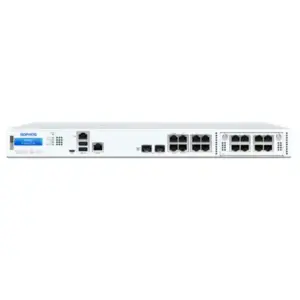
The Palo Alto Networks PA-555-POE is a branch-focused next-generation firewall that combines security inspection, secure routing and integrated PoE connectivity. It is mainly used to protect distributed locations while enforcing application, user and threat policies consistently. Organisations with branch offices, retail outlets, clinics, schools, hospitality locations or midsize operational sites may consider it when they need more capacity and PoE flexibility than smaller appliances provide. Before proceeding, buyers should confirm real traffic patterns, enabled security services, encrypted traffic levels, VPN requirements, PoE endpoints, per-port power demand, subscription packages, high-availability needs, rack and power conditions, and the exact support term.
What it does
The PA-555-POE inspects network sessions using Palo Alto Networks security controls, applies policy based on applications and users, supports secure site connectivity, and can deliver electrical power through selected Ethernet ports to compatible devices. This creates a practical platform for branch consolidation, but it does not remove the need for correct switching design, Wi-Fi planning, power calculations or subscription selection. The firewall should be treated as part of a complete branch architecture rather than as a universal replacement for every access-layer component.
Who it suits
It may suit businesses standardising security across multiple sites, organisations adding centrally governed branch protection, and projects that can benefit from eight PoE-capable ports with a substantial shared power budget. It is less suitable when the required throughput, session scale, port density, redundancy model or PoE load exceeds the appliance design. It may also be unnecessary for a very small site with modest traffic and no integrated PoE requirement. FourTeck can help compare the PA-555-POE with smaller or larger PA-500 Series models.
Business challenges the PA-555-POE can help address
Fragmented branch security
Different branches often accumulate inconsistent policies, unmanaged internet paths and varied security controls. A standard firewall platform can help operations teams apply a repeatable policy model, provided central management, templates and change procedures are planned correctly.
Power and cabling complexity
Access points, IP phones and cameras may need both network connectivity and electrical power. Integrated PoE can simplify selected installations, but buyers must calculate the total budget, port demand, cable standard and endpoint power class before relying on it.
Limited application visibility
Traditional port-based rules can be difficult to interpret when modern applications use dynamic protocols. An application-aware policy approach can improve control and reporting, while still requiring sensible rule design, identity integration and regular review.
Secure multi-site connectivity
Branch networks usually require encrypted links to data centres, cloud environments or other sites. The appliance can support secure VPN use cases, but topology, routing, resilience, throughput and cryptographic settings must match the wider network design.
Core capabilities in a branch deployment
Policy enforcement and threat prevention are designed to operate together, with capabilities affected by enabled subscriptions and configuration.
Rules can be aligned to applications, identity and business use rather than relying only on ports and IP addresses.
Supported ports can power compatible endpoints, subject to per-port limits and the overall appliance power budget.
Logs, policy and device operations can be incorporated into a wider Palo Alto Networks management approach.
PA-555-POE fit matrix
| Requirement | Suitable when | Confirm before ordering |
|---|---|---|
| Branch firewall capacity | Measured traffic and enabled services remain within a responsible design margin. | Application mix, TLS inspection, threat profiles, growth and failover load. |
| PoE consolidation | Up to eight compatible devices can be served within the shared budget. | Port assignment, 802.3 power class, cable quality and total wattage. |
| Secure remote connectivity | VPN use is sized for the branch and routing design. | Tunnel count, encryption, authentication, redundancy and peak throughput. |
| Central policy management | The organisation uses a consistent operational model across locations. | Panorama design, licenses, templates, administrator roles and logging. |
| High availability | The architecture includes appropriate paired appliances and network paths. | HA mode, duplicate licensing, cabling, upstream design and rack power. |
Verified product information
The following points reflect publicly available Palo Alto Networks PA-500 Series material and should still be checked against the current regional ordering guide, selected software release and final quotation. Performance values can vary by test methodology and enabled functions, so sizing should not be based on one headline number alone.
| Brand | Palo Alto Networks |
|---|---|
| Product name | PA-555-POE ML-Powered Next-Generation Firewall |
| Product family | PA-500 Series |
| Product type | Branch and midsize next-generation firewall with integrated PoE |
| Firewall throughput | Up to approximately 7.5 Gbps in published reseller references; confirm against current official datasheet and sizing method |
| Threat prevention throughput | Up to approximately 5.0 Gbps in published product references; subscription and configuration dependent |
| IPsec VPN throughput | Published values vary by source and methodology; confirm current official figure for the required software release |
| PoE support | Supported on ports 5 through 12 |
| Maximum reserved power per PoE port | Up to 90W, endpoint and standard dependent |
| Total PoE budget | Up to 332W across supported PoE ports |
| Storage | 120GB |
| Form factor | 1U rack-mountable appliance |
| Approximate dimensions | 44.5 mm high × 409 mm wide × 320 mm deep; confirm rack clearance |
| Management | Local and central management options; platform and license dependent |
| Subscriptions | Security services, support and management subscriptions are ordered according to the required protection package and term |
| High availability | Configuration dependent; paired appliances and appropriate network design may be required |
| Availability | Contact FourTeck for current UAE model, license and lead-time confirmation |
Configuration, licensing and compatibility dependencies
The appliance hardware is only one part of the purchasing decision. Security subscriptions determine which cloud-delivered protections and advanced services are available. Support entitlement affects software access, technical assistance and replacement processes. Central management, logging retention, remote-access requirements and branch orchestration may introduce additional products or subscriptions. Buyers should also confirm the PAN-OS release supported for the planned deployment and whether existing templates, certificates, authentication services and logging platforms are compatible.
PoE design requires separate attention. A port that can reserve up to 90W does not mean every connected device will consume that amount, nor does it mean all ports can draw the maximum simultaneously. The combined endpoint load must stay within the total appliance budget. Cable category, length, connector quality, surge protection, grounding and the power profile of access points, cameras or phones should be reviewed. Where many devices require power, a dedicated PoE switch may remain the better design.
A practical purchase and deployment journey
Measure the branch
Document users, devices, applications, internet circuits, VPN flows, current peaks and expected growth. Include traffic that may be inspected between internal zones, not only internet bandwidth.
Define security services
Choose the required threat prevention, DNS security, URL controls, malware analysis, data security or other subscriptions according to policy and risk requirements.
Calculate PoE demand
List each powered endpoint, expected wattage, physical port and cabling route. Preserve a reasonable margin rather than designing exactly to the theoretical maximum.
Build the quotation
Include hardware, subscriptions, support, mounting items, optics or transceivers where needed, installation, configuration, migration and documentation.
Validate the design
Review routing, zones, NAT, identity sources, VPN peers, certificate needs, HA design, management connectivity and rollback requirements before cutover.
Application-aware control for distributed operations
A branch firewall has to distinguish between business applications, general web use, collaboration traffic, software updates, cloud services and potentially risky or unauthorised activity. The PA-555-POE can support a policy model that considers application identity and user context, helping administrators write rules that more closely reflect business intent. This is particularly useful when many services share common ports or move dynamically between cloud endpoints.
The operational value comes from disciplined policy design rather than from enabling every control at once. Existing rules should be reviewed, application dependencies should be observed and exceptions should be documented. Identity mapping should be tested carefully so that user-based rules remain accurate. Logging and reporting requirements also need to be defined, especially when branches have limited WAN capacity or central log retention obligations.
During migration, teams should establish which policies can be translated directly and which require redesign. A phased deployment can reduce disruption: begin with visibility, compare observed applications against expected use, then tighten rules after owners confirm business requirements. FourTeck can help scope configuration and migration assistance, but final policy approval should remain with the customer’s authorised security and business stakeholders.
PoE design that supports the branch rather than constraining it
Integrated PoE is one of the main reasons to consider the PA-555-POE. It can reduce the number of separate power injectors and may simplify small or medium access-layer deployments. Typical powered endpoints can include wireless access points, IP phones, cameras and selected IoT devices. The benefit is most valuable when the endpoint count and power draw align naturally with the firewall’s supported ports and shared power budget.
A correct design begins with the endpoint datasheet, not with the maximum wattage printed for the firewall. Buyers should record the normal and maximum power draw, supported PoE standard, boot behaviour and cable requirements for every device. Wireless access points may increase power consumption when additional radios, USB devices or advanced features are enabled. Cameras with heaters, infrared lighting or motorised functions can also draw more power under specific conditions.
Operational resilience matters as well. If the firewall is rebooted or replaced, connected PoE devices may lose power. That may be acceptable for some branches, but not for all surveillance, voice or wireless designs. Where continuous endpoint power is essential, dedicated PoE switching with redundant power may be preferable. FourTeck can help review the endpoint list and determine whether integrated PoE should be the primary access method or a targeted convenience for selected devices.
Performance sizing with realistic security assumptions
Firewall sizing is frequently distorted by comparing internet circuit speed with a single maximum throughput value. The real design should account for enabled threat profiles, encrypted traffic inspection, application mix, packet size, VPN encryption, east-west flows, logging, session count, new session rate and future growth. The branch should also remain stable during software updates, traffic bursts and failover events.
The PA-555-POE is positioned for stronger branch and midsize requirements, but it should not be selected solely because its published throughput exceeds the WAN link. A heavily inspected environment with substantial TLS decryption, many short-lived sessions or numerous VPN tunnels can behave differently from a basic forwarding test. Conversely, a branch with moderate traffic may gain more value from port layout, PoE capability and operational standardisation than from raw capacity.
FourTeck can assist with a structured sizing discussion using observed traffic and project assumptions. Where current monitoring data is unavailable, the design should use conservative estimates and document them. The quotation should identify any assumptions that materially affect the recommendation. This gives procurement teams a clearer basis for comparing the PA-555-POE with the PA-545-POE, PA-550, PA-560 or other suitable platforms without treating different models as interchangeable.
Ideal business environments and use cases
Multi-site retail
Retail branches need secure internet access, segmented point-of-sale traffic, guest connectivity, cameras and central visibility. The PA-555-POE may fit sites where the traffic and powered endpoint profile match its capacity, while payment security requirements and WAN resilience are planned separately.
Professional and regional offices
Distributed offices can use it to protect cloud access, collaboration, remote connectivity and inter-site applications. Identity integration, SaaS usage, VPN topology and user growth should be documented before model selection.
Education and training sites
Schools and learning centres may need segmented staff, student, guest and device networks plus powered wireless access points. Content policy, safeguarding controls, peak concurrent usage and high-density Wi-Fi requirements need careful review.
Healthcare and clinics
Clinics can require strict network separation, secure access to hosted systems, voice, cameras and dependable logging. Medical-device compatibility and local governance obligations should be handled as explicit project requirements.
Hospitality and serviced spaces
Hotels, serviced offices and mixed-use sites often combine guest, operations, voice, surveillance and building systems. The firewall can form part of the security boundary, while access switching and Wi-Fi architecture remain separate sizing exercises.
Light industrial branches
Warehouses and operational sites may need secure WAN links, cameras, scanners and segmented equipment networks. Environmental conditions, cabinet cooling, cabling routes and operational technology dependencies must be confirmed.
Integration and operational considerations
A firewall deployment touches routing, DNS, DHCP, identity, certificates, endpoint management, logging, monitoring, cloud connectivity and incident response. The project should identify which functions will be hosted on the PA-555-POE and which remain on dedicated systems. For example, using the firewall for DHCP may be practical in a branch, while larger environments may retain central services. The same design decision applies to local breakout, SD-WAN policy, VPN termination and guest access.
Integration with directory and authentication services should be tested for both availability and privacy requirements. Certificate deployment is central to encrypted traffic inspection, and affected endpoints must trust the issuing authority. Some applications, devices or regulated traffic may require bypass rules. Logging should be sized according to retention expectations, incident response procedures and any central SIEM platform.
Operational ownership should be decided before go-live. Administrators need defined roles, backup procedures, software maintenance windows, configuration review practices and an escalation path. Where the appliance is deployed across many branches, standard templates can improve consistency, but exceptions should remain visible and documented. FourTeck can include configuration, migration and handover activities in the quotation when the required scope is provided.
Buyer questions to resolve before ordering
Use measured peak and average values, including internal zones, VPN and encrypted traffic, rather than relying only on the internet circuit rate.
Map each subscription to a policy or risk requirement and confirm the term, renewal expectation and support entitlement.
Record device model, power class, normal draw, maximum draw, cable path and whether power continuity is business critical.
Multiple sites generally benefit from a consistent policy and logging model, but management platform scope must be included in the architecture.
Confirm paired hardware, duplicate subscriptions where applicable, HA links, upstream switching and failover capacity.
Clarify whether the quotation should include design, staging, onsite installation, migration, testing, documentation or administrator handover.
Procurement checklist for the PA-555-POE
☑ Confirm the exact PA-555-POE model and regional order code.
☑ State the required appliance quantity and any HA pairs.
☑ Provide measured traffic, user count and expected growth.
☑ List the required security subscriptions and term.
☑ Include support entitlement and preferred support duration.
☑ Identify every PoE device, port and wattage requirement.
☑ Confirm WAN, LAN, SFP and transceiver needs.
☑ Review rack depth, airflow, grounding and power feeds.
☑ Define VPN, routing, segmentation and identity requirements.
☑ Decide whether Panorama or another central platform is included.
☑ Document migration, cutover and rollback expectations.
☑ Request installation, configuration and handover as separate scope items where needed.
How FourTeck can assist
FourTeck can help translate a branch requirement into a practical product and service scope. The discussion can cover appliance sizing, comparison with nearby Palo Alto Networks models, subscription selection, support terms, PoE calculations, interface requirements, optics, high availability, central management and implementation services. This is especially useful when procurement has a model in mind but the technical bill of materials is not yet complete.
For deployment projects, FourTeck can coordinate assessment, design review, staging, base configuration, migration planning, installation, testing and documentation according to the agreed quotation. The final scope depends on the number of sites, existing firewall platform, rule-set complexity, VPN topology, application dependencies and customer change controls. These activities should be stated clearly rather than assumed to be included with the hardware.
Buyers can explore FourTeck firewall products, review available firewall services, or contact the Dubai team with the project details.
UAE availability and support guidance
Contact FourTeck to confirm current UAE availability for the PA-555-POE hardware, selected subscriptions, support term and any required accessories. Availability may depend on model, license region, quantity, project registration requirements and vendor lead time. A complete request should include the destination, appliance quantity, subscription bundle, support duration, required implementation services and target deployment window.
Delivery and project coordination can be discussed after the exact requirement is confirmed. Installation and configuration scope should be included in the quotation when required. For organisations operating in Dubai, Abu Dhabi, Sharjah and Ajman, FourTeck can coordinate requirement review, quotation preparation and project planning through one combined UAE discussion rather than treating each location as a separate product decision.
GCC Availability
FourTeck can assist organisations planning PA-555-POE deployments across the GCC by reviewing the required firewall capacity, subscription package, PoE endpoint profile, support term and implementation scope before quotation. Businesses operating in the United Arab Emirates, Saudi Arabia, Kuwait, Qatar, Bahrain or Oman should provide the destination country, quantity, deployment site details, preferred subscription duration and expected project schedule. This information helps separate the hardware order from country-specific delivery, licensing and service considerations.
Product availability, license eligibility, delivery schedules, service visits, project scope and vendor lead times can vary by country, model and quantity. FourTeck can coordinate requirement clarification, model and license selection, quotation preparation, configuration planning, installation scope and renewal guidance, but these items should be confirmed for each destination. For Kuwait-related enquiries, buyers may also review FourTeck Kuwait technology support and submit the exact bill-of-material requirement for regional planning.
Africa Availability
Organisations planning branch-security projects in Africa can ask FourTeck to review the PA-555-POE model, licenses, support entitlement, PoE requirements, optics, accessories, migration scope and operational needs. The correct approach depends on the destination, number of sites, traffic profile, power conditions, local cabling, shipping arrangements and the availability of technical resources at each location. East African projects in markets such as Kenya and Uganda may also require careful coordination of remote staging, onsite support expectations and renewal planning.
Availability and fulfilment may vary according to the product model, quantity, license region, power or regulatory requirements, vendor lead time and local project conditions. Buyers should share the destination country, exact appliance requirement, desired subscription term, deployment schedule and any installation or support expectations. FourTeck can then provide appropriate guidance without assuming local inventory or immediate shipment. Relevant regional information is available through FourTeck Africa, FourTeck Kenya and FourTeck Uganda.
Related products and services to consider
PA-545-POE comparison
Consider when the project needs integrated PoE but has a lower capacity or port requirement. Exact performance and PoE differences should be checked against the current datasheet.
PA-550 or PA-560 review
Suitable for buyers comparing non-PoE or higher-capacity options within the family. The final choice should follow traffic, interface and lifecycle requirements.
Security subscriptions
Threat prevention and cloud-delivered services should be selected according to policy, risk, compliance and operational needs rather than added as an undifferentiated bundle.
Panorama management
Central management may benefit multi-site estates that need consistent templates, logging and administrator workflows. Licensing and design are separate considerations.
Firewall migration service
Rule review, object cleanup, VPN migration, testing and rollback planning can be scoped for customers replacing an existing platform.
Installation and handover
Rack installation, cabling checks, base configuration, validation and administrator handover can be included when the site and responsibility boundaries are defined.
Why businesses contact FourTeck
The most useful role in a firewall purchase is often requirement clarification. Buyers may know the product family but still need help deciding whether the PA-555-POE is appropriately sized, which subscriptions belong in the order, whether integrated PoE is suitable for the endpoint design, and what supporting items are required. FourTeck can help structure these decisions and prepare a quotation that separates hardware, licenses, support and professional services.
Businesses also contact FourTeck for compatibility review, bill-of-material guidance, deployment planning, migration scope and renewal coordination. These services are based on the project information supplied and should be confirmed in writing. Learn more about FourTeck firewall assistance or use the FourTeck business technology contact page for a wider infrastructure discussion.
Frequently asked questions
What type of organisation should consider the PA-555-POE?
It is intended for distributed branches, retail sites and midsize environments that need next-generation security with integrated PoE. Suitability depends on measured traffic, enabled security services, session demand, port requirements and growth.
How many PoE ports does the PA-555-POE provide?
Palo Alto Networks documentation identifies PoE support on ports 5 through 12, giving eight supported PoE ports. Endpoint compatibility and total power use must still be checked.
What is the total PoE power budget?
The published total PoE budget is up to 332W across supported ports, with up to 90W reserved per port. Actual design depends on connected devices, cabling and power standards.
Are security subscriptions included with the hardware?
Do not assume that every security service is included. The required subscriptions, support entitlement and terms should be listed explicitly in the quotation.
Can the PA-555-POE be deployed in high availability?
High availability is configuration dependent and normally requires a second appropriately licensed appliance, HA links, compatible upstream connectivity and a tested failover design.
Does integrated PoE replace a dedicated access switch?
Not in every design. It can simplify selected deployments, but larger port counts, power redundancy, switching features or endpoint density may still justify dedicated PoE switching.
What information is needed for an accurate quotation?
Provide quantity, traffic profile, users, WAN links, VPN needs, subscriptions, support term, PoE endpoint list, interface requirements, HA design and required implementation services.
Can FourTeck assist with installation and configuration?
Yes, installation, staging, configuration, migration, testing and handover can be discussed. The agreed scope depends on the number of sites and complexity of the existing environment.
Is the PA-555-POE currently available in Dubai?
Availability should be confirmed for the exact quantity, subscriptions, support term and destination. Vendor lead time and regional ordering conditions may change.
How should warranty and support be confirmed?
Warranty and replacement guidance should be checked against the selected Palo Alto Networks support entitlement, contract term, region and current vendor policy stated in the quotation.
Discuss the PA-555-POE requirement with FourTeck
Share your deployment locations, user count, application traffic, VPN topology, required subscriptions, PoE endpoints and project scope. FourTeck can help validate the model, prepare the bill of materials and coordinate a UAE quotation without assuming stock, license inclusion or implementation services.

Reviews
There are no reviews yet.