
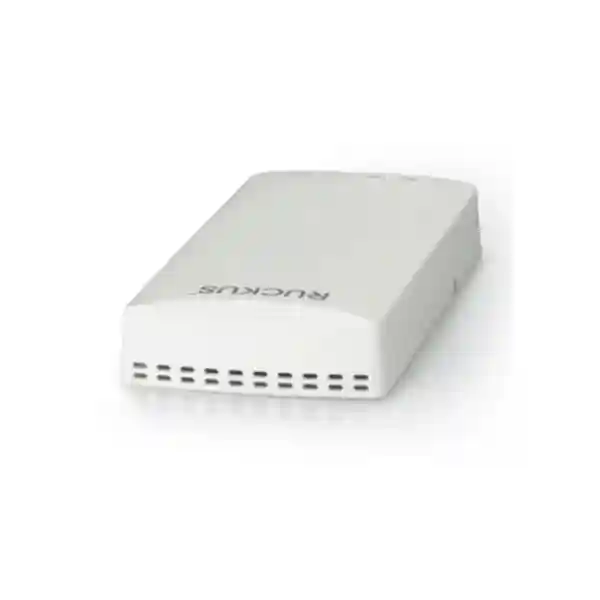
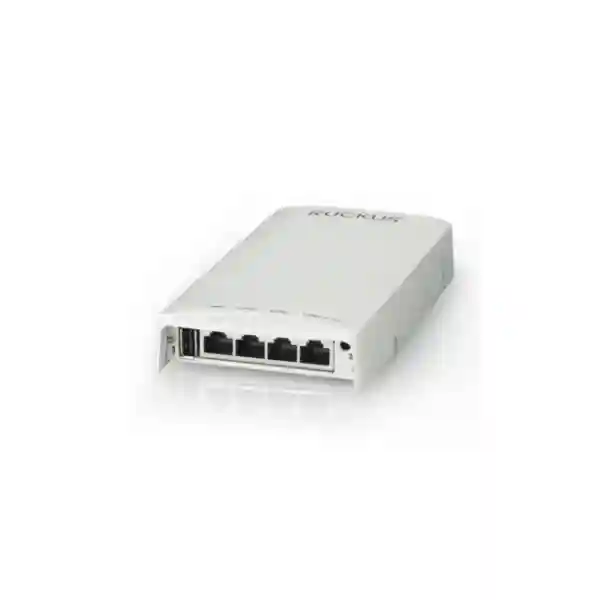
RUCKUS H550 Wall-Mounted Access Point in Dubai, UAE
The RUCKUS H550 combines a dual-band Wi-Fi 6 access point, room-side Gigabit Ethernet connectivity and embedded IoT capability in a compact wall-mounted form factor. It is designed for environments such as hotel guest rooms, residence halls, apartments and other multi-dwelling spaces where each room may need dependable wireless service plus wired connectivity for devices such as IP phones, IPTV equipment and other Ethernet endpoints. FourTeck can help buyers review the H550 against the real site design, controller platform, PoE source, cabling plan, device mix and procurement requirements before a quotation is finalized.
Direct answer for buyers
Choose the H550 when the project calls for a discreet in-room Wi-Fi 6 access point with several Gigabit Ethernet interfaces and embedded BLE/Zigbee capability. Confirm the exact regional part number, PoE mode, controller or management method, switch power budget, mounting conditions and desired wired-device behavior before ordering.
What the RUCKUS H550 is designed to do
The RUCKUS H550 is an indoor wall-mounted access point built around IEEE 802.11ax Wi-Fi 6. Manufacturer information lists a dual-radio 2×2:2 design with a maximum PHY rate of 574 Mb/s at 2.4 GHz and 1200 Mb/s at 5 GHz, giving a combined maximum PHY rate of 1774 Mb/s. Those figures are radio link rates rather than guaranteed application throughput, so real performance depends on client capability, channel width, RF conditions, interference, airtime utilization, backhaul capacity and network design.
The device is particularly useful where a room needs more than Wi-Fi alone. RUCKUS lists five 1 GbE interfaces in total, with one serving as the uplink/PoE input and four available for local wired connectivity. This architecture can reduce the need for a separate room switch in certain hospitality or residence designs. The H550 also includes embedded Bluetooth Low Energy and Zigbee radios for IoT use cases, while a USB 2.0 interface supports additional module options where a validated deployment requires them.
Wireless optimization features include RUCKUS BeamFlex adaptive antenna technology, ChannelFly and SmartMesh. Supported management choices listed by RUCKUS include SmartZone, Unleashed and cloud-based control options, with compatibility depending on software release and deployment architecture. Buyers should therefore treat the H550 as one component of a complete WLAN design rather than as a standalone coverage promise.
Verified H550 specification snapshot
Wi-Fi 6 / IEEE 802.11ax, dual-band 2.4 GHz and 5 GHz.
Dual-radio 2×2:2 with up to 16 antenna patterns per band.
574 Mb/s at 2.4 GHz, 1200 Mb/s at 5 GHz, 1774 Mb/s combined maximum.
Five 1 GbE interfaces in total, supporting uplink plus room-side wired connectivity.
Embedded BLE and Zigbee support, with USB 2.0 available for supported module scenarios.
RUCKUS SmartZone, Unleashed and cloud-management options, subject to current software compatibility.
0°C to 40°C according to current manufacturer product information.
Hospitality guest rooms, residence halls and multi-dwelling in-room connectivity designs.
Why buyers consider the H550 for hospitality and room-by-room deployments
Conventional corridor-mounted access points can work well in many buildings, but some hospitality and multi-dwelling projects benefit from placing wireless service closer to the user. A wall-plate access point can shorten the RF path into the room and create a predictable place for local wired endpoints. The H550 is designed around that model. Its combination of Wi-Fi, Ethernet switching functions and IoT radios can support a room architecture in which one structured-cabling run feeds several local services.
That does not mean every hotel room, apartment or dormitory automatically needs one H550. A correct design considers wall construction, room geometry, corridor leakage, channel reuse, expected device density, guest traffic, voice requirements, multicast or IPTV design, IoT topology, switch capacity and controller architecture. In some properties, one AP per room may create excessive co-channel contention unless power and channel plans are carefully tuned. In other properties, room placement may solve coverage issues that corridor installations struggle to address. The purchasing decision should therefore follow an RF and cabling plan rather than a simple room-count calculation.
FourTeck can help customers turn a product request into a procurement checklist covering the exact H550 part variant, mounting method, upstream switch port and PoE capabilities, software platform, quantity, accessories, IoT needs and service scope. For broader network-security coordination, buyers can also review FourTeck Dubai network security services and deployment planning guidance where the wireless LAN must be segmented from guest, staff or operational networks.
Power, PoE and cabling questions to confirm before purchase
The H550 supports Power over Ethernet input, but feature availability and power output behavior can vary with the power mode and exact product variant. Manufacturer documentation shows that USB and PoE-out capabilities depend on the available power budget. This makes the upstream switch design important: do not assume that every PoE switch port will enable every H550 feature at the same time.
Before requesting a quotation, identify the upstream switch model, PoE standard, cable category and length, whether any room-side endpoint needs power from the H550, and whether the USB interface will be used. Also confirm whether the existing wall box and cable entry suit the mounting method. These details can prevent a common procurement problem in which the access point itself is correct but the surrounding power or mounting design is incomplete.
RUCKUS H550 Wall-Mounted Access Point Dubai
Customers searching for a RUCKUS H550 Dubai supplier are usually solving a specific in-building connectivity problem rather than simply replacing a consumer access point. In Dubai, that requirement often appears in hotels, serviced apartments, staff accommodation, student residences, residential towers, clinics with private rooms, and mixed-use properties where occupants need both Wi-Fi and selected wired services. The H550 is relevant because it can place Wi-Fi 6 service close to the room while offering multiple Gigabit Ethernet interfaces for local devices. For a project team, this can simplify the physical room design when the existing structured cabling already reaches a suitable wall location.
Dubai deployments should be planned around the actual floor plan and building materials. Concrete walls, decorative panels, mirrors, service shafts, elevators and dense room layouts can change RF behavior significantly. A quotation request should therefore include the number of floors, typical room layout, room count, approximate wall construction, existing cable termination points, upstream switch locations and the expected number of wireless clients per room. If IPTV, IP telephony, access control, smart-room sensors or other Ethernet devices are present, list those as well so the wired-port and PoE-out requirements can be checked.
Buyers should also decide how the WLAN will be managed. A single small property may evaluate an Unleashed design, while larger or multi-property estates may require centralized control through SmartZone or a cloud platform. The correct choice depends on scale, operations, licensing, existing RUCKUS infrastructure and software compatibility. FourTeck can help organize these questions, but the final bill of materials should be tied to a validated design rather than a generic “one AP per room” rule.
For UAE buyers who need the wireless project integrated with secure internet breakout, VLAN separation or guest-network policy, review the perimeter firewall planning page and the Palo Alto PA-410 branch firewall page as examples of related edge-security considerations. Commercial availability, installation scope and delivery timing should always be confirmed in the current FourTeck quotation.
RUCKUS H550 Wall-Mounted Access Point UAE
For UAE-wide projects, the RUCKUS H550 is most useful when an organization wants a repeatable room-level connectivity design across properties in Dubai, Abu Dhabi, Sharjah, Ajman or other emirates. The device’s wall-plate form factor can support a standardized template in which each room has Wi-Fi 6, wired Ethernet and optional IoT functions from a single network edge location. However, procurement should not begin with quantity alone. The design team should establish the required management platform, software version, PoE power budget, VLAN structure, authentication method and operational ownership before ordering large numbers of units.
A UAE hospitality group, for example, may need separate traffic paths for guests, staff devices, IPTV, telephony and building systems. The H550 can provide physical connectivity at the room, but the wider network must still enforce segmentation and security through switches, WLAN policies and the internet-edge architecture. Hotels and residences also need a channel plan that works across repeated floors. Because walls and room orientation differ between properties, the same radio settings should not be copied blindly from one building to another. Pilot testing or a formal wireless survey can reveal whether transmit power, channel width or AP placement needs adjustment.
Procurement teams should ask for the exact regional part reference, quantity, controller or management requirement, support entitlement, accessories, mounting requirements and lead-time confirmation. If a project includes existing RUCKUS infrastructure, provide controller details and current software release so compatibility can be reviewed. Where the network is being refreshed at the same time, document PoE switch capacity and uplink bandwidth because hundreds of room APs can place a very different load on the access layer than a small office WLAN.
Organizations can use the main FourTeck UAE technology site for wider UAE inquiries. The H550 should be quoted as part of the required solution, not treated as a promise of stock, delivery date or installation coverage until those commercial details are confirmed.
RUCKUS H550 Wall-Mounted Access Point Uganda
A RUCKUS H550 Uganda requirement commonly makes sense for hotels, lodges, residence facilities, education accommodation and apartment-style properties that want stronger in-room Wi-Fi together with wired connections. The buying conversation should begin with the property layout and the availability of structured cabling. If each room already has a Cat5e or better Ethernet run back to an access switch, a wall-mounted AP can be a practical way to deliver room-level service. If cabling is incomplete or switches do not provide a suitable PoE standard, the project may need network remediation before the access points can be installed as intended.
Uganda projects should also account for operational support and power conditions. The H550 is powered through Ethernet, so the stability of the PoE switching layer matters as much as the AP itself. In properties where backup power is important, the network team should determine whether access switches and upstream equipment are connected to UPS or generator-backed circuits and whether their PoE budget remains adequate during normal and backup operation. For room services such as IP phones or IPTV endpoints, identify whether the device is only receiving data from the H550 or also requires power from it, because the available PoE-out behavior depends on the H550 variant and input power mode.
Wireless planning should focus on room construction, expected guests per room, public-area coverage and interference from neighboring networks. A wall AP is not automatically a replacement for lobby, conference-room or outdoor coverage. Many properties will use different AP form factors for different zones while retaining a common management platform. That can make controller selection and software compatibility more important than the price of an individual unit.
For procurement or project discussions, buyers can review the FourTeck Uganda regional site and provide the project city, room count, required quantity, existing switch model, controller details, preferred deployment schedule and any wired or IoT devices that must connect in each room. Current availability, shipping, taxes, support and installation scope should be confirmed in the formal quotation.
RUCKUS H550 Wall-Mounted Access Point Kampala
In Kampala, the H550 is particularly relevant to city hotels, furnished apartments, student accommodation and office-residential developments where wireless service must work through dense room layouts. The city-level planning question is usually not whether Wi-Fi 6 is desirable, but how to place and power access points in a building whose cabling, floor plan and construction may already be fixed. A wall-mounted AP can take advantage of room data outlets, but the mounting position should still be checked for obstruction by furniture, TVs, metal panels or decorative finishes that could affect both radio propagation and access to the Ethernet ports.
Kampala buyers should prepare a simple room-connectivity inventory before asking for a quote. Record how many rooms need APs, how many local Ethernet devices are expected in each room, whether IP phones need PoE, whether IPTV uses multicast, whether smart locks or sensors rely on BLE or Zigbee, and what controller platform is already in use. These details help distinguish a straightforward hardware supply from a more complete WLAN design. If the building uses several access switches, include their model numbers and PoE budgets so the available power can be compared with the intended H550 feature set.
A city hotel may also need separate Wi-Fi behavior in guestrooms, lobby areas, meeting spaces, restaurants and outdoor zones. The H550 is an in-room wall-plate product; other AP types may be better for high-ceiling public spaces or outdoor courtyards. A mixed-AP design can still be managed coherently when software compatibility and controller licensing are planned correctly. Capacity should be based on client density and airtime rather than a theoretical maximum user count.
For Kampala procurement, share the site location, expected deployment size, current network topology and whether installation, configuration or only product supply is required. FourTeck can then help frame a quotation request without assuming local stock or fixed lead times. Buyers should also plan a secure guest-network path to the internet and keep hotel operational systems segmented from visitor traffic.
RUCKUS H550 Wall-Mounted Access Point Arua
For Arua, a RUCKUS H550 project may be driven by hospitality, institutional accommodation, healthcare lodging or managed residential facilities that need reliable room connectivity without adding a separate Ethernet switch at every room location. Because the H550 combines Wi-Fi and several local Ethernet ports, it can be attractive in sites where one structured-cabling run is available per room. The real suitability depends on cable condition, switch power, controller architecture and the number of wired services that must be supported.
Arua deployments benefit from careful attention to maintainability. If replacement equipment, spare units or specialist support cannot always be sourced immediately, the project should document the configuration, labeling, switch-port mappings and management credentials so local IT teams can isolate faults quickly. Buyers may also choose to keep a small number of spare devices for a larger property, but the quantity should be determined by operational policy rather than assumed as part of the purchase. Firmware and controller compatibility should be documented at handover so a replacement AP can join the environment without avoidable software mismatch.
Power planning is equally important. Since the H550 relies on PoE, an access switch outage affects both wireless and any room-side services dependent on the AP. Where uptime matters, review UPS coverage, switch redundancy, spare ports and the practical recovery procedure. If an IP phone or other endpoint requires PoE output from the H550, confirm the exact H550 SKU and upstream power mode because feature availability varies with the available power budget. Do not assume that basic 802.3af input will provide the same downstream capability as higher-power modes.
For a quotation, provide the number of rooms, building count, approximate room spacing, existing switch model, available PoE standard, required controller platform and the expected mix of Wi-Fi, Ethernet and IoT devices. This creates a clearer purchasing basis than requesting “H550 price in Arua” without the surrounding deployment information. Commercial terms, shipping and service scope should be confirmed for the specific project.
RUCKUS H550 Wall-Mounted Access Point Mbarara
Mbarara buyers evaluating the RUCKUS H550 often need a compact access point for guest rooms, apartments, campus residences or other spaces where a low-profile wall installation is preferable to ceiling-mounted hardware. The H550’s Wi-Fi 6 radios, local Gigabit Ethernet ports and integrated BLE/Zigbee capability can support a converged room design, but the purchase should follow an infrastructure check. Verify that each intended location has a usable Ethernet run, that the switch supports the required PoE mode, and that the wall box or mounting surface is suitable for the planned installation.
For properties serving business travelers, students or long-stay residents, the network may need to handle video conferencing, streaming, cloud applications, voice and multiple personal devices at the same time. The H550’s maximum PHY rates describe radio capability, not guaranteed internet speed. Actual user experience depends on RF conditions, the number of active clients, internet capacity, WAN contention, DNS performance, controller configuration and the upstream wired network. Buyers should therefore avoid sizing the property by headline wireless rate alone.
Mbarara sites may also need a practical division between guest Wi-Fi and building operations. If Ethernet ports are used for IPTV, phones or managed devices, VLAN and policy planning should be defined centrally. IoT use should be similarly deliberate: embedded BLE and Zigbee are useful capabilities, but they do not replace the need to validate the application, supported integration and controller workflow. If the project will not use IoT functions, there is no value in making unverified automation claims simply because the radios are present.
A useful RFQ should state property type, room count, required AP quantity, floor count, internet bandwidth, switch model, controller preference, endpoint types and whether staging, installation, configuration or post-deployment support is expected. FourTeck can use that information to frame a more accurate commercial response while keeping availability, logistics and warranty terms specific to the quotation.
RUCKUS H550 Wall-Mounted Access Point Gulu
For Gulu hospitality and accommodation projects, the RUCKUS H550 can be considered when the network goal is to move the access point closer to each room and reuse structured cabling for both wireless and wired services. This approach may be useful where corridor coverage is inconsistent through thick walls or where every room needs Ethernet for an IP phone, television system, workstation or managed device. The wall-plate format keeps equipment close to the user while avoiding a separate small switch in some designs.
The practical design question is resilience. A room AP that also provides wired connectivity becomes a small concentration point, so IT staff should know what happens when it loses PoE, uplink or controller connectivity. Upstream switch reliability, backup power, clear port labeling and a documented replacement procedure all become important. Where a hotel or institution operates several buildings, it may be useful to standardize switch configuration templates and AP naming conventions so support staff can locate a fault without tracing the network from scratch.
Gulu projects should also confirm the intended wireless management model. Unleashed may suit certain smaller deployments, while centralized SmartZone or cloud options may be appropriate for larger estates, but the choice must be validated against current RUCKUS software and licensing. If a customer already owns RUCKUS controllers, the controller model and software version should be included in the RFQ. If the deployment is greenfield, management requirements should be discussed alongside the AP hardware rather than after the units arrive.
When requesting H550 pricing for Gulu, include the exact quantity, site type, number of floors, room count, wall material where known, cabling condition, PoE switch details, expected room-side devices and desired implementation scope. That information helps avoid under-scoped offers and makes it easier to identify whether mounting accessories, switch upgrades, controller licensing or professional services need to be part of the project.
RUCKUS H550 Wall-Mounted Access Point Kenya
A RUCKUS H550 Kenya deployment may suit hotels, serviced apartments, campus residences and multi-dwelling buildings that want room-level Wi-Fi 6 combined with wired Ethernet access. Kenya buyers searching by model often compare price first, but the more important procurement questions are the exact regional SKU, controller compatibility, PoE requirements, mounting method, warranty channel and whether the quotation includes only hardware or also staging and configuration. The H550 has several published part variations, so the order reference should be verified rather than inferred from the model name alone.
For Nairobi and other dense urban areas, wireless planning should consider neighboring networks and floor-to-floor interference. High AP density can improve signal strength but may also increase contention if channels and transmit power are not managed carefully. The H550 supports RUCKUS radio optimization features, yet good design still depends on an appropriate channel plan, client load, building materials and the upstream network. In a hotel, meeting rooms and lobbies may require different AP types or placement than guest rooms, so the H550 should be part of a wider WLAN design rather than the only device considered.
The wired side deserves equal attention. Four local Ethernet ports can be valuable for IP telephones, IPTV endpoints, workstations or other room equipment, but VLAN assignment and security policies must be designed to prevent guest devices from reaching operational systems. If downstream PoE is required, confirm the H550 variant and input power arrangement. Large rollouts should also check switch PoE budgets per closet, uplink utilization and UPS capacity.
For regional procurement and project coordination, buyers can use the FourTeck Kenya technology site and send the site city, quantity, current RUCKUS environment, switch model, desired controller, wired endpoint requirements and target project scope. Availability and delivery should be confirmed at quotation time rather than assumed from online listings.
RUCKUS H550 Wall-Mounted Access Point Kuwait
For Kuwait hotels, serviced residences and multi-tenant buildings, the RUCKUS H550 can support a room-by-room Wi-Fi 6 design while providing local Gigabit Ethernet connections from the same wall-mounted device. This can be valuable where the property wants a neat installation near existing data outlets and needs to connect room endpoints without adding visible switching hardware. As with any dense indoor WLAN, the H550 should be selected within a full RF and switching plan rather than on the basis of maximum PHY rate alone.
Kuwait projects should pay attention to indoor environmental and building conditions. RUCKUS specifies an operating range of 0°C to 40°C for the H550, so equipment rooms and installation locations should remain within supported conditions. The AP is an indoor product; outdoor or semi-exposed placement should use equipment designed for those environments. In high-rise properties, construction materials, mirrored surfaces, service cores and repeating floor plans can all influence how much signal carries between rooms and floors. A pilot floor or predictive design can help establish realistic power and channel settings before a large rollout.
Procurement teams should also verify power design carefully. A wall AP may be expected to feed phones or other endpoints, but PoE output is dependent on the exact H550 SKU and available input power. Record the switch model, PoE standard, cable length and any downstream powered-device requirement. Where uninterrupted service is important, the access switches and controller infrastructure should be included in the backup-power plan so a utility interruption does not disable both wireless and wired room services simultaneously.
When requesting a Kuwait quotation, provide quantity, building type, room count, current cabling and switching, controller preference, expected client density and required installation scope. Ask for confirmation of the exact part number, commercial availability, support entitlement and delivery terms. This keeps the offer tied to the real deployment and avoids assumptions about stock or regional warranty.
RUCKUS H550 Wall-Mounted Access Point Ghana
The RUCKUS H550 can be a practical fit for Ghana hospitality, student housing, residential and institutional accommodation projects that need a compact Wi-Fi 6 access point with room-side Ethernet connectivity. Online searches for “RUCKUS H550 Ghana price” may surface imported listings, but business buyers should distinguish a generic online unit from a project-ready quotation. The exact part reference, regulatory region, management entitlement, support path, mounting accessories and PoE design all matter when the AP is being installed across a real property.
In Accra and other dense locations, neighboring Wi-Fi networks can add RF noise, while concrete walls and floor slabs can limit useful signal propagation. A room-level H550 design can help by bringing the AP closer to users, but the radio plan still needs to manage co-channel interference and floor-to-floor overlap. Properties with conference halls, restaurants, lobbies or outdoor areas will usually need additional AP types or placements suited to those zones. The H550 should therefore be evaluated as an in-room component of a broader WLAN, not as a universal access point for every space.
Ghana buyers should also identify whether wired devices will connect to the H550. If rooms use IP phones, IPTV, POS terminals or managed endpoints, record the number and VLAN requirement for each type. If any endpoint needs PoE from the AP, confirm power-mode compatibility. Upstream switches should be checked for available PoE budget and port count across the full property, especially when many rooms are being deployed at once.
For local procurement discussions, use the FourTeck Ghana regional site and provide quantity, city, property type, controller environment, switch details, cabling condition and target service scope. FourTeck can then coordinate a current quotation. Stock, delivery, taxes, installation and warranty terms should be explicitly confirmed rather than assumed.
RUCKUS H550 Wall-Mounted Access Point Nigeria
Nigeria buyers evaluating the RUCKUS H550 are often planning hospitality, residential, education or managed-property networks where one wall location must serve several connectivity needs. The H550’s Wi-Fi 6 radios, integrated room-side Ethernet and IoT capabilities can reduce device clutter in suitable designs, but its value depends on whether the building infrastructure supports the intended deployment. Structured cabling, PoE switching, controller design, internet capacity and local support procedures should be reviewed before hardware quantities are finalized.
For hotels and residences in Lagos, Abuja, Port Harcourt or other cities, power resilience may be a major design consideration. Since the H550 is PoE-powered, the access-switch layer becomes the electrical source for room connectivity. A network built around UPS or generator-backed switching can keep APs online during power transitions, but the runtime and PoE load must be calculated rather than assumed. If room-side phones or other devices depend on power from the H550, the upstream power requirement becomes even more important. Confirm the exact H550 variant and supported PoE-out mode in the bill of materials.
Large Nigerian properties should also plan centralized operations. Consistent AP naming, switch-port documentation, VLAN templates, controller monitoring and spare-device procedures can shorten fault resolution across hundreds of rooms. The RUCKUS management platform should be selected according to scale, existing infrastructure and software support. If the customer already has SmartZone or another RUCKUS controller, supply its model and version for compatibility review.
For project and procurement support, buyers can visit the FourTeck Nigeria regional site and share the exact quantity, destination city, building type, room count, switch model, PoE standard, controller preference and implementation requirements. Current pricing, logistics, warranty and lead time should be provided in the formal offer. A complete RFQ is more useful than requesting only a unit price because it exposes dependencies that could otherwise delay deployment.
RUCKUS H550 Wall-Mounted Access Point Seychelles
For Seychelles resorts, hotels, serviced villas and accommodation properties, the RUCKUS H550 can support discreet in-room Wi-Fi 6 and wired guest services where structured Ethernet is available. The wall-mounted design is attractive for hospitality rooms because it can sit near existing data outlets and connect local devices without requiring a visible desktop switch. Resort projects, however, often include a mix of indoor rooms, open-air public spaces, restaurants, pools and outdoor paths, so the H550 should be used only in the indoor zones for which its design and environmental limits are appropriate.
Island deployments place extra emphasis on procurement planning and spares. International logistics can affect how quickly a replacement component reaches site, so a larger property may choose to hold a reasonable number of spare APs, power components or mounting accessories. That is an operational decision rather than a fixed manufacturer requirement. The project should document software versions, controller adoption procedures and configuration standards so a spare device can be introduced predictably by local IT staff or a remote support team.
Environmental placement should also be reviewed carefully. The H550 is specified as an indoor AP and should not be mounted where it is exposed to rain, salt spray or conditions beyond its stated operating range. For guest rooms, inspect the wall position for furniture, mirrors, metal cabinets and other obstructions. In villas or suites with larger floor areas, one wall-plate AP may or may not provide complete coverage depending on layout and construction, so validation is preferable to assuming coverage from room size alone.
A Seychelles RFQ should include the island or property location, number of buildings, room count, required quantity, existing Ethernet cabling, switch and PoE details, controller platform, wired-room services and desired support scope. Ask the supplier to confirm the exact part number, logistics, warranty route and delivery terms. For wider multi-country coordination, FourTeck can discuss the project through its regional technology channels without implying that local stock or an on-island office is available unless confirmed in writing.
RUCKUS H550 Wall-Mounted Access Point use cases
Hotel guest rooms
Place Wi-Fi closer to guests while connecting IPTV, IP phones or other Ethernet endpoints from the same wall location. Validate multicast, VLAN and PoE requirements before rollout.
Student and staff residences
Provide dual-band Wi-Fi 6 in rooms with wired access for desktops, phones or institution-managed devices. Plan authentication, client isolation and access policy centrally.
Serviced apartments
Use a low-profile AP where tenants need both wireless and wired service. Consider how guest turnover, support access and smart-room integrations will be managed.
IoT-enabled rooms
Embedded BLE and Zigbee can support validated IoT workflows, but application support, controller integration and device onboarding should be checked for the specific solution.
Controller and management selection
RUCKUS lists the H550 with support for SmartZone, Unleashed and cloud-management options. The correct platform depends on property scale, existing licenses, operational model, reporting expectations and the software release supported by the installed access points. A small independent property and a multi-country hotel group can both use the same AP model but may require very different management architectures.
When adding H550 units to an existing environment, provide the controller model, software version, current AP families and any planned upgrade path. Do not assume compatibility only because the devices share the RUCKUS brand. Software support matrices can change, and older controller versions may need an upgrade before newer AP firmware can be adopted. For a new deployment, decide who will administer the WLAN, how remote support will work and whether centralized visibility across several sites is needed.
Wireless management also connects to network security. Guest, staff, voice and IoT traffic often require separate VLANs or policies at the gateway. The PA-415 integrated-PoE firewall example and Sophos XGS 88 branch firewall guidance illustrate the type of upstream security planning that may sit alongside an access-point project, although final vendor choice should follow the actual requirement.
Compatibility and deployment checklist
- Confirm the exact H550 regional part number and whether the selected unit matches the intended regulatory domain.
- Confirm controller or management compatibility, including software release and any required licenses or subscriptions.
- Check upstream switch PoE standard, per-port capability, total PoE budget and UPS coverage.
- Identify every local wired device and determine whether it needs only Ethernet data or also downstream PoE.
- Validate wall-box dimensions, mounting method, cable termination and physical access to the AP ports.
- Plan VLANs and security boundaries for guest, staff, voice, IPTV, IoT and management traffic where applicable.
- Use RF design or validation for room density, channel reuse, transmit power and public-area coverage.
- Define labeling, documentation, spare strategy and replacement workflow for multi-room deployments.
Related FourTeck resources for a complete network project
The H550 often sits behind switches, VLANs and an internet-security gateway, so a wireless deployment may connect to a wider network refresh. Use the following verified same-site resources for adjacent planning rather than treating the access point as an isolated purchase.
Review the broader UAE edge-security approach for guest internet, branch connectivity and protected business networks.
Useful when the H550 project also needs VLAN, VPN, policy, migration or gateway configuration support.
Compare related gateway and network-security products for a complete branch, property or campus bill of materials.
Plan the upstream network boundary, segmentation and controlled internet access that support a secure WLAN.
Consider how guest, staff and operational traffic should reach the internet or protected internal systems.
A related compact branch-security option when a property needs application-aware internet-edge policy and VPN.
Review a branch firewall with integrated PoE where security and access-device connectivity are being designed together.
A compact firewall option to consider for small property or branch internet security where Sophos is preferred.
Review FourTeck’s wider business-technology and network-security positioning before starting a project discussion.
Frequently asked questions about the RUCKUS H550
Is the RUCKUS H550 Wi-Fi 6?
Yes. RUCKUS identifies the H550 as a dual-band Wi-Fi 6 / 802.11ax indoor access point with 2×2:2 radios.
How many Ethernet ports does the H550 have?
RUCKUS lists five 1 GbE interfaces in total. The wall-plate design uses one interface for uplink/PoE input and provides four room-side Ethernet connections.
Does the H550 support BLE and Zigbee?
Yes. Current manufacturer information lists integrated Bluetooth Low Energy and Zigbee capability. The actual IoT workflow depends on the chosen software, application and device ecosystem.
Can the H550 power an IP phone?
Certain H550 variants and power modes support downstream PoE, but the available output depends on the exact SKU and input power. Confirm the switch PoE mode and the endpoint power requirement before purchase.
What controller can manage the H550?
RUCKUS product information lists SmartZone, Unleashed and cloud-management options. Compatibility should be checked against the current controller and software release used by the customer.
Is the H550 suitable for outdoor use?
No. The H550 is an indoor access point. Outdoor or exposed environments should use hardware designed and rated for those conditions.
What is the RUCKUS H550 price in Dubai?
Pricing depends on the exact regional part number, quantity, sourcing, support, accessories, currency and any service scope. Contact FourTeck for a current quotation instead of relying on a static web price.
Do I need one H550 per room?
Not necessarily. One-per-room designs are common in some properties, but the correct AP count depends on wall construction, room geometry, expected client density, RF reuse and coverage goals. Validate with an RF design or survey.
Regional FourTeck procurement channels
Multi-country buyers often need consistent model selection, documentation and commercial coordination even when logistics differ by market. The following FourTeck regional sites can support country-specific inquiry routing. Availability, tax, delivery, installation and warranty handling should still be confirmed for each destination.
Decision recap: when the H550 is a good shortlist candidate
Shortlist the H550 when
You need indoor room-level Wi-Fi 6, several local Gigabit Ethernet ports, optional IoT integration and a low-profile wall-mounted form factor supported by a compatible RUCKUS management platform.
Re-check the design when
You need outdoor coverage, the site lacks PoE switching or structured cabling, the controller version is unknown, room-side endpoints need unverified power output, or the AP count has been estimated without RF planning.
Quotation checklist for RUCKUS H550
To receive a useful quotation, send as much of the following information as possible. A complete request helps separate required hardware from optional accessories and professional services.
- Destination city and country, project name and required quantity.
- Building type, room count, number of floors and whether the project is new build or retrofit.
- Existing RUCKUS controller or management platform and current software version, if any.
- Access-switch model, available PoE standard, total PoE budget and cable type.
- Room-side Ethernet devices, including IP phones, IPTV, workstations, sensors or other endpoints.
- Whether downstream PoE from the H550 is required for any connected device.
- Guest, staff, voice, IoT and management VLAN requirements.
- Need for survey, configuration, staging, installation, documentation or post-deployment support.
- Preferred project schedule and any site-access or logistics constraints.
Talk to FourTeck about the RUCKUS H550
FourTeck can help turn an H550 model request into a clearer procurement and deployment scope covering quantity, regional part number, management platform, PoE design, wired-room devices, accessories and implementation requirements. Use the verified contact channel to request current availability and commercial terms for your location. For wider company information, review FourTeck’s Dubai technology profile.

Reviews
There are no reviews yet.