
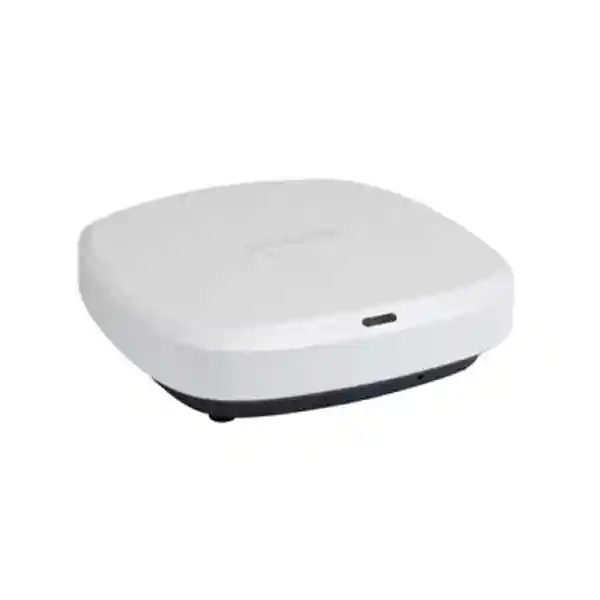
RUCKUS R370 Indoor Access Point
The RUCKUS R370 is an entry-level enterprise Wi-Fi 7 indoor access point built for smaller venues and low-to-medium-density deployments that still need dependable wireless performance, modern security options and practical management flexibility. It operates concurrently in the 2.4 GHz and 5 GHz bands, provides 2×2:2 spatial streams on each radio, reaches a combined maximum PHY rate of 3.57 Gbps and includes a 2.5 GbE Ethernet interface to reduce wired backhaul bottlenecks.
For buyers, the important question is not only whether the R370 is a Wi-Fi 7 access point, but whether it fits the building layout, expected device count, application mix, PoE design, switching capacity, controller strategy, VLAN plan and security architecture. FourTeck can help turn those inputs into a clearer bill of materials and deployment discussion without assuming stock, lead time, licensing or installation scope before they are confirmed.
IEEE 802.11a/b/g/n/ac/ax/be support for current and earlier-generation clients.
Concurrent 2.4 GHz and 5 GHz operation with two spatial streams per band.
Up to 688 Mb/s on 2.4 GHz plus up to 2882 Mb/s on 5 GHz under supported conditions.
Multi-gigabit Ethernet helps align the AP uplink with its aggregate wireless capability.
Direct answer: who is the RUCKUS R370 for?
The R370 is designed for buyers who want enterprise Wi-Fi 7 capability in smaller indoor locations without moving immediately to a higher-tier, higher-density platform. RUCKUS positions it for low-to-medium-density deployments and smaller venues, including small and medium businesses, branch offices, retail locations, restaurants and economy hospitality environments. It supports up to 256 concurrent users according to the current manufacturer specification, but that figure is a platform limit rather than a recommendation to place 256 actively demanding users on one radio cell.
Real deployment sizing should account for floor plan, wall materials, client capabilities, channel width, neighboring RF activity, voice and video usage, guest traffic, roaming expectations, uplink capacity and the performance required per user. A small office with many video meetings can need more careful design than a physically larger area with light browsing. FourTeck therefore recommends treating access-point quantity as an RF and capacity decision rather than multiplying a published client number by the number of users.
Verified RUCKUS R370 specifications
| Product type | Indoor wireless access point |
| Wi-Fi generation | Wi-Fi 7 / IEEE 802.11be, with a/b/g/n/ac/ax support |
| Bands | 2.4 GHz and 5 GHz |
| Radio chains / streams | 2×2:2 |
| Maximum PHY rates | 688 Mb/s at 2.4 GHz; 2882 Mb/s at 5 GHz; 3570 Mb/s combined |
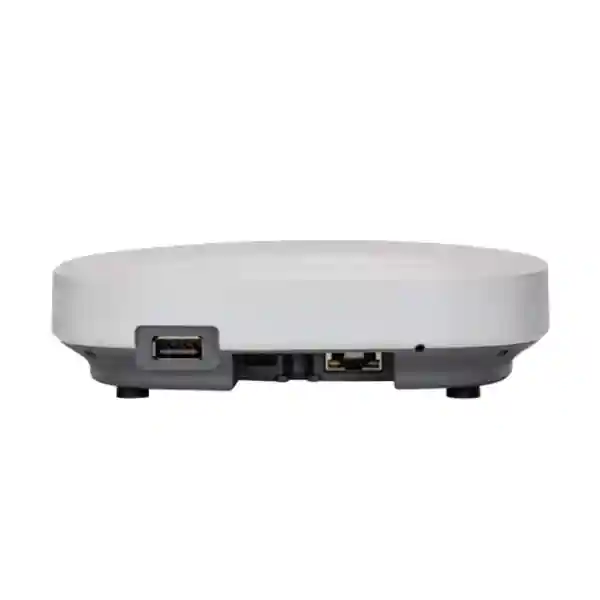
| Ethernet | 1 × 2.5 GbE |
| Concurrent users | Up to 256 |
| Mesh | RUCKUS SmartMesh |
| IoT | IoT Ready; USB 2.0 available for supported expansion |
| Operating temperature | 0°C to +40°C |
Management choices matter
The current RUCKUS product specification lists support for RUCKUS Cloud, RUCKUS SmartZone, RUCKUS Unleashed, ZoneDirector and standalone operation. That gives buyers flexibility, but the right choice depends on the existing estate and the operational model.
A small independent site may value a controller-less approach, while a distributed organisation may need centralized visibility, policy consistency, monitoring and lifecycle management. Existing RUCKUS customers should confirm the software release and management-platform compatibility for the proposed deployment rather than assuming that every older controller version will immediately adopt a new Wi-Fi 7 model.
If you are refreshing older access points, document the current controller, licenses, firmware, VLANs, authentication method, captive portal, guest workflows and switch interfaces before ordering. This reduces the risk of discovering a management or uplink dependency during installation.
Important buyer note: Wi-Fi 7 does not automatically mean 6 GHz
The R370 is a Wi-Fi 7 access point, but the current manufacturer specification lists supported Wi-Fi bands as 2.4 GHz and 5 GHz. Buyers who specifically require 6 GHz operation should not assume it is present because the product carries the Wi-Fi 7 label. Confirm the required spectrum, client-device support, local regulatory rules and access-point model before finalizing the wireless design.
Deployment planning before you request a quote
Coverage and RF
Share floor plans, approximate area, wall types, ceiling height, neighboring Wi-Fi conditions and areas where roaming or voice reliability matters. Access-point placement should follow coverage and capacity requirements rather than aesthetic convenience alone.
Switching and PoE
Confirm the switch model, available PoE budget, cable category, link speed and uplink design. A 2.5 GbE AP interface provides value only when the surrounding wired network can support the intended throughput and power requirements.
Security and segmentation
Decide how staff, guests, voice, POS, cameras and IoT devices should be separated. Wireless SSIDs, VLANs, authentication and firewall policy should be designed together so that convenient connectivity does not become uncontrolled lateral access.
FourTeck network planning resources
Wireless design is only one layer of the business network. If the R370 will connect to an existing edge-security environment, the switch, VLAN and firewall configuration should be reviewed as part of the same project. The following verified FourTeck pages provide useful context for adjacent network decisions.
- Firewall deployment planning in Dubai explains how WAN, LAN, VLAN, Wi-Fi, VPN and security policies should be mapped before deployment.
- Perimeter firewall design guidance is useful when staff, guest and IoT wireless networks need controlled access to internal systems and the internet.
- Palo Alto Networks PA-410 is an example of a compact branch firewall that does not provide integrated Wi-Fi or PoE, illustrating why separate switching and access-point planning may be required.
- Palo Alto Networks PA-415 includes PoE-capable interfaces and is relevant when considering whether a small branch should power selected access devices directly or use a dedicated PoE switch.
- Sophos XGS 88 provides 2.5 GE connectivity, which is useful context for buyers comparing multi-gigabit network-edge options around faster access infrastructure.
- Palo Alto PA-400R rugged firewall guidance is relevant to branch or operational sites where environmental conditions and remote connectivity are part of the wider network design.
- About FourTeck Firewall Dubai describes the broader networking and security support context for business deployments.
- Contact FourTeck to share floor plans, AP quantity, switch model, management preference and target deployment scope for quotation review.
RUCKUS R370 Indoor Access Point Dubai
Businesses searching for a RUCKUS R370 Indoor Access Point in Dubai are commonly trying to solve a practical office or branch wireless problem: how to provide fast, stable Wi-Fi for staff, guests and business applications without overbuilding the site. Dubai offices can range from compact serviced workspaces and retail units to clinics, restaurants, showrooms, hospitality spaces and branch operations with dense neighboring Wi-Fi networks. In these environments, access-point selection should consider both capacity and interference. The R370’s dual-band 2.4 GHz and 5 GHz design, ChannelFly support, SmartMesh capability and 2.5 GbE uplink make it a candidate for smaller indoor sites where Wi-Fi 7 is desired but a higher-tier tri-radio platform is not automatically required.
For Dubai buyers, a quotation should go beyond the access point itself. Confirm whether the existing network switch can provide the required PoE mode and whether it supports multi-gigabit Ethernet on the AP-facing port. Check the structured cabling route, switch uplink, available rack capacity and firewall segmentation. If the site uses separate staff and guest SSIDs, the VLANs and firewall rules should be prepared before the AP goes live. Retail and hospitality deployments may also need captive-portal decisions, guest isolation and bandwidth policies. Offices using Microsoft Teams, Zoom, cloud desktops or voice over Wi-Fi should identify roaming and latency-sensitive areas so that AP placement and channel planning support the actual work pattern.
Dubai projects also benefit from documenting the management model before purchase. Existing RUCKUS customers should state whether the network is managed through SmartZone, Unleashed, RUCKUS Cloud or another supported method, then confirm software compatibility for the R370. New deployments should decide who will monitor AP status, apply updates, create SSIDs, manage authentication and troubleshoot client issues after handover. A controller choice that suits one branch may not be the right fit for a business with many UAE sites.
FourTeck’s UAE IT and networking portfolio provides a broader view of network, security and infrastructure services that can sit around the R370. When requesting a Dubai quote, share the number of floors, approximate coverage area, expected users and devices, current switch and firewall models, internet speed, planned SSIDs, authentication requirements and whether installation or only product supply guidance is needed. Availability, accessories, delivery coordination and project timing should be confirmed in the written quotation rather than assumed from the product model alone.
RUCKUS R370 Indoor Access Point UAE
Across the UAE, buyers evaluating the RUCKUS R370 Indoor Access Point may be planning a single office, a chain of branches or a standardized wireless design for several locations. The R370’s compact form factor and low-to-medium-density positioning can suit smaller business premises where enterprise management and RF optimization matter more than headline radio count. Typical UAE use cases include professional offices, clinics, retail outlets, restaurants, training centres, hotel rooms, branch locations and multi-tenant business environments. The important design question is whether the traffic profile, client density and coverage requirement match the R370’s role rather than simply whether the site needs “Wi-Fi 7.”
Multi-site UAE deployments should pay particular attention to operational consistency. If branches in Dubai, Abu Dhabi, Sharjah or other emirates are expected to use the same SSIDs, authentication policies and guest workflows, centralized management may reduce configuration drift. The chosen platform should be checked against the organization’s existing RUCKUS software version and support model. Configuration templates should still allow site-level differences for VLAN IDs, WAN design, radio conditions and local internet services. Standardization is useful only when the physical network and security architecture have also been documented.
UAE procurement teams should separate hardware, management, support, accessories and professional services in the commercial review. Confirm the exact regional ordering reference, power method, mounting needs, controller or cloud entitlement where applicable, deployment services and support expectations. The manufacturer’s 2.5 GbE interface does not mean an existing 1 GbE switch is unusable, but it does mean the project should decide whether multi-gigabit access is part of the required outcome. Likewise, published concurrent-client limits should not be used as a substitute for RF capacity planning.
For secure business use, integrate the wireless design with DHCP, DNS, VLANs, identity services and firewall policy. Guest users should not automatically reach staff systems, printers, cameras or management interfaces. IoT devices may need their own network and access rules. A project brief that captures these requirements before ordering lets FourTeck prepare a more relevant quotation and reduces avoidable changes during installation.
RUCKUS R370 Indoor Access Point Uganda
Customers looking for the RUCKUS R370 Indoor Access Point in Uganda may be upgrading office Wi-Fi, extending connectivity to a branch, replacing consumer-grade access points or standardizing wireless service across commercial locations. The R370 can be considered for low-to-medium-density indoor areas where a compact enterprise AP, Wi-Fi 7 capability and flexible management are useful. Suitable projects may include offices, education administration areas, hospitality locations, retail premises, clinics, restaurants and smaller branch sites. The selection should still be based on building layout, user concentration and the quality of the wired network behind the access point.
Uganda deployments can benefit from careful power and switching planning. An access point that depends on PoE should not be treated as an isolated device; the switch must have enough power budget for all connected APs, phones, cameras and other powered equipment. Where backup power is important, the PoE switch, controller or gateway and upstream internet equipment should be considered together so that wireless service does not disappear even though only the AP appears to be protected. Cabling quality and run length also matter when deploying multi-gigabit-capable interfaces.
Businesses with multiple Ugandan branches should decide whether each location will be managed independently or as part of a common platform. A centralized approach can simplify SSID policy, monitoring and troubleshooting, but the management choice needs to match internet reliability, support skills and the existing RUCKUS environment. If a current SmartZone or Unleashed deployment is already in place, provide its software version and AP inventory when requesting the R370 so compatibility and upgrade planning can be reviewed before installation.
FourTeck’s Uganda technology solutions site can be used as a regional starting point for broader networking discussions. A useful R370 inquiry should include site city, building type, approximate floor area, user and device count, current switch model, internet bandwidth, existing wireless platform, desired SSIDs and whether deployment support is part of the request. Commercial availability and delivery details should be confirmed at quotation stage.
RUCKUS R370 Indoor Access Point Kampala
A Kampala buyer searching for the RUCKUS R370 Indoor Access Point is often dealing with an active commercial environment where many neighboring wireless networks compete for spectrum. Business districts, shared office buildings, retail units, restaurants, clinics and hotels can have several Wi-Fi systems operating within range of one another. In that context, the value of an enterprise AP is not simply faster peak speed. Channel selection, interference handling, sensible AP placement and client steering become central to the user experience. The R370 includes RUCKUS ChannelFly and other RF optimization technologies, but a good installation still begins with understanding the site.
For a Kampala office, ask how many users are active at the busiest time, not just how many employees are on the payroll. Count phones, laptops, tablets, printers, scanners, POS devices and guest devices. Identify meeting rooms where many people connect simultaneously and areas where video calls are critical. A single access point may cover a wide physical area but still be capacity-limited in a busy meeting or training space. Conversely, too many APs configured without an RF plan can create unnecessary co-channel competition. The deployment should balance coverage, capacity and roaming.
Kampala projects should also verify how the R370 connects to the rest of the network. If the switch only provides 1 GbE, decide whether the existing design is acceptable or whether a multi-gigabit refresh is part of the objective. If several APs will be powered by the same switch, calculate the total PoE requirement and include other PoE endpoints. Where internet or power continuity is a business concern, protect the upstream switch, firewall, router and service handoff rather than focusing only on the AP.
For quotations, state whether the site is a new wireless deployment or a replacement project, and include any existing RUCKUS controller details. FourTeck can then discuss model fit, management options, mounting and network dependencies with fewer assumptions. Kampala customers planning multiple branches elsewhere in Uganda should also consider whether a common SSID and management standard would simplify ongoing support.
RUCKUS R370 Indoor Access Point Arua
For organizations in Arua, the RUCKUS R370 Indoor Access Point may be relevant when a branch, NGO office, professional workplace, hospitality site, retail operation or institutional facility needs managed indoor Wi-Fi with a path beyond consumer-grade equipment. The R370’s role is strongest where the required coverage area is moderate, client density is not extreme and the organization values consistent configuration, security segmentation and enterprise troubleshooting. Its dual-band Wi-Fi 7 design provides modern client support while maintaining compatibility with earlier Wi-Fi generations.
Arua deployments should give extra attention to infrastructure readiness. Before selecting access-point quantity, document the switch location, cable runs, available ports, PoE capacity and backup-power design. If an office has frequent changes in room usage or temporary work areas, wireless mesh may be useful in selected circumstances, but wired Ethernet backhaul remains preferable where it is practical and correctly installed because it provides predictable capacity and keeps radio airtime available for clients. SmartMesh should therefore be treated as a design option rather than an automatic replacement for structured cabling.
Security requirements should be written before configuration. Staff, guest and operational devices may need different SSIDs and VLANs. Guest traffic may need internet-only access, while staff devices require business applications and printers. Cameras, access-control devices or IoT endpoints should not automatically share the same trust level as employee laptops. The AP can broadcast the wireless networks, but the wider switch and firewall configuration must enforce the intended separation.
When requesting an Arua quote, provide the expected number of access points, floor-plan information if available, switch and firewall models, whether a RUCKUS management platform already exists, preferred authentication method and the project’s support expectations. If the deployment will later expand to Kampala, Gulu, Mbarara or other sites, mention that roadmap at the start so the management approach and naming standards can be planned for growth rather than rebuilt after the first branch.
RUCKUS R370 Indoor Access Point Mbarara
Mbarara businesses evaluating the RUCKUS R370 Indoor Access Point may include hotels, healthcare-related offices, education facilities, professional firms, retailers and branch operations that depend increasingly on cloud applications and mobile devices. A compact enterprise AP can be useful where reliable indoor coverage, policy control and managed growth are more important than buying the highest possible radio specification. The R370 offers Wi-Fi 7 on 2.4 GHz and 5 GHz, a 2.5 GbE uplink, SmartMesh and a choice of management approaches, making it suitable for a range of smaller-site designs when capacity requirements are aligned with the product tier.
Hospitality and customer-facing deployments in Mbarara should separate guest experience from back-office security. The guest network may need a captive portal, bandwidth controls or simple internet-only access, while staff systems, payment devices and administrative services belong on controlled networks. Wireless design should also consider where guests actually use connectivity: reception, dining areas, rooms, meeting spaces and outdoor-adjacent zones can place very different demands on an indoor AP. Coverage should be validated against building materials and room layout rather than estimated only from square meters.
Business offices should examine application use. Email and light browsing are forgiving, while cloud backup, video conferencing, large file transfers and voice over Wi-Fi can expose weak uplinks or oversubscribed cells. The R370’s 2.5 GbE port provides room for multi-gigabit backhaul, but the switch, cabling and upstream network must be designed to use it. If the site already has Gigabit switching, FourTeck can help review whether the wireless requirement justifies a switch upgrade now or whether the AP can be deployed within the current infrastructure and upgraded later.
A complete Mbarara request should therefore include coverage objectives, peak user count, application profile, switch model, PoE capacity, internet link, existing controller and any guest-access requirements. This information supports a more meaningful quotation than a request based only on unit price, and it helps identify accessories or network changes before equipment reaches the site.
RUCKUS R370 Indoor Access Point Gulu
The RUCKUS R370 Indoor Access Point can be considered in Gulu for branch offices, training facilities, guest accommodation, retail environments, clinics and organisations that need centrally manageable indoor wireless networking. For these buyers, the strongest procurement approach is to define the service the network must deliver: how many active devices connect at peak time, which rooms or zones need coverage, whether users move between APs during calls, and which business systems are sensitive to latency or packet loss. Once these requirements are clear, access-point quantity and placement can be designed rather than guessed.
In multi-room buildings, wall density and construction material can make a major difference to 5 GHz coverage. The 2.4 GHz band travels differently and may reach farther, but it has less available spectrum and can become crowded. Wi-Fi 7 does not remove basic RF planning principles. The R370’s intelligent radio features can optimize operation, yet they work best when AP locations and transmit-power strategy are sensible. If voice, video calls or roaming are important, avoid relying on a single centrally placed AP purely because it can be detected in every corner of the building.
Gulu projects that are part of a wider Uganda network should also document naming, IP addressing, VLANs and management ownership. A consistent configuration makes it easier for a support team to compare sites when users report problems. The same principle applies to firmware and maintenance: define who is responsible for software updates, configuration backup and incident escalation. Controller-less operation can reduce infrastructure at a small site, while centralized platforms can improve visibility across many branches; the right choice depends on the organisation’s scale and support model.
Before requesting a quote, share whether the building is new or already cabled, the number of available PoE ports, the switch uplink speed, any backup-power arrangement, planned SSIDs and whether the APs must integrate with an existing firewall or authentication service. This lets the wireless equipment be quoted as part of a working network rather than as isolated hardware.
RUCKUS R370 Indoor Access Point Kenya
Kenya buyers searching for a RUCKUS R370 Indoor Access Point often need a business-grade replacement for older Wi-Fi 5 or Wi-Fi 6 equipment, or a standardized platform for new offices and branches. The R370 brings Wi-Fi 7 capability to a compact dual-band design aimed at low-to-medium-density environments. It can fit professional offices, retail sites, restaurants, education administration areas, hospitality locations and remote branches where organizations want managed wireless service without immediately moving to a high-density tri-radio access point.
A Kenya deployment should be sized against both user experience and the wired network. If employees use video meetings, cloud ERP, large file transfers, IP telephony or browser-based business platforms throughout the day, the AP uplink and switch uplinks should be checked for congestion. The R370 includes a 2.5 GbE interface, so organizations planning a refresh may want to evaluate multi-gigabit access switching. Existing Gigabit environments can still be reviewed pragmatically; the decision should depend on measured and expected traffic rather than assuming every AP needs an immediate full-switch replacement.
Organizations with sites in Nairobi and other Kenyan cities should consider central management, repeatable SSID policy and a documented support process. For a branch rollout, record the AP serial inventory, management assignment, switch port, VLANs, physical location and cable label. These operational details become valuable when troubleshooting remotely. If RUCKUS Unleashed is preferred for smaller deployments, confirm the current supported software path for the R370; if SmartZone or cloud management is in use, confirm controller compatibility before rollout.
The FourTeck Kenya technology site provides regional context for wider IT and networking inquiries. For an R370 quotation, include the city, building type, number of floors, approximate users, AP quantity if already estimated, existing switch and firewall, management platform, required accessories and whether deployment support is needed. A precise request enables better procurement guidance and reduces the risk of missing power, mounting or management dependencies.
RUCKUS R370 Indoor Access Point Kuwait
For Kuwait businesses, the RUCKUS R370 Indoor Access Point can be evaluated for indoor offices, shops, restaurants, clinics, education spaces, hospitality rooms and branches that need dependable managed Wi-Fi with current-generation client support. The access point is rated for an operating temperature of 0°C to +40°C, so indoor environmental conditions and equipment-room cooling should be considered as part of the design. It should not be selected for exposed outdoor locations merely because the regional climate is demanding; an outdoor-rated access point is a different product category.
Kuwait buyers should also distinguish between Wi-Fi generation and radio-band requirement. The R370 supports Wi-Fi 7 but operates on 2.4 GHz and 5 GHz according to the current manufacturer specification. Organizations specifically planning for 6 GHz should compare alternative RUCKUS models rather than assuming every Wi-Fi 7 AP uses all three bands. This is especially important for refresh projects where the technology roadmap may include newer laptops and mobile devices that can use 6 GHz in supported regulatory environments.
In a branch or customer-facing site, network segmentation should be included in the scope. Employee devices, guest users, payment terminals, CCTV, phones and IoT equipment have different access requirements. The AP can map SSIDs to the appropriate network design, but the switch and firewall must carry and enforce the VLANs correctly. If the R370 will replace an older AP, capture the current SSID names, authentication method, DHCP services and firewall rules before cutover so that the migration does not inadvertently change access behavior.
FourTeck’s Kuwait IT solutions portal can support regional procurement discussions. Include required quantity, current RUCKUS management platform, switch details, PoE capacity, coverage area and project location in the inquiry. Availability and delivery timing should be confirmed in the quotation, particularly when a project requires several APs, mounting accessories or a coordinated rollout schedule.
RUCKUS R370 Indoor Access Point Ghana
Ghana organizations considering the RUCKUS R370 Indoor Access Point may be looking for stronger wireless consistency in offices, shops, hospitality environments, clinics, schools or branch networks where consumer Wi-Fi has become difficult to support. The R370 provides a compact enterprise platform with dual-band Wi-Fi 7, a multi-gigabit Ethernet uplink, SmartMesh and several management options. Its value is strongest when it is deployed as part of an intentional network design with appropriate switching, power, segmentation and management rather than as a simple replacement for a standalone router.
A Ghana site survey should identify where users concentrate and how the building affects radio propagation. Reception areas, training rooms, meeting spaces and customer waiting areas may create short periods of high device density even when the average user count is modest. Walls, metal shelving, glass partitions and adjacent tenants can influence coverage and interference. The R370’s RF optimization features can help, but they do not remove the need to choose good AP locations and sensible channel plans.
Power continuity and network resilience can also be part of the buying decision. If a business relies on Wi-Fi for cloud applications, POS or operational communications, consider how the PoE switch, firewall, internet handoff and any controller or management dependency are protected during power disturbances. A UPS serving only the access point does not keep the service available if the upstream switch or gateway shuts down. For multiple APs, calculate the combined switch power budget with all other PoE devices.
Regional buyers can use the FourTeck Africa technology site for wider project context. When asking for the R370, provide city, quantity, floor plan if available, switch and firewall details, existing controller, expected user count and whether staff/guest separation is required. This information helps identify whether the R370 fits the project tier and what supporting infrastructure should be included in the commercial discussion.
RUCKUS R370 Indoor Access Point Nigeria
Nigeria businesses searching for the RUCKUS R370 Indoor Access Point may be planning wireless connectivity for offices, financial-service branches, retail locations, hospitality sites, clinics, education spaces, service centres or distributed company networks. The R370 is designed for smaller, low-to-medium-density environments and combines Wi-Fi 7 client support with enterprise management options. Its 3.57 Gbps combined maximum PHY rate and 2.5 GbE interface are useful specifications, but the finished user experience depends on the site layout, radio conditions, client mix, internet service and the capacity of the upstream wired network.
For Nigerian multi-branch organisations, supportability should be a primary design goal. Standardize SSID names, authentication methods, VLAN mapping, switch-port configuration and monitoring wherever business policy allows, but document site-specific differences. Centralized management can make it easier to identify offline APs, compare radio health and apply consistent changes, while smaller independent locations may prefer a simpler controller-less option. Existing RUCKUS customers should share the current software release and controller details before purchasing newer AP hardware.
Where power reliability is a concern, plan the entire connectivity chain. The AP, PoE switch, firewall/router, fiber or wireless CPE and any on-site controller need coordinated backup if Wi-Fi must stay available. A branch with a generator or UPS should also confirm switch startup behavior and total PoE load. On larger sites, separate access and distribution switching may provide better resilience than powering all network devices from a single small switch.
FourTeck can support the procurement discussion through its wider African network presence. A useful Nigerian request should state the deployment city, number of locations, AP quantity per site, existing RUCKUS environment, PoE switch model, firewall, internet speed, staff and guest requirements and whether installation, migration or only supply coordination is expected. This avoids treating the access point as a commodity line item when the real objective is a reliable wireless service.
RUCKUS R370 Indoor Access Point Seychelles
Seychelles buyers evaluating the RUCKUS R370 Indoor Access Point may include hotels, guest facilities, offices, retail premises, restaurants and service businesses where dependable indoor guest and staff connectivity is important. The R370’s compact design and low-to-medium-density positioning can be a good match for smaller interior zones, but hospitality networks should be planned by room layout, construction material, corridor design and user expectations. A Wi-Fi signal detected in a room does not necessarily mean the network can deliver consistent video, calling or cloud access when several guests are active at once.
Hospitality projects should also separate guest internet from operational networks. Front-desk systems, payment devices, staff terminals, CCTV and building-management endpoints should not automatically share the same broadcast and security domain as guest devices. The access point can present multiple SSIDs, while the switching and firewall design should apply VLANs, DHCP scopes, internet policy and access controls. Captive portal, guest onboarding and bandwidth policy should be defined during design rather than left for the final installation day.
Because island procurement can involve more planning around shipping and spares, buyers should specify the complete bill of materials when requesting a quote. Include access points, mounting requirements, PoE switching, power protection, controller or management subscriptions where applicable and any spare-unit strategy. Do not assume that power adapters, PoE injectors or every accessory are included with a base AP order. Confirm each line item, regional part reference and delivery arrangement in writing.
For smaller resorts or offices, controller-less operation may reduce on-site infrastructure, while multi-property businesses may value centralized management. The correct decision depends on support skills, internet reliability, number of APs and the need for common policy across locations. Share these details with FourTeck along with floor plans, room counts, expected guest density and current network equipment so the R370 can be evaluated as part of a complete indoor wireless design.
Compatibility and integration checklist
Management platform
Confirm SmartZone, Unleashed, cloud or standalone strategy and verify the current supported software release before adoption.
PoE and switching
Check per-port PoE capability, total switch budget, port speed, switch uplinks and cabling. Include every powered endpoint in the calculation.
VLAN and firewall
Define staff, guest, voice, POS and IoT trust zones. Confirm that trunks, DHCP, DNS and security policies support the intended separation.
Client mix
List older and newer laptops, phones, scanners and IoT devices. Wi-Fi 7 benefits vary with client capability and radio conditions.
Frequently asked questions about the RUCKUS R370
Is the R370 a Wi-Fi 7 access point?
Yes. RUCKUS lists the R370 as an indoor Wi-Fi 7 access point supporting IEEE 802.11be along with earlier a/b/g/n/ac/ax standards.
Does the R370 support 6 GHz?
The current manufacturer specification lists 2.4 GHz and 5 GHz bands for the R370. Buyers requiring 6 GHz should evaluate a model that explicitly lists that band.
How many clients can the R370 support?
RUCKUS lists up to 256 concurrent users. Actual design capacity should be lower or higher per cell according to application load, signal quality, channel width and user experience requirements rather than the platform limit alone.
Does it have multi-gigabit Ethernet?
Yes. The R370 includes one 2.5 GbE Ethernet port. The connected switch and cabling should be checked if multi-gigabit backhaul is part of the design target.
Can the R370 use wireless mesh?
Yes. RUCKUS lists SmartMesh support. Mesh can help where cabling is difficult, but wired backhaul is generally preferable when practical because it preserves wireless airtime and offers predictable capacity.
Is the R370 suitable for a small office?
It is positioned for low-to-medium-density smaller venues and can suit small offices when the coverage, user density and application requirements fit. A floor plan and device estimate are more useful than floor area alone.
Can it be managed without a dedicated controller appliance?
RUCKUS lists Unleashed and standalone operation among the supported management choices. Confirm the intended software release and design before purchase.
Is the R370 suitable outdoors?
It is an indoor access point. Projects needing weather exposure, outdoor mounting or wider environmental tolerance should use a suitable outdoor-rated model.
Does Wi-Fi 7 guarantee faster internet?
No. Internet performance is limited by the WAN service, firewall, switching, backhaul, RF conditions and client capability. Wi-Fi 7 improves the wireless platform, but the complete path must be sized correctly.
Quotation checklist for RUCKUS R370 projects
A useful quotation request gives enough context to confirm the hardware and identify supporting network requirements. Include the following information where available:
- Country, city and deployment address area.
- Number of floors, rooms and approximate coverage area.
- Expected peak users and total device count.
- Voice, video, POS, cloud and guest-traffic requirements.
- Existing switch model, port speed and PoE capacity.
- Firewall model and VLAN or segmentation plan.
- Current RUCKUS controller or management platform.
- Required SSIDs and authentication method.
- Mounting, injector, power or spare requirements.
- Whether supply, configuration, installation, migration or support is required.
Decision recap
Choose the RUCKUS R370 when the requirement is an indoor, compact, enterprise Wi-Fi 7 access point for low-to-medium-density use and the project is comfortable with dual-band 2.4 GHz and 5 GHz operation. Its 2×2:2 radios, 3.57 Gbps combined maximum PHY rate, 2.5 GbE uplink, SmartMesh, IoT-ready design and flexible management options make it a practical candidate for smaller business environments.
Consider a different RUCKUS model when the site specifically needs 6 GHz, higher-density capacity, more radio streams, outdoor environmental protection or a different physical deployment style. Product tier should follow the use case rather than the newest Wi-Fi label alone.
Before ordering, verify the R370 against the existing management software, PoE switch, uplink speed, cabling, VLAN design, firewall policy and support process. For multi-country requirements across the Middle East and Africa, FourTeck can use the same planning framework while adapting procurement and deployment discussions to each site.
Regional FourTeck resources
For organizations planning standardized wireless infrastructure across several markets, regional procurement and support context can be coordinated through FourTeck’s established country and Africa technology sites. Use the relevant regional portal to discuss broader networking requirements alongside the access-point request.
Available regional references used for this page include FourTeck UAE, FourTeck Uganda, FourTeck Kenya, FourTeck Kuwait and FourTeck Africa.
Talk to FourTeck about the RUCKUS R370
Share your country, site type, floor plan, estimated users, current switch and firewall, existing RUCKUS environment and the services you expect around supply or deployment. FourTeck can then review the R370 in the context of your actual wireless and network requirements and prepare a quotation discussion based on confirmed scope.

Reviews
There are no reviews yet.