

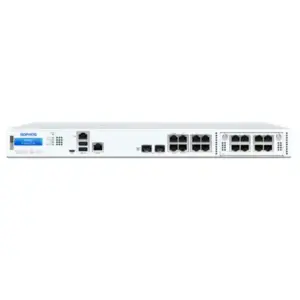
SonicWall SMA 8200v Virtual Access Appliance in Dubai, UAE
The SonicWall SMA 8200v is a virtual secure mobile access platform built for organizations that need dependable, policy-controlled connectivity to private applications, data-centre services, cloud workloads and hybrid infrastructure. It helps IT teams provide remote access without treating every user, device or session as equally trusted. FourTeck supports UAE buyers with appliance sizing, licensing guidance, virtualization planning, identity integration, deployment, migration and operational support.
Quick Information
Overview
Remote access has become part of normal business operations, yet it remains one of the most sensitive entry points into a corporate network. Employees work from homes, hotels, customer sites and branch offices. Contractors may need temporary access to a limited application. Administrators may need privileged access to infrastructure. Business partners may require a narrowly defined connection to a portal or shared service. A secure access gateway must therefore do more than create a tunnel. It should identify users, evaluate the context of a connection, control what each person can reach and give administrators enough visibility to support the environment responsibly.
The SonicWall SMA 8200v is positioned for this role as a software-based appliance that can be deployed without adding a dedicated physical chassis. It is part of the SonicWall Secure Mobile Access 1000 Series and is intended for organizations that want enterprise remote-access capabilities in a virtual form factor. A virtual appliance can be particularly useful when the business already operates a mature virtualization platform, has a private cloud strategy, needs rapid provisioning, or prefers to align secure access infrastructure with data-centre and disaster-recovery architecture.
FourTeck helps UAE organizations translate these capabilities into a practical deployment. We assess the expected concurrent-user load, application mix, authentication platform, virtualization resources, public DNS, certificates, network placement, firewall rules and operational responsibilities. The objective is not simply to activate remote access. It is to create an access service that matches how the organization actually works, restricts unnecessary exposure and remains manageable after the initial rollout.
Why Secure Remote Access Matters for Business Security
Publishing an internal application directly to the internet can create unnecessary risk. A conventional VPN that provides broad network access can also be too permissive for contractors, unmanaged devices or users who need only one service. Modern organizations require a more deliberate approach in which identity, device condition, destination, protocol, session behaviour and business role influence the access decision.
A secure access platform provides a controlled bridge between external users and protected resources. Instead of opening a wide path into the internal network, administrators can define access communities, map users and groups to approved destinations, apply authentication requirements and choose the most appropriate connection method for each application. Browser-based access may be suitable for selected web resources, while a client connection may be required for applications that use multiple ports or need network-level reachability.
This matters for compliance, operational continuity and incident response. When access policies are clearly defined, IT teams can answer practical questions: who connected, what resource was used, whether authentication succeeded, which session method was applied and when access should be revoked. The platform does not replace endpoint protection, identity governance or the perimeter firewall. It complements them by creating a dedicated control point for remote connectivity.
Key Business Benefits
Controlled Application Access
Give users access to approved business resources rather than exposing entire internal networks. Policy design can be aligned with departments, job roles, locations and application sensitivity.
Virtual Deployment Flexibility
Deploy the appliance within a supported virtual or cloud environment and align it with existing compute, network, backup and recovery practices.
Identity-Led Security
Integrate access decisions with enterprise authentication and multifactor authentication options, subject to the selected platform, licenses and identity design.
User Experience Options
Support different access methods for browser-based applications, managed endpoints and users who need broader connectivity, depending on policy and configuration.
Scalable Licensing Approach
Plan capacity around concurrent usage and business growth. User counts, support and subscription components are license dependent and should be validated before ordering.
Central Visibility
Use a dedicated administrative platform to review sessions, policies, authentication events and operational status, with reporting depth dependent on configuration.
Product Highlights
Designed to broker remote connectivity to applications and network resources.
No dedicated physical appliance is required for the SMA 8200v instance.
Published model capacity; real design must consider workload, platform resources and licensing.
Supports enterprise authentication and third-party MFA integration options.
Technical Specification Table
| Field | SonicWall SMA 8200v Information |
|---|---|
| Brand | SonicWall |
| Model | SMA 8200v |
| Product Type | Virtual secure mobile access appliance |
| Product Category | Enterprise remote access / SSL VPN gateway |
| Form Factor | Virtual appliance |
| Recommended Firmware | SMA 1000 Series release dependent; confirm current supported release before deployment |
| Concurrent Sessions / Users | Up to 5,000 published capacity; license and configuration dependent |
| Published SSL VPN Throughput | Up to approximately 1.58 Gbps under vendor test conditions; actual performance varies |
| Allocated Memory | 8 GB published reference allocation |
| Processor Allocation | 4 virtual cores published reference allocation |
| Recommended Disk Size | 240 GB published reference size |
| Operating System | Hardened Linux-based appliance software |
| SSL Acceleration | Supported |
| Supported Platforms | VMware ESXi, Microsoft Hyper-V, KVM/QEMU and AWS options are documented by SonicWall; exact version support should be confirmed |
| High Availability | Configuration and license dependent |
| Authentication | Enterprise directory and multifactor integration options; compatibility dependent on selected identity platform |
| Management | Web-based administration; centralized management options are available for larger deployments |
| Logging / Reporting | Built-in operational visibility with scope dependent on configuration and integrations |
| License Bundle | Appliance, user capacity, support and optional components may be quoted separately; contact FourTeck for current options |
| Warranty Guidance | Virtual software appliance support terms are contract dependent; confirm the selected SonicWall support package |
| UAE Availability | Contact FourTeck for current license, support and deployment options |
| Important Note | Published maximums are not a substitute for project sizing. Performance depends on users, applications, encryption, authentication, host resources and traffic patterns. |
Configuration and Buyer Guidance
The model name alone does not define a complete remote-access solution. Buyers should confirm the base appliance entitlement, the required concurrent-user quantity, support duration, high-availability needs, authentication integrations and any optional services. A quotation that appears inexpensive may include only the virtual appliance and omit user capacity or support. Conversely, a bundle may include more capacity than the organization currently needs. FourTeck reviews the bill of materials so the selected package matches the project rather than relying on assumptions.
Concurrent users versus named users
Remote-access sizing should be based on how many users are expected to connect at the same time, not only on the total employee count. A company with 2,000 employees may need only a few hundred concurrent sessions during ordinary operation, while a business-continuity event could push usage much higher. Shift patterns, regional teams, contractor access and seasonal demand should be considered. Capacity must also include room for growth and unexpected peaks.
Virtual resource planning
The published processor, memory and disk values are useful starting points, but the underlying hypervisor must provide stable resources. CPU contention, slow storage, oversubscription or incorrect network design can reduce user experience. The virtual appliance should be placed on a host and storage platform that matches the expected workload. Resource reservations, network interface mapping, backup strategy and recovery procedures should be documented.
Network placement and certificates
The appliance normally requires carefully designed connectivity between the internet-facing zone and protected internal resources. Public DNS, public certificates, NAT rules, upstream firewall policy and management access must be prepared. A certificate mismatch or poor DNS design can create user warnings and support calls. Administrative access should be restricted to approved networks and protected with strong authentication.
Authentication and MFA
Identity integration is central to secure remote access. Directory groups should reflect real job roles, and multifactor authentication should be evaluated for users, contractors and administrators. The exact integration method depends on the identity provider, protocol support and software release. FourTeck can help map the authentication flow, test user scenarios and define a recovery process for locked accounts or unavailable identity services.
Ideal Business Use Cases
Enterprise Hybrid Work
Provide structured access for employees who divide their time between offices, homes and customer locations. Policies can distinguish managed corporate endpoints from other devices and limit each group to suitable applications.
Third-Party and Contractor Access
Give external specialists controlled access to selected systems without granting general network reachability. Access can be time-bound and mapped to a specific project or resource set.
Healthcare and Regulated Workloads
Support remote access to clinical, administrative or business applications where identity, policy consistency and audit visibility are important. Compliance remains dependent on the complete organizational control framework.
Education and Research
Enable staff, researchers and approved students to reach private portals, licensed resources or laboratory systems while applying group-specific access controls.
Business Continuity
Maintain a planned remote-access capability for weather events, office closures, travel disruption or temporary site unavailability. Capacity should be tested against emergency concurrency assumptions.
Cloud and Data-Centre Administration
Create a controlled path for approved administrators to reach management interfaces and private workloads, with privileged access separated from standard employee connectivity.
Context-Aware Access Policies
A useful secure-access design begins with policy, not technology. The business should define which users require access, which applications they need, what device types are acceptable, when access should be available and how exceptions will be approved. The SMA platform can then be configured to implement those decisions. This reduces the temptation to create broad access groups simply because they are easier to administer.
For example, finance employees may require access to an ERP application and document repository, but not engineering systems. A support contractor may need access to one server for a defined maintenance window. Senior administrators may require wider access but should use stronger authentication and dedicated administrative accounts. Remote users on unmanaged devices may be limited to browser-based services, while managed endpoints can receive a client connection with broader permissions.
Good policy design also includes denial rules, session timeouts, inactive-user handling and a clear process for revocation. When an employee changes roles or a supplier contract ends, access should be removed promptly. FourTeck helps translate business roles into access communities and resource definitions so the configuration remains readable and supportable.
Browser, Client and Application Access Choices
Not every user requires a full network tunnel. Some employees need only a web application, intranet page or remote desktop service. In these cases, a browser-oriented workflow can reduce complexity and limit exposure. Other applications use multiple ports, local integrations or protocols that require a client-based connection. The access method should therefore be selected per application rather than applied uniformly to every user.
The user experience must also be tested. Authentication redirects, multifactor prompts, browser compatibility, client installation, certificate trust and session reconnect behaviour can affect adoption. A technically correct deployment may still generate support incidents when the login sequence is confusing. Pilot testing with representatives from different departments helps identify these issues before a larger rollout.
FourTeck can prepare access profiles for common user groups, document connection steps and help administrators understand when to use each method. The goal is to offer the least-privileged access path that still allows the user to complete legitimate work.
Resilience, Scalability and Operational Readiness
Secure remote access becomes a business-critical service when large numbers of employees depend on it. Resilience planning should cover more than the virtual machine. Organizations should consider host failure, storage failure, internet circuit loss, DNS availability, certificate expiry, identity-service failure and upstream firewall changes. High availability and centralized management options are configuration and license dependent, but the broader continuity plan must include all supporting systems.
Capacity should be monitored over time. A system sized for 500 sessions may become constrained after a merger, new contractor programme or shift to remote work. Administrators should track peak concurrency, authentication latency, throughput, resource utilization and support trends. Expansion should be planned before the environment reaches a critical threshold.
Operational readiness includes configuration backups, administrator role separation, change records, upgrade planning and periodic policy review. Certificates require renewal. User groups change. Applications move to new servers. Old resource definitions may become unnecessary. FourTeck can help establish a maintenance approach that keeps the SMA deployment aligned with the business instead of allowing it to become an undocumented legacy service.
Buyer Checklist
UAE Availability and Service Support
FourTeck assists customers with SonicWall SMA 8200v quotations, licensing clarification, deployment planning and technical services. Availability can vary by license type, support term, user quantity and purchasing route. We therefore provide project-specific guidance rather than claiming fixed stock or a universal package. Customers should share their expected user count, preferred contract duration, deployment platform and required support level so the correct items can be reviewed.
Our technical scope can include pre-deployment assessment, virtual appliance installation, interface and routing preparation, certificate configuration, authentication integration, access policy design, pilot testing, user onboarding guidance, migration assistance and post-deployment troubleshooting. Service scope is agreed according to the complexity of the environment and the responsibilities of the customer’s internal IT team.
Dubai, Abu Dhabi, Sharjah and Ajman Coverage
FourTeck supports organizations across Dubai, Abu Dhabi, Sharjah and Ajman with remote-access consultation, licensing coordination, virtual deployment planning and configuration services. Engagements may be delivered remotely, onsite or through a blended approach depending on the project, access requirements and agreed scope. Multi-site customers can use one planning process to define user groups, regional application access, identity integration and operational ownership across their UAE environment.
GCC and Africa Availability
Organizations with regional operations can request coordination for GCC and selected African markets. Licensing, delivery route, taxation, local support arrangements and deployment responsibility vary by country, so each requirement is reviewed individually. FourTeck can help central IT teams prepare a consistent remote-access architecture while allowing for local network, identity and compliance differences.
Explore FourTeck regional resources for Kuwait, Kenya, Uganda and broader Africa technology support.
Related FourTeck Products and Services
Firewall Configuration
Prepare upstream firewall rules, NAT, segmentation and routing required for a secure SMA deployment.
SonicWall Solutions
Coordinate secure access with SonicWall network security, branch connectivity and policy requirements.
VPN Migration
Move users and policies from legacy remote-access platforms using staged testing and documented rollback planning.
Network Security Consultation
Review identity, endpoint, firewall and remote-access controls as one connected business security architecture.
Why Buyers Choose FourTeck
A secure-access project crosses multiple technical domains. The virtual appliance depends on the hypervisor or cloud platform, public and private networking, DNS, certificates, the identity system, endpoint software, application servers and the upstream firewall. FourTeck approaches the project as an integrated service rather than treating the appliance as an isolated license.
Capacity is mapped to real concurrent usage and application behaviour.
Appliance, users, support and optional services are checked before ordering.
Network, certificate, identity and test requirements are addressed together.
Configuration, migration and troubleshooting can be aligned with internal IT responsibilities.
Learn more about FourTeck Firewall Dubai and our approach to business network security.
Frequently Asked Questions
What is the SonicWall SMA 8200v?
It is a virtual appliance in the SonicWall Secure Mobile Access 1000 Series. It provides controlled remote access to private applications and network resources through policy-based secure connectivity.
How many users can the SMA 8200v support?
The published platform capacity is up to 5,000 concurrent sessions. Actual licensed capacity and usable performance depend on the purchased user entitlement, virtual resources, application mix, authentication flow and traffic conditions.
Does the base virtual appliance include all user licenses?
Not necessarily. The appliance, user capacity, support term and optional components may be separate quotation items. FourTeck can review the required bill of materials before purchase.
Which virtualization platforms are supported?
SonicWall documents deployment options for VMware ESXi, Microsoft Hyper-V, KVM/QEMU and AWS. Supported versions can change, so the intended platform and software release should be checked before installation.
Can the SMA 8200v integrate with multifactor authentication?
The SMA 1000 Series supports third-party MFA integration options. Compatibility and configuration depend on the identity provider, selected protocol, software release and license requirements.
Is high availability available?
High-availability capabilities are configuration and license dependent. The design should also account for hypervisor, storage, network, DNS, certificate and identity-service resilience.
Can FourTeck migrate users from an older VPN platform?
Yes. FourTeck can assess the existing solution, map applications and user groups, build new access policies, run a pilot and coordinate a staged migration. Scope depends on the current platform and environment complexity.
What information is needed for a quotation?
Provide the expected concurrent-user count, support duration, virtualization platform, high-availability requirement, identity provider, main applications and desired deployment services.
Does FourTeck provide installation and configuration in the UAE?
FourTeck provides planning, installation, configuration, policy setup, authentication integration, testing, migration and troubleshooting services across the UAE, subject to an agreed project scope.
What warranty or support applies to a virtual appliance?
A virtual appliance is covered through the selected software support and subscription terms rather than a physical hardware warranty. Confirm the exact SonicWall support package, duration and renewal conditions in the quotation.
Get the Right SMA 8200v Configuration for Your Organization
Share your concurrent-user requirement, deployment platform, authentication method and support term. FourTeck will help review the appropriate appliance, licensing and service options for your UAE project.

Reviews
There are no reviews yet.