

Ubiquiti airMAX NanoBeam 5AC NBE-5AC-GEN2 in Dubai, UAE
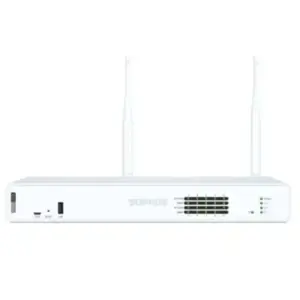
A compact directional radio for creating practical outdoor network links between buildings, sites and remote endpoints. The NanoBeam 5AC combines a 19 dBi integrated antenna, Gigabit connectivity, passive PoE power and UISP-ready management in a weather-resistant enclosure designed for focused wireless deployment.
What to confirm first
A successful wireless bridge depends on more than the radio alone. Confirm clear line of sight, Fresnel-zone clearance, link distance, required capacity, mounting height and local channel availability.
Share both endpoint details with FourTeck so the proposed bill of materials can include the correct quantity, cabling, protection and installation scope.
Direct answer for buyers
The NBE-5AC-GEN2 is an outdoor directional wireless bridge from Ubiquiti’s airMAX family. It is mainly used to carry Ethernet traffic over a focused 5 GHz radio link where trenching fibre or copper is impractical. Businesses should consider it for building-to-building connectivity, remote cameras, branch extensions, temporary facilities, hospitality compounds and similar line-of-sight applications. Before proceeding, confirm the number of radios required, distance, path visibility, expected throughput, channel conditions, mounting method, passive PoE compatibility and local regulatory settings. The product is not a replacement for a full indoor Wi-Fi access point, and actual link performance depends on design, interference, alignment, channel width and environmental conditions.
What the NanoBeam does
The NanoBeam 5AC creates a directional wireless connection between compatible outdoor radios. In a common point-to-point design, one radio is installed at each endpoint and aligned toward the other. Ethernet traffic enters the first radio, crosses the outdoor 5 GHz link and exits through the far-side Ethernet interface. This lets an organisation extend its network without installing a physical cable across roads, yards, open land or separate structures.
The radio can operate in access point or station mode. It supports bridging, routing, DHCP, SNMP, SSH, traffic shaping, statistical reporting and airMAX AC features. These functions give installers practical control over link behaviour, monitoring and traffic handling, but the correct mode and settings should be chosen for the wider network design.
Who it may suit
The device is relevant to businesses that need a compact outdoor bridge rather than a large dish system. Typical buyers include IT teams, contractors, system integrators, facilities managers, CCTV installers, schools, farms, warehouses, hotels, construction sites and organisations linking nearby premises.
It is most suitable when there is a clear directional path and a realistic bandwidth requirement that fits the proposed radio design. It may be less suitable where buildings, trees, terrain or dense interference obstruct the path, where a much longer or higher-capacity link is required, or where the endpoint needs general-purpose indoor wireless coverage. In those cases, a different antenna class, fibre route, 60 GHz solution or another airMAX model may be more appropriate.
Business challenges this product can address
Separate buildings
A warehouse, gatehouse, annex, workshop or office can be connected to the primary network without running a new cable across the full gap, subject to path and regulatory checks.
Remote surveillance
The bridge can transport network traffic from selected IP cameras or a remote switch back to the main site when the designed link has sufficient capacity and stable line of sight.
Temporary connectivity
Construction offices, events, project compounds and short-to-medium-term facilities may use a wireless bridge where a permanent civil-work route is not justified.
Difficult cable routes
Road crossings, landscaped areas, leased premises and operational yards can make trenching disruptive. A properly engineered radio link may provide an alternative path.
Core capabilities in practical terms
Directional 19 dBi antenna
The integrated antenna concentrates radio energy toward the intended endpoint, helping create a focused link rather than broad local coverage.
Flexible channel widths
Point-to-point channel options range from 10 to 80 MHz. Wider channels can support more capacity but generally require cleaner spectrum and careful planning.
Gigabit interfaces
Two Gigabit Ethernet ports support network connectivity and deployment flexibility. Port use should follow the intended powering and downstream design.
UISP-ready operations
The device can be incorporated into Ubiquiti’s UISP environment for compatible monitoring and management workflows, subject to the chosen deployment architecture.
Product-fit matrix
| Requirement | Suitable when | Confirm before ordering |
|---|---|---|
| Building-to-building Ethernet | Both endpoints have a clear directional path and suitable mounting points. | Distance, Fresnel clearance, link capacity, mounting height and quantity. |
| Remote CCTV backhaul | The camera load fits the designed throughput and latency expectations. | Camera count, bit rate, switch power, surge protection and redundancy needs. |
| Compact outdoor installation | A relatively discreet integrated radio is preferred over a larger reflector. | Wind exposure, pole size, wall-mount accessory and cable route. |
| Managed wireless infrastructure | The organisation can maintain firmware, monitoring, credentials and channel planning. | UISP approach, management access, IP addressing and operational ownership. |
| High-interference environment | Only after a spectrum survey shows usable 5 GHz channels and a stable design. | Noise floor, competing radios, channel width, antenna alignment and alternatives. |
Verified technical information
| Brand | Ubiquiti |
|---|---|
| Product name | airMAX NanoBeam 5AC |
| Model | NBE-5AC-GEN2 |
| Product type | Outdoor 5 GHz directional wireless bridge |
| Dimensions | 189 × 189 × 125 mm |
| Weight | 530 g |
| Enclosure | UV-stabilized polycarbonate |
| Mounting | Pole mount included; wall mount optional |
| Network interfaces | Two Gigabit Ethernet RJ45 ports |
| Power method | 24V passive PoE, 2-pair |
| Included power supply | 24V, 0.5A Gigabit PoE adapter |
| Supported voltage | 20–27V DC |
| Maximum power consumption | 8.5W |
| Antenna gain | 19 dBi |
| Polarization | Dual-linear |
| Worldwide frequency range | 5150–5875 MHz; usable channels are region dependent |
| Management radio range | 2412–2472 MHz worldwide |
| Channel bandwidth | PtP: 10/20/30/40/50/60/80 MHz; PtMP: 10/20/30/40 MHz |
| Operating modes | Access point and station |
| Operating temperature | -40°C to 80°C |
| Operating humidity | 5% to 95% non-condensing |
| Wind survivability | Up to 200 km/h under the stated manufacturer test condition |
| Availability | Contact FourTeck for current UAE quantity, lead time and regional options |
Compatibility, power and regulatory dependencies
The NanoBeam uses 24V passive PoE, which is different from standards-based 802.3af, 802.3at or 802.3bt PoE. Connecting it to an unsuitable power source can prevent operation or damage equipment. The included 24V Gigabit PoE adapter should therefore be considered part of the standard power design unless a verified compatible power solution is specified.
Available radio channels and permitted transmit power vary by country and regulatory domain. The unit must be configured for the correct region and operated within applicable UAE requirements. Channel selection should also account for local interference and any dynamic frequency selection obligations. A frequency that appears technically available may not be appropriate for every installation.
Compatibility with other wireless devices depends on mode, firmware, airMAX generation and network design. Do not assume that every generic 5 GHz access point can form the intended bridge. Confirm the far-side radio model, firmware approach, encryption, channel width and management plan before purchasing.
A practical deployment journey
Define the service
Document the sites, applications, required capacity, availability expectation and whether the link is primary, secondary or temporary.
Survey the path
Check line of sight, Fresnel clearance, mounting surfaces, cable runs, power access, grounding and likely interference at both endpoints.
Confirm the bill of materials
Verify radio quantity, mounts, outdoor cable, surge protection, switches, enclosures and any installation equipment required.
Configure and align
Apply the correct country, channel, width, security, IP and management settings, then align the radios using measured signal and link-quality data.
Test and document
Validate Ethernet negotiation, throughput, packet loss, latency, failover expectations and monitoring before operational handover.
Focused radio design and link quality
The most important capability of the NanoBeam is its integrated directional antenna. A directional design concentrates the radio link toward a defined endpoint, which can improve signal use and reduce reception of unwanted energy from directions outside the main beam. This makes the product appropriate for targeted building-to-building connectivity rather than broad client coverage.
However, antenna gain does not remove the need for a proper path. The visible line between two radios may appear clear while the wider Fresnel zone is partially blocked by parapets, trees, cranes or terrain. Obstruction can cause reflections, fading and unstable modulation. Mounting the radio slightly higher or changing the endpoint location may improve results more than simply increasing transmit power.
Alignment also matters. A compact antenna can still lose performance when it is pointed above, below or beside the far endpoint. Installation teams should use signal, noise, capacity and error information rather than visual aiming alone. Final alignment should be secured mechanically so wind and maintenance activity do not change the angle.
Channel width, interference and usable capacity
The product supports multiple channel widths. A wider channel can carry more data under good conditions, but it occupies more spectrum and can be more vulnerable to interference. In a congested area, a narrower and cleaner channel may produce more consistent business performance than a wide channel with frequent retries. Capacity planning should therefore consider stability and application needs, not only the highest visible link rate.
Actual throughput is influenced by modulation, signal-to-noise ratio, Ethernet overhead, traffic direction, radio settings, firmware, environmental conditions and competing transmitters. Buyers should avoid treating a headline wireless rate as guaranteed application throughput. A design for video, voice, cloud access or database traffic should include reasonable overhead and growth margin.
For critical links, conduct a spectrum review at the intended mounting height and at the relevant time of day. Interference patterns can differ between daytime operations and evening use. The chosen frequency plan should also consider nearby networks operated by the same organisation to avoid self-interference.
Management, monitoring and operational ownership
A wireless bridge becomes part of the production network and should be managed accordingly. The NanoBeam supports browser-based administration and operational services including SNMP, SSH, ping watchdog, bridging, routing and statistical reporting. These capabilities allow an IT team or service provider to monitor availability, examine radio quality and maintain the device.
Management access should be protected with strong credentials, approved network paths and a defined firmware process. Default credentials, public exposure and undocumented IP addresses create avoidable operational risk. Configuration backups and endpoint labels make later maintenance easier, especially when multiple bridges are installed across a site.
UISP can be considered where centralised oversight is needed, but the management design should be agreed before deployment. The organisation should decide who receives alerts, who is authorised to change channels, how outages are escalated and whether the link requires spare equipment or an alternative path.
Ideal business environments and use cases
Warehouses and industrial yards
A bridge can link a remote warehouse, security cabin, loading area or operational building to the main LAN. The design should account for moving vehicles, metal structures, future construction and camera bandwidth.
Hospitality and residential compounds
Separate villas, clubhouses, service buildings or guard facilities can be connected without disturbing landscaped areas, provided each path is evaluated individually and downstream indoor Wi-Fi is handled by suitable access points.
Schools and campuses
Temporary classrooms, sports buildings, gatehouses or administrative blocks may use a bridge for controlled network extension. Student traffic, safeguarding policies and resilience expectations should be included in planning.
Farms and remote facilities
The product can support connectivity to monitoring points, offices, pumps, cameras or staff facilities where cable installation is difficult. Power, mast stability, lightning exposure and maintenance access are important.
Construction and project sites
A relocatable wireless bridge may provide temporary connectivity between project offices and operational zones. Mounting, permissions and changing site obstructions should be reviewed throughout the project.
CCTV and access-control backhaul
Where remote security devices require network transport, the NanoBeam can form part of the backhaul. Camera bit rates, recording architecture, PoE switching and outage impact must be calculated before selection.
Integration and operational considerations
The radio should be treated as one component in a complete network path. At each endpoint, confirm switch-port speed, VLAN design, IP addressing, spanning-tree behaviour, DHCP boundaries and security controls. A transparent bridge can extend broadcast domains, so network segmentation should be deliberate rather than accidental.
Outdoor cabling requires suitable material and routing. Use outdoor-rated shielded cable where the project design calls for it, protect cable entry points, maintain bend radius and avoid placing data cable alongside hazardous power routes. Surge protection and grounding should follow site engineering practice and local electrical requirements. The device includes enhanced surge protection, but this does not remove the need for a complete site protection strategy.
Where the link carries critical services, discuss redundancy. Options may include a second wireless path, an alternative carrier, fibre, or an agreed operational recovery procedure. Redundancy requirements can change the radio choice, mounting plan and network configuration.
Buyer questions to resolve before ordering
What is the endpoint distance?
Distance affects signal planning, expected modulation, mount height and whether the NanoBeam is the right antenna class.
Is the path truly clear?
Photos, coordinates and a site survey help identify obstructions that may not be obvious from ground level.
How much traffic will cross?
List applications, users, camera streams and growth so the link is not sized only for current light use.
What equipment exists at each end?
Confirm switches, routers, PoE sources, cabinets and available power to prevent interface or powering errors.
Who will maintain the link?
Ownership for monitoring, firmware, credentials, fault response and configuration changes should be clear.
Is installation included?
Hardware supply, mounting, cabling, configuration, testing and documentation may be separate quotation items.
Procurement checklist
✓ Exact model: NBE-5AC-GEN2
✓ Required radio quantity and spare strategy
✓ Endpoint addresses or coordinates
✓ Link distance and line-of-sight evidence
✓ Required usable throughput and application mix
✓ Pole, wall or custom mounting requirement
✓ Outdoor cable length and route
✓ Surge protection and grounding scope
✓ Correct 24V passive PoE arrangement
✓ VLAN, addressing and management plan
✓ Installation, alignment and testing scope
✓ Current UAE availability and lead time
How FourTeck can assist
FourTeck can help turn a product request into a clearer deployment requirement. Assistance may include reviewing endpoint details, discussing link distance, confirming the exact radio model, identifying accessories, planning installation scope and preparing a quotation based on quantity and destination. For larger or more critical projects, the discussion can also cover network integration, redundancy, management and handover expectations.
Buyers can explore related business technology products, review available installation and configuration services, or contact the team through the FourTeck enquiry page. The final scope should state whether the requirement is supply only, remote configuration, onsite installation or a complete tested link.
A useful enquiry includes the two locations, approximate distance, photographs from both mounting positions, required applications, quantity, preferred timeline and any site-access restrictions. This information supports a more accurate recommendation and quotation.
UAE availability and support guidance
Contact FourTeck to confirm current UAE availability for the Ubiquiti NBE-5AC-GEN2. Availability may depend on quantity, supplier position, regional stock, vendor lead time and project schedule. A model shown on an international store does not automatically indicate local availability, warranty route or delivery timing.
For projects in Dubai, Abu Dhabi, Sharjah and Ajman, FourTeck can discuss product supply, delivery coordination, mounting requirements, cabling, configuration and installation planning as part of one combined requirement. Actual service coverage and scheduling depend on scope, access, safety requirements and site conditions.
Buyers should request confirmation of the exact SKU, included accessories, warranty guidance, lead time and service items before issuing a purchase order. Installation and configuration should be clearly included in the quotation when required rather than assumed to be part of hardware supply.
GCC Availability
FourTeck can assist organisations planning NanoBeam 5AC deployments across GCC markets, including the United Arab Emirates, Saudi Arabia, Kuwait, Qatar, Bahrain and Oman. Regional support can begin with a review of the proposed application, endpoint distance, radio quantity, mounting conditions and required network capacity. This helps determine whether the NBE-5AC-GEN2 is appropriate or whether another bridge class should be considered.
Product availability, permitted channels, delivery schedules, service visits and vendor lead times can vary by country, quantity and project requirement. Buyers should provide the destination country, exact model, required quantity, preferred deployment date, installation location and any configuration expectations. FourTeck can then coordinate quotation guidance, product selection, delivery planning and project scope. No assumption should be made about local inventory, customs processing, fixed delivery time or onsite service until the destination and requirement have been reviewed. For Kuwait-related coordination, buyers may also visit FourTeck Kuwait.
Africa Availability
Organisations in Africa may use compact outdoor wireless bridges for campus links, surveillance backhaul, remote facilities and temporary project connectivity. FourTeck can help review the intended application, compare suitable radio options, identify accessories and discuss configuration, installation, support and regional procurement planning. The exact recommendation should reflect distance, path conditions, local spectrum rules, power availability and the operational importance of the link.
Availability and fulfilment can depend on the destination country, product quantity, regional power or regulatory requirements, shipping arrangements, vendor lead time and local project conditions. Buyers should share the country, endpoint details, quantity, required schedule and any onsite-support expectations. This enables practical guidance without assuming local inventory or guaranteed shipment. For regional enquiries, visit FourTeck Africa, FourTeck Kenya or FourTeck Uganda. Customs outcomes, country-wide onsite coverage and delivery dates must be confirmed for each project.
Related products and services to consider
Matching NanoBeam endpoint
A point-to-point link commonly requires a compatible radio at each end. Confirm whether the quotation is for one unit, one pair or multiple links.
Alternative airMAX bridge
Longer paths, higher interference or different mounting conditions may justify a LiteBeam, PowerBeam, IsoStation or another antenna class after review.
Outdoor cabling and protection
Outdoor-rated cable, surge protection, grounding and weather-resistant termination are often essential parts of a reliable installation.
Installation and alignment
Professional mounting, configuration, alignment and testing can be included where the site requires an operational link rather than hardware supply alone.
Network switching
Endpoint switches may be needed for cameras, access points or users. Confirm PoE, VLAN, uplink and environmental requirements separately.
Link survey and consultation
A design review helps evaluate path clearance, radio choice, capacity and deployment risks before equipment is ordered.
Why businesses contact FourTeck
Business buyers often need more than a model number. They need clarity about whether the product fits the path, how many units are required, what accessories should be included, how the radio will connect to existing switches and who will configure and test the link. FourTeck can help organise these decisions into a purchase-ready requirement.
The assistance is practical: requirement clarification, model selection, bill-of-material guidance, compatibility review, quotation coordination, installation planning, configuration scope and support coordination. Buyers can learn more about FourTeck’s business technology focus or submit endpoint details through the contact page for review.
Frequently asked questions
Do I need two NBE-5AC-GEN2 units?
A conventional point-to-point bridge normally requires one compatible radio at each endpoint. A single unit may be used as part of an existing compatible design, but the far-side device and mode must be confirmed.
Can the NanoBeam provide normal office Wi-Fi?
Its primary role is a focused outdoor bridge, not broad indoor client coverage. Use appropriate indoor or outdoor access points for user Wi-Fi after the bridged connection reaches the remote site.
What distance can it cover?
There is no single guaranteed distance because results depend on line of sight, Fresnel clearance, interference, channel width, local power limits, alignment and required throughput. Provide endpoint coordinates for a design review.
Is the PoE adapter included?
Ubiquiti lists a 24V, 0.5A Gigabit PoE adapter as included. Confirm the contents of the regional supply package in the quotation.
Does it use standard 802.3af PoE?
No. The device uses 24V passive PoE. Power compatibility must be checked carefully before connecting it to a switch, injector or third-party power system.
Can it be mounted on a wall?
A pole mount is included, while wall mounting is optional. Confirm the required wall-mount accessory, surface condition and alignment range before installation.
Is UISP required?
The radio can be configured and operated without making UISP the only management method. UISP may be useful for centralised monitoring when it fits the organisation’s management approach.
What information is needed for a quotation?
Provide quantity, endpoint locations, distance, required throughput, mounting preference, cable length, delivery destination and whether configuration or installation is required.
Is the NBE-5AC-GEN2 available in Dubai?
Availability changes with quantity and supplier lead time. Contact FourTeck to confirm current UAE options rather than relying on availability shown in another regional store.
Can FourTeck configure and install the link?
Configuration, installation, alignment and testing can be discussed as part of the project scope. Site access, mounting height, safety requirements and endpoint conditions must be reviewed before scheduling.
Plan the link before ordering the radios
Share the two endpoint locations, approximate distance, required applications, quantity and installation expectations. FourTeck can help confirm whether the NanoBeam 5AC is suitable, prepare a clearer bill of materials and coordinate a Dubai or UAE quotation.

Reviews
There are no reviews yet.