

10G UniFi gateway for modern business networks
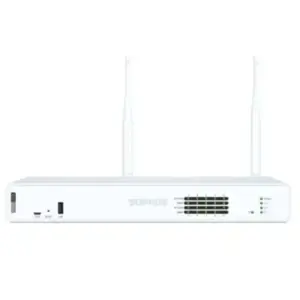
Ubiquiti Cloud Gateway Fiber UCG-Fiber in Dubai, UAE
The UCG-Fiber brings high-speed routing, multi-WAN flexibility, UniFi application hosting and compact desktop deployment into one appliance. It is intended for buyers who need more headroom than a basic office router but do not want the footprint of a large rack gateway.
Planning a new UniFi deployment or gateway upgrade?
Confirm the model, interfaces, storage and project scope before ordering.
Direct answer for buyers
The Ubiquiti Cloud Gateway Fiber UCG-Fiber is a 10G-capable UniFi cloud gateway that hosts the UniFi application suite and combines routing, firewalling, VPN, multi-WAN functions and a small integrated switch. It is mainly used as the central network gateway for offices, branches, hospitality sites, retail environments and technically demanding homes or studios that need multi-gigabit internet and coordinated UniFi management. Buyers should consider it when they require 10G SFP+ or copper connectivity, up to 5 Gbps IDS/IPS throughput and optional local storage for UniFi Protect. Before proceeding, confirm the ISP handoff, port mapping, optics or cables, PoE load, storage choice, camera count, migration plan and current UAE supply position.
What it does
UCG-Fiber provides the core gateway role between an organisation’s internet services and internal network. It can route traffic, enforce stateful and application-aware firewall policies, identify applications, apply content controls, manage VPN connections and support multi-WAN designs. Because it is a Cloud Gateway rather than an independent gateway, it also runs UniFi applications locally and can act as the management console for compatible UniFi switches, access points, cameras, access hubs, phones and displays. This reduces the need for a separate CloudKey in many deployments.
Who it suits
The model is most relevant to buyers moving beyond gigabit internet, organisations standardising on UniFi, or sites that want strong gateway performance without a 1U rack appliance. It can fit professional offices, warehouses, schools, clinics, hospitality venues, retail branches, creative studios and small multi-site businesses. It is less suitable when the project requires a different security vendor ecosystem, mandatory enterprise support terms, very large camera estates, substantial PoE switching capacity or performance beyond its published platform limits.
Business challenges the UCG-Fiber can help address
Outgrowing a 1 GbE gateway
Businesses adopting faster fiber circuits can find that an older gateway becomes the bottleneck. The UCG-Fiber provides 10G SFP+ and 10 GbE RJ45 options, while its IDS/IPS throughput is rated at 5 Gbps. The actual result still depends on traffic mix, enabled services, ISP protocol and configuration.
Fragmented network management
When switching, WiFi, cameras and access systems are managed separately, routine administration becomes harder. UCG-Fiber can host Network, Protect, Access, Talk and Connect applications, allowing compatible UniFi systems to be viewed through one operating environment.
Limited WAN resilience
The gateway supports multiple WAN ports, load balancing and internet failover design. This can help organisations maintain connectivity when a primary link is disrupted, provided a suitable secondary service and correct failover policy are included in the project.
Need for compact NVR capability
Selectable NVMe storage can support UniFi Protect on the same console. This is useful for a modest camera deployment, although retention, resolution, frame rate and camera count must be calculated before choosing storage.
Capability overview
Two 10G SFP+ ports and one 10 GbE RJ45 port provide flexible WAN and LAN design options.
Four 2.5 GbE RJ45 ports support local devices, switches or configurable WAN use.
Stateful firewall, Layer 7 controls, traffic identification, filtering and IDS/IPS are built into UniFi Network.
Site Magic, IPsec, WireGuard, OpenVPN, Teleport and other supported options serve remote access and site connectivity.
OSPF and BGP support can help with more advanced routed network designs.
The console can run Network, Protect, Access, Talk and Connect, subject to device and workload limits.
Product-fit matrix
| Requirement | Suitable when | Confirm before ordering |
|---|---|---|
| Multi-gigabit internet | The circuit is above 1 Gbps and the buyer needs 10G handoff options. | ISP protocol, ONT handoff, PPPoE impact and required transceiver. |
| UniFi consolidation | Switches, APs, cameras or access devices will be managed in one platform. | Device count, application mix and migration method. |
| Branch resilience | Two or more internet services are planned for failover or load balancing. | WAN port mapping, public IP needs and failover policy. |
| Small Protect deployment | A limited camera estate can use local NVMe recording. | Camera resolution, retention days, storage option and tray requirement. |
| Compact installation | Desktop deployment is preferred over a rack-mounted gateway. | Ventilation, power, cable management and physical security. |
Verified technical information
| Brand | Ubiquiti |
|---|---|
| Product | Cloud Gateway Fiber |
| Model | UCG-Fiber |
| Form factor | Compact desktop |
| Dimensions | 212.8 × 127.6 × 30 mm |
| Processor and memory | Quad-core ARM Cortex-A73 at 2.2 GHz, 3 GB system memory |
| 2.5 GbE ports | 4 × RJ45, supporting 2.5G/1G/100M/10M |
| 10 GbE copper | 1 × RJ45, supporting 10G/2.5G/1G |
| 10G fiber interfaces | 2 × SFP+, supporting 10G/1G |
| Default WAN ports | 1 × 10G SFP+ and 1 × 10 GbE RJ45 |
| Maximum WAN port count | 6 |
| IDS/IPS throughput | 5 Gbps |
| Published device capacity | 50+ managed UniFi devices and 500+ simultaneous connected users |
| Protect camera guidance | Up to 15 HD, 8 2K or 5 4K cameras under published reference conditions |
| NVR storage | Selectable NVMe SSD up to 2 TB; third-party SSD installation may require the M.2 SSD tray |
| PoE budget | 30W |
| Power | 54V DC/1.1A adapter included; 100–240V AC input |
| Maximum consumption | 29.4W excluding PoE output |
| Operating temperature | 0 to 40°C |
| Availability | Contact FourTeck for current UAE model, storage and lead-time options |
Compatibility and dependency notice
The word “Fiber” in the product name refers to the available SFP+ connectivity; the gateway also includes copper RJ45 interfaces. SFP+ transceivers, direct-attach cables and ISP optical handoff requirements are not interchangeable, so the exact media type, wavelength, distance and connector must be confirmed. Some security signature services may depend on optional subscriptions. Storage is selectable and a later third-party SSD addition may require the correct tray. Published camera limits are guidance rather than a retention guarantee because storage duration depends on resolution, frame rate, motion activity and recording policy. The 30W PoE budget does not replace a full PoE switch for deployments with several access points, cameras or phones.
A practical purchase and deployment journey
Requirement review
Document internet speeds, public IP services, client count, VLANs, UniFi devices, camera needs and business-critical applications.
Interface design
Choose copper, SFP+, DAC or optical modules and decide how WAN and LAN ports will be assigned.
Bill of materials
Confirm gateway, storage, tray, optics, patching, PoE switch, UPS and mounting accessories.
Configuration plan
Define internet settings, VLANs, firewall zones, VPNs, failover, DHCP, DNS and migration steps.
Testing and handover
Validate WAN performance, failover, application access, wireless operation, recording and administrator access.
High-speed routing without a rack-sized appliance
The central attraction of UCG-Fiber is the combination of multi-gigabit routing and a compact footprint. Many UAE offices now receive internet services above 1 Gbps, yet the internal gateway, switch uplink or security inspection path can prevent users from receiving the expected benefit. With 10G SFP+ and 10 GbE copper connectivity, the appliance gives designers more freedom to connect a high-speed ISP circuit and a multi-gigabit LAN core. This does not mean every deployment will achieve the same test result. PPPoE overhead, packet size, active threat inspection, quality-of-service rules, VPN encryption, client hardware and the performance of the upstream and downstream switches all affect measured throughput.
A sensible design begins with the real application requirement rather than the headline port speed. An office moving large design files to local storage may benefit from a 10G LAN uplink even when the internet connection is slower. A hospitality property may value dual-WAN resilience more than raw throughput. A branch with cloud applications may need stable latency, clear traffic prioritisation and easy remote troubleshooting. FourTeck can help translate these needs into port assignments, switch uplinks and a realistic performance plan.
Unified control for Network, Protect, Access and more
UCG-Fiber is a UniFi Cloud Gateway, so it hosts the application environment locally instead of requiring a separate CloudKey for routine management. This can simplify smaller and medium deployments by placing network, camera, access, voice and display administration on one console. The operational benefit is not merely a single login. Administrators can correlate client activity, network topology, internet quality, device health and application events more easily when the environment is designed around compatible UniFi components.
The platform should still be sized carefully. Running several applications on one appliance consumes system resources, and the published device or camera limits should not be treated as a target that every project must reach. A site with only a few cameras but hundreds of highly active clients can behave differently from a quiet site with more cameras. Recording retention also depends on storage capacity and video settings. Buyers with a large surveillance requirement may be better served by a dedicated UniFi NVR while retaining UCG-Fiber as the network gateway. This separation can improve capacity planning and lifecycle flexibility.
Security, segmentation and remote connectivity
The gateway includes stateful firewalling, application-aware Layer 7 controls, deep packet inspection, traffic identification, content filtering, intrusion detection and prevention, advanced zone filtering and VLAN-based segmentation. These features can help an organisation separate corporate devices, guest users, cameras, access-control equipment, voice endpoints and operational technology. Segmentation reduces unnecessary communication between groups and makes policy intent easier to understand.
Security effectiveness depends on design and maintenance. A firewall cannot correct weak passwords, unmanaged endpoints, poor backup practice or applications exposed without review. Rules should be written around approved traffic flows, and unnecessary inbound access should be avoided. Remote users can be served through WireGuard, OpenVPN, Teleport or identity-based options, while site-to-site connectivity can use Site Magic, IPsec or other supported methods. The appropriate choice depends on remote device type, identity requirements, third-party interoperability and the organisation’s security policy. Dynamic routing with OSPF or BGP is also available for environments that require more sophisticated path control, but these protocols should be configured by personnel who understand route filtering and failure behaviour.
Ideal business environments and use cases
Professional offices
Central routing, VLAN separation, guest WiFi, VPN access and multi-WAN failover for a growing workforce.
Retail and hospitality
Segmentation for staff, guest, payment, camera and building systems with remote visibility across sites.
Creative and technical teams
10G-capable uplinks for high-speed local storage, media workflows and multi-gigabit internet services.
Warehouses and logistics
Central management of APs, scanners, cameras and access equipment while preserving traffic separation.
Education and training sites
Policy-based network separation for administration, learners, guests, media systems and security devices.
Multi-site organisations
VPN or Site Magic connectivity, unified monitoring and repeatable network standards across branches.
Integration and operational considerations
Before replacing an existing gateway, collect the current configuration. This should include WAN addressing, VLAN IDs, DHCP scopes, DNS settings, port forwards, VPN peers, static routes, public services, firewall rules and authentication requirements. A migration is more reliable when the old and new designs are compared line by line rather than recreated from memory. Where an existing UniFi controller is in use, the adoption and migration method should be planned to minimise device resets and downtime.
The gateway should be connected to a UPS where continuity matters. Cooling and cable access must also be considered because compact desktop devices are often placed in cabinets with poor ventilation. For SFP+ links, use supported modules or direct-attach cables that match the connected switch and distance. A 10G copper connection can generate more heat than lower-speed links, particularly when an SFP+ to RJ45 adapter is used. The project should also define who owns software updates, configuration backups, administrator accounts and periodic security review after handover.
Buyer questions to resolve before ordering
Procurement checklist
☐ Exact UCG-Fiber model and regional power requirement
☐ Required quantity and deployment locations
☐ No-storage, 1 TB or 2 TB storage preference
☐ M.2 SSD tray requirement for later third-party storage
☐ SFP+ module, DAC cable or 10G copper adapter choice
☐ Primary and secondary ISP handoff details
☐ PoE device requirement within the 30W budget
☐ External PoE switching requirement
☐ UniFi application and managed-device count
☐ Camera resolution, retention and recording policy
☐ Firewall, VLAN, VPN and routing configuration scope
☐ Existing controller or gateway migration requirement
☐ UPS, mounting and structured-cabling needs
☐ Support, documentation and handover expectations
How FourTeck can assist
FourTeck can help buyers turn a product request into a complete and practical bill of materials. Assistance may include confirming whether UCG-Fiber is appropriately sized, reviewing the WAN handoff, selecting compatible connectivity accessories, identifying the right storage option and defining a configuration or installation scope. For an existing network, FourTeck can discuss migration planning, controller transfer, VLAN design, VPN requirements, firewall policies and testing expectations. For a new site, the discussion can extend to UniFi switching, WiFi, cameras, access control, UPS capacity and structured cabling.
The quotation should distinguish hardware, optional storage, accessories, subscriptions and professional services. This gives procurement teams a clearer view of what is included and what remains dependent on final design. Buyers can also review related technology through the FourTeck product portfolio, discuss deployment services through the technology services page, or send project details using the FourTeck contact page.
UAE availability and support guidance
Contact FourTeck to confirm current UAE availability for the Ubiquiti Cloud Gateway Fiber UCG-Fiber. Availability may depend on quantity, regional version, selected storage, accessory requirements and vendor lead time. Delivery and project coordination can be discussed after the exact bill of materials is approved. Installation and configuration should be stated in the quotation when required, as the hardware price alone does not include every possible migration or network-design activity. For projects across Dubai, Abu Dhabi, Sharjah and Ajman, FourTeck can review the site requirement, coordinate the selected equipment and discuss remote or onsite scope according to the project. Warranty terms should be confirmed against the supplied channel and quotation rather than assumed from another regional store.
GCC Availability
FourTeck can assist organisations evaluating the UCG-Fiber for projects across the GCC, including requirements in the United Arab Emirates, Saudi Arabia, Kuwait, Qatar, Bahrain and Oman. The starting point is a clear technical brief covering destination country, required quantity, ISP connection type, storage choice, accessories, license or subscription needs, installation location and desired project schedule. Product availability, regional power options, shipping arrangements, vendor lead times and service coordination can vary by country and order size. Where several branches are involved, FourTeck can also help standardise the gateway design, WAN policy, VPN approach and accessory list before quotations are finalised. Buyers should not assume that stock, pricing or service conditions in one GCC market apply unchanged in another. Share the exact deployment information so the quotation can reflect the correct model, logistics and configuration scope. For Kuwait-related coordination, the FourTeck Kuwait resource may also be relevant.
Africa Availability
Organisations planning UniFi networks in Africa can contact FourTeck for product evaluation, accessory selection, storage planning, configuration scope and regional procurement guidance. Projects in East Africa, West Africa, Southern Africa or Central Africa may have different power, shipping, regulatory, support and deployment conditions, so the destination and operating environment should be confirmed at the beginning. Availability can depend on the exact UCG-Fiber variant, quantity, chosen optics, storage option, vendor lead time and local fulfilment arrangements. FourTeck can help prepare a consistent bill of materials for one site or multiple locations and discuss whether remote configuration, local coordination or installation assistance is required. Buyers should share the destination country, expected deployment date, internet handoff, user count, camera requirement and support expectations. For regional enquiries, visit the FourTeck Africa portal, Kenya technology page or Uganda technology page.
Related products and services to consider
UniFi multi-gigabit switches
Useful when 2.5G or 10G access and larger PoE budgets are required beyond the gateway’s integrated ports.
SFP+ optics and DAC cables
Selected according to medium, distance, connector, switch compatibility and ISP handoff.
UniFi WiFi 6 or WiFi 7 access points
Chosen according to coverage, client density, channel planning and PoE requirements.
Dedicated UniFi NVR
Worth considering when the camera count or retention requirement exceeds the practical scope of local gateway storage.
Network configuration service
Can cover VLANs, firewall zones, VPNs, failover, routing, migration and handover documentation.
UPS and installation accessories
Support power continuity, safe placement, cable management and an orderly deployment.
Why businesses contact FourTeck
Technology buyers often need more than a model number. They need confirmation that the gateway matches the internet circuit, internal switching, user count, camera workload and support plan. FourTeck focuses on requirement clarification, model and accessory selection, bill-of-material guidance, compatibility review, quotation coordination and deployment planning. This helps reduce common purchasing errors such as omitting the correct SFP+ module, assuming a storage drive is included, underestimating PoE demand or selecting a gateway without considering migration work. The same discussion can include configuration, documentation and post-deployment support expectations so the procurement and technical teams share one scope.
Frequently asked questions
Is the UCG-Fiber only for fiber internet?
No. It offers SFP+ ports for fiber or DAC connectivity, but it also includes 10 GbE and 2.5 GbE RJ45 copper ports. The correct WAN interface depends on the ISP handoff.
Does it need a separate CloudKey?
Normally no. UCG-Fiber is a UniFi Cloud Gateway and hosts supported UniFi applications locally. An existing controller migration should still be planned before replacement.
What is the IDS/IPS throughput?
Ubiquiti publishes 5 Gbps IDS/IPS throughput for this model. Real deployment results can vary with traffic, protocols and enabled services.
Can it manage UniFi cameras?
Yes. It supports UniFi Protect and selectable NVMe storage. Published camera guidance is up to 15 HD, 8 2K or 5 4K cameras under reference conditions.
Is storage included?
That depends on the selected version. No-storage, 1 TB and 2 TB options may be offered. A third-party drive added later may require the correct M.2 SSD tray.
Can it provide PoE?
The appliance has a published 30W PoE budget. Larger deployments will normally require a separate PoE switch sized for all access points, cameras and other powered devices.
Does it support dual-WAN and failover?
Yes. Multi-WAN load balancing and internet failover are supported. Port mapping, health checks and failover behaviour should be configured for the specific services.
Which accessories may be required?
Common requirements include SFP+ modules, DAC cables, an SFP+ to RJ45 adapter, an M.2 SSD tray, NVMe storage, a PoE switch, UPS and structured cabling.
Can FourTeck configure and migrate the gateway?
Configuration and migration assistance can be discussed as part of the quotation. The scope depends on the existing network, downtime window and required documentation.
How do I confirm the Dubai price and availability?
Send the quantity, storage choice, accessories, deployment location and service requirement to FourTeck. Current availability and quotation terms will then be confirmed.
Plan the UCG-Fiber around your real network requirement
Share your internet speed, UniFi device count, camera needs, storage preference and deployment location. FourTeck can help confirm the bill of materials and configuration scope.

Reviews
There are no reviews yet.