

Enterprise directional indoor wireless
Ubiquiti E7 Campus Indoor in Dubai, UAE
The E7-Campus-Indoor is built for organisations planning high-capacity WiFi 7 coverage across large indoor areas where directional radio design, multigigabit switching, resilient cabling, and central UniFi management must work as one system. It is not simply a faster access point; it is a planning decision involving RF layout, PoE++, 10 GbE transport, 6 GHz policy, client capability, and operational support.
Direct answer for buyers
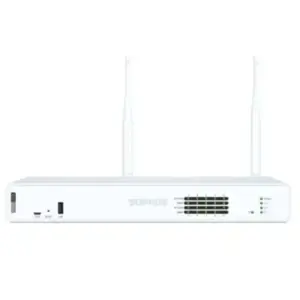
The Ubiquiti E7 Campus Indoor is a high-capacity, directional indoor access point in the UniFi enterprise wireless range. Its main role is to serve large indoor spaces that need strong WiFi 7 capacity, broad directional coverage, multigigabit backhaul, and centrally managed network policies. It should be considered by universities, event venues, hotels, convention spaces, large offices, training environments, and public-facing facilities with high client counts or demanding applications. Before proceeding, buyers should confirm the exact regional model, permitted 6 GHz operation, required number and orientation of access points, PoE++ availability, 10 GbE switching, cable category and length, mounting method, controller readiness, VLAN design, and whether installation, configuration, testing, or ongoing support must be included.
What the E7 Campus Indoor does
This model creates a managed wireless cell for large indoor zones using three WiFi bands: 2.4 GHz for broad compatibility, 5 GHz for mainstream high-performance devices, and 6 GHz for compatible modern clients where regional rules permit. Its directional antenna pattern is intended to focus coverage into a planned area rather than radiate uniformly in every direction.
The primary 10 GbE connection is designed to prevent the wired uplink from becoming an immediate bottleneck when many high-throughput wireless clients are active. A secondary GbE interface supports network-path resilience scenarios, subject to the final topology and switching design.
Who should consider it
The product is most relevant where ordinary office access points may require excessive quantities, where user density is high, or where directional placement can cover a hall, concourse, auditorium, lobby, learning space, indoor sports area, or large shared floor more effectively.
It may be excessive for small offices, simple retail units, low-density residential deployments, or networks limited to 1 GbE switching and basic PoE budgets. In those cases, a smaller UniFi WiFi 7 model may offer a more proportionate cost and installation profile.
Business challenges this access point can help address
Crowded shared spaces
High numbers of users create airtime contention, uneven performance, and difficult capacity planning. Ten spatial streams and three-band operation provide a stronger platform, although actual results still depend on client mix, channel planning, interference, and application behaviour.
Insufficient wired backhaul
WiFi 7 can outgrow a conventional 1 GbE uplink. The 10 GbE interface gives designers room for aggregated traffic, but the switch port, cable, patch panels, transceivers where applicable, and upstream network must support the planned rate.
Single-path concerns
A secondary network interface can support resilient design objectives. This does not automatically create complete high availability; the switches, power sources, cabling routes, controller, gateway, and upstream services must also be designed to avoid single points of failure.
Large directional coverage zones
The integrated directional antenna can be useful when coverage needs to be projected across a defined indoor area. Correct mounting height, tilt, orientation, obstruction analysis, and overlap with neighbouring cells are essential to avoid weak edges or excessive interference.
Capability band
Product-fit matrix
| Requirement | Suitable when | Confirm before ordering |
|---|---|---|
| Large indoor coverage | A directional cell can serve a hall, open floor, auditorium, concourse, or similar zone. | Mounting position, antenna orientation, obstacles, ceiling height, and required edge signal. |
| High client density | Many simultaneous users need managed access across modern and legacy bands. | Concurrent-device profile, application traffic, airtime demand, roaming, and authentication method. |
| WiFi 7 adoption | The organisation is introducing WiFi 7 endpoints or planning a longer infrastructure lifecycle. | Client radio capabilities, 6 GHz regulatory availability, security settings, and device-driver readiness. |
| Multigigabit transport | The access layer and core can carry traffic beyond 1 GbE. | 10 GbE copper port availability, cable category, distance, switch capacity, and upstream oversubscription. |
| Resilient network path | The design requires alternate Ethernet connectivity for continuity planning. | Supported topology, switch configuration, power resilience, loop prevention, and failure-testing method. |
Verified technical information
The following information is based on the manufacturer specification for model E7-Campus-Indoor. Regional radio rules and product revisions can affect available channels, transmit settings, included items, and ordering details, so the exact UAE-supplied unit should be confirmed in the quotation.
| Brand | Ubiquiti |
|---|---|
| Product name | UniFi E7 Campus Indoor |
| Model | E7-Campus-Indoor |
| Product type | Enterprise directional indoor wireless access point |
| WiFi standard | WiFi 7, IEEE 802.11be, with support for earlier compatible standards |
| Spatial streams | 10 |
| Radio configuration | 6 GHz 4×4 MU-MIMO, 5 GHz 4×4 MU-MIMO, 2.4 GHz 2×2 MU-MIMO |
| Maximum stated data rates | Up to 11.5 Gbps on 6 GHz at 320 MHz, 8.6 Gbps on 5 GHz at 240 MHz, and 688 Mbps on 2.4 GHz at 40 MHz; practical throughput is lower and environment dependent. |
| Coverage guidance | Manufacturer states up to 465 m² (5,000 ft²). Actual usable coverage depends on building materials, mounting, orientation, interference, channel width, power limits, client radios, and required service level. |
| Maximum client guidance | Manufacturer states 1,000+ clients. Capacity design should be based on active users, traffic demand, airtime, applications, roaming, and acceptable performance rather than the headline association count alone. |
| Networking interfaces | One 10 GbE RJ45 port and one 1 GbE RJ45 port |
| Power method | PoE++ |
| Maximum power consumption | 44 W |
| Supported voltage range | 42.5–57 V DC |
| Antenna design | Integrated directional antenna with band-specific directional patterns |
| Mounting | Wall and pole mounting included; optional VESA mounting is listed by the manufacturer |
| Device weight | Approximately 2.2 kg; approximately 3.1 kg with articulating mount |
| Management | UniFi Network management environment; controller version and hosting method should be confirmed for the planned deployment |
| Security and policy features | Includes features such as client isolation, WiFi schedules, RADIUS over TLS, dynamic RADIUS-assigned VLANs, guest controls, and private pre-shared keys, subject to software and configuration. |
| Regional availability | Contact FourTeck for current UAE variant, availability, pricing, lead time, and order conditions. |
Dependencies and prerequisites
The access point cannot deliver its intended value in isolation. PoE++ power must be available with enough per-port and total switch budget. The 10 GbE copper uplink needs compatible switching and suitable structured cabling. A 1 GbE-only network can operate the device in a constrained design, but it may prevent the project from benefiting from the intended backhaul capacity.
Use of the 6 GHz band is region dependent. Available channels, indoor operating requirements, channel widths, transmit power, and supported client behaviour must follow UAE regulations and the regional hardware and software configuration. Wide channels may increase peak rates but consume more spectrum and can reduce reuse in multi-access-point designs.
The product should also be matched with an appropriate UniFi Network application, gateway and VLAN architecture, DNS and DHCP services, authentication platform where required, monitoring process, firmware policy, and support ownership. Optional services, enhanced care plans, accessories, surge protection, secondary switching, and installation work should not be assumed to be included unless listed in the quotation.
A practical purchase and deployment journey
Define the service objective
Document the areas to cover, minimum signal expectation, applications, active user count, device types, roaming behaviour, guest requirements, authentication approach, and business-critical services. This provides a better basis than selecting access points from floor area alone.
Assess the physical environment
Review drawings, dimensions, ceiling or wall structure, mounting access, cable routes, reflective surfaces, partitions, machinery, audience seating, and likely sources of radio interference. Directional access points benefit from deliberate placement and orientation.
Validate switching and power
Confirm 10 GbE access ports, available PoE++ budget, cable category, horizontal distance, patching, rack power, UPS strategy, switch uplinks, core capacity, VLAN support, and the role of the secondary Ethernet interface.
Prepare the bill of materials
List exact access-point quantities, regional model, mounts, compatible switches, injectors only where appropriate, cables, patching, surge or grounding components, controller or gateway requirements, support options, and installation services.
Configure, test, and document
Adopt the device, apply approved firmware, configure SSIDs and network policies, test throughput and roaming, validate failover assumptions, measure coverage, review logs, record settings, and hand over operational documentation.
Directional WiFi 7 coverage for large indoor zones
A directional antenna changes how the access point should be designed into the building. Conventional ceiling access points are commonly used to create roughly downward or omnidirectional cells. The E7 Campus Indoor is instead suited to projecting coverage across a defined area from a wall, pole, or compatible VESA position. This can be valuable in lecture theatres, auditoriums, indoor arenas, exhibition halls, concourses, warehouses with open aisles, or long shared spaces where the desired users sit in front of the access point rather than around it.
The manufacturer lists directional internal antenna gains of 12 dBi on both 6 GHz and 5 GHz and 9 dBi on 2.4 GHz, with band-specific beamwidths. Those figures help an RF designer understand the shape and concentration of energy, but they do not guarantee a particular client experience. Mobile phones, tablets, laptops, handheld terminals, and IoT devices have different antenna quality and transmit power. A client may hear the access point at the edge of a space yet be unable to transmit back reliably. Coverage therefore needs to be assessed in both directions.
Wide channels can support high peak rates for compatible clients, especially in 6 GHz, but a campus design with multiple neighbouring cells may benefit from narrower channels to improve frequency reuse and reduce co-channel contention. The correct plan depends on the number of access points, neighbouring networks, required throughput, permitted spectrum, and density of active devices. FourTeck can help turn floor plans and business requirements into an initial sizing discussion, while a predictive design or onsite survey may be recommended for complex or mission-sensitive areas.
Backhaul, PoE++, and resilient network design
The presence of a 10 GbE primary port is significant because aggregate wireless capacity can exceed the practical throughput of a single gigabit connection. However, buying a 10 GbE access point does not automatically create a 10 GbE user experience. The switch port must support the required speed, the copper cabling must be suitable for the distance and installation conditions, and the upstream switch fabric and uplinks must have enough capacity for the total deployment. Oversubscription may be reasonable, but it should be intentional.
PoE++ simplifies installation by delivering power and data over Ethernet, yet it introduces a measurable power-planning requirement. With maximum consumption listed at 44 W, a switch supporting several units needs sufficient per-port output and total PoE budget. Designers should also account for other powered devices, temperature derating where applicable, redundant power supplies, UPS runtime, and what happens during switch maintenance. A switch that can negotiate the port speed but cannot provide the needed power is not a complete match.
The secondary 1 GbE interface can support a design objective of removing a single network path, but high availability must be considered end to end. If both cables return to the same switch, power supply, rack, or upstream link, several failure modes remain. Where continuity matters, the architecture may require separate switches, diverse cable routes, protected power, tested failover behaviour, redundant gateways, and resilient management services. FourTeck can help scope these dependencies before the quotation so that the access point is not treated as the only resilient component.
Central management, segmentation, and operational control
The E7 Campus Indoor is designed to operate within the UniFi Network environment. Central management allows administrators to define wireless networks, associate them with VLANs, apply guest policies, set schedules, isolate clients, use private pre-shared keys, and integrate RADIUS-based authentication. These tools can help separate employees, students, visitors, contractors, operational devices, and specialised equipment, provided the wired network and gateway policies are configured consistently.
For enterprise deployments, onboarding is only the beginning. Administrators need a firmware process, change control, configuration backup, administrator access policy, logging, alerting, capacity review, and a clear support path. Automatic updates may be convenient in some environments, while regulated or highly available sites may require staged validation. The chosen approach should reflect operational risk and maintenance windows.
Dynamic RADIUS-assigned VLAN support and RADIUS over TLS can strengthen identity-based access designs, but they depend on compatible authentication systems, certificates, time synchronisation, DNS, and careful policy testing. Guest portals and payment or external portal integrations may also introduce dependencies outside the access point. During planning, buyers should identify which functions are essential at launch, which are future requirements, and who will own each supporting system. A clear scope prevents an access-point purchase from being mistaken for a complete network-access project.
Ideal environments and use cases
Universities and training campuses
Lecture halls, atriums, libraries, indoor common areas, and learning spaces can have sudden peaks when classes change or events begin. The model can form part of a high-density design where authentication, student segmentation, roaming, and multigigabit switching are planned together.
Hotels and conference facilities
Ballrooms, meeting floors, pre-function areas, and large indoor event spaces require flexible capacity for changing layouts. Directional positioning and controller-based configuration can help, although temporary partitions, stage systems, and attendee density should be reviewed for each use pattern.
Corporate campuses
Large collaboration zones, town-hall areas, cafeterias, reception spaces, and open floors may benefit where a smaller number of carefully positioned high-capacity cells is preferable to many conventional units. Security and VLAN design remain central.
Indoor venues and public spaces
Exhibition spaces, indoor sports areas, transport halls, galleries, and visitor centres can produce dense, unpredictable traffic. Capacity planning should consider peak attendance, guest onboarding, application mix, upload behaviour, and operational communications.
Warehouses and logistics interiors
Open aisles or loading-related indoor areas may suit directional coverage, but metal racks, moving inventory, scanners, voice terminals, and industrial interference affect design. Ruggedness and environmental limits must also be checked against the site.
High-capacity guest networks
The device can support guest-access objectives where the gateway, internet circuit, portal, rate limits, DNS, DHCP, and security controls are adequately sized. Wireless capacity alone cannot compensate for a restricted WAN or undersized services.
Integration and operating considerations
A successful installation depends on the rest of the network. The access switch should support the required Ethernet speed and PoE classification. The core and gateway should handle the aggregate traffic, VLANs, firewall policies, DHCP load, DNS demand, authentication sessions, logging, and internet bandwidth. Networks serving thousands of associations may also need careful IP-address planning and lease management.
Client compatibility should be reviewed realistically. WiFi 7 clients can use newer capabilities, but many organisations will continue to support WiFi 6, WiFi 5, and older IoT devices. Some legacy devices may not support modern security modes or 6 GHz. Creating separate SSIDs or policies can help, yet too many SSIDs consume airtime through management overhead. A deliberate SSID strategy is preferable to recreating every historical network name on the new platform.
Roaming performance depends partly on client behaviour. Features and thresholds can encourage better movement between access points, but the client ultimately makes many roaming decisions. Cell overlap, minimum data rates, transmit-power balance, band steering, authentication latency, and application sensitivity all matter. Voice, video, real-time control, and handheld-scanner applications should be tested in their real operating paths.
Monitoring should include more than whether the device is online. Useful indicators include channel utilisation, retry rates, client signal, data rates, roaming events, uplink negotiation, PoE status, latency, packet loss, authentication failures, DHCP problems, and capacity by time of day. Establishing baseline measurements after commissioning makes future troubleshooting faster.
Buyer questions to resolve before ordering
Associated-client counts alone do not reveal airtime demand. Identify users, device count per person, and application behaviour.
Provide drawings, dimensions, mounting height, obstructions, and the minimum acceptable performance at the edge.
Verify per-port power, total budget, Ethernet speed, cable distance, and switch uplinks.
Confirm the UAE regional variant, regulatory operation, client support, and channel plan.
Check wall or pole structure, load, access, articulation, aesthetics, safety, and serviceability.
Define acceptable failure modes and whether separate switches, power, cables, gateways, and WAN links are required.
Procurement checklist
☑ Confirm exact model E7-Campus-Indoor and regional version
☑ Confirm required quantity and spare-unit strategy
☑ Provide floor plans and mounting locations
☑ Record expected users, devices, and applications
☑ Verify PoE++ per-port and total switch budget
☑ Verify 10 GbE copper support and cable category
☑ Confirm secondary-port design and failover objective
☑ Check UniFi Network controller readiness
☑ Define SSIDs, VLANs, guest access, and authentication
☑ Confirm included mounts and optional accessories
☑ Include installation, configuration, testing, and documentation where required
☑ Confirm UAE availability, lead time, support, and warranty terms in the quotation
How FourTeck can assist
FourTeck can review the requirement, identify whether this directional enterprise model fits the environment, help estimate quantities, discuss compatible UniFi switching and gateways, prepare an initial bill of materials, and include installation or configuration scope where requested. For complex areas, the conversation can also cover predictive design, survey needs, cable readiness, mounting, testing, and documentation.
Visit the FourTeck technology products section to review related infrastructure, or use the network and technology services page when deployment assistance is required.
UAE availability and support guidance
Contact FourTeck to confirm current UAE availability for the exact E7-Campus-Indoor regional unit. Availability may depend on quantity, vendor lead time, regional radio version, project schedule, and support selection. Delivery coordination can be discussed after the requirement and destination are confirmed.
For projects requiring installation, configuration, testing, or migration, these activities should be written into the quotation rather than assumed. Buyers can use the FourTeck contact page to share quantities, location, timeline, and technical scope.
Dubai, Abu Dhabi, Sharjah, and Ajman coverage
FourTeck can coordinate product discussions for organisations operating in Dubai, Abu Dhabi, Sharjah, and Ajman through one combined requirement review. Buyers should provide the final deployment address, building type, access restrictions, delivery contact, quantity, preferred installation window, and whether the project includes cabling, mounting, switch changes, controller configuration, WiFi migration, acceptance testing, or documentation. Site attendance, delivery planning, and project scheduling depend on confirmed scope and commercial agreement. For multi-site projects, standardising the access-point model may simplify operations, but each location still needs its own RF, cabling, power, and capacity assessment. A common template for SSIDs, VLANs, security policies, firmware, naming, and monitoring can then be adapted to local conditions.
GCC Availability
FourTeck can assist organisations planning Ubiquiti E7 Campus Indoor deployments across GCC markets with requirement review, model confirmation, quotation coordination, switching and PoE planning, configuration scope, installation planning, and regional project discussions. The United Arab Emirates, Saudi Arabia, Kuwait, Qatar, Bahrain, and Oman can have different product channels, radio requirements, commercial terms, service logistics, and lead times. Product availability, licensing or support options, delivery schedules, onsite visits, and vendor lead times may vary by country, quantity, and project requirement. Buyers should share the destination country, exact model, required quantity, deployment location, preferred timeline, power and switching environment, and any installation or support expectations. For Kuwait-related coordination, the FourTeck Kuwait resource may also be relevant. No local inventory, fixed delivery date, or country-specific certification should be assumed until confirmed in writing.
Africa Availability
FourTeck can help organisations evaluating the E7 Campus Indoor for projects in Africa review the exact model, access-point quantity, compatible switches, PoE budget, accessories, controller requirements, mounting approach, configuration scope, support needs, and regional procurement plan. Availability and fulfilment can depend on the destination, product revision, quantity, radio region, power and regulatory requirements, shipping arrangements, vendor lead time, installation scope, and local project conditions. Buyers should provide the destination country, site type, floor plans where available, required quantity, preferred deployment schedule, and expectations for remote or onsite assistance. Regional information is available through FourTeck Africa, with additional resources for Kenya and Uganda. Local stock, customs outcomes, immediate shipment, nationwide onsite coverage, and guaranteed delivery should not be assumed without project-specific confirmation.
Related products and services to consider
10 GbE PoE++ switching
A compatible access switch is necessary to power the unit and use the intended primary uplink speed. Port count, PoE budget, uplink capacity, and redundancy should be reviewed.
UniFi gateway and controller
Central management, routing, VLANs, security policies, guest services, and monitoring need a suitable UniFi or integrated network architecture.
WiFi design and survey
Predictive modelling and onsite validation can reduce uncertainty in large or complex indoor spaces, especially where directional cells and high user density are involved.
Structured cabling review
Cable category, run length, patching, labelling, testing, pathways, and rack termination should support 10 GbE and the planned mounting positions.
Installation and configuration
Mounting, adoption, firmware, SSIDs, VLANs, authentication, guest policies, optimisation, testing, and documentation can be scoped as project services.
Alternative UniFi access points
Smaller ceiling, wall, outdoor, or audience-focused models may be more appropriate for other zones. Alternatives should be selected by coverage pattern and client demand, not only peak data rate.
Why businesses contact FourTeck
Business buyers often need help converting a product interest into a workable scope. FourTeck can discuss whether the E7 Campus Indoor matches the building and user profile, identify missing infrastructure, and help organise the information required for a relevant quotation. This may include exact model and quantity, switch compatibility, PoE budget, controller readiness, mounting, cabling, VLANs, authentication, failover expectations, installation, testing, and support.
The value of this process is procurement clarity. It reduces the risk of ordering a powerful access point without the switches, cables, power, mounts, network design, or services needed to deploy it. It can also reveal when another model is a better fit for smaller rooms, standard office floors, outdoor areas, or exceptionally dense audience environments. Learn more about FourTeck technology assistance or discuss the requirement directly through the contact page.
Frequently asked questions
Is the Ubiquiti E7 Campus Indoor suitable for a normal office?
It can be used in an office, but it is primarily attractive for large directional indoor zones, high client density, or projects needing 10 GbE and PoE++. Smaller offices may obtain a better cost and coverage match from a conventional UniFi ceiling or wall access point.
How much area can one E7 Campus Indoor cover?
The manufacturer lists up to 465 m², but this is planning guidance rather than a guaranteed service area. Walls, glass, metal, ceiling height, mounting angle, interference, channel choice, client transmit power, and the required data rate can substantially change usable coverage.
Does it require a 10 GbE switch?
The device has a 10 GbE primary port and benefits from a compatible multigigabit switching design. It may connect at a lower supported rate in some environments, but that can restrict aggregate backhaul performance. Switch compatibility should be confirmed.
What power source is needed?
The specified power method is PoE++, with maximum power consumption listed at 44 W. Confirm both the per-port output and total PoE budget of the selected switch, along with cable distance and any other powered devices.
Can it use the 6 GHz band in the UAE?
6 GHz operation is region and regulation dependent. The exact UAE hardware or software region, permitted channels, channel widths, and transmit conditions should be confirmed for the ordered model and current local rules.
What is the purpose of the secondary GbE port?
It supports resilient network-path objectives. The final benefit depends on the topology, switches, power, cabling routes, controller, and upstream network. A secondary port alone does not make the whole service highly available.
Does the quoted product include installation and configuration?
Installation and configuration should only be considered included when they are explicitly listed in the FourTeck quotation. Scope can cover mounting, adoption, firmware, SSIDs, VLANs, authentication, guest access, testing, optimisation, and documentation.
What information is needed for an accurate quotation?
Provide quantity, destination, floor plans, site type, expected user density, applications, mounting locations, existing switch models, PoE budget, controller details, required accessories, installation scope, and preferred project timeline.
Is the product currently available in Dubai?
Current availability must be confirmed at the time of enquiry. It may vary with regional model, quantity, vendor lead time, and project requirements. FourTeck can provide availability and quotation guidance after receiving the exact requirement.
Should an RF survey be completed before installation?
A survey is strongly worth considering for large, obstructed, high-density, or business-critical spaces. Predictive design can provide an initial plan, while onsite validation confirms real materials, interference, cable constraints, and client behaviour.
Discuss your Ubiquiti E7 Campus Indoor requirement
Send FourTeck the required quantity, floor plan, client-density estimate, switch details, mounting preference, project location, and expected timeline. The response can then address product fit, compatible infrastructure, current UAE availability, and quotation scope.

Reviews
There are no reviews yet.