

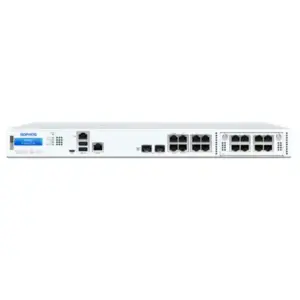
Ubiquiti Standard 24 USW-24 in Dubai, UAE
The USW-24 gives organisations a practical way to add centrally managed Gigabit Ethernet connectivity to a rack, communications room or branch site. It combines twenty-four 1G RJ45 interfaces, two 1G SFP uplinks, fanless operation and UniFi Network management in a compact 1U design. It is intended for non-PoE endpoints, making requirement confirmation especially important before purchase.
Plan the correct switch
Share the number of users, existing UniFi components, uplink method, rack details and whether any devices require PoE. FourTeck can review the requirement before quotation.
Access connectivity
Fibre or copper uplinks
Verified switching capacity
Endpoints need separate power
Direct answer for buyers
The Ubiquiti Standard 24, model USW-24, is a managed Layer 2 network switch for organisations that need twenty-four Gigabit copper ports and two 1G SFP uplinks under UniFi Network management. It is mainly used to connect desktop computers, printers, servers, gateways, access points with separate power, storage systems and other Ethernet devices. It should be considered by businesses already using UniFi or planning a centrally managed switching environment. Before proceeding, confirm that 1G access speeds are sufficient, that PoE is not required, that the rack and power arrangement are suitable, and that the planned SFP modules, VLANs and uplinks match the wider network design.
What the USW-24 does
The switch provides a managed connection point for wired devices in a UniFi network. Each of its twenty-four RJ45 interfaces supports 10, 100 and 1000 Mbps Ethernet, while two 1G SFP interfaces can be used for fibre or compatible copper uplinks. Through UniFi Network, an administrator can organise ports, assign VLANs, apply access controls, monitor links and manage switching behaviour from a central interface.
Its role is normally at the access layer of a small or medium network. It can aggregate user devices and local equipment before forwarding traffic toward a gateway, core switch, server segment or another network cabinet. It is not a router, firewall, wireless access point or PoE power source. Those functions require separate devices.
Who should consider it
The model may suit offices, professional firms, clinics, schools, hospitality locations, warehouses, retail branches and project sites that need quiet, rack-mounted Gigabit switching. It is particularly relevant where endpoints are powered independently and where the network team values a unified management experience across UniFi gateways, switches and wireless infrastructure.
It may be less suitable when many cameras, phones or access points must receive power from the switch, when 2.5G desktop access is required, when 10G uplinks are needed, or when advanced Layer 3 switching is central to the design. In those cases, a PoE, Enterprise, Pro or aggregation-oriented alternative should be evaluated.
Business challenges this model can help address
Port shortage in a growing office
A business may outgrow an eight-port or sixteen-port switch as more workstations, printers, meeting-room devices and local systems are added. Twenty-four access ports provide a clearer expansion path while keeping the network in one managed platform.
Scattered unmanaged switches
Several small unmanaged switches can make troubleshooting, segmentation and documentation difficult. A managed rack switch can consolidate connections, expose port status and support a more deliberate VLAN and access policy.
Need for quieter equipment
The USW-24 uses fanless cooling. That makes it relevant for smaller offices, AV cupboards and communication areas where noise is a concern, provided ambient temperature and ventilation remain within the documented limits.
Limited visibility into wired links
UniFi Network management gives administrators a central place to review connected devices, link status, port profiles and switching configuration. This can improve operational clarity compared with unmanaged hardware.
Core capabilities at a glance
Twenty-four copper ports support everyday wired endpoints at up to 1 Gigabit per second.
Two 1G SFP slots provide options for compatible fibre modules or supported copper adapters.
Features include VLAN support, LACP, STP/RSTP, IGMP controls, port isolation and traffic safeguards.
The switch is administered through UniFi Network, with application version requirements to be confirmed.
Product-fit matrix
| Requirement | Suitable when | Confirm before ordering |
|---|---|---|
| Office access switching | Up to twenty-four Gigabit copper connections are needed in one cabinet. | Allow spare ports for growth and identify any devices that require PoE. |
| Fibre uplink | A 1G SFP connection is sufficient between cabinets or to an upstream switch. | Fibre type, connector, distance and module compatibility. |
| Quiet operation | Fanless hardware is preferred for a nearby communication space. | Room temperature, airflow and rack ventilation. |
| UniFi standardisation | The organisation uses or plans to use UniFi Network management. | Controller hosting, software version and administrator ownership. |
| High-speed uplinks | 1G uplinks meet the traffic profile. | Whether 10G SFP+ or multi-gigabit access is required instead. |
Verified technical information
The following values are based on current Ubiquiti technical information for the exact USW-24 model. Buyers should still confirm regional supply, included accessories and current hardware documentation when placing an order.
| Brand | Ubiquiti |
|---|---|
| Product name | UniFi Standard 24 |
| Model | USW-24 |
| Product type | Managed Layer 2 Ethernet switch |
| Copper interfaces | 24 × 1 GbE RJ45, supporting 1G/100M/10M |
| SFP interfaces | 2 × 1G SFP |
| PoE support | No PoE output |
| Switching capacity | 52 Gbps |
| Non-blocking throughput | 26 Gbps |
| Forwarding rate | 39 Mpps |
| Supported VLANs | Up to 1,000 |
| MAC address table | 8,000 entries |
| Form factor | Rack mount, 1U |
| Dimensions | 442 × 200 × 44 mm |
| Weight | 2.7 kg without brackets; 2.8 kg with brackets |
| Cooling | Fanless |
| Maximum power consumption | 25W |
| Power input | 100–240V AC, 50/60 Hz, internal AC/DC supply |
| Display | 1.3-inch touchscreen |
| Operating temperature | -5 to 45°C |
| Management requirement | UniFi Network 7.2.94 or later, subject to current vendor guidance |
| Availability | Contact FourTeck for current UAE options |
Compatibility and dependency notice
The USW-24 does not supply PoE. Wireless access points, IP phones, surveillance cameras, door controllers and other powered devices must therefore use separate injectors, local adapters or another PoE-capable switch. SFP modules are also selected according to fibre type, wavelength, connector, distance and the equipment at the other end of the link. Management depends on an appropriate UniFi Network application or UniFi console. VLAN, 802.1X, aggregation and access-control settings should be designed in relation to the gateway, authentication platform and wider topology rather than configured in isolation.
A practical purchase and deployment journey
Count devices and reserve growth capacity
List every wired endpoint, uplink and spare connection. A twenty-four-port switch should not be selected solely because the current count is twenty-three; allowance for expansion, testing and temporary devices can prevent an early replacement.
Separate PoE and non-PoE requirements
Identify which devices need power through Ethernet. The USW-24 is appropriate only when those devices have independent power or when PoE is provided elsewhere. Mixed environments may use a non-PoE switch for desktops and servers alongside a dedicated PoE switch for access points and cameras.
Design uplinks and segmentation
Confirm whether copper or fibre uplinks will be used, whether link aggregation is required and how VLANs will separate users, voice, wireless, servers, guests or operational systems. The upstream switch and gateway must support the intended design.
Confirm rack, power and cabling
Check available 1U rack space, supported rack depth, power outlet location, earthing, patch-panel arrangement and cable labelling. Fanless operation does not remove the need for ventilation and suitable ambient conditions.
Adopt, configure, test and document
After installation, the switch should be adopted into UniFi Network, updated according to the organisation’s change process, assigned correct port profiles, tested for reachability and fail-safe behaviour, and recorded in the network documentation.
Centralised management for day-to-day control
The value of a managed switch is not limited to the number of physical ports. In a UniFi environment, the USW-24 becomes part of a shared operational view where administrators can inspect port status, connected clients and network configuration. This is useful when a business has several switches, access points and gateways and wants to reduce device-by-device administration.
Port profiles can help standardise repeated settings. For example, a workstation port may use one VLAN and access policy, while a voice port or trunk to another switch may use a different configuration. Standardisation reduces inconsistent manual configuration, but it still requires a well-defined network plan. A profile applied to the wrong port can disrupt service just as easily as a command entered directly on a traditional switch.
Monitoring also supports troubleshooting. A network administrator can check whether a link is active, review negotiated speed, locate a connected client and investigate whether a port has been blocked or isolated. The exact interface and available controls can change as UniFi Network software evolves, so operational procedures should be based on the deployed software version and tested before major changes.
Businesses should also decide where the UniFi Network application will run and who will own administrator access. Options may include a compatible UniFi console or another supported hosting method. Backup, account security, remote access policy, update management and change records are important parts of the deployment. The switch itself is only one component of the management architecture.
Layer 2 features that support organised networks
The USW-24 includes a broad set of Layer 2 controls that can support segmentation, loop prevention, multicast handling and access management. VLANs allow a physical switch to carry several logically separated networks. This can be useful for isolating staff devices, guests, voice systems, building equipment or other traffic classes, subject to routing and firewall policies on the upstream gateway.
Spanning Tree Protocol and Rapid Spanning Tree Protocol help prevent switching loops where redundant paths exist. Loop prevention matters because an accidental loop can create broadcast storms and destabilise a network. The switch also supports storm control and multicast or broadcast rate limiting, which can help contain abnormal traffic. These mechanisms must be configured with awareness of the topology and should not be treated as a substitute for correct cabling and design.
LACP port aggregation can combine compatible links for additional capacity or resilience between supported devices. The benefit depends on traffic distribution and both ends of the connection being configured consistently. Aggregation does not normally make a single flow exceed the speed of one member link, and it should not be assumed to provide automatic protection against every upstream failure.
IGMP snooping and advanced IGMP settings can help manage multicast traffic in environments such as video distribution, conferencing or selected AV systems. Voice VLAN, LLDP-MED, 802.1X control, port isolation, device isolation, DHCP snooping and access lists provide additional options. Each feature should be introduced according to a defined requirement. Activating every available control without design and testing can create avoidable support issues.
Capacity, uplinks and future growth
The USW-24 offers 52 Gbps switching capacity and 26 Gbps of total non-blocking throughput. These values suit many conventional Gigabit access environments, but a buyer should consider the real traffic pattern rather than relying only on headline capacity. A small professional office with cloud applications and a few local servers may have very different uplink needs from a media studio, backup network or high-density virtualisation environment.
The two SFP interfaces operate at 1G. They are useful for fibre runs between rooms or buildings, or for compatible copper adaptation, but they do not provide 10G SFP+ connectivity. Where many Gigabit endpoints may simultaneously transfer large files to central storage, a 1G uplink can become a practical bottleneck. In that situation, a model with faster uplinks should be reviewed even if twenty-four access ports appear sufficient.
Growth planning should cover both port count and speed. A company expecting more users can reserve ports, but a company adopting Wi-Fi 7 access points, multi-gigabit workstations or high-throughput storage may need 2.5G access and 10G or faster uplinks. The standard USW-24 remains useful where Gigabit Ethernet matches the requirement and budget, but it should not be selected for a future architecture that is already known to need higher rates.
FourTeck can help compare this switch with nearby UniFi models based on port density, PoE budget, uplink speed, management needs and expansion plans. The objective is not always to choose the largest switch. A well-sized design may use separate access, PoE and aggregation roles so that each device is aligned with the traffic and power requirement.
Ideal environments and realistic use cases
Professional office
Connect desktops, printers, meeting-room systems, local servers and a gateway in an office that uses separate power for all devices. VLANs can separate staff, guest and operational traffic when supported by the wider design.
Branch or retail site
Provide managed connectivity for point-of-sale equipment, back-office computers, signage controllers and local infrastructure. PoE endpoints would need another power arrangement or a separate PoE switch.
Education and training facility
Support wired classroom equipment, administration devices and lab systems where 1G access is sufficient. Port controls and VLANs can help organise groups, subject to policy and gateway configuration.
Hospitality back office
Consolidate non-PoE operational equipment, staff workstations and management devices while maintaining a shared UniFi view. Guest Wi-Fi and camera power needs should be planned separately.
Server or equipment room edge
Use the switch for lower-bandwidth management ports, appliances and general-purpose Gigabit connections. High-volume storage and virtualisation traffic may require faster switching and uplinks.
Mixed-switch network
Combine the USW-24 with a PoE switch so desktops and servers use the non-PoE model while phones, cameras and access points receive power from dedicated PoE hardware.
Integration and operational considerations
The switch must fit the complete network, not only the rack. Confirm interoperability with the upstream gateway or core switch, the intended SFP modules, any authentication service and the UniFi Network application. Where the network includes equipment from several vendors, use standards-based features carefully and test functions such as VLAN trunks, LACP and spanning tree before production rollout.
Cabling quality is equally important. Category-rated copper cabling, correct termination, patch-panel condition and distance all affect negotiated speed and reliability. Fibre links require matching optics and suitable cleaning and handling practices. A switch upgrade will not correct poor cabling, so link testing should form part of the project when existing infrastructure is uncertain.
Operationally, decide how firmware updates will be reviewed and scheduled. Changes should be backed by configuration records and, where possible, a maintenance window. Monitoring should include uplink utilisation, port errors, unexpected speed negotiation and topology changes. For business-critical sites, consider spare capacity, backup hardware strategy and whether a single switch creates an unacceptable point of failure.
Security configuration should reflect the organisation’s policy. Features such as 802.1X, DHCP guarding, access lists and port isolation can strengthen control, but they depend on correct supporting systems and testing. FourTeck can include configuration assistance in the quotation where required, with final scope based on the customer’s topology and objectives.
Questions to resolve before ordering
This is the most important distinction between the USW-24 and PoE alternatives. List access points, phones, cameras and other powered devices explicitly.
Review expected aggregate traffic, storage access, inter-switch links and future growth before accepting a 1G uplink design.
Confirm the console or hosting method, application version, administrative access, backup and remote-management policy.
Define VLANs, trunks, access ports, voice requirements and gateway policies before deployment rather than after devices are connected.
State fibre mode, connector, distance, wavelength and the device at the far end so compatible optics can be evaluated.
Clarify rack mounting, patching, labelling, adoption, firmware review, port configuration, testing and documentation expectations.
Procurement checklist
☐ Exact model confirmed as USW-24, non-PoE
☐ Required quantity and spare capacity defined
☐ Copper endpoint count verified
☐ PoE devices identified separately
☐ Uplink speed and medium selected
☐ SFP module type and quantity confirmed
☐ Rack space, depth and ventilation checked
☐ Power source and earthing reviewed
☐ UniFi Network hosting decided
☐ VLAN and port-profile plan prepared
☐ Cabling and patch-panel condition assessed
☐ Installation and configuration scope agreed
☐ Delivery location and target schedule shared
☐ Warranty and support terms confirmed in quotation
How FourTeck can assist
FourTeck can help translate a port count into a complete switching requirement. This may include reviewing whether the USW-24 is the correct non-PoE model, comparing it with PoE or higher-performance alternatives, identifying uplink modules, checking rack and power considerations, and preparing a quotation that reflects the actual bill of materials.
For projects that require implementation support, the discussion can cover rack installation, patching, switch adoption, port-profile configuration, VLAN setup, uplink configuration, testing and handover documentation. The exact scope depends on the existing network, remote or on-site requirements, site readiness and customer responsibilities. No compatibility or deployment outcome should be assumed until the topology and supporting equipment have been reviewed.
Businesses can also explore broader network and security products, review available technology services, or contact the FourTeck consultation team with a device list and site details.
UAE availability and support guidance
Contact FourTeck to confirm current UAE availability for the Ubiquiti Standard 24 USW-24. Supply can depend on quantity, regional channel conditions and vendor lead time. A quotation can also clarify whether rack hardware, power cable, SFP modules, patch leads, installation or configuration services are included. Buyers in Dubai, Abu Dhabi, Sharjah and Ajman can discuss delivery coordination and project requirements in one combined review. The exact installation date and support scope should be agreed only after the equipment, site readiness and implementation requirements are confirmed. For an accurate response, provide the required quantity, deployment location, target schedule, current UniFi environment and any need for fibre uplinks or migration support.
GCC Availability
FourTeck can assist organisations planning USW-24 deployments across the GCC by reviewing the intended site, port count, uplink design, management platform and installation requirement before quotation. This is useful for companies coordinating similar branch networks in the United Arab Emirates, Saudi Arabia, Kuwait, Qatar, Bahrain or Oman, while still allowing each location to be checked for local power, cabling and operational needs. Product availability, pricing, licensing considerations, delivery schedules, service visits and vendor lead times can vary by country, quantity and project scope. Buyers should share the destination country, exact model, required quantity, preferred deployment date, SFP requirements and whether configuration or onsite support is expected. FourTeck can then coordinate the commercial and technical discussion without assuming stock, fixed transit time or identical scope in every market. For Kuwait-related planning, businesses may also review FourTeck regional technology guidance.
Africa Availability
Organisations planning network upgrades in Africa can contact FourTeck for product evaluation, quotation coordination and deployment-scope guidance for the Ubiquiti USW-24. The discussion may cover switch quantity, compatible optics, power arrangements, rack requirements, controller hosting, configuration, remote assistance and local implementation responsibilities. Fulfilment can depend on the destination, product model, quantity, shipping arrangements, vendor lead time, regulatory requirements and site conditions. Buyers should provide the destination country, exact requirement, expected schedule and any need for installation or post-deployment support. FourTeck can help assess projects in East Africa and other regions without claiming local inventory or guaranteed onsite coverage. Relevant regional resources include FourTeck Kenya, FourTeck Uganda and the broader FourTeck Africa technology portal.
Related products and services to evaluate
UniFi Standard 24 PoE
Consider the PoE version where access points, phones, cameras or other devices should receive power from the switch. Confirm PoE port count and total power budget.
UniFi higher-speed switches
Evaluate Pro, Enterprise or other models when 10G uplinks, 2.5G access, PoE++, advanced features or higher capacity are required. Exact suitability is model dependent.
SFP modules and fibre accessories
Select optics according to fibre mode, connector, wavelength, distance and the equipment at both ends. Compatibility should be confirmed before purchase.
Network installation services
Rack mounting, patching, labelling, adoption, configuration, testing and documentation can be discussed as a separate project scope.
Why businesses contact FourTeck
Technology procurement is easier when the model, accessories and deployment scope are confirmed together. Businesses contact FourTeck for requirement clarification, model comparison, bill-of-material guidance, uplink selection, compatibility review, quotation coordination and implementation planning. This practical review can help avoid common errors such as ordering a non-PoE switch for powered endpoints, selecting the wrong fibre module, under-sizing uplinks or overlooking controller and rack requirements.
The discussion can remain limited to product supply or expand to configuration and project coordination where needed. FourTeck does not need to assume that every customer wants the same service package. By sharing the current topology, endpoint list and desired outcome, buyers can receive a more relevant quotation and identify dependencies before equipment reaches the site. Learn more about FourTeck or use the business technology contact channel.
Frequently asked questions
Is the USW-24 a PoE switch?
No. The Ubiquiti Standard 24 USW-24 does not provide PoE output. Devices that need power through Ethernet require injectors, local power adapters or a PoE-capable switch.
How many network ports does it provide?
It provides twenty-four 1G RJ45 ports and two 1G SFP ports. The SFP interfaces are generally used for compatible fibre or copper uplinks.
Does it support 10G uplinks?
No. The two uplink slots are 1G SFP, not 10G SFP+. Buyers requiring 10G uplinks should evaluate another UniFi switch model.
Can the switch be managed without UniFi Network?
The model is designed for management through UniFi Network. The current official technical requirement lists UniFi Network version 7.2.94 or later, subject to updated vendor guidance.
Is it suitable for a small business office?
It can be suitable where up to twenty-four Gigabit copper connections are needed, PoE is not required and 1G uplinks match the traffic profile. Growth and spare-port requirements should be included in the assessment.
Which SFP module should be ordered?
The correct module depends on fibre type, connector, wavelength, distance and the equipment at the far end. Share these details with FourTeck before ordering optics.
Can FourTeck configure VLANs and port profiles?
Configuration support can be discussed as part of the quotation. The scope depends on the existing gateway, UniFi environment, VLAN plan, authentication needs and site access.
Is the USW-24 fanless?
Yes. The official product description identifies a silent, fanless cooling system. The installation area still needs suitable ventilation and an ambient temperature within the specified range.
What information is needed for a quotation?
Provide quantity, deployment location, endpoint count, PoE needs, uplink type, SFP requirements, existing UniFi equipment, rack details and any installation or configuration requirement.
How can current Dubai availability be checked?
Contact FourTeck with the exact USW-24 model and quantity. Availability, price and lead time should be confirmed in the current quotation rather than assumed from older listings.
Confirm the model before you order
Send FourTeck your required quantity, connected-device list, uplink plan and installation location. The team can help confirm whether the non-PoE USW-24 is the right fit and prepare a requirement-based quotation.

Reviews
There are no reviews yet.