

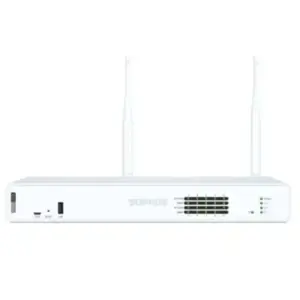
Wall-mounted tri-band WiFi 7 access point
Ubiquiti U7 Pro Wall U7-Pro-Wall in Dubai, UAE
The U7 Pro Wall brings WiFi 7, 6 GHz connectivity, a multigigabit uplink, and UniFi management into a compact wall-mounted format. It is designed for buyers who want high-performance indoor wireless coverage without relying exclusively on ceiling-mounted access points. FourTeck can help confirm whether this model, its power requirements, controller version, mounting approach, and regional radio support match your project.
Before requesting a quotation
- Confirm the exact U7-Pro-Wall regional version.
- Check PoE+ power and 2.5 GbE switching capacity.
- Review 6 GHz availability and compatible client devices.
- Share floor plans, wall materials, and expected client density.
- Specify mounting, installation, and configuration requirements.
802.11be wireless platform
2.4, 5, and 6 GHz
Multigigabit wired connection
Single-cable network and power
Central policy and monitoring
Direct answer: what is the U7 Pro Wall?
The Ubiquiti U7 Pro Wall is an indoor wall-mounted WiFi 7 access point in the UniFi ecosystem. It is mainly used to provide managed wireless coverage across rooms, corridors, offices, villas, hospitality interiors, executive areas, and other spaces where wall placement is more practical or visually suitable than ceiling installation. It should be considered by organisations already using, or planning to use, UniFi Network management and suitable PoE+ switching. Before proceeding, buyers should confirm the exact regional model, 6 GHz rules, cabling and PoE budget, controller version, client compatibility, wall location, coverage expectations, and whether the standard wall mount or an optional flush mount, paintable cover, or table stand is required.
What it does
The access point converts a wired Ethernet connection into centrally managed wireless service across three radio bands. Its 2.5 GbE uplink helps avoid the one-gigabit wired bottleneck that can limit newer high-capacity access points, while PoE+ allows data and power to travel through one cable. UniFi Network provides a common place to configure SSIDs, VLANs, guest access, radio settings, roaming features, client isolation, schedules, and performance policies.
The U7 Pro Wall is not a standalone internet gateway, modem, router, or Ethernet switch. It normally forms part of a wider network containing a gateway or firewall, PoE-capable switch or injector, structured cabling, and a UniFi Network controller or compatible UniFi console.
Who it suits
This model may suit villas, premium apartments, small and midsize offices, clinics, training rooms, boutique hotels, meeting suites, retail interiors, education spaces, and multi-room projects that require discreet wall placement. It is particularly relevant when the cable route terminates at a wall location, when ceiling access is difficult, or when interior design requirements favour a compact vertical device.
It is less suitable when an integrated downstream Ethernet switch is required at each room, when the site needs outdoor weather protection, or when the supporting network cannot deliver PoE+ and multigigabit connectivity. In those situations, another UniFi wall, in-wall, mesh, outdoor, or ceiling model may be more appropriate.
Business challenges the U7 Pro Wall can help address
Awkward ceiling access
Some buildings have decorative ceilings, limited service access, or cable pathways that make ceiling-mounted access points inconvenient. A wall-mounted format can simplify the physical plan where Ethernet already terminates at suitable wall locations.
Growing wireless demand
Modern offices and homes increasingly use high-resolution conferencing, cloud applications, smart displays, mobile devices, and bandwidth-intensive collaboration. WiFi 7 and the additional 6 GHz band can increase available capacity when clients and regulations support those capabilities.
Fragmented wireless management
UniFi management can bring access-point configuration, client visibility, SSID policy, VLAN mapping, guest controls, radio tuning, and alerts into one operational interface. The actual management experience depends on the chosen UniFi controller or console and installed software version.
Interior design constraints
The standard wall mount, optional paintable cover, optional flush mount, and optional table stand create several placement choices. Accessories are purchased separately unless a quotation explicitly includes them, so the required finish should be decided during bill-of-material planning.
Core capability band
The access point uses 2×2 MIMO on each of its three bands, giving six total spatial streams across 2.4, 5, and 6 GHz.
Support for 802.11k, 802.11v, and 802.11r can assist compatible clients moving between managed access points. Client behaviour and network design still affect roaming results.
The platform supports captive portal functions, vouchers, client isolation, PPSK, RADIUS-related features, and dynamic VLAN assignment when configured with suitable services.
Band steering, meshing, schedules, speed limits, and advanced radio management help administrators adapt the wireless environment to operational requirements.
Product-fit decision matrix
| Requirement | Suitable when | Confirm before ordering |
|---|---|---|
| Wall-mounted WiFi 7 | The project needs a discreet indoor AP and wall cabling is practical. | Wall position, cable entry, mounting finish, and room layout. |
| 6 GHz capacity | Compatible WiFi 6E or WiFi 7 clients are used and local rules permit operation. | Regional version, channel rules, client support, and wall attenuation. |
| Multigigabit access | The switching layer provides 2.5 GbE and adequate upstream capacity. | Switch port speed, cabling category, PoE budget, and gateway throughput. |
| Central UniFi operations | The organisation wants policy, monitoring, and updates in UniFi Network. | Controller hosting, software version, admin ownership, and backup process. |
| Room Ethernet ports | Choose this model when an integrated downstream switch is not required. | Consider U7 In-Wall or another model if local wired ports are necessary. |
Verified Ubiquiti U7 Pro Wall specifications
The following details should still be checked against the exact regional unit and current manufacturer documentation at the time of quotation.
| Brand | Ubiquiti |
|---|---|
| Product name | UniFi U7 Pro Wall |
| Model | U7-Pro-Wall |
| Product type | Indoor wall-mounted wireless access point |
| WiFi standard | WiFi 7, with support for earlier compatible WiFi standards |
| Radios and MIMO | 2×2 MIMO on 2.4 GHz, 5 GHz, and 6 GHz; six spatial streams total |
| Maximum stated data rates | 6 GHz: 5.8 Gbps at 320 MHz; 5 GHz: 4.3 Gbps at 240 MHz; 2.4 GHz: 688 Mbps at 40 MHz. Actual throughput is lower and environment dependent. |
| Coverage guidance | Manufacturer-rated up to 140 m² (1,500 ft²); practical coverage depends on placement, walls, interference, channels, and client capability. |
| Maximum client guidance | 300+ stated by manufacturer; design should use expected traffic and client mix, not only the maximum association figure. |
| Network interface | One 1/2.5 GbE RJ45 port |
| Power method | PoE+ |
| Maximum power consumption | 22 W |
| Supported voltage range | 44–57 V DC |
| Dimensions | 150 x 103 x 36 mm |
| Weight | 580 g |
| Enclosure | Polycarbonate and aluminium; aluminium mount |
| Operating temperature | -30 to 60 °C, subject to correct indoor installation and manufacturer guidance |
| Operating humidity | 5% to 95% non-condensing |
| Management requirement | UniFi Network application version 8.1.113 or later |
| Mounting | Wall mount included; optional paintable cover, flush mount, and table stand may be available separately |
| Availability | Contact FourTeck to confirm current UAE model, quantity, lead time, and pricing |
| Important note | 6 GHz channels and maximum channel widths are region dependent. Features and performance also depend on firmware, controller, client support, radio design, and local regulation. |
Compatibility and dependency notice
The U7 Pro Wall should not be selected in isolation. Its useful performance depends on the entire path from the wireless client to the application. That path includes the client radio, channel width, RF environment, access-point placement, Ethernet cable, PoE source, switch uplink, gateway, internet circuit, server capacity, and policy configuration. A 2.5 GbE port does not guarantee 2.5 Gbps internet speed, and published PHY data rates are not equivalent to real application throughput.
The 6 GHz band is especially dependent on local regulation and compatible devices. Older phones and laptops may continue using 2.4 or 5 GHz. Walls, mirrors, dense concrete, metal surfaces, lift shafts, and furniture can reduce signal strength, particularly at higher frequencies. Buyers should therefore treat manufacturer coverage figures as planning guidance rather than a promise for every building.
Management requires UniFi Network 8.1.113 or later. Confirm where the application will run, who will administer it, how backups will be managed, and how firmware updates will be tested. Where RADIUS, VLANs, guest portals, PPSK, or payment-based authentication are planned, the required identity, network, and external services must also be included in the design.
A practical purchase and deployment journey
Define the rooms
Identify the spaces requiring coverage, their construction materials, occupancy, critical applications, and expected device mix.
Survey the infrastructure
Check Ethernet routes, cable quality, switch port speeds, PoE budgets, rack capacity, gateway performance, and controller availability.
Confirm the bill of materials
Specify the AP quantity, exact regional model, mounting accessories, injectors or switches, patching, gateway, and installation materials.
Configure and validate
Adopt the APs, create wireless policies, map VLANs, tune channels and power, test roaming, verify guest access, and document settings.
Operate and review
Monitor utilisation, interference, client experience, firmware status, alerts, and changing occupancy before adjusting the design.
WiFi 7 capacity where it is genuinely useful
WiFi 7 introduces capabilities that can improve capacity, latency, and spectral use, but the benefit depends on both the client and the radio environment. The U7 Pro Wall supports 320 MHz channels on 6 GHz and 240 MHz channels on 5 GHz according to Ubiquiti’s specifications. Those wide channels can offer high link rates in compatible regions, yet they also consume more spectrum and may not be the right choice for every multi-AP deployment.
In dense offices, narrower channels can sometimes produce a better overall design because more non-overlapping channels are available. A high single-client speed test is not the only measure of a successful wireless network. Consistent coverage, airtime efficiency, roaming behaviour, retransmission rates, and application response under load matter more to daily users.
FourTeck can help translate expected applications and client counts into a practical radio plan rather than selecting settings only from maximum specifications.
Multigigabit and PoE design
The 2.5 GbE uplink is an important part of the U7 Pro Wall design. To use it effectively, the connected switch port must support 2.5 GbE, and the horizontal cabling should be tested for the intended speed. A one-gigabit switch can still connect the access point, but it may limit aggregate wired throughput. The upstream switching and gateway design should also be reviewed so that bottlenecks are not simply moved elsewhere.
Power is delivered through PoE+, with a stated maximum device consumption of 22 watts. The switch’s total PoE budget must cover all connected devices with appropriate headroom. Where a PoE switch is not available, a compatible 2.5G PoE+ adapter may be considered, but it must be included in the order and placed safely in the cable path.
For multiple access points, the quotation should confirm per-port PoE capability, total available wattage, uplink bandwidth, rack power, cooling, and redundancy expectations.
UniFi control, guest access, and segmentation
The value of a managed access point extends beyond radio speed. UniFi Network can coordinate SSIDs, VLANs, guest access, schedules, bandwidth policies, fast-roaming features, isolation, and monitoring across multiple sites or access points, depending on the chosen hosting model and permissions.
Businesses may separate corporate devices, guest users, voice endpoints, building systems, and IoT equipment into different network segments. The access point can participate in that design, but segmentation also requires compatible switches, gateway policies, DHCP services, DNS, and security controls. Dynamic RADIUS-assigned VLANs and RadSec support can be valuable where identity-based access is planned, although an appropriate RADIUS or identity service must be deployed and maintained.
A clean design should document SSID purpose, authentication method, VLAN mapping, internet access, east-west restrictions, device onboarding, certificate handling, and support ownership.
Ideal business environments and use cases
Executive offices and meeting suites
Wall placement can suit rooms where ceiling equipment is undesirable. The design should account for conferencing, presentation systems, employee laptops, guest devices, and nearby access points.
Villas and premium residences
The device may fit structured home networks requiring centrally managed coverage. Floor construction, concrete walls, smart-home devices, and equipment cabinet location should be reviewed before deciding the AP count.
Boutique hospitality interiors
Guest rooms, lounges, and small hospitality areas can benefit from planned wall coverage. Confirm whether local Ethernet ports are required because the U7 Pro Wall does not provide an integrated downstream switch.
Clinics and professional practices
Managed wireless can support staff, guest, and device networks when segmentation and application requirements are properly defined. Healthcare or regulated workloads may require additional security and compliance controls.
Training and collaboration rooms
High temporary client counts and rich media use require careful channel, capacity, and upstream planning. The maximum client figure should not replace a proper concurrent-use assessment.
Retail and design-conscious spaces
Optional paintable and flush-mount accessories may help integrate the AP into the interior. Product finish, installation depth, cable pathway, and maintenance access should be agreed before fit-out work begins.
Integration and operational considerations
A wireless access point is one component of a business network. The U7 Pro Wall must be integrated with addressing, DHCP, DNS, VLANs, firewall rules, internet service, monitoring, identity systems, and support procedures. Where the organisation already uses UniFi gateways and switches, adoption and visibility can be streamlined. Where third-party switching or firewalls are used, interoperability may still be possible, but VLAN tagging, PoE, link negotiation, multicast behaviour, and troubleshooting ownership should be tested.
The controller should have a defined owner and a secure administration model. Use individual administrator accounts, appropriate permissions, multifactor authentication where available, protected backups, and a controlled update process. Record device names, switch ports, cable IDs, room locations, management addresses, and intended radio settings. This documentation becomes especially valuable when the site expands or another support team takes responsibility.
Radio design should consider more than signal strength. Check channel utilisation, co-channel interference, neighbouring networks, retry levels, client capabilities, sticky-client behaviour, and application performance. Avoid placing the AP behind large displays, inside cabinets, beside metal surfaces, or near sources of electrical interference. The wall height and orientation should support the intended coverage direction.
For guest access, decide whether visitors require a simple password, vouchers, branded portal, identity integration, payment workflow, or isolated internet-only connectivity. Portal and payment functions can depend on external services and policy design. For corporate networks, confirm whether WPA2, WPA3, enterprise authentication, certificates, PPSK, or device onboarding is appropriate for the client estate.
Buyer questions to resolve before ordering
Share drawings and wall materials so the AP quantity is based on the building rather than a generic coverage figure.
List laptop, phone, tablet, and specialist-device models where possible. Legacy clients may remain on 2.4 or 5 GHz.
Confirm port speed, cabling condition, uplinks, and gateway capacity to prevent avoidable bottlenecks.
Calculate the total load for every AP, phone, camera, and powered device connected to the switch.
Confirm the console, cloud gateway, server, or hosted controller and ensure the required software version is supported.
Choose the standard wall mount or confirm optional flush, paintable, or table accessories during quotation.
Procurement checklist for U7-Pro-Wall projects
✓ Exact U7-Pro-Wall regional model
✓ Required quantity and spare strategy
✓ Floor plans and proposed wall locations
✓ Expected users and concurrent devices
✓ WiFi 7 and 6 GHz client requirement
✓ 2.5 GbE switch-port availability
✓ PoE+ per-port and total switch budget
✓ Cabling category and certification status
✓ UniFi controller type and version
✓ SSID, VLAN, guest, and identity scope
✓ Standard or optional mounting accessories
✓ Installation, testing, and documentation scope
✓ Delivery destination and access restrictions
✓ Support, firmware, and handover expectations
How FourTeck can assist
FourTeck can review the buyer’s floor plan, user profile, existing switch and gateway environment, cabling, management platform, and deployment priorities before preparing a quotation. This helps determine whether the U7 Pro Wall is the correct model or whether a ceiling, in-wall, mesh, outdoor, or higher-capacity alternative should be evaluated.
Assistance can include model confirmation, bill-of-material guidance, PoE and port review, accessory selection, UniFi controller planning, installation scope, VLAN and SSID requirements, guest access planning, configuration, testing, documentation, and handover. Each activity should be explicitly included in the quotation because product supply, installation, configuration, migration, and ongoing support are separate scope items.
Businesses can explore FourTeck technology products, review available network planning and deployment services, or contact the team through the Dubai technology consultation page. For broader infrastructure requirements, visit FourTeck UAE.
Information to send FourTeck
- Company and project location
- Exact model and quantity
- Floor plan or room dimensions
- Current gateway, switches, and controller
- Estimated concurrent client count
- Important applications and SSIDs
- Mounting and finish preference
- Installation and configuration requirements
- Desired delivery or project window
UAE availability and support guidance
Contact FourTeck to confirm current UAE availability for the Ubiquiti U7 Pro Wall. Supply can depend on the exact regional model, requested quantity, current vendor lead time, accessories, and project schedule. A quotation should identify whether the requirement is for product supply only or also includes PoE switching, injectors, mounting accessories, structured cabling, gateway integration, controller setup, installation, configuration, testing, or support.
Pricing should be confirmed at the time of request because exchange rates, shipping, vendor pricing, and regional supply conditions can change. Delivery and project coordination can be discussed after the exact requirement and destination are known. Warranty guidance should also be confirmed in the quotation for the supplied regional unit rather than assumed from another country’s online store or optional support programme.
Dubai, Abu Dhabi, Sharjah, and Ajman coverage
FourTeck can coordinate requirement discussions for U7 Pro Wall projects across Dubai, Abu Dhabi, Sharjah, and Ajman. Buyers should provide the installation address, site-access conditions, floor plans, quantity, preferred schedule, and whether remote or on-site technical work is required. Product delivery, cabling, mounting, configuration, and testing are separate elements and should be clearly described in the requested scope. For multi-site organisations, it is also useful to identify whether all locations will share one UniFi management environment, follow a common SSID and VLAN standard, or require site-specific policies. Current product availability and service scheduling must be confirmed for the specific project.
GCC availability
FourTeck can assist organisations planning Ubiquiti U7 Pro Wall deployments across GCC markets by reviewing the required model, regional radio version, quantity, PoE infrastructure, UniFi management platform, mounting accessories, and configuration scope. Projects may involve the United Arab Emirates, Saudi Arabia, Kuwait, Qatar, Bahrain, or Oman, but availability and fulfilment conditions are not identical across countries. Product supply, 6 GHz operation, licensing or service requirements, delivery schedules, site visits, and vendor lead times can vary according to destination, quantity, regulation, and project complexity.
For an appropriate quotation, share the destination country, exact product, quantity, deployment location, expected timeline, switch and gateway environment, and whether installation or remote configuration is needed. FourTeck can then coordinate requirement review, bill-of-material guidance, delivery planning, and support scope. No assumption should be made about local inventory, customs handling, certification, or installation dates until the project details are reviewed. Kuwait buyers may also explore FourTeck Kuwait technology support for regional coordination.
Africa availability
Organisations planning UniFi wireless projects in Africa can contact FourTeck for product evaluation, model and accessory review, controller planning, PoE and switching checks, configuration scope, support expectations, and regional procurement coordination. Requirements may come from East Africa, West Africa, Southern Africa, Central Africa, or individual markets such as Kenya and Uganda. The exact U7 Pro Wall version, 6 GHz rules, power and regulatory requirements, quantity, shipping route, vendor lead time, and local site conditions can all influence the recommended approach.
Buyers should provide the destination country, project city, quantity, floor plans, target schedule, network topology, installation expectations, and any need for remote handover or ongoing support. Availability must be confirmed for each request; local inventory, customs outcomes, delivery dates, and country-wide on-site coverage should not be assumed. For regional enquiries, review FourTeck Africa technology solutions, Kenya project assistance, or Uganda technology coordination.
Related products, accessories, and services to consider
U7 Pro Wall paintable flush mount
Consider this optional accessory where a recessed, low-visibility installation is required. Confirm wall depth, cable entry, finish, and installer access.
U7 Pro Wall table stand
This accessory may suit temporary or desktop placement where wall mounting is not desired. Cable routing and physical security should be considered.
2.5G PoE+ adapter
A compatible adapter may be relevant where a suitable PoE+ switch is not available. Confirm power, network speed, placement, and regional plug requirements.
UniFi multigigabit PoE switching
The switch should provide 2.5 GbE, adequate PoE+ power, sufficient uplink capacity, and the required port count for the complete access-point design.
UniFi gateway or console
A suitable UniFi platform can host management and provide routing or security functions, depending on the chosen model. Size it for internet speed, VPN, policies, and site count.
Wireless survey and configuration
Planning, installation, adoption, RF tuning, VLAN mapping, guest access, validation, and documentation can be included as a defined professional-services scope.
Why businesses contact FourTeck
The main reason to involve FourTeck is to turn a model request into a complete, reviewable requirement. Buyers often know the access point they are interested in but still need to confirm quantities, placement, switches, PoE, controller hosting, mounting accessories, gateway capacity, cabling, configuration, installation, and support. FourTeck can help organise those elements into a bill of materials and project scope that procurement and technical teams can evaluate.
This assistance is particularly useful when comparing the U7 Pro Wall with other UniFi options. A wall-mounted AP without local switch ports may be ideal in one room and unsuitable in another. A ceiling model may provide a better radiation pattern in open areas. An in-wall model may be preferable where wired ports are required. An outdoor model is necessary for exposed locations. The recommendation should follow the site and operational need, not simply the newest specification.
FourTeck can also coordinate quotation updates, compatibility review, installation planning, configuration scope, migration from an older wireless platform, and handover documentation. Learn more about FourTeck’s business technology approach or submit the requirement through the contact page.
Frequently asked questions
Is the Ubiquiti U7 Pro Wall a router?
No. It is a managed wireless access point. A complete network normally also requires a gateway or firewall, switching, PoE power, cabling, internet service, and a UniFi Network management environment.
Does U7-Pro-Wall support the 6 GHz band?
Yes, the model supports 6 GHz operation, but usable channels and maximum widths depend on the regional version and local regulation. Client devices must also support WiFi 6E or WiFi 7 to connect on 6 GHz.
What power source does the access point require?
It uses PoE+ and has a stated maximum power consumption of 22 watts. Confirm that the selected switch or injector supports the required standard, voltage, and total power budget.
Does it include Ethernet ports for room devices?
No. The U7 Pro Wall has one 1/2.5 GbE RJ45 uplink and does not provide an integrated downstream switch. Consider another in-wall model where local wired ports are necessary.
How much area can one U7 Pro Wall cover?
Ubiquiti states coverage up to 140 m², but actual results depend on wall materials, room shape, mounting position, interference, channel settings, power, and client capabilities. A site plan or survey is recommended.
Which UniFi Network version is required?
Ubiquiti lists UniFi Network version 8.1.113 or later. Confirm the current requirement before installation and ensure the controller platform can support the selected release.
Are the flush mount and table stand included?
The standard wall mount is included according to the manufacturer specification. The paintable cover, paintable flush mount, table stand, and PoE adapter are optional accessories unless explicitly included in the quotation.
Can FourTeck install and configure the U7 Pro Wall?
Installation and configuration can be discussed as a separate project scope. Share the site, floor plan, cabling status, access requirements, controller environment, VLANs, SSIDs, and desired testing or documentation.
How can I confirm Dubai availability and price?
Send FourTeck the exact model, quantity, required accessories, delivery destination, and service scope. Current UAE availability, regional version, lead time, and quotation will then be confirmed for the request.
What warranty applies to the product?
Warranty and optional support coverage can vary by supply channel, region, and quotation. Confirm the applicable terms for the exact unit supplied rather than relying on another country’s online-store programme.
Plan the U7 Pro Wall as part of a complete network
Send FourTeck your floor plan, expected client count, existing UniFi environment, PoE switch details, and mounting preference. The team can help confirm the model, accessories, quantity, implementation scope, and current UAE quotation.

Reviews
There are no reviews yet.