

Managed multi-gigabit PoE switching
Ubiquiti Pro Max 24 PoE USW-Pro-Max-24-PoE in Dubai, UAE
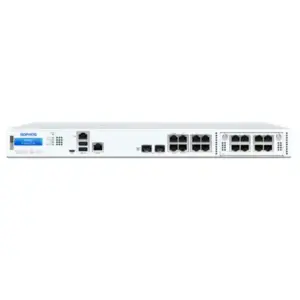
A 24-port Layer 3 UniFi switch with eight 2.5 GbE PoE++ ports, sixteen Gigabit ports, dual 10G SFP+ uplinks, a 400W PoE budget and Etherlighting for clearer physical port identification.
Professional Max access switch
Multi-gigabit PoE edge
1U, 442 x 325 x 44 mm
Confirm current UAE options
Direct answer for buyers
The USW-Pro-Max-24-PoE is a managed Layer 3 switch for UniFi environments that need both conventional Gigabit access and faster 2.5 GbE connections for newer wireless access points, workstations or other capable endpoints. It is mainly used to connect and power network devices while providing 10G uplinks toward a gateway, core or aggregation layer. Businesses already operating UniFi Network, or planning a coordinated UniFi deployment, should consider it when a 400W PoE budget and sixteen PoE++ capable ports match the device plan. Before proceeding, confirm the number of multi-gigabit endpoints, total and per-port PoE demand, rack and cooling conditions, uplink media, redundancy approach and the exact UniFi management architecture.
What this switch does and who it suits
What it does
The switch provides wired connectivity, PoE power delivery, VLAN segmentation, traffic-control functions and local Layer 3 services within a UniFi-managed network. Sixteen Gigabit ports serve conventional endpoints, while eight 2.5 GbE ports are suitable for devices that can exceed one-gigabit throughput. Two SFP+ interfaces support 10G or 1G uplinks, depending on the selected modules or direct-attach cables. Etherlighting provides port illumination that can make physical tracing easier in a busy rack.
Its role is usually at the access or distribution edge. It can connect Wi-Fi access points, IP cameras, VoIP phones, access-control devices, computers, printers and downstream switches, provided that port speed, PoE classification and total power draw are correctly planned.
Who it suits
The model is relevant to medium-sized offices, schools, hospitality properties, retail sites, clinics, warehouses and branch facilities that want centralised UniFi management with stronger PoE and uplink capacity than an entry-level switch. It is especially useful where several high-performance access points or powered devices require PoE++ and where selected endpoints benefit from 2.5 GbE.
It may be less suitable when all connected devices are low-power Gigabit endpoints, when a fully non-UniFi management stack is mandatory, or when the project requires more than eight copper multi-gigabit ports. In such cases, a different UniFi model or another switching platform may be more appropriate.
Business challenges it can help address
Wireless uplink bottlenecks
Modern access points may support aggregate wireless throughput beyond one gigabit. The eight 2.5 GbE ports allow suitable APs to connect above Gigabit speed, subject to cabling quality, client demand and upstream capacity.
Mixed PoE requirements
The port mix supports PoE+ and PoE++ devices, while the 400W total budget provides room for a varied endpoint set. Accurate load calculation remains essential because the total budget is shared.
Congested uplinks
Dual SFP+ interfaces offer 10G uplink choices for connection to a capable gateway, core or aggregation switch. Optics, fibre type and link distance must be confirmed separately.
Operational visibility
UniFi Network provides central configuration and monitoring, while Etherlighting can assist rack-level identification. Effective visibility still depends on correct adoption, naming, alerting and documentation.
Product-fit decision matrix
| Requirement | Suitable when | Confirm before ordering |
|---|---|---|
| Multi-gigabit access | Up to eight copper endpoints need 2.5 GbE. | Cabling category, endpoint NIC speed and upstream bandwidth. |
| High-power PoE | Several APs, cameras or edge devices require PoE++. | Per-port class, total wattage and startup power. |
| 10G uplinks | The upstream device has compatible SFP+ connectivity. | Fibre type, optic compatibility, distance and redundancy design. |
| Layer 3 services | Local VLAN routing or DHCP functions are useful. | Routing design, security policy and gateway responsibilities. |
| UniFi operations | The organisation uses or plans UniFi Network. | Controller hosting, software version, admin access and backup policy. |
Verified technical specifications
The following information is based on the exact USW-Pro-Max-24-PoE model. Specifications can change through product revisions or software updates, so the final bill of materials should be checked before purchase.
| Brand | Ubiquiti |
|---|---|
| Product name | UniFi Pro Max 24 PoE |
| Model | USW-Pro-Max-24-PoE |
| Product type | Managed Layer 3 PoE switch |
| 1 GbE RJ45 ports | 16 total: 8 PoE+ and 8 PoE++ |
| 2.5 GbE RJ45 ports | 8, all PoE++ |
| SFP+ ports | 2 x 10G/1G |
| Total PoE availability | 400W |
| Maximum PSE output per port | PoE 15.4W, PoE+ 32W, PoE++ 60W |
| Switching capacity | 112 Gbps |
| Non-blocking throughput | 56 Gbps |
| Forwarding rate | 83 Mpps |
| Supported VLANs | 1,000 |
| MAC address table | 16,000 |
| IPv4 static routes | 256 |
| Redundant power input | USP RPS DC input supported |
| Power input | 100–240V AC, 50/60 Hz, plus USP RPS DC input |
| Maximum power consumption | 50W excluding PoE; 450W including PoE output |
| Dimensions | 442 x 325 x 44 mm |
| Weight | 5.1 kg without brackets; 5.2 kg with brackets |
| Form factor | 1U rack mount |
| Display | 1.3-inch touchscreen LCM |
| Operating temperature | -5 to 40°C |
| Operating humidity | 10 to 90% non-condensing |
| Management requirement | UniFi Network 8.0.24 or later |
| Availability | Contact FourTeck for current UAE options |
Configuration and compatibility dependencies
PoE capacity is shared. A 400W total budget does not mean every PoE++ port can continuously deliver 60W at the same time. The endpoint list should be calculated using expected and maximum demand, with allowance for startup behaviour and future additions.
2.5 GbE performance depends on the full path. The client device, switch port, structured cabling, upstream gateway or core and application workload must all support the required speed. Older cabling installations should be tested before relying on sustained multi-gigabit operation.
SFP+ components are separate design items. Select direct-attach copper, multimode fibre or single-mode fibre according to distance, rack layout and the upstream device. Module compatibility and supported wavelengths must be checked.
Layer 3 features require an intentional routing plan. Inter-VLAN routing and local DHCP can reduce dependence on another device for selected functions, but firewall policy, internet routing, WAN security and broader network architecture still need clear ownership.
A practical purchase and deployment journey
Map connected devices
List access points, cameras, phones, computers and downstream switches. Record required speed, PoE class and quantity for each device.
Design uplinks
Decide whether one or both SFP+ ports will connect to a gateway, core or aggregation switch, and select appropriate media.
Confirm rack and power
Check 1U space, supported rack depth, ventilation, AC power, UPS sizing and any requirement for a UniFi redundant power system.
Plan configuration
Define VLANs, port profiles, PoE settings, link aggregation, multicast handling, access controls, monitoring and administrator responsibilities.
Test and document
Verify adoption, firmware, port negotiation, PoE load, uplink throughput, failover behaviour, endpoint reachability and configuration backup.
Multi-gigabit access where it matters
The switch’s port mix is designed for environments where not every endpoint needs the same speed. Many printers, phones, cameras and business terminals still operate comfortably at one gigabit or below, while newer access points, media workstations or specialised devices can benefit from 2.5 GbE. Using eight multi-gigabit ports for the endpoints that genuinely need them can provide a more balanced design than paying for higher-speed copper on every port.
A buyer should not assume that a 2.5 GbE port automatically produces 2.5 Gbps of application performance. Throughput depends on the endpoint, protocol overhead, server or internet capacity, uplink design and congestion elsewhere in the network. The value of the higher-speed ports is therefore greatest when the project team has already identified real traffic sources, such as high-density Wi-Fi, local media transfer, backup traffic or clustered services.
For wireless projects, review the access-point Ethernet interface, radio design and expected user density together. An AP with a multi-gigabit interface may still be limited by channel width, interference, client capability or upstream services. FourTeck can help compare the switch port plan against the intended AP model and deployment layout so the bill of materials reflects actual requirements rather than headline speeds alone.
PoE planning for powered infrastructure
Power over Ethernet can simplify installation by carrying network data and electrical power over the same structured cable, but correct design requires more than counting PoE ports. The USW-Pro-Max-24-PoE provides eight PoE+ Gigabit ports, eight PoE++ Gigabit ports and eight PoE++ 2.5 GbE ports. This means sixteen ports can support high-power PoE++ endpoints, while the total available PoE power remains 400W.
A practical power schedule should show each endpoint’s standard, nominal draw, maximum draw and any downstream load. A powered edge switch, for example, may use PoE++ input and then power several additional devices. A PTZ camera may draw more power during heater, infrared or motor operation than during normal viewing. Access-control devices can include locks, readers or auxiliary modules with combined demand. Designing only from typical consumption can leave insufficient headroom during peak conditions.
The 400W budget is substantial for a 24-port switch, but it should still be allocated deliberately. Reserve capacity for replacements and modest expansion, avoid loading the switch to its theoretical limit without operational margin, and coordinate UPS capacity with the combined switch and PoE load. A larger PoE budget also creates more heat, so cabinet airflow and room temperature should be considered. Where business continuity is important, document which powered devices are critical and how long the backup power system must sustain them.
Centralised UniFi management and operational control
The switch is managed through UniFi Network, with application version 8.0.24 or later specified for this model. Central management can give administrators a unified view of port status, client connections, VLAN assignments, traffic statistics and alerts alongside other adopted UniFi devices. This is particularly useful for branch offices, education environments, hospitality networks and multi-zone sites where consistent naming and policy reduce operational confusion.
Management convenience should be supported by governance. Decide where the UniFi Network application will run, who has administrator access, how backups are protected and how firmware changes are approved. A central console does not replace change control. Port profiles, VLAN assignments, PoE settings and uplink configurations can affect many users, so larger organisations should test changes, document rollback steps and separate routine administration from higher-risk network design changes.
Etherlighting can complement the software view by helping technicians identify ports physically. In a dense rack, visual port identification may reduce the chance of disconnecting the wrong cable during maintenance. Its value improves when cable labels, rack elevations, switch naming and documentation are also maintained. Visual aids should be treated as part of a broader operating process, not a substitute for accurate records.
Ideal business environments and use cases
High-density offices
Connect desktop users, phones, access points, printers and meeting-room devices while reserving multi-gigabit ports for high-demand users or Wi-Fi infrastructure.
Education campuses
Support classroom access points, surveillance, VoIP and administration networks with VLAN separation and central oversight, subject to site-wide design and safeguarding requirements.
Hospitality properties
Provide wired aggregation for guest Wi-Fi APs, cameras, phones and operational devices while maintaining separate logical networks for guests, staff and building systems.
Retail and branches
Consolidate access devices, cameras, point-of-sale terminals, wireless coverage and local workstations in a centrally managed branch switching layer.
Media and collaboration
Use multi-gigabit access and 10G uplinks for selected creative workstations, AV endpoints or collaboration systems where traffic patterns justify the capacity.
Surveillance and access control
Power compatible cameras, readers, intercoms or edge devices while calculating combined PoE demand, storage bandwidth and continuity requirements.
Integration and operational considerations
The switch can participate in a broader network that includes UniFi gateways, access points, cameras and other switching layers, but compatibility must be considered device by device. A network does not have to be entirely UniFi for the switch to forward standard Ethernet traffic, yet the management experience and some platform integrations are strongest when the design uses supported UniFi components and a correctly maintained UniFi Network application.
For uplinks, confirm the receiving device’s SFP+ capabilities and the required transceiver or direct-attach cable. Optical links require matching wavelength, fibre type and connector arrangements. Copper direct-attach cables are practical within or between nearby racks but have distance limits. Redundant uplinks require careful spanning-tree or aggregation design; simply connecting two cables without the right configuration can create loops or unexpected blocking.
For VLANs and Layer 3 services, identify where routing and security enforcement will occur. The switch supports local DHCP, DHCP relay, inter-VLAN routing and static routing, but many organisations still prefer a firewall or gateway to control traffic between sensitive networks. Consider how ACLs, firewall rules, guest access, IoT isolation and logging will work together. The appropriate split depends on network scale, operational skills and compliance expectations.
Environmental planning is also important. The unit is 325 mm deep and weighs over five kilograms, so confirm cabinet depth, rail or shelf arrangement, front-to-back airflow and cable clearance. The rated operating range is -5 to 40°C with 10 to 90 percent non-condensing humidity. A communications room in the UAE should have stable cooling and dust management rather than relying on the upper temperature limit as a normal operating target.
Buyer questions to resolve before ordering
Separate genuine multi-gigabit endpoints from devices that only require standard Gigabit access.
Include maximum draw, startup behaviour, downstream-powered equipment and planned expansion.
Choose DAC, multimode fibre or single-mode fibre according to distance and the upstream hardware.
Define whether the switch, a UniFi gateway or another firewall controls inter-VLAN traffic.
Determine whether the USP RPS input, UPS runtime or both are part of the continuity plan.
Confirm UniFi Network hosting, application version, administrative access and backup ownership.
Procurement checklist
☐ Exact model: USW-Pro-Max-24-PoE
☐ Required quantity and site allocation
☐ Number of 1 GbE and 2.5 GbE endpoints
☐ Per-device PoE standard and maximum wattage
☐ Required SFP+ modules or DAC cables
☐ Fibre type, connector and link distance
☐ Rack depth, 1U space and airflow
☐ AC circuit and UPS capacity
☐ Redundant power requirement
☐ UniFi Network hosting and version
☐ VLAN, routing and access-control scope
☐ Installation, testing and documentation needs
☐ Current UAE availability and lead time
☐ Warranty terms applicable to the supplied region
How FourTeck can assist
FourTeck can help translate a device list and network objective into a more accurate switch requirement. This can include reviewing the number of powered endpoints, identifying which ports need 2.5 GbE, estimating PoE headroom, checking uplink media, considering rack and power constraints and coordinating a quotation for the required quantity. For a wider project, the review can also cover UniFi gateways, wireless access points, fibre modules, patching, cabinets and installation scope.
Configuration support can be discussed separately from hardware supply. Relevant activities may include device adoption, firmware review, switch naming, VLAN and port-profile configuration, PoE settings, link aggregation, uplink testing, basic monitoring setup and handover documentation. The exact work should be defined in the quotation because site conditions, existing network architecture, remote access, after-hours requirements and customer change-control procedures can affect the scope.
For broader technology requirements, explore FourTeck product options, review available network and technology services, or learn more about FourTeck. Buyers can also use the FourTeck contact page to share a bill of materials or request a project discussion.
UAE availability and support guidance
Contact FourTeck to confirm current UAE availability for the Ubiquiti Pro Max 24 PoE. Availability may depend on quantity, regional version, vendor lead time and the accessories included in the requested bill of materials. A complete quotation should identify the exact switch model, required optics or direct-attach cables, redundant-power accessories if applicable, installation requirements and any configuration or testing work.
Delivery and project coordination can be discussed after the requirement is confirmed. For deployments in Dubai, Abu Dhabi, Sharjah and Ajman, FourTeck can review destination details, access conditions, rack readiness and the planned installation window. On-site work, remote configuration and post-installation support are scope dependent and should be agreed in advance. Buyers should also confirm warranty terms for the supplied region rather than assuming that store-specific service plans shown in another market automatically apply in the UAE.
GCC availability
FourTeck can assist GCC organisations that are evaluating the USW-Pro-Max-24-PoE for offices, schools, hospitality sites, retail branches, surveillance networks or other UniFi deployments. The review can cover model suitability, quantity, PoE demand, 2.5 GbE requirements, SFP+ uplinks, required accessories, configuration expectations and delivery planning. Projects may involve the United Arab Emirates, Saudi Arabia, Kuwait, Qatar, Bahrain or Oman, but product availability, licensing, delivery schedules, service visits and vendor lead times can vary by destination and project scope. Buyers should share the destination country, exact product model, required quantity, preferred delivery window, connected-device list and any installation or configuration expectations. FourTeck can then coordinate a suitable quotation and identify dependencies that should be resolved before purchase. For enquiries related to Kuwait, the FourTeck Kuwait resource may also be useful. No local stock, customs outcome or fixed delivery schedule should be assumed until the requirement is reviewed.
Africa availability
Organisations planning UniFi networks in Africa can contact FourTeck for product evaluation, accessory planning, quotation coordination and deployment guidance for the Ubiquiti Pro Max 24 PoE. The discussion may include exact switch quantity, powered-device requirements, fibre or copper uplinks, cabinet conditions, power protection, configuration scope and support expectations. Availability and fulfilment depend on the destination, hardware revision, quantity, regional power requirements, shipping arrangements, vendor lead time and local project conditions. Buyers in East Africa and other regions should provide the destination country, exact model, preferred schedule and details of any installation, remote configuration or handover support required. FourTeck’s regional resources include technology support information for Kenya, FourTeck Uganda and the wider FourTeck Africa portal. Local inventory, customs clearance, country-wide on-site coverage and fixed delivery timing must be confirmed for each project rather than assumed.
Related products and services to consider
UniFi gateway selection
Choose a gateway with suitable WAN, routing, security and 10G uplink capacity for the planned traffic profile.
UniFi wireless access points
Match AP radio capability, Ethernet speed, PoE requirement and deployment density to the switch port plan.
SFP+ modules and DAC cables
Select compatible uplink media based on distance, fibre type, connector format and the receiving device.
Rack and power protection
Review cabinet depth, cooling, UPS runtime, power distribution and optional redundant-power arrangements.
Network configuration service
Define VLANs, port profiles, PoE policies, uplinks, monitoring and handover requirements as a separate scope.
Frequently asked questions
How many 2.5 GbE ports does the USW-Pro-Max-24-PoE have?
It has eight 2.5 GbE RJ45 ports. All eight support PoE++ and can also negotiate lower supported Ethernet speeds.
Are all 24 ports PoE capable?
Yes. Eight Gigabit ports support PoE+, eight Gigabit ports support PoE++, and all eight 2.5 GbE ports support PoE++.
What is the total PoE budget?
The total available PoE budget is 400W. The design must still account for maximum per-device demand and shared total capacity.
Does it support 10G uplinks?
Yes. It includes two SFP+ interfaces that support 10G or 1G operation. Compatible modules or cables are selected separately.
Can the switch perform Layer 3 functions?
Yes. Confirmed functions include local DHCP server, DHCP relay, inter-VLAN routing and static routing. The overall routing and security design should still be planned carefully.
Which UniFi Network version is required?
Ubiquiti specifies UniFi Network version 8.0.24 or later for this model.
Is redundant power supported?
The switch includes a USP RPS DC input in addition to its universal AC input. The redundant-power device and complete continuity design should be confirmed separately.
Is it suitable for Wi-Fi 6 or Wi-Fi 7 access points?
It can be suitable when the AP’s Ethernet interface and PoE requirement match the available ports. Confirm the exact AP model, required wattage and expected uplink speed before ordering.
Are SFP+ optics included?
Do not assume that optics or direct-attach cables are included. They should be listed explicitly in the quotation according to distance and fibre requirements.
How can I request a Dubai quotation?
Share the required quantity, connected-device list, PoE demand, uplink design, delivery location and any installation or configuration scope with FourTeck.
Confirm the model, power budget and uplink plan
Send FourTeck your quantity, device schedule and deployment location for a structured UAE quotation and configuration discussion.

Reviews
There are no reviews yet.