
Secure branch and micro-network connectivity for UAE deployments
Barracuda Secure Connector SC3 LTE
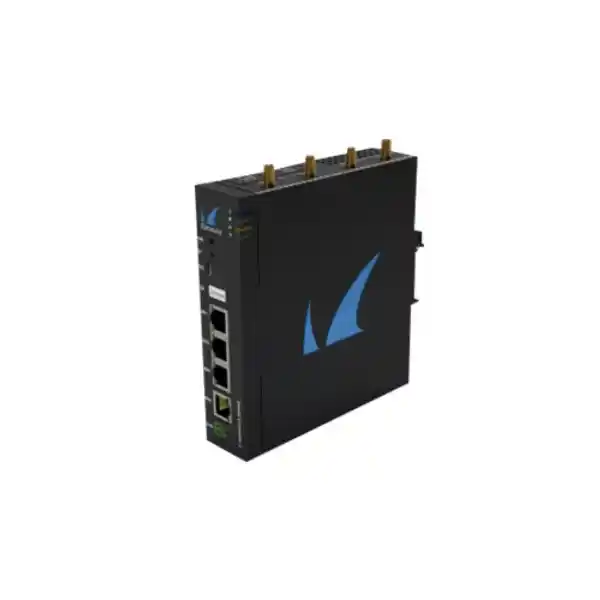
The Barracuda Secure Connector SC3 LTE is designed for organizations that need to connect many small sites, devices, machines, kiosks, industrial endpoints, or micro-networks to centrally managed corporate resources without placing a full-sized branch firewall at every location. In the SC3 family, LTE-capable hardware is provided by the cellular variants, notably SC34 and SC35, while the broader platform combines four Gigabit Ethernet interfaces, flexible power options, compact mounting, local firewalling, and centrally orchestrated TINA VPN connectivity through Barracuda Secure Access Controller and Firewall Control Center infrastructure.
Direct answer
Choose the SC3 LTE family when a remote UAE site needs secure, centrally governed connectivity and an integrated 4G/LTE path. SC34 is the LTE-capable option without integrated Wi-Fi; SC35 adds Wi-Fi capability. Exact cellular carrier compatibility, SIM provisioning, antenna requirements, licensing, and deployment architecture should be validated for the target site before quotation.
What the Barracuda Secure Connector SC3 LTE is built to solve
Distributed enterprises increasingly operate locations that are too small, too numerous, too temporary, or too operationally specialized to justify a conventional branch-firewall design. Examples include payment kiosks, digital signage networks, smart-building controllers, industrial sensors, warehouse terminals, automated service points, remote monitoring stations, retail counters, branch utility equipment, construction-site systems, healthcare devices, access-control panels, and other machine-oriented or micro-network deployments. These locations still need controlled access to data-center or cloud resources, but the networking model must be compact, reproducible, centrally managed, and practical for deployment by non-specialist staff.
Barracuda Secure Connector addresses this requirement with an appliance and management architecture optimized for large fleets of small remote networks. A Secure Connector establishes a site-to-site TINA VPN tunnel toward a Barracuda Secure Access Controller or supported CloudGen Firewall endpoint. Management is coordinated through the Firewall Control Center, allowing administrators to create templates, distribute settings, track status, and update the configuration of many devices from a central operational point. This is materially different from treating each remote unit as a completely independent firewall that must be manually configured and maintained.
For the UAE, the LTE-capable SC3 variants are particularly useful where fixed-line connectivity is unavailable, slow to provision, operationally inconvenient, or required only as part of a flexible remote-site design. Cellular connectivity can support temporary installations, mobile assets, isolated facilities, backup reachability strategies, or locations where a telecom handoff is not located near the target equipment. The correct implementation still requires engineering: carrier coverage, APN design, NAT behavior, public or private addressing, SIM policy, antenna placement, VPN reachability, power design, and the location of the Access Controller all affect real-world performance.
SC3 LTE hardware at a glance
Ethernet
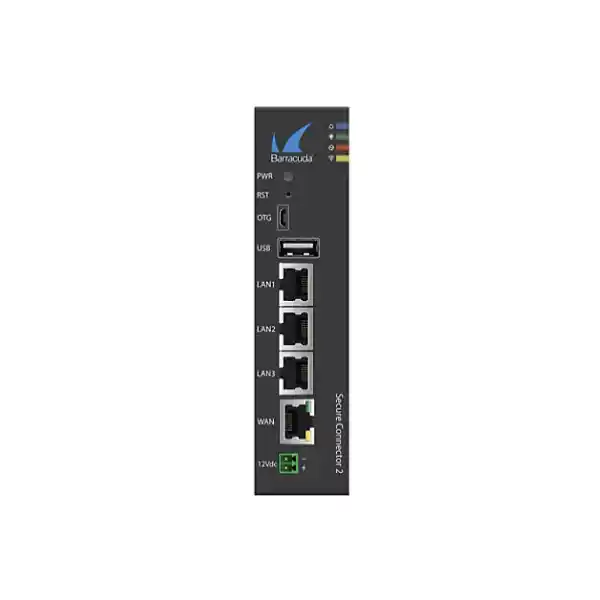
One 10/100/1000 Mbps RJ45 WAN interface plus three 10/100/1000 Mbps RJ45 LAN interfaces operating as a local switch. The WAN interface can receive PoE+ power.
Cellular
SC34 and SC35 support cellular connectivity including GSM, UMTS, and global 4G/LTE capability. Cellular service remains dependent on the deployed SIM, operator network, band support, signal conditions, and local carrier policy.
Platform
ARM Cortex-A7 processor, 2 GB RAM, onboard and micro-SD storage resources, USB 3.0 and USB OTG connectivity, packaged in a compact metal enclosure suited to distributed installations.
Power and mounting
Auxiliary DC input supports 12V to 57V, and the WAN port supports PoE+ input in the documented 37V to 54V range. DIN-rail, wall, and magnetic mounting methods are supported.
Understanding SC34 and SC35 when ordering “SC3 LTE”
The phrase “SC3 LTE” describes the LTE-enabled capability within the SC3 hardware family, but procurement teams should not stop at that label. Barracuda documents multiple SC3 submodels with different integrated wireless functions. SC30 is the wired model without integrated Wi-Fi or cellular capability. SC31 adds Wi-Fi but not cellular. SC34 is the cellular-capable SC3 model without integrated Wi-Fi. SC35 combines the cellular capability with integrated Wi-Fi. For an LTE-focused deployment, SC34 and SC35 are therefore the relevant variants.
This distinction matters because requirements are often described informally during procurement. A project brief may say “LTE branch connector” even though the installation also expects the appliance to provide a local wireless access point. In that scenario, selecting an LTE-capable model without the Wi-Fi function would not satisfy the intended topology. Conversely, an industrial cabinet that serves only wired controllers may have no need for integrated Wi-Fi, making the cellular-only variant a cleaner selection. FourTeck recommends documenting the exact remote endpoints, local LAN requirements, wireless LAN requirement, WAN preference, power source, mounting method, SIM details, and intended failover behavior before finalizing the bill of materials.
The SC3 platform documentation also notes that hardware components may change over time. For procurement purposes, the exact current revision, submodel code, included accessories, regional approvals, and compatibility details should therefore be checked against the serialised unit or current manufacturer documentation at the time of quotation. FourTeck can help UAE customers translate a functional requirement into the appropriate Barracuda Secure Connector configuration rather than relying only on a short product family name.
Secure Connector architecture: appliance, Access Controller, and Control Center
A Secure Connector should be evaluated as part of an architecture rather than as a stand-alone edge box. The remote SC3 appliance is the compact endpoint installed beside the devices or local micro-network. It forms the encrypted connectivity path toward the organization’s Barracuda environment. The Secure Access Controller acts as the VPN termination point for Secure Connector tunnels. The Firewall Control Center provides centralized lifecycle and configuration management, including template-driven settings and operational oversight for the distributed estate.
Barracuda documentation describes the Secure Connector as connecting through a single site-to-site TINA VPN tunnel, with both user and management traffic transported through that relationship. The standard service uses TCP or UDP port 692 for the VPN path. The infrastructure also uses dedicated management communication between the Secure Connector environment and Control Center. The design allows an organization to concentrate policy handling and operational control in fewer central points while placing compact devices at the remote edge.
This architecture is valuable when the number of remote points is large. Imagine an organization operating dozens or hundreds of kiosks, sensors, unmanned substations, retail counters, lockers, or branch devices across Dubai, Abu Dhabi, Sharjah, Ras Al Khaimah, Fujairah, Ajman, and Umm Al Quwain. Configuring each location as an isolated security stack creates consistency challenges. With Secure Connector, administrators can create standardized configuration templates and associate those templates with individual appliances. Central changes can then be distributed without requiring a specialist to visit every site.
The central design also supports geographically distributed architectures. Barracuda documents deployment of Access Controllers in on-premises infrastructure or public cloud environments, and the Control Center can manage multiple Access Controllers. This allows a design team to consider regional termination points, proximity to applications, availability zones, data-center topology, and scale. The correct design depends on the number of Secure Connectors, traffic patterns, latency requirements, security policy, redundancy objectives, and the location of business systems.
Port map and local network design
The SC3 platform provides a straightforward physical network layout: one Gigabit Ethernet WAN interface and three Gigabit Ethernet LAN interfaces. In Barracuda’s documented default port configuration, the WAN interface maps to eth1 and is also identified as the management port. LAN1 maps to eth0, LAN2 to eth3, and LAN3 to eth4. All four copper interfaces are 10/100/1000 Mbps RJ45 ports. The three LAN ports operate as a switch, which can simplify small-device installations where only a few local endpoints need connectivity.
This port layout is intentionally practical rather than high density. The device is not positioned as a campus access switch. If a site has more than three wired endpoints, PoE endpoint requirements, VLAN aggregation needs, extensive local segmentation, or high port density, the design will normally include an external managed switch. The SC3 can then provide the secure upstream path while the local switch handles access-port density and, where required, power delivery to phones, cameras, sensors, or wireless access points.
The WAN port’s PoE+ recipient capability can be useful when installation space is limited. A compatible IEEE 802.3at Type 2 power-sourcing device can deliver power through the WAN connection within the documented voltage range. Alternatively, the appliance can use its auxiliary DC input. Barracuda explicitly warns against operating the device with both the 12V DC supply and PoE on the WAN port at the same time. This requirement should be incorporated into installation instructions so field teams do not unintentionally connect parallel power sources.
Where LTE is the principal WAN method, engineers should still decide how the wired WAN port participates in the design. It may be used for primary fixed connectivity with cellular as an alternative path, left available for future service, or used within a topology defined by the Secure Connector software and local project requirements. The practical objective is to define failure behavior before deployment: what constitutes a failed transport, which applications require continuity, how cellular usage should be controlled, and how the appliance is expected to recover after carrier or fixed-line service returns.
Why LTE matters for UAE remote networking
Rapid site activation
A cellular-capable connector can reduce dependence on the physical availability of a fixed-line handoff at the exact equipment location. For temporary offices, project sites, pop-up environments, remote cabinets, or new branches waiting for primary circuits, this can materially simplify the activation sequence. The security architecture can be prepared centrally before the unit reaches the site, while local activation focuses on power, antennas, SIM/APN parameters, Ethernet endpoints, and verification of the VPN path.
Diverse connectivity path
Cellular service can provide a physically diverse path compared with a fixed Ethernet handoff. The resilience benefit depends on how the carrier backhaul, tower coverage, power, routing, NAT, and enterprise VPN endpoint are engineered. LTE should therefore be treated as a designed transport, not as an automatic guarantee of redundancy. Testing under real signal and traffic conditions is essential.
Operational reach
UAE organizations frequently operate equipment outside traditional office spaces: warehouses, logistics zones, retail outlets, service counters, campuses, utility enclosures, industrial areas, construction environments, and mobile or semi-permanent deployments. LTE connectivity can extend a centrally governed network architecture to these locations without requiring every project to resemble a conventional branch office.
Controlled micro-networks
Many remote assets need only a few Ethernet connections and a secure path to selected applications. The SC3’s three switched LAN ports are a natural fit for these micro-network patterns, while firewall rules, routing, NAT choices, and VPN reachability can be centrally standardized across many locations.
Firewall zones and local traffic policy
The Secure Connector includes a purpose-built firewall service that is simpler than the full CloudGen Firewall feature set but still provides meaningful control at the remote edge. Barracuda documents four logical firewall zones for Secure Connector operation: LAN, Wi-Fi, WAN, and VPN. Interfaces are assigned to the appropriate zone based on their configured role. This enables policies to be written around the direction and purpose of traffic rather than only around individual physical interfaces.
For example, a typical industrial telemetry deployment may allow a small set of controllers on the LAN zone to initiate only defined TCP or UDP sessions toward application servers reachable through the VPN zone. Direct Internet access could be restricted or denied. A retail device deployment might allow specific cloud destinations through centrally routed infrastructure while limiting unsolicited lateral access between endpoint groups. A kiosk design might use source or destination NAT to accommodate addressing constraints. The appropriate rules depend on the application communication matrix, not merely on the fact that LTE is available.
Barracuda documentation indicates that protocols other than TCP or UDP are blocked by the Secure Connector firewall. This detail should be considered during application discovery. Legacy operational technology, unusual tunneling mechanisms, non-IP integrations, or specialized protocols may require validation before the platform is selected. Engineers should document each required source, destination, port, direction, expected session behavior, DNS dependency, NTP dependency, certificate service, management system, and update service. This produces a precise rule base and reduces the temptation to use overly broad access policies.
For larger organizations, the central advantage is policy consistency. A template can encode the intended baseline for a site type. A retail template can differ from a warehouse template, while both remain centrally governed. This approach improves change control and reduces configuration drift. FourTeck can assist with rule-set design and deployment planning through its UAE technology practice at FourTeck IT Services UAE, particularly where Secure Connector deployment must integrate with existing routing, switching, cloud, identity, or monitoring standards.
TINA VPN transport and tunnel design
Secure Connector uses Barracuda’s TINA VPN architecture for connectivity to the Secure Access Controller. The documented Secure Connector VPN service uses a single site-to-site tunnel and can operate over TCP or UDP. In design terms, that allows engineers to choose between transport behaviors based on the quality of the underlying network. UDP is normally appropriate when lower overhead and responsive transport are priorities on a stable path. TCP can provide greater stability in some unreliable environments, although the final choice should be validated for the application and carrier conditions.
The standard Secure Connector VPN entry port is TCP/UDP 692. This matters when a Secure Access Controller is deployed behind a border firewall, NAT gateway, cloud security group, or upstream access-control list. The path must permit the configured service from remote connectors to the Access Controller entry point. If managed CloudGen Firewalls and Secure Connectors share public addressing or infrastructure, the design may require port planning to prevent service conflicts. Public cloud deployment introduces another layer of routing, security-group, and route-table considerations.
Remote network definitions determine which destinations traverse the VPN. In a tightly controlled machine-to-machine deployment, only specific corporate or cloud subnets may need to be reachable. In other designs, a default route can be carried through the tunnel so that Internet-bound traffic from the remote network is centralized through the corporate security stack. Each model has tradeoffs. Full tunneling can improve policy centralization but consumes central bandwidth and adds latency. Selective routing reduces backhaul but may require additional local security decisions.
Encryption selection and key management should align with the organization’s security policy and current Barracuda software capabilities. Because VPN configuration details can evolve across software releases, FourTeck recommends validating the deployed Secure Connector software version, Access Controller version, and approved encryption settings during implementation. The objective is a reproducible, supportable tunnel design rather than simply achieving first connectivity.
Centralized configuration and fleet operations
The operational value of Secure Connector becomes more apparent as the number of remote devices grows. Firewall Control Center provides the management layer for Secure Connector devices and associated infrastructure. Administrators can create Secure Connector configurations directly or use templates to standardize repeated settings. Templates reduce the burden of manually reproducing common parameters and create a cleaner lifecycle model for organizations with multiple site types.
When a configuration template is linked to multiple connectors, a controlled change can be distributed across those devices. This is useful for updating VPN destinations, route definitions, DNS settings, firewall rules, or other approved parameters across a fleet. A centrally managed process also supports stronger governance: configuration ownership can stay with the network or security team even if the physical appliance is installed by a local technician, facilities contractor, retail integrator, or operational-technology team.
Barracuda supports deployment methods in which the Secure Connector configuration is prepared in the Control Center and transferred to the device. Current documentation describes configuration deployment using USB OTG or the local web interface, after which the Secure Connector can automatically connect to its assigned Access Controller and Control Center. This can be especially useful in remote sites where the field technician needs a repeatable procedure rather than access to full enterprise credentials or complex network configuration.
Fleet operations should still be planned beyond initial provisioning. Organizations should establish a naming convention, inventory mapping, serial-number register, location register, SIM identifier mapping, assigned template, owner, escalation path, firmware policy, replacement process, and decommissioning workflow. These controls are important for any centrally managed edge estate. A device should not become an anonymous network object merely because it is small.
For UAE projects, FourTeck can help structure this operational model alongside the hardware procurement. Customers looking for broader regional technology procurement can also reference FourTeck UAE for local project coordination and FourTeck Global where multinational standardization or cross-border requirements are part of the rollout.
Detailed hardware specification interpretation
| Area | SC3 platform detail | Design significance |
|---|---|---|
| WAN | 1 × 1GbE RJ45 WAN, PoE+ recipient | Provides wired upstream connectivity and can receive power from a compatible IEEE 802.3at Type 2 source. |
| LAN | 3 × 1GbE RJ45 switched LAN | Supports a small local micro-network directly; larger endpoint counts normally require an external switch. |
| USB | USB 3.0 and USB OTG | Supports deployment and service workflows documented for the Secure Connector platform. |
| Processor | ARM Cortex-A7 | A compact embedded architecture appropriate to the product’s edge-connector role rather than full branch UTM positioning. |
| Memory | 2 GB RAM | Supports the Secure Connector operating role; sizing should focus on supported architecture and remote workload rather than comparing RAM alone with larger firewalls. |
| Storage | Micro-SD based storage resources, including documented 8 GB onboard and 16 GB micro-SD values | Appropriate for the embedded connector function; it is not intended to behave like a logging-heavy security appliance with large local SSD retention. |
| Cellular | GSM / UMTS / global 4G LTE on SC34 and SC35 | Provides cellular WAN capability subject to network coverage, SIM/APN configuration, carrier support, and radio conditions. |
| Wi-Fi | Available on SC31 and SC35 | SC35 is the relevant choice when a project needs both integrated cellular and integrated Wi-Fi. |
| Mounting | DIN rail, wall, magnetic mounting | Provides installation flexibility in cabinets, equipment spaces, kiosks, retail fixtures, and other non-rack locations. |
| Power | Aux DC 12–57V or PoE+ input 37–54V | Allows flexible installation; DC and PoE must not be used simultaneously. |
Physical dimensions are documented at approximately 3.07 × 5.91 × 4.72 inches, and appliance weight at approximately 1.15 kg. These dimensions reinforce the device’s compact deployment role. Installation engineers should nevertheless reserve sufficient clearance for Ethernet cables, cellular antennas, optional Wi-Fi antennas on the applicable model, power cabling, bend radius, ventilation, and maintenance access. A compact chassis does not eliminate the need for thoughtful cabinet layout.
Power engineering and installation safety
Power is an important SC3 design consideration because the platform supports both auxiliary DC input and power through the WAN Ethernet port. Barracuda specifies a 12V to 57V range for the auxiliary two-pin DC input and a 37V to 54V range for WAN PoE+ input, with IEEE 802.3at Type 2 identified as the compatible power-sourcing standard. The manufacturer also explicitly instructs users not to power the unit simultaneously from both sources.
This flexibility is useful in industrial and distributed installations. A network cabinet with a PoE+ switch may be able to provide data and power over a single cable to the WAN interface. A site with a controlled DC system may instead use the auxiliary input. In temporary or conventional office environments, an external AC power supply can be used where appropriate. Barracuda documentation notes that the external power supply is optional and may need to be ordered separately, so procurement teams should confirm whether the selected SKU and project bill of materials include the required supply.
Power-source choice should be documented by site type. If one group of locations uses PoE and another uses a local AC adapter, the installation guide should make that explicit. Field teams should know the expected source, upstream switch port, power budget, cable category, surge protection strategy, earthing practice, and restart procedure. In outdoor-adjacent, industrial, or utility installations, power quality and environmental enclosure design may be as important as network configuration.
A resilient deployment also considers what happens during an outage. If the Secure Connector and the connected endpoint are expected to maintain service during utility interruptions, both must be placed within the UPS or DC-backed power domain. Providing backup power only to the network connector while the local controller loses power offers limited benefit. Conversely, if the endpoint is power-protected but the upstream PoE switch is not, the network path still fails. End-to-end availability analysis should therefore cover every power dependency from the local device through the WAN transport and central VPN endpoint.
LTE planning: SIM, APN, coverage, and carrier behavior
The presence of an LTE modem does not by itself define the cellular service. A production deployment needs a SIM profile, operator subscription, APN configuration, addressing model, usage policy, and a clear understanding of how the carrier network treats inbound and outbound sessions. Enterprise SIM services may use public Internet APNs, private APNs, managed enterprise APNs, or other carrier-specific constructs. The choice affects reachability, NAT, routing, security controls, and how the Secure Connector reaches the Access Controller.
Signal quality should be assessed at the actual installation point rather than assumed from general mobile coverage. Metal cabinets, reinforced concrete, underground rooms, elevator machinery areas, industrial buildings, and remote enclosures can materially reduce radio performance. Antenna position, cable loss, orientation, and local RF interference all matter. Where the installation is business-critical, teams should record signal characteristics during commissioning and test the device under sustained application traffic rather than relying on a successful ping.
Cellular bandwidth is shared and variable. Throughput and latency can change with tower load, radio conditions, mobility, carrier traffic policy, and network generation. Applications should be classified accordingly. Transactional traffic, telemetry, remote management, and moderate business application usage may be well suited to LTE connectivity. High-volume backups, large software distribution, continuous media streams, or unrestricted user Internet access can generate unpredictable data consumption. Where cellular costs or data caps matter, routing and policy should prioritize essential traffic.
Carrier NAT is another important design factor. Many mobile networks place subscribers behind provider NAT. This does not necessarily prevent Secure Connector operation because the appliance initiates its VPN connection toward the Access Controller, but it affects assumptions about inbound reachability and troubleshooting. Enterprise APN services may provide different addressing behavior. The networking team should coordinate with the cellular provider and Barracuda architecture rather than depending on consumer mobile-network expectations.
For UAE deployments, FourTeck recommends a pre-deployment checklist covering the preferred carrier, approved SIM type, APN name, authentication details where applicable, PIN handling, expected monthly data volume, coverage at each site, antenna placement, test procedure, escalation contact, and the Access Controller public endpoint. This turns LTE from an informal “backup option” into an engineered transport.
Secure Access Controller sizing and licensing
A fleet of Secure Connectors requires more than the remote appliances. Barracuda documentation specifies that deployment uses a Secure Access Controller license and a Secure Connector Energize Updates pool license. The number of instances in the pool determines how many Secure Connectors may connect, and the pool size must remain within the supported VPN-connection capacity of the Access Controller model. Procurement therefore needs to align remote-unit count with central infrastructure licensing.
Barracuda documents Virtual Access Controller models with different licensed compute sizes and VPN-connection capacities, including VACC 400 with two CPU cores and up to 500 VPN connections, VACC 610 with four CPU cores and up to 1,200 VPN connections, and VACC 820 with eight CPU cores and up to 2,500 VPN connections. These values are useful for high-level planning, but final sizing should account for software release requirements, expected tunnel count, traffic volume, availability design, geographic distribution, maintenance strategy, and headroom for future sites.
Organizations should avoid sizing only for the current day-one connector count. A project with 250 initial units may plan expansion to 600, and a merger or new IoT program can increase the number quickly. Headroom should also be reserved for lab devices, spares, temporary installations, and replacement workflows. If high availability is required, both licensing and infrastructure architecture must reflect the desired failure behavior.
Control Center capacity and topology are equally important. The Control Center manages the Secure Connector configurations and associated Access Controller environment. Network address pools for Secure Connector management and data networks should be sized carefully because Barracuda documentation notes constraints around network sizing. IP-address planning should therefore happen before a large deployment, particularly where remote sites are allocated subnets from centralized ranges.
FourTeck can quote the hardware as part of a complete design that includes the required Barracuda licensing and central components. Customers should provide the current CloudGen Firewall and Control Center environment, number of Secure Connectors, projected growth, primary application locations, redundancy requirements, and whether Access Controllers will run on-premises or in public cloud infrastructure. This avoids the common procurement mistake of purchasing edge appliances without validating the controller and licensing prerequisites.
Deployment topology examples
Retail and payment micro-site
A small retail location may have a payment terminal, an inventory endpoint, and a local controller connected to the three LAN ports. The SC3 LTE establishes secure connectivity toward the organization’s Access Controller. Firewall rules permit only the application flows required by the endpoints. LTE can serve as the primary transport in a temporary location or as a designed alternative transport in a location that also has wired WAN service. Central templates keep the rule base and routing consistent across many stores.
Industrial controller cabinet
An industrial cabinet may contain a programmable controller, telemetry gateway, and engineering service port. A DIN-rail mounted Secure Connector can sit within the cabinet, powered through the chosen DC or PoE design. The local firewall restricts controller communication to specific central services through the VPN. Cellular connectivity avoids extending a fixed line to a difficult location, but RF conditions and antenna placement must be validated carefully in a metal or industrial environment.
Digital signage or smart-building endpoint
Multiple remote display controllers, building devices, access-control components, or sensor aggregators can be grouped behind standardized Secure Connectors. Centralized management is valuable because these sites may be maintained by facilities personnel rather than dedicated network engineers. A prebuilt configuration can limit local effort to installation, cabling, activation, and validation.
Temporary project site
Construction, events, exhibitions, pop-up offices, and short-lived project locations often need secure access before permanent telecommunications services are delivered. An LTE-enabled SC3 can provide a repeatable secure connectivity building block. When the project ends, the device can be decommissioned, reconfigured under central control, and reassigned according to the organization’s asset and certificate policies.
Remote monitoring system
Security systems, environmental monitoring, remote equipment, and telemetry applications often generate modest but business-critical traffic. The SC3 LTE can provide a compact route back to centralized services, while policy restricts the remote equipment from reaching unnecessary network destinations. The architecture is strongest when the application team provides a complete communication matrix and the security team converts it into explicit rules.
Addressing, routing, NAT, and network planning
Secure Connector networks can be implemented with different addressing approaches. Barracuda documentation includes manual and mapped network options, and centrally assigned management and data networks are part of the broader infrastructure design. The right approach depends on whether devices at remote sites already have fixed addresses, whether those addresses overlap across sites, and whether central applications need to identify individual endpoints by unique network addresses.
Address overlap is common in machine networks because vendors often ship devices with the same factory subnet. A company may have hundreds of remote controllers all using an identical local address range. Readdressing every controller can be operationally difficult or unsupported by third-party service providers. A mapped network approach can help present unique translated networks toward the central environment while retaining the local addressing expected by the endpoint. This must be planned carefully so monitoring, troubleshooting, and application logs clearly relate translated addresses back to physical sites.
Routing decisions determine which traffic is sent through the VPN. A least-privilege design advertises or configures only the corporate networks required by the remote endpoints. A centralized Internet-egress model may instead route a default path through the tunnel, allowing security inspection at the data-center or cloud border. Both models are valid in different circumstances. Engineers should compare central bandwidth, latency, policy requirements, application destinations, SaaS usage, and cellular data costs.
DNS, NTP, software repositories, certificate-validation endpoints, monitoring platforms, and remote-support systems are often overlooked during initial application discovery. A remote device can appear to have basic IP connectivity yet fail because one of these supporting services is unreachable. The site template should therefore include the complete operational dependency set. When cellular networks are used, MTU and fragmentation behavior should also be tested with the actual VPN path if applications show inconsistent performance.
For greenfield deployments, reserve IP space with growth in mind. Barracuda’s infrastructure documentation emphasizes planning Secure Connector VIP networks and their association with Access Controllers. An enterprise address plan should allow new site classes, additional Access Controllers, disaster-recovery endpoints, test environments, and geographic expansion without forcing disruptive redesign.
Performance expectations: size for the application, not the Ethernet label
The presence of Gigabit Ethernet ports does not mean every Secure Connector deployment should be designed around sustained gigabit application throughput. Port speed describes the physical Ethernet interface capability, while actual application performance depends on the embedded platform, software processing, VPN encryption, cellular service, packet characteristics, central infrastructure, and the application itself. Secure Connector is optimized for securely attaching remote devices and micro-networks, not for replacing a high-throughput enterprise branch firewall.
Sizing should begin with the traffic profile. Determine the number of endpoints, average and peak throughput, concurrent sessions, packet size distribution, directionality, transaction sensitivity, latency tolerance, and expected growth. A telemetry site sending small periodic messages has a very different profile from a branch performing large cloud backups. A payment terminal may use little bandwidth but demand predictable connectivity. A video application may consume far more capacity and be sensitive to cellular variability.
The LTE link may become the practical bottleneck long before the Ethernet interfaces. Real-world mobile performance varies by signal quality, carrier load, plan, network generation, and coverage. Capacity planning should use measured results from representative sites. Where the application is critical, test during different times of day and include failover or degraded-bandwidth scenarios. The goal is to understand how the application behaves when latency rises or available throughput falls, not merely whether the VPN remains technically established.
Central architecture also affects scale. Every Secure Connector tunnel terminates on an Access Controller or supported endpoint. Aggregate bandwidth, connection count, encryption processing, and upstream routing must be sized centrally. A rollout of hundreds of low-bandwidth sites can still create substantial aggregate traffic. Maintenance windows and failover events can also create reconnection bursts. Proper controller sizing and network design are therefore part of the performance model.
If the project requires a conventional branch-security stack with high UTM throughput, multiple WAN circuits, extensive local segmentation, many VLANs, high port density, or advanced security inspection directly on the site appliance, a larger Barracuda CloudGen Firewall may be the more appropriate platform. FourTeck can compare the Secure Connector approach with full firewall models through its specialist Firewall Dubai practice.
SC3 LTE versus a full branch firewall
A common design question is whether to deploy Secure Connector or a full CloudGen Firewall at a small location. The answer depends on the role of the site. Secure Connector is compelling where the remote location is primarily a small collection of devices that needs safe, centrally managed connectivity back to enterprise resources. A full branch firewall is more appropriate when the site itself requires a broad security services stack, higher throughput, more interfaces, advanced local policy, multiple user networks, local Internet security inspection, or complex SD-WAN behavior.
Secure Connector intentionally shifts much of the operational model toward centralized infrastructure. Corporate security services such as application control, URL filtering, and virus scanning can be handled at the central CloudGen Firewall or border security layer depending on architecture. This keeps the remote appliance compact and easier to replicate. It also means the central path is strategically important: routing and service availability must be designed so the remote application continues to function as expected.
A full branch firewall gives more autonomy to the location. That can be beneficial for offices with many users, local servers, direct SaaS access, multiple VLANs, guest wireless, voice systems, printers, and locally significant Internet traffic. The operational overhead and hardware footprint are higher, but so is the local capability. Secure Connector should not be selected simply because it is smaller or because LTE is desired; it should be selected because its architecture matches the remote-site function.
Hybrid estates are common. Headquarters and major branches can use full CloudGen Firewalls, while kiosks, small retail points, OT cabinets, and unattended sites use Secure Connectors. Centralized Barracuda management then supports a tiered edge architecture in which the platform at each location matches business requirements. FourTeck can help classify site types and build a bill of materials that avoids both over-engineering and under-sizing.
Wi-Fi considerations for SC35
If the deployment needs both LTE and integrated Wi-Fi, the SC35 variant is the relevant SC3 model in Barracuda’s published platform matrix. The Wi-Fi interface can operate in access-point or client-oriented roles within the Secure Connector architecture, and its firewall-zone assignment reflects the configured function. When used as an access point, the interface participates in the Wi-Fi firewall zone. When used as a client for upstream connectivity, it can be associated with the WAN function.
Integrated Wi-Fi is useful for small deployments where adding a separate access point would be unnecessary. Examples might include a service terminal, maintenance tablet, or a small number of wireless sensors. It should not automatically be treated as a substitute for an enterprise WLAN where coverage planning, roaming, multiple SSIDs, high client counts, radio-frequency optimization, centralized wireless analytics, or advanced authentication are required.
Security teams should define exactly which devices may use wireless access and what destinations they can reach. The presence of a separate firewall zone provides a logical basis for restricting traffic between wireless clients, wired LAN devices, VPN resources, and WAN services. Authentication and encryption settings should follow organizational policy and the current capabilities supported by the deployed Barracuda software version.
RF planning remains relevant even in small sites. The appliance location may be chosen for Ethernet or power convenience rather than optimal wireless propagation. A metal cabinet, equipment room, counter enclosure, or basement can create poor Wi-Fi coverage. If wireless service is important, validate it at the intended client locations. Where coverage is more demanding, use a purpose-built wireless access solution and treat the SC3 primarily as the secure network connector.
High availability and resilient architecture
Resilience for a Secure Connector deployment exists at multiple layers: local power, WAN transport, mobile carrier, Secure Access Controller, Control Center, data-center routing, cloud infrastructure, DNS, and the application itself. A reliable design identifies which failures must be survived and which can be accepted. It is not enough to label LTE as “backup” without defining the failure detection, routing behavior, data budget, and recovery process.
At the central layer, Barracuda documents that Access Controllers can be deployed in high-availability configurations where required. Organizations should decide whether remote connectors need a secondary central endpoint or whether infrastructure redundancy around the Access Controller is sufficient. In public cloud designs, availability-zone architecture, public IP handling, cloud route tables, and firewall policies become part of the solution. In on-premises designs, redundant power, hypervisor availability, border-firewall design, and Internet connectivity must be considered.
At the remote site, resilience may involve using wired WAN and LTE as different connectivity options, but the details depend on supported software configuration and the specific project topology. The two transports can still share hidden dependencies. For example, both may ultimately rely on the same building power supply or both may traverse a common carrier core. A true availability analysis maps each dependency and determines whether a single failure can interrupt service.
For mission-critical remote equipment, operational procedures are as important as architecture. Define how alarms are generated, who owns the SIM subscription, who can replace the appliance, where spare units are stored, how replacement certificates or configurations are assigned, and how a failed unit is securely retired. A compact remote appliance may be physically easy to replace, but restoration is fast only when inventory and configuration processes are prepared.
FourTeck can assist customers in building a practical redundancy matrix covering SC3 power, access transport, cellular service, controller capacity, configuration backup, monitoring, and spare strategy. The appropriate level depends on business impact rather than on product capability alone.
Security engineering for IoT and operational technology
IoT and operational-technology devices frequently create security challenges because they are difficult to patch, use long lifecycle cycles, depend on vendor-specific services, or sit in locations without dedicated IT staff. A Secure Connector can help by placing these endpoints behind a centrally defined network boundary and sending approved traffic through a managed VPN architecture. The value is strongest when the security policy is built from an explicit application dependency model.
Start by identifying each device type and owner. Record IP addressing, expected protocols, central servers, cloud destinations, DNS behavior, time synchronization, management method, software-update source, and vendor remote-support requirement. Then define what the endpoint must not do. A sensor that only uploads telemetry to two corporate systems should not automatically have unrestricted access to every private subnet. A building controller should not be able to initiate arbitrary Internet sessions merely because the LTE path provides connectivity.
Segmentation is particularly important when several device types share the same physical location. The SC3 has three switched LAN ports, but the overall design may use an external managed switch when separation between endpoint groups is needed. VLAN or subnet architecture should match what the Secure Connector deployment supports and how traffic is routed to the central environment. Where complex local segmentation is required, a full firewall platform may be more appropriate.
Central logging and monitoring should be planned as part of the project. The network team should know how to identify a remote unit, determine whether its VPN is established, correlate traffic with the correct site, and distinguish cellular problems from local Ethernet or application failures. A naming convention that includes region, facility, site type, and asset identifier can simplify operations at scale.
Physical security matters as well. Remote appliances may be installed in public or semi-public spaces. Use appropriate locked enclosures, tamper controls, cable management, and asset labeling. USB access and local web management should be governed according to policy. Decommissioned units should have their configuration, certificates, SIMs, and inventory status handled through a controlled process.
UAE deployment considerations
UAE projects often span a diverse mix of modern offices, industrial zones, warehouses, hospitality locations, retail environments, construction projects, campuses, and remote infrastructure. The SC3 LTE is attractive because its compact size and cellular capability allow a consistent architecture to reach sites that do not fit the conventional branch-office model. However, regional deployment planning should combine network engineering with procurement, logistics, carrier coordination, and site-access procedures.
Telecom readiness varies by site. A mature Dubai office may have multiple fixed providers available, while a newly occupied warehouse or project location may not yet have the intended circuit installed. Cellular connectivity can help bridge this difference, but coverage and carrier policy must be validated at the exact location. Indoor RF performance can differ sharply between adjacent rooms. Industrial facilities may need external or carefully positioned antennas, subject to the supported hardware and local installation rules.
Environmental conditions also matter. The compact metal enclosure and DIN-rail mounting are useful for equipment spaces, but the appliance still needs to operate within manufacturer environmental limits. Outdoor cabinets in the UAE can experience heat well above standard indoor conditions, especially in direct sun. If the device is installed in an external or non-conditioned enclosure, the cabinet design must maintain a suitable operating environment, provide ventilation or cooling where required, and protect the equipment against dust, moisture, and electrical disturbances.
For multi-emirate deployments, maintain a consistent site package. Each location should receive the correct SC3 submodel, mounting hardware, antennas, power components, network cables, SIM, installation guide, asset label, and pre-approved configuration. A standardized kit reduces errors and makes support easier. Installation photos and acceptance results can be stored against the asset record to improve future troubleshooting.
FourTeck supports UAE customers from design through product supply and rollout coordination. The objective is not simply to deliver a box but to make sure the selected Secure Connector model fits the intended Barracuda architecture, carrier service, power environment, and operational process.
Deployment workflow for a controlled rollout
A successful rollout starts with central infrastructure readiness. The Firewall Control Center and Secure Access Controller must be deployed, licensed, networked, and reachable. Secure Connector management and data networks should be defined, the Access Controller VPN service should be configured, and border-firewall rules should allow the required communication. The team should verify that the chosen public endpoint is reachable over the carrier networks that remote SC3 devices will use.
Next, create a representative site template. Define device identification standards, network addressing, firewall policy, routes, VPN settings, DNS, time services, cellular parameters, optional Wi-Fi settings, and local administration policy. Test the template in a lab with the same SC3 LTE submodel intended for production. Use a representative SIM and, where possible, reproduce the target carrier path.
Pilot deployment should involve a small number of real sites with different conditions. Include at least one site with strong cellular coverage and one more challenging location. Measure tunnel establishment time, application reachability, latency, throughput, signal behavior, reboot recovery, central configuration push, and field installation time. Document any adjustments required to the installation guide.
After pilot acceptance, stage devices in batches. Pre-register serial numbers, assign site names, associate templates, prepare SIMs, label equipment, and package the correct accessories. Where configuration-file deployment is used, follow the current Barracuda process for exporting and importing the Secure Connector configuration. The field procedure should be short and deterministic: mount, connect antennas, insert or activate the SIM as required, connect LAN devices, connect the approved power source, wait for boot, confirm WAN service, confirm VPN, and perform the application test.
Acceptance should verify more than green status. Test the actual business service from behind the Secure Connector, verify the site appears correctly in central management, confirm the intended firewall behavior, record signal and interface status, and test any required failover process. Where the device is installed in a cabinet, photograph final cable routing, antenna placement, asset label, and power connection.
Finally, transfer the site into operations. Monitoring, incident routing, SIM billing ownership, configuration change control, replacement stock, firmware management, and escalation to Barracuda support should all have named owners. This process turns a one-time installation into a maintainable fleet.
Troubleshooting framework for SC3 LTE sites
Troubleshooting is fastest when the team separates the service into layers. Start with power and hardware state. Confirm that the appliance is using the intended power source, that DC and PoE are not simultaneously connected, and that cabling and LEDs indicate expected physical status. Then verify the local LAN: endpoint addressing, link state, gateway setting, and whether the Secure Connector can see the connected devices.
Next, evaluate the LTE transport. Confirm SIM status, PIN state where relevant, APN configuration, cellular registration, signal level, and whether the mobile network has assigned connectivity. Compare the behavior with a known-good SIM or test environment when available. A registered modem does not necessarily mean the VPN endpoint is reachable, so continue testing at the IP layer.
Then examine VPN reachability. The Secure Connector must reach the configured Access Controller entry point on the intended service port. Check upstream NAT and firewall policies, public IP configuration, cloud security groups, carrier restrictions, DNS if a hostname is used, and the Access Controller service state. If the tunnel is established but applications fail, shift focus to routes, firewall rules, NAT, central forwarding, and destination-server policy.
Central management status adds another diagnostic view. Confirm that the Control Center recognizes the Secure Connector, that the correct configuration and template are assigned, and that there are no unresolved configuration conflicts. If local overrides were used for troubleshooting, remember that centrally managed configuration can supersede local changes according to the Secure Connector management model.
Application testing should use known flows rather than generic Internet tests. A successful public ping does not prove that the remote controller can reach its server on the required port. Test DNS, application TCP or UDP sessions, authentication, certificate validation, and return routing. Capture timestamps so central and remote logs can be correlated.
For recurring incidents, record signal metrics, carrier cell changes, data-plan events, firmware level, tunnel uptime, and environmental factors. Pattern analysis can reveal whether a problem is local RF coverage, carrier congestion, power instability, central capacity, or application behavior.
Procurement checklist for Barracuda Secure Connector SC3 LTE UAE
A precise quotation should identify the exact SC3 submodel rather than only the family description. Confirm whether integrated Wi-Fi is required. If cellular is required without integrated Wi-Fi, the LTE-capable SC34 profile may be appropriate. If both cellular and Wi-Fi are required, SC35 is the relevant model. Confirm the current hardware revision and regional availability at the time of order.
Confirm power accessories. Determine whether the appliance will be powered from a compatible PoE+ source, auxiliary DC infrastructure, or an external AC supply. Barracuda notes that the power supply is optional for SC3 and may need to be ordered separately. The site kit should also include the correct mounting parts, supported antennas for the selected wireless functions, Ethernet cabling, and any project-specific cabinet accessories.
Confirm central licensing. The environment requires a Secure Access Controller capability and Secure Connector Energize Updates pool licensing sized for the number of deployed connectors. Existing Barracuda customers should provide current Control Center and firewall versions so compatibility can be reviewed. New deployments should include the controller and management architecture in the scope.
Confirm cellular service responsibility. Specify who provides the SIM, which UAE carrier is preferred, whether an enterprise APN is used, whether static or private addressing is required, the expected monthly data volume, and who receives usage alerts. For critical sites, consider whether a second connectivity strategy is required and how it will be monitored.
Confirm services. Define whether FourTeck is supplying hardware only, staging the appliance, preparing configurations, implementing the Access Controller, integrating the Control Center, coordinating carrier settings, performing site installation, or providing ongoing support. Clear scope is especially important for large deployments because staging and asset mapping can consume significant project effort even when each individual appliance is compact.
A good quotation should therefore answer six questions: which SC3 submodel, how many units, what power method, what cellular service, what central Barracuda licensing and controller capacity, and what implementation services are required. Providing these details allows FourTeck to produce a materially more accurate solution proposal.
Frequently asked technical questions
Does every SC3 model include LTE?
No. Barracuda’s SC3 model matrix differentiates wired, Wi-Fi, cellular, and combined variants. SC34 and SC35 are the documented cellular-capable models. SC35 also includes Wi-Fi capability, while SC34 does not.
How many Ethernet ports does the SC3 platform provide?
The SC3 platform has one Gigabit Ethernet WAN port and three Gigabit Ethernet LAN ports. The WAN port can receive PoE+ power, and the three LAN ports operate as a local switch.
Can SC3 be powered by PoE?
Yes. The WAN interface is documented as a PoE+ recipient compatible with IEEE 802.3at Type 2 power sourcing. The appliance can alternatively use its auxiliary DC input. Barracuda instructs users not to operate the unit with both DC and PoE connected at the same time.
Is a power adapter included?
Barracuda documentation states that the external power supply is optional and may need to be ordered separately. The exact current package contents should be confirmed during quotation for the specific SC3 SKU and hardware revision.
Does Secure Connector replace a CloudGen Firewall?
Not in every use case. Secure Connector is optimized for connecting remote devices and micro-networks to centrally managed resources. A full CloudGen Firewall is a better fit where the remote site needs a richer local security stack, higher throughput, more interfaces, or advanced branch functions.
What central components are required?
Barracuda Secure Connector deployments use Firewall Control Center management and a Secure Access Controller or supported CloudGen Firewall endpoint for VPN termination. Licensing must also be sized for the Secure Connector fleet.
Can the Access Controller run in the cloud?
Yes. Barracuda documents Secure Access Controller deployment in public cloud environments such as Azure and AWS as well as on-premises architectures. The correct placement depends on where applications are hosted, network routing, latency, availability, and operational policy.
What port does the Secure Connector VPN use?
Barracuda documents TCP or UDP port 692 for the Secure Connector VPN service. The surrounding border firewall, NAT, cloud security controls, and routing must allow the configured path to the Access Controller.
Can many SC3 devices be centrally configured?
Yes. Central fleet management is a core Secure Connector design goal. Firewall Control Center provides configuration management, including template-driven settings for groups of devices, allowing organizations to standardize many remote sites.
Can FourTeck support SC3 LTE projects outside one UAE city?
Yes. FourTeck can support UAE-wide planning and supply, subject to project scope and site access. For broader network-security requirements, the company’s UAE and global resources can be used to coordinate standardization, logistics, and technical design across multiple regions.
Why source Barracuda SC3 LTE through FourTeck
A Secure Connector purchase is most valuable when the procurement decision includes the surrounding architecture. FourTeck can help UAE customers determine whether SC3 LTE is the correct form factor, whether SC34 or SC35 best fits the remote site, how power and mounting will be handled, what central controller capacity is required, and how the cellular transport will reach the organization’s Barracuda environment.
For customers already operating Barracuda CloudGen Firewall, FourTeck can align the new Secure Connector estate with existing Control Center, licensing, VPN, routing, and security policies. For new deployments, the design can be developed from the application and site requirements outward: identify remote endpoints, define allowed communication, size the number of connectors, place the Access Controller, reserve management and data networks, validate licensing, and produce a repeatable site package.
Our focus for SC3 LTE projects is practical deployment readiness. That includes bill-of-material review, model confirmation, power and accessory checks, central architecture planning, carrier/APN input, configuration strategy, rollout sequencing, and acceptance criteria. Customers who need related firewall and connectivity solutions can review the dedicated FourTeck Firewall Dubai portfolio, while broader UAE infrastructure requirements are supported through FourTeck UAE.
For multinational organizations, consistency across countries is often as important as local supply. The same naming, template, licensing, inventory, and acceptance model should be preserved wherever practical. FourTeck’s global technology platform can support broader planning while the UAE team coordinates local implementation requirements.
Technical design notes for architects and security teams
Treat the SC3 LTE as an embedded secure access edge for a defined remote workload. Do not begin the design by asking only how many Mbps the appliance can pass. Begin by asking what the remote system is, which central applications it requires, how critical it is, what physical environment it occupies, how it is powered, which communications transports are available, and who will operate it. From those answers, determine whether Secure Connector is the appropriate Barracuda platform.
Map trust boundaries clearly. The LAN-side device network should have an explicit security classification. The VPN path should terminate in a controlled segment. Application traffic should be permitted based on requirement rather than convenience. Management traffic should be separated conceptually from user or device traffic, and central routing should avoid accidentally exposing the remote network to unrelated corporate segments.
Design certificate and identity lifecycle alongside the hardware. Secure Connector deployment uses centrally managed identities and configuration. Asset replacement, reassignment, and retirement should have a documented process so that an old device or configuration does not remain trusted after it leaves service. Serial-number tracking should be linked to location and configuration records.
Plan software lifecycle. Barracuda release notes and hardware documentation evolve over time, and required firmware differs by hardware generation. SC3 hardware was introduced with Secure Connector 3.x, and current Barracuda CloudGen Firewall documentation should be used when deploying or upgrading the estate. Organizations should define maintenance windows, test upgrades on representative hardware, and avoid making large fleet changes without rollback and monitoring procedures.
Finally, make observability part of the architecture. The operations team should have a dashboard or procedure that answers: is the Secure Connector online, which transport is active, is the VPN established, what configuration is assigned, can the endpoint reach its application, when did status last change, and who owns the site? This operational visibility is what turns a large fleet of small appliances into a manageable enterprise service.
FourTeck can provide architecture workshops, deployment support, and integration guidance for customers that need to fit Secure Connector into an existing enterprise network rather than deploy it as an isolated point solution.
Lifecycle management: staging, replacement, and decommissioning
Large remote-device programs should be designed for replacement from the beginning. An SC3 installed today may eventually be moved, replaced because of hardware failure, reassigned to a different site, or retired as a project ends. The process should preserve security and reduce restoration time. Keep a controlled inventory of serial numbers, hardware revisions, submodels, site assignments, SIM identifiers, power accessories, and antenna kits.
Staging should verify the unit before shipment. Confirm the correct hardware variant, inspect the enclosure and connectors, validate boot, record identifiers, associate the planned configuration, and ensure the required accessories are present. For LTE units, validate that the SIM and APN information match the target environment. A staging label should identify the destination site and installation package.
Replacement stock should be held according to business impact and deployment geography. A company with hundreds of low-criticality sensors may accept centralized spares, while a payment or industrial-control deployment may need regional spare kits. The replacement procedure should identify how a new serial number is authorized, how the old unit is revoked, and how the correct configuration is transferred without exposing administrative credentials to unauthorized personnel.
Decommissioning requires both physical and logical actions. Remove the site from active management where appropriate, revoke or retire credentials, cancel or reassign the SIM, update asset records, remove configuration associations, and securely handle any stored information. If hardware is returned, reused, or disposed of, follow organizational data-handling and vendor procedures.
This lifecycle discipline also improves auditability. Operations can show which device was at which site, which template it used, when it was replaced, and whether the associated cellular subscription was closed. For regulated or high-security environments, that traceability can be as important as the initial firewall rule configuration.
Application discovery before deployment
The most common source of deployment delays is incomplete information about the remote application. A site may be described as “one sensor and LTE,” but the sensor may depend on DNS, NTP, a cloud API, a vendor license server, an internal message broker, certificate revocation checking, and a remote-support gateway. Unless these dependencies are captured, a tightly secured rule base may block essential functions or a broad rule base may be created simply to get the project working.
Build a communication matrix for every endpoint type. Record source network, destination network or hostname, protocol, port, direction, session initiator, expected data rate, criticality, and whether traffic must be routed through the corporate environment. Identify any dynamic cloud destinations and determine how they should be controlled. If the application vendor publishes network requirements, reconcile them with enterprise security policy before installation day.
Consider maintenance workflows separately from production traffic. A controller may normally send telemetry to one server but occasionally require an engineer to connect from a support network. Decide whether that support path is permanently allowed, enabled only during a maintenance window, or mediated through another secure access mechanism. Avoid leaving broad access enabled merely because it simplifies rare troubleshooting.
Determine software-update behavior. Some embedded devices download firmware directly from the Internet, while others receive updates from an internal server. Cellular data usage can increase dramatically during updates, especially across a large fleet. A staged update policy, local caching strategy, or centralized repository may be appropriate depending on the device type and network design.
Once the communication matrix is complete, it becomes the basis for Secure Connector firewall rules, routing, VPN networks, monitoring tests, and acceptance criteria. This transforms security policy from guesswork into an application-driven design.
Monitoring and operational metrics
A large SC3 LTE deployment should be monitored as a service, not as a set of individual boxes. Useful metrics include connector availability, VPN state, active transport, reconnection frequency, cellular signal indicators, data usage, interface errors, configuration status, application reachability, and central controller capacity. Monitoring should distinguish between a device being powered off intentionally and a device failing unexpectedly.
Availability targets should reflect business function. A temporary signage unit and a remote industrial safety system do not carry the same impact. Define service tiers and response expectations so operations teams prioritize incidents correctly. Critical sites may require proactive alerting when signal quality deteriorates or when the device switches to cellular, while low-impact sites may be handled through daily exception reporting.
Cellular cost monitoring is important where plans are metered. A device that suddenly consumes far more data than its baseline may indicate a software update, misrouted Internet traffic, a compromised endpoint, or an application fault. Correlating carrier usage records with firewall and application logs can reveal the cause. Thresholds should be tailored to site type rather than using one global value.
Configuration compliance is another key metric. Each site should be assigned to the correct template or approved exception. Configuration drift should be visible and reviewed. Changes should follow the same governance as other network security changes, with testing, approval, and rollback procedures proportionate to the risk.
For customers that need integration with broader monitoring, service desk, or network-management systems, FourTeck can help map the Barracuda operational model into the organization’s existing support workflow. The goal is to ensure a remote connectivity incident reaches the team that can actually resolve it.
When SC3 LTE is an especially strong fit
The SC3 LTE family is especially compelling when the remote site has only a small number of endpoints, those endpoints require controlled access to central systems, site count is high, and operational consistency matters more than rich local firewall services. It is also attractive where cellular connectivity is operationally important because fixed-line service is unavailable, delayed, geographically inconvenient, or intentionally supplemented by LTE.
It fits well when installation must be simple. A compact device with three LAN ports, a WAN port, LTE capability, flexible mounting, and flexible power can be installed in many locations without a rack. Central templates let expert network engineers prepare the design while field personnel execute a standardized physical installation. This separation of responsibilities supports large deployments.
It is also a strong fit when the organization already uses Barracuda CloudGen Firewall and Firewall Control Center. The Secure Connector estate can then align with existing operational tools, VPN infrastructure, and security governance. The organization avoids introducing a completely separate remote-access platform for small IoT or micro-network sites.
However, SC3 LTE is less suitable when the site requires substantial local security inspection, many Ethernet ports, high sustained throughput, extensive segmentation, complex local services, or a feature set associated with a full enterprise firewall. In such cases, selecting a larger CloudGen Firewall avoids forcing the Secure Connector into a role it was not designed to perform.
The decision should therefore be based on workload and architecture rather than device size. FourTeck can help classify the remote site and recommend whether Secure Connector, CloudGen Firewall, or a mixed approach provides the cleanest long-term design.
Quotation and pre-sales data that speeds up the project
When requesting a quotation for Barracuda Secure Connector SC3 LTE in the UAE, provide more than quantity. The most useful request includes the number of sites, whether each site needs integrated Wi-Fi, the number and type of local Ethernet devices, expected traffic, primary and secondary WAN options, carrier preference, power source, mounting location, existing Barracuda infrastructure, and desired support scope.
If the organization already has Firewall Control Center and CloudGen Firewall, include the current versions and relevant license information. This allows compatibility and controller requirements to be evaluated. If Secure Connector is new to the environment, specify whether the Access Controller should be deployed on-premises, in Azure, in AWS, or as part of another approved architecture. Provide the approximate number of connectors expected over the next two to three years so central capacity can be sized with headroom.
For LTE, identify the UAE carrier or enterprise mobility provider, APN type, addressing requirements, and expected monthly data use. If the project requires FourTeck to supply or coordinate SIM services, state this clearly. If SIMs are customer-provided, confirm they are activated and permitted for the target enterprise APN before staging.
For industrial or special-environment sites, provide cabinet dimensions, available DC voltage, PoE capability, temperature conditions, antenna constraints, and any requirement for surge protection or external enclosures. A site photograph or layout can prevent accessory mistakes. If a local switch is required, specify endpoint count and PoE needs so the overall network kit can be designed together.
FourTeck uses this information to produce a technically aligned quotation rather than a hardware-only estimate. Customers can also request related implementation, staging, and support services through FourTeck IT Services UAE.
Decision recap: is Barracuda Secure Connector SC3 LTE right for your UAE site?
Strong fit
Choose SC3 LTE when the site is a small branch, kiosk, IoT cluster, industrial cabinet, remote controller group, temporary location, or other micro-network that needs centrally governed secure access. It is particularly useful when LTE is required as a practical WAN method and the site does not need the full feature depth of a larger branch firewall.
Review alternatives
Consider a larger CloudGen Firewall when the site has many users, multiple VLANs, high port density, high sustained throughput, substantial local Internet traffic, advanced on-site security inspection, or complex SD-WAN requirements. The secure-connector model should remain aligned to its remote-access and micro-network role.
Key selection point
For “SC3 LTE,” confirm the exact submodel. SC34 provides the documented LTE cellular capability without integrated Wi-Fi. SC35 provides cellular capability plus Wi-Fi. Selecting the right model at quotation stage prevents later redesign.
Quotation input checklist
Site profile
Number of sites, city or emirate, site type, indoor or cabinet environment, installation schedule, and business criticality.
Local devices
Endpoint count, Ethernet or Wi-Fi requirement, IP addressing, protocols, required destinations, and any external switch requirements.
LTE service
Preferred carrier, SIM responsibility, APN, addressing model, expected data use, coverage constraints, and antenna placement.
Power and mounting
PoE+ or DC power method, need for external PSU, DIN-rail or wall installation, cabinet dimensions, and environmental conditions.
Barracuda environment
Existing Control Center and CloudGen Firewall versions, current licensing, Access Controller topology, and projected connector count.
Services scope
Hardware supply, staging, configuration, Access Controller implementation, rollout support, testing, documentation, training, and ongoing support.
Plan your Barracuda Secure Connector SC3 LTE deployment with FourTeck UAE
For a technically accurate quotation, send FourTeck your site count, SC34 versus SC35 requirement, endpoint profile, cellular carrier and APN information, power method, existing Barracuda environment, and implementation scope. We can help validate the remote-site architecture, controller and licensing requirements, installation package, and rollout process before procurement.
The result should be a repeatable, centrally managed remote connectivity design that is appropriate for the actual application rather than a collection of independently configured LTE devices. For additional UAE network-security options, visit Firewall Dubai by FourTeck.
Consultation focus
Model selection • LTE design • Access Controller • Control Center • licensing • routing • firewall policy • power • mounting • rollout • support

Reviews
There are no reviews yet.