

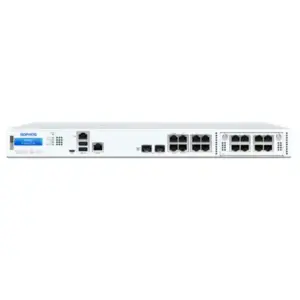
Fortinet FortiAP FAP-243K Wireless Access Point in Dubai, UAE
The FAP-243K is a Fortinet Wi-Fi 7 indoor access point built for organisations that need modern tri-band wireless, external-antenna deployment flexibility and centralized control within a Fortinet network architecture. Its design combines three client-serving 2×2 radios for 2.4 GHz, 5 GHz and 6 GHz with a fourth radio dedicated to scanning, helping IT teams plan a wireless edge that balances user access with continuous RF awareness.
Confirm the quantity, regional model suffix, antenna and mounting plan, PoE source, management platform, firmware compatibility, installation scope and required FortiCare or cloud services.
A direct answer for buyers evaluating the FAP-243K
The Fortinet FortiAP FAP-243K is an indoor, external-antenna Wi-Fi 7 access point intended for centrally managed business wireless networks. It serves clients across 2.4 GHz, 5 GHz and 6 GHz while using an additional radio for scanning. Organisations should consider it when they need Wi-Fi 7 capability, multi-gigabit wired connectivity and a Fortinet-aligned wireless edge, especially where external antennas help shape coverage. Before proceeding, confirm whether the site can use 6 GHz under local regulation, whether the switching layer can supply the required PoE and uplink capacity, whether the selected FortiGate or cloud platform supports the intended firmware, and which antennas, mounting components, licenses, support services and regional hardware suffix belong in the final bill of materials.
What the FAP-243K does
The FAP-243K provides indoor wireless access using Wi-Fi 7 radios in the 2.4 GHz, 5 GHz and 6 GHz bands. Fortinet’s current wireless product matrix identifies each client-serving radio as 2×2, with a dedicated fourth 2×2 scanning radio covering the same three frequency ranges. That architecture lets the access point provide client connectivity while maintaining a radio resource for background monitoring rather than forcing every monitoring task onto a client-serving radio.
Its role is not simply to make a single room faster. In an enterprise design, an access point sits inside a wider system that includes switching, PoE, VLANs, authentication, DHCP, security policy, RF planning, management and support. The FAP-243K is most useful when those pieces are planned together.
Who should shortlist it
The model may fit businesses refreshing indoor WLAN infrastructure for newer client devices, branch or campus networks standardising on Fortinet management, and environments where external antennas provide useful placement or coverage control. Examples can include corporate offices, education, hospitality, healthcare administration areas, retail back-office or public-facing spaces, and multi-site organisations that want common policy and management.
It is not automatically the correct choice for outdoor areas, harsh industrial environments, very high spatial-stream requirements, or sites where an internal-antenna design is preferred. Those cases should be compared with another FortiAP model or a different form factor after a site and capacity review.
Business challenges this access point can help address
Growing client capability
A Wi-Fi 7 refresh can prepare selected indoor areas for newer laptops, phones and other clients while retaining service for older devices on established bands. Actual client performance still depends on endpoint capability, channel plan, interference, uplink design and application traffic.
RF visibility during service
The dedicated scanning radio can support wireless monitoring without giving up one of the three primary client-serving radios. The operational value depends on how monitoring and security features are configured in the chosen management platform.
Multi-gigabit edge design
The 10/5/2.5/1 GbE primary interface gives designers more wired-uplink headroom than a single 1 GbE-only connection. Real throughput should be evaluated end to end, including switching, cabling and WAN or application limits.
Coverage shaping
External antennas can be useful where an RF designer wants antenna orientation or placement flexibility. They also introduce a planning responsibility: antenna type, connection, positioning and regional radio rules must be correct.
Capability band: what is confirmed for the exact model
2.4 GHz, 5 GHz and 6 GHz client-serving radios, each using 2×2 radio chains.
A fourth 2×2 radio is listed for scanning across 2.4, 5 and 6 GHz.
One 10/5/2.5/1 GbE RJ45, one 1 GbE RJ45 and one RS-232 RJ45 serial port.
The product matrix lists BLE and ZigBee capability alongside the Wi-Fi radios.
Product-fit decision matrix
Verified technical information for FAP-243K
The values below are based on Fortinet’s current wireless product matrix and related FortiAP documentation for this model. Radio data rates are theoretical physical-layer maxima, not a promise of application throughput.
| Brand | Fortinet |
|---|---|
| Product | FortiAP FAP-243K |
| Product type | Indoor enterprise wireless access point |
| Wireless standard | Wi-Fi 7 / IEEE 802.11be |
| Radio count | 4 Wi-Fi radios + 1 BLE radio |
| Wi-Fi antennas | 6 external antennas; BLE antenna is internal |
| Radio 1 | 2.4 GHz, 2×2, 20/40 MHz; listed maximum data rate up to 688 Mbps |
| Radio 2 | 5 GHz, 2×2, 20/40/80/160/240 MHz; listed maximum data rate up to 4.324 Gbps |
| Radio 3 | 6 GHz, 2×2, 20/40/80/160/320 MHz; listed maximum data rate up to 5.765 Gbps |
| Radio 4 | Scanning only, 2.4/5/6 GHz, 2×2, up to 160 MHz |
| BLE / ZigBee | Supported according to Fortinet’s wireless product matrix |
| Network interfaces | 1 × 10/5/2.5/1 GbE RJ45, 1 × 1 GbE RJ45 |
| Console / serial | 1 × RS-232 RJ45 serial port |
| PoE | Fortinet lists 802.3bt PoE as the default power method; confirm switch or injector power budget |
| Maximum power consumption | 26.1 W |
| SSID support | Up to 24 simultaneous SSIDs |
| SSID modes | Local-Bridge, Tunnel and Mesh |
| Listed client capacity | Up to 512 clients per client-serving radio; practical design density should be much lower and based on application requirements |
| Management | FortiGate-integrated WLAN management and supported Fortinet cloud/SASE management options; confirm exact platform and software compatibility |
| Wi-Fi Alliance certification | Listed as certified in Fortinet’s current product matrix |
| Regional part number | Region dependent; Fortinet ordering uses FAP-243K with a regional suffix |
| Warranty and support | Confirm the applicable hardware warranty, FortiCare option and service term in the quotation |
| UAE availability | Contact FourTeck for current model, suffix, quantity and lead-time guidance |
Power, antenna, licensing and compatibility dependencies
A correct FAP-243K order is more than a device quantity. Fortinet lists 802.3bt PoE as the default power approach for this model, while its accessories portfolio also identifies a 36 W DC power supply option for the FAP-243K. The QuickStart package illustration shows the access point, six antennas, mounting hardware and documentation, but it does not present a power adapter as a standard package item. That makes the power source an important quotation check rather than an assumption.
External antennas are another design dependency. The six Wi-Fi antenna connectors must be paired with the correct approved antennas and installed according to the RF design and local regulations. Do not substitute a visually similar antenna without checking band support, connector type, gain, mounting method and regional restrictions. Six-gigahertz operation is also region dependent, and available channels or transmit settings can vary with regulatory domain.
Management and software compatibility should be verified before rollout. FortiAP can be managed through supported Fortinet platforms, but the exact FortiGate model, FortiOS release, FortiAP firmware, cloud service and subscription combination matters. FourTeck can help turn these dependencies into a clear bill of materials and deployment checklist before purchase.
A practical purchase and deployment journey
Map the requirement
Identify floor areas, user counts, device types, applications, roaming needs, guest access, voice requirements and any special coverage zones. A model should be selected after the usage profile is understood.
Validate RF and antennas
Plan AP placement and antenna orientation, review construction materials and interference, and confirm where 6 GHz service is useful. External antennas offer flexibility only when they are selected and positioned deliberately.
Check the wired underlay
Review access-switch multigigabit support, PoE capacity, cabling, VLANs, DHCP, uplinks and firewall connectivity. A Wi-Fi 7 AP cannot compensate for a constrained or underpowered wired network.
Confirm management
Choose the intended Fortinet management path and verify controller, FortiOS, FortiAP firmware and subscription compatibility. Define who will own monitoring, changes, backups and upgrades.
Build the quotation
Specify model suffix, quantity, antennas, mounting requirements, PoE or DC power, support term and any services. This reduces the risk of an incomplete order arriving at the project site.
Stage, test and tune
Adopt the AP, apply WLAN and security policy, test client onboarding and roaming, confirm RF coverage, inspect switch-port behavior and adjust channels or power where the measured environment requires it.
Wi-Fi 7 capability without treating headline rates as user speed
Fortinet’s matrix lists maximum physical-layer data rates of up to 688 Mbps on the 2.4 GHz radio, 4.324 Gbps on the 5 GHz radio and 5.765 Gbps on the 6 GHz radio. These figures help describe radio capability, but they should not be added together and presented as guaranteed business throughput. Real user experience is shaped by client radio capability, channel width, signal level, contention, protocol overhead, interference, cabling, switch performance, firewall policy, Internet bandwidth and application behavior.
That distinction is particularly important when a procurement team compares Wi-Fi 7 access points. A new AP may support broader channels or newer modulation features, while a large part of the client population still connects using Wi-Fi 6, Wi-Fi 6E or earlier standards. The business case should therefore consider the expected device-refresh cycle and where high-throughput or latency-sensitive applications actually operate. A conference room full of modern laptops, a design team moving large local files and a hospitality corridor with mostly low-duty-cycle phones do not have the same RF requirement.
For the FAP-243K, the presence of a 10/5/2.5/1 GbE uplink is valuable because it allows the wired edge to be sized beyond 1 GbE where appropriate. It does not remove the need to validate PoE, cabling and upstream switching. FourTeck can help buyers align AP capability with the rest of the LAN so the quotation supports the intended design rather than focusing on a single specification.
External antennas: useful flexibility with an RF design responsibility
The FAP-243K differs from the nearby FAP-241K in one highly visible way: Fortinet lists six external Wi-Fi antennas for the FAP-243K, while the FAP-241K uses internal antennas. External antennas can be appropriate where the installer needs to account for room geometry, equipment placement, mounting position or a deliberate radiation pattern. They can also make an AP a better candidate for designs where antenna placement and direction are part of the engineering decision.
The same flexibility creates more variables. Each antenna must support the required frequency bands, have an appropriate connector and gain, and be installed in a position consistent with the coverage plan and regulatory requirements. Antenna orientation affects polarization and coverage. Furniture, partitions, glass, metal surfaces, ceilings and building services can all change what a site survey predicts. Six-gigahertz signals also behave differently from lower-frequency signals through some building materials, so a placement copied from an older Wi-Fi 5 or Wi-Fi 6 design may not produce the desired result.
For a new Dubai or UAE site, include the antenna choice in the design review rather than treating it as an after-order accessory decision. For an existing site, do not assume older antennas can be reused simply because a connector looks familiar. Confirm supported bands, approved models and the regulatory domain. A small amount of RF planning before procurement can prevent a much more expensive repositioning exercise later.
Central management, policy and operational control
Fortinet positions FortiAP as part of its secure networking architecture, with management available through a supported FortiGate WLAN controller or Fortinet cloud/SASE approaches. For an IT team already operating FortiGate, this can make the wireless layer part of the same broader operating model rather than an isolated AP system. The value is operational consistency: device adoption, WLAN definitions, segmentation, security policy and monitoring can be planned around a common architecture.
The management path should be selected before buying hardware because it affects compatibility, licensing, support and day-to-day ownership. A branch team may prioritize simple centralized administration across many sites, while a campus team may focus on detailed RF operations, segmentation and change control. A microbranch design can have a different management and security path again. Fortinet’s product information lists SASE support for FAP-243K, but the required service and subscription should be confirmed for the intended design rather than assumed to be included with hardware.
Software versions also matter. FortiAP firmware and FortiOS compatibility matrices change over time as features and releases evolve. Before a rollout, confirm the specific FortiGate hardware and software release that will manage the APs, the target FortiAP firmware, and the maintenance window for adoption or upgrades. This is especially important when adding Wi-Fi 7 APs to an established Fortinet environment that may have been designed around older FortiAP generations.
Where the FAP-243K can fit well
Corporate offices
Meeting areas, collaboration spaces and work floors with a growing population of modern clients can benefit from a planned Wi-Fi 7 refresh. Validate voice, roaming, guest access and coverage before final AP counts.
Education environments
Classrooms, labs and administration areas may have high concurrent device counts and changing application loads. Capacity design should use realistic active-device assumptions rather than the hardware’s absolute client limit.
Hospitality and venues
Indoor guest and staff networks can require careful RF shaping, segmentation and roaming. External antennas may help in selected layouts, but an RF survey is important in dense or architecturally complex spaces.
Distributed enterprise branches
Organisations standardising on Fortinet can use a common WLAN approach across branch sites, provided WAN, management, licensing and local RF requirements are defined for each location.
Healthcare administration zones
Modern client connectivity can be useful in offices and collaboration areas, but clinical or specialised environments may add device-certification, interference and operational requirements that must be assessed separately.
Retail and customer spaces
Staff mobility, guest Wi-Fi and business devices can share a managed wireless edge when segmentation and RF coverage are correctly designed. Confirm whether the external-antenna form factor suits the aesthetics and mounting constraints.
Integration and operational considerations
A successful FAP-243K deployment depends on the network around it. First, validate the access-switch port. The primary AP interface can negotiate at 10, 5, 2.5 or 1 GbE, but the selected speed depends on the switch, cable plant and configuration. If the switch is only 1 GbE, the AP may still function in the supported configuration, but the wired uplink becomes a design limit. If the switch supports multigigabit Ethernet, confirm the cable category and run length.
Second, review power. The product matrix identifies 802.3bt PoE as default for FAP-243K. A switch can have enough total chassis PoE capacity yet still fail to provide the required power class on a specific port. Count the full AP quantity and reserve budget for other PoE devices such as cameras or phones. Where a DC adapter is planned, include it explicitly and verify electrical placement.
Third, align segmentation and authentication. Employee, guest, IoT and operational devices may require different VLANs, policies or identity methods. The AP supports multiple SSIDs, but a design should not create many SSIDs simply because the platform allows them; excessive SSID beacon overhead can reduce airtime efficiency. Use the minimum number that satisfies business and security requirements.
Finally, define lifecycle operations: configuration backups, monitoring, log retention, firmware testing, change control, support escalation and periodic RF review. Wireless environments change as tenants move, walls are added, clients are replaced and neighboring networks appear. Treat WLAN operations as an ongoing service, not a one-time installation.
Buyer questions to resolve before ordering
Use floor plans, wall materials, expected active clients and application demand. Do not size from maximum client-count figures alone.
There should be an RF reason: placement flexibility, pattern control or a site constraint. If not, an internal-antenna model may be simpler.
Confirm multigigabit ports, 802.3bt PoE, switch budget, cable plant, VLANs and upstream capacity.
State whether FortiGate, cloud management or a SASE-aligned deployment is intended and confirm license and firmware requirements.
Regional rules, client support and building characteristics determine how much value the 6 GHz radio provides.
Model suffix, AP quantity, antennas, mounts, power, support, subscriptions and professional services should be explicit.
Procurement checklist for a complete FAP-243K request
What comes with the access point, and what may need separate confirmation
Fortinet’s FortiAP 241K/243K QuickStart Guide illustrates package contents for the two models. For the FAP-243K variant, the guide shows the access point, six antennas, QuickStart documentation, T-rail pieces, mounting screws and anchors, and a mounting bracket. This is useful when checking whether the physical installation kit matches the ceiling or wall plan.
The same illustration does not show a power adapter as a standard included item. Since Fortinet separately lists a 36 W DC power supply in its wireless accessory portfolio and identifies 802.3bt PoE as the default power method, buyers should specify how each AP will be powered. If a PoE switch is already installed, confirm the per-port standard and available wattage. If a PoE injector or DC adapter is required, include the exact compatible item in the quotation.
Package content can also vary by regional suffix or future vendor revision, so the quotation and current ordering documentation should be treated as the final purchasing reference. FourTeck can help reconcile the product, mounting, power and support items before order placement.
How FourTeck can support sizing and quotation preparation
A useful wireless quotation starts with the environment, not only a model number. FourTeck can review the requested FAP-243K quantity against available floor plans, approximate user counts, high-demand spaces, existing switching, PoE availability and management preferences. This review helps identify whether the requested device is a sensible fit and what supporting items must be included.
For a new Fortinet LAN edge design, the conversation can also include suitable network and security products, access-switch requirements, FortiGate integration, installation and configuration scope. For an existing Fortinet environment, buyers can share the current FortiGate model, FortiOS release, switch model, AP firmware baseline and preferred support term so compatibility can be checked before equipment is ordered.
If professional assistance is required, FourTeck can discuss implementation and support services as a separate scope. Site survey, cabling, mounting, configuration, migration and post-install tuning should be stated explicitly because they are not automatically part of a hardware quotation.
UAE availability and support guidance
Contact FourTeck to confirm current UAE availability for the Fortinet FortiAP FAP-243K. Availability may depend on the required regional suffix, quantity, support term, accessories and vendor lead time. A quote should identify whether the request is hardware only or includes antennas, power accessories, FortiCare, configuration, installation or other services. The requested delivery date can be shared for planning, but it should not be treated as confirmed until the exact bill of materials and supply position are checked.
For technical planning, provide the intended FortiGate or management platform, switch model, PoE capability and deployment environment. This lets the quotation process address compatibility before the project reaches installation. Buyers can use the FourTeck contact page to request model verification, current UAE quotation guidance and deployment assistance.
Dubai, Abu Dhabi, Sharjah and Ajman project coordination
Businesses planning FAP-243K deployments in Dubai, Abu Dhabi, Sharjah and Ajman can discuss hardware requirements and project coordination with FourTeck as one combined UAE scope. Share the destination, number of access points, floor-plan information, installation conditions, existing Fortinet estate and preferred project sequence. Hardware supply, delivery coordination, installation activity and configuration support can then be separated clearly in the quotation. For multi-site projects, it is useful to identify which sites are identical and which have different floor layouts, switch infrastructure or user density. This avoids applying one AP count or antenna plan to every location without evidence. Current availability, regional model suffixes, vendor lead times, service scheduling and warranty options should be confirmed for the exact requirement before commitments are made.
GCC Availability
FourTeck can assist organisations planning FortiAP projects across the GCC with requirement review, model selection, quotation coordination and deployment planning. For the FAP-243K, the most important regional checks include the destination country, regulatory domain, exact hardware suffix, quantity, antenna requirements, PoE method, management platform and support term. A design created for the United Arab Emirates should not automatically be copied into Saudi Arabia, Kuwait, Qatar, Bahrain or Oman without checking local radio rules and project conditions.
Product availability, licensing, service options, delivery schedules and vendor lead times can vary by country and by quantity. Installation planning may also depend on site access, cabling readiness and local resources. Buyers should share the destination country, required number of access points, preferred deployment schedule and whether configuration or installation support is expected. FourTeck can then help structure the quotation and regional project discussion without assuming local inventory, a fixed delivery date or an identical regulatory profile across every GCC market. For Kuwait-focused enquiries, the FourTeck Kuwait resource may also help start the regional conversation.
Africa Availability
For organisations evaluating the FAP-243K for African operations, FourTeck can help translate the wireless requirement into a procurement and deployment plan that accounts for the destination rather than assuming one global configuration. Useful information includes the country, number of sites, AP quantity, power method, antenna design, intended Fortinet management platform, support expectations and target project window. In East Africa, including projects in Kenya and Uganda, these details are especially useful when a regional standard is being rolled out across offices with different switch or cabling conditions.
Availability and fulfilment may depend on model suffix, license region, regulatory requirements, shipping arrangements, vendor lead time and local installation conditions. Power standards, mounting access and available technical resources can also affect the final scope. FourTeck does not assume local inventory or guaranteed delivery for a specific destination without checking the requirement. Buyers can review broader FourTeck Africa technology support information and then share the exact destination, quantity, deployment schedule and support needs for appropriate guidance.
Related options and supporting services to evaluate
FortiAP FAP-241K
A nearby 2×2 Wi-Fi 7 indoor model with internal antennas. It can be worth comparing when external antennas are not required. Confirm exact specifications and regional availability.
FortiAP FAP-443K
A 4×4 Wi-Fi 7 indoor model with external antennas. Consider it where the RF and capacity design justifies the higher spatial-stream platform rather than assuming it is automatically better.
FortiSwitch access layer
Review multigigabit port support, 802.3bt PoE and switch power budget when building the wired edge for FAP-243K access points.
FortiGate integration
Existing or planned FortiGate appliances can be evaluated for WLAN management compatibility and broader network policy. See Fortinet firewall guidance from FourTeck.
Installation and configuration
Site survey, mounting, VLAN setup, WLAN creation, authentication, testing and RF tuning can be discussed as a project scope rather than assumed to be included with hardware.
Why businesses contact FourTeck for this type of wireless project
The practical reason to involve FourTeck is requirement clarity. An access point project can fail commercially even when the selected model is technically capable if the order omits the right power, antennas, support, regional suffix or installation scope. FourTeck can help buyers turn a model request into a structured bill of materials and clarify which choices are hardware facts and which depend on design or licensing.
This assistance can include comparing the requested FAP-243K with nearby FortiAP options, reviewing switch and PoE readiness, checking the intended FortiGate or cloud-management path, defining support expectations and separating product supply from professional services. Procurement teams can also request a clean quotation that states quantities, accessory requirements, service terms and open dependencies. For broader company information, visit About FourTeck.
The goal is not to make every project more complicated. It is to identify the few decisions that materially affect compatibility, cost and deployment before the order is placed.
What buyers usually need to know before shortlisting the FAP-243K
Most buyers who reach the FAP-243K stage are no longer asking only whether Wi-Fi 7 is newer than Wi-Fi 6. They are trying to understand whether this exact access point fits an existing Fortinet environment, whether its external antennas are useful for their building, whether their switches can power it, and whether the 6 GHz band will deliver practical value to their client population. Those are better selection questions than simply comparing the largest number on a specification sheet.
Is FAP-243K a Wi-Fi 7 access point?
Yes. Fortinet lists the FAP-243K as an indoor IEEE 802.11be Wi-Fi 7 model. Its three client-serving radios cover 2.4 GHz, 5 GHz and 6 GHz, and the current product matrix also lists a fourth radio used for scanning. That means it is designed for a tri-band enterprise WLAN rather than a 6 GHz-only network. Older compatible client devices can continue to use the lower bands while newer clients can use capabilities available to them.
Why does the external-antenna version matter?
The FAP-243K uses six external Wi-Fi antennas, so it gives an RF designer more deployment flexibility than an internal-antenna model in situations where antenna placement or radiation pattern matters. That does not mean it is automatically the better AP. External antennas add visible hardware, connector and mounting considerations. If a normal ceiling-mounted internal pattern is adequate, a nearby internal-antenna FortiAP may be simpler.
Power is a frequent point of confusion. The FAP-243K product matrix identifies 802.3bt PoE as the default power method and lists maximum consumption at 26.1 W. The important procurement question is therefore not only the wattage figure; it is whether the existing switch provides the required PoE standard on the actual port and has enough remaining chassis budget for every powered device. A project with twenty APs, IP phones and cameras can run out of PoE budget even when each individual switch port looks compatible on paper. If DC power or a PoE injector is planned, that accessory should appear explicitly in the bill of materials.
Buyers also compare FAP-243K with FAP-241K and FAP-443K. The FAP-241K sits close to it in the portfolio and uses a similar 2×2 Wi-Fi 7 radio concept with internal antennas. The FAP-443K moves to a 4×4 platform with external antennas. The right choice depends on coverage, spatial-stream needs, client density, mounting preference and budget. A 4×4 AP is not automatically required just because a site has many devices, and a 2×2 AP is not automatically undersized. Capacity is created by the complete RF cell plan, channel reuse, active-device behavior and application demand.
Another common question is whether a 10 GbE uplink is mandatory. The FAP-243K primary interface supports 10, 5, 2.5 and 1 GbE, giving the designer options. The selected speed should match switch capability, cabling and the expected traffic profile. A multigigabit port can preserve headroom for a modern WLAN, while a legacy 1 GbE connection may become a bottleneck under some loads. The practical decision comes from measured or modeled demand rather than assuming every AP needs 10 GbE at all times.
Management compatibility is equally important. Fortinet positions FortiAP for centralized management through supported FortiGate and cloud/SASE approaches. When adding FAP-243K units to an established network, the FortiGate model and FortiOS release should be checked against the relevant FortiAP firmware. This avoids discovering during installation that a planned software baseline must first be upgraded. It also helps procurement understand whether a cloud or SASE subscription is part of the intended design.
Finally, prepare the quote around the deployment, not only the AP. A useful request includes the country, site count, AP quantity, regional suffix requirement, antenna choice, mounting style, PoE source, management platform, support term and whether installation or configuration is needed. For a Dubai project, share whether the requirement is a new site, a refresh of older FortiAP units, or an addition to an existing FortiGate-managed WLAN. FourTeck can use that context to check the surrounding bill of materials and provide current UAE availability guidance without treating online list prices or inventory indications from another market as a local commitment.
Questions that can change the design decision
Do we need Wi-Fi 7 everywhere, or only in selected areas?
A full-building replacement can make sense when the existing WLAN is at end of life or when operational standardisation is a priority. In other projects, higher-demand collaboration areas may justify Wi-Fi 7 first while lower-demand zones remain on supported older APs. The decision should consider controller compatibility, roaming design and operational complexity, not only capital cost.
Will 6 GHz improve our users’ experience?
It can add useful spectrum for compatible clients, but value depends on local regulatory availability, client support and cell design. Six-gigahertz coverage may not travel through building materials the same way as lower bands. A site survey and device inventory help determine whether the new band solves a real capacity problem or simply adds a feature that few clients will use immediately.
Can we reuse our existing PoE switches?
Possibly, but verify more than the PoE logo. Check 802.3bt support on the intended ports, the switch’s total power budget, multigigabit Ethernet capability and current cable plant. If the switch cannot provide the desired combination of power and uplink speed, the project may require a switch refresh, PoE injectors or a different architecture.
What information makes an accurate quotation easier?
Provide the exact model, quantity, country, existing FortiGate and FortiSwitch models, software versions where known, site count, antenna intent, power method, support term and service expectations. Floor plans and approximate active-user counts are valuable when sizing is part of the request. This reduces the number of open assumptions in the final bill of materials.
Should the AP be bought before the site survey?
For a small, well-understood addition, an existing validated design may be enough. For a new floor, dense venue or difficult building, ordering the AP count before RF assessment can create over-coverage, dead zones or unnecessary equipment. External antennas make design decisions even more relevant because antenna choice and orientation affect the result.
What should we test after installation?
Test client onboarding, authentication, VLAN assignment, Internet and internal application access, roaming, signal levels, channel use, switch-port speed and power state. Then verify monitoring and alerting. A successful link light is only the beginning; the acceptance test should reflect the applications users depend on.
Frequently asked questions about FortiAP FAP-243K
Is the FortiAP FAP-243K an indoor or outdoor access point?
It is an indoor Wi-Fi 7 access point. For outdoor or environmentally exposed areas, use a model specifically designed and rated for that environment.
Does the FAP-243K use internal or external Wi-Fi antennas?
Fortinet lists six external Wi-Fi antennas for FAP-243K and an internal BLE antenna. Antenna selection and installation should be confirmed as part of the RF and regional design.
Which frequency bands does the FAP-243K serve?
Its client-serving radios cover 2.4 GHz, 5 GHz and 6 GHz. A fourth radio is listed for scanning across these bands. Available 6 GHz channels and settings are region dependent.
What wired ports are available on the access point?
Fortinet lists one 10/5/2.5/1 GbE RJ45 interface, one additional 1 GbE RJ45 interface and an RS-232 RJ45 serial port.
What PoE standard should be planned for FAP-243K?
The current Fortinet wireless product matrix lists 802.3bt PoE as the default. Confirm the switch or injector can provide the required power and that the total PoE budget is adequate.
Can FAP-243K be managed by FortiGate?
FortiAP supports FortiGate-integrated WLAN management. The exact FortiGate model, FortiOS version and FortiAP firmware combination should be checked against current compatibility documentation before deployment.
Does the hardware include a power adapter?
The FortiAP 241K/243K QuickStart package illustration does not show a power adapter as a standard included item. Fortinet lists compatible power accessories separately, so the required power method should be confirmed in the quotation.
How many users can one FAP-243K support?
Fortinet lists up to 512 clients per client-serving radio as a platform limit, but that figure should not be used as a design target. Practical AP capacity depends on active-client behavior, applications, airtime, signal quality and service-level goals.
How can I get a Dubai or UAE quotation for FAP-243K?
Send FourTeck the quantity, destination, required deployment date, management platform, antenna and power requirements, support term and any installation or configuration scope. FourTeck can then confirm current UAE availability and quote details.
Plan the FAP-243K as part of the complete wireless edge
Share your AP quantity, floor-plan context, existing Fortinet environment, switch and PoE details, antenna requirement and preferred support term. FourTeck can help confirm the right regional model, supporting bill of materials and current UAE quotation guidance before you place the order.

Reviews
There are no reviews yet.