

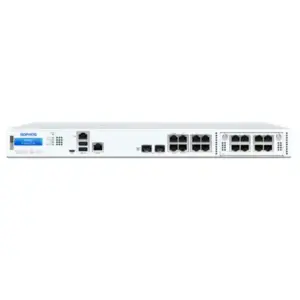
Fortinet FortiSwitch FS-348G-FPOE Network Switch in Dubai, UAE
The FS-348G-FPOE is built for network closets where one switch must serve conventional 1GbE endpoints, higher-speed 2.5GbE devices, substantial PoE demand and 10GbE uplinks. Its mixed access-port design gives IT teams a practical way to modernise a campus edge without forcing every connected device onto the same port speed.
Direct answer for buyers
Fortinet FortiSwitch FS-348G-FPOE is a 48-port Layer 2/3 PoE network switch aimed at campus access deployments that need both standard Gigabit and 2.5GbE copper connections. It is mainly used to connect and power devices such as wireless access points, IP phones, cameras and normal wired endpoints while feeding the upstream network through four 10GE SFP+ interfaces. Organisations should consider it when they need meaningful PoE capacity and a deliberate mix of 1GbE and multigigabit access ports. Before proceeding, confirm which endpoints require 2.5GbE, the total PoE requirement, the intended uplink design, management mode, support level, optics or cables, rack power and the current UAE lead time.
What the FS-348G-FPOE does
At the access layer, a switch has to do more than provide empty Ethernet sockets. It must match endpoint speed, supply power where required, carry multiple VLANs, forward traffic toward the distribution or core layer and give administrators enough management control to operate the network predictably. The FS-348G-FPOE addresses this role with a deliberately mixed copper layout: half of the access ports are 1GbE and half are 2.5GbE. That lets a designer reserve multigigabit capacity for devices that can use it, while continuing to serve conventional endpoints without paying for higher-speed access on every connection.
The full-PoE variant is particularly relevant when the wiring closet must power many endpoints. Fortinet lists the model with IEEE 802.3af/at/bt support across its powered access-port set and a maximum 1540 W PoE output limit. The switch also provides four 10GE SFP+ uplinks, which can be used in an upstream design that is matched to the traffic profile, redundancy requirement and core-switch capabilities.
Who should consider this model
The model is a logical candidate for medium-campus access closets, larger offices, education buildings, healthcare facilities, hospitality properties, mixed-use commercial sites and other environments where wired users share the same access infrastructure with powered network devices. A typical design might place ordinary desktops, printers and phones on 1GbE ports while reserving 2.5GbE ports for modern wireless access points, high-throughput workstations, selected cameras or other endpoints that can benefit from extra copper bandwidth.
It is not automatically the right choice for every 48-port requirement. A site with almost no PoE devices may be better served by the non-PoE FS-348G. A simple office with only 1GbE users and a modest PoE load may not need this model’s power envelope. Conversely, a design that needs 5GbE or 10GbE copper on many access ports, 25GbE uplinks or a substantially different redundancy architecture should be compared with higher-tier FortiSwitch options before ordering.
Business problems this switch can help address
Too many powered endpoints
When a closet serves access points, IP phones, cameras and other powered devices, separate injectors or undersized PoE switches can complicate cabling and capacity planning. The FS-348G-FPOE gives the designer a large central PoE budget, provided endpoint demand is calculated against the switch limit.
A 1GbE-only edge is becoming restrictive
Wireless and selected high-throughput devices may need more than 1GbE. Twenty-four 2.5GbE access ports create a migration path without requiring every endpoint to move to a faster access rate at once.
Separate network and security operations
Where a FortiGate-managed architecture is appropriate, FortiLink can bring switch provisioning and access control into the wider Fortinet management model. This can reduce the number of disconnected tools used for routine LAN operations.
Unclear upgrade sequencing
The mixed 1GbE/2.5GbE layout helps organisations upgrade selectively. High-value endpoints can use the multigig ports first, while ordinary devices remain on Gigabit access until business or technical requirements justify further change.
Capability band: what matters in day-to-day design
Product-fit decision matrix
| Requirement | Suitable when | Confirm before ordering |
|---|---|---|
| 48-port access density | One closet needs a full 48 copper access ports with mixed endpoint types. | How many endpoints actually need 2.5GbE versus 1GbE? |
| High PoE requirement | Many APs, phones, cameras or other powered devices share the same switch. | Per-device power draw, PoE class, startup demand and growth headroom. |
| Multigig wireless edge | A portion of the access layer needs more than 1GbE for modern wireless or high-throughput endpoints. | AP Ethernet speed, power requirement, cabling quality and uplink capacity. |
| FortiGate-managed LAN | The organisation wants FortiLink management and a converged Fortinet LAN-security operating model. | FortiGate capacity, supported topology, software versions and migration plan. |
| Standalone or cloud-managed switching | A FortiGate is not used as the switch controller or the operations model calls for another supported management path. | Cloud-management licensing, advanced switching requirements and support term. |
Verified technical and ordering information
The table below concentrates on exact-model information that can be confirmed from current Fortinet product and ordering material. Values that depend on architecture, licensing or region are described as such rather than treated as universal defaults.
| Brand | Fortinet |
| Product name | FortiSwitch 348G-FPOE |
| Model / hardware SKU | FS-348G-FPOE |
| Product type | Layer 2/3 PoE campus network switch, FortiGate switch-controller compatible |
| Portfolio position | Fortinet Secure Campus / medium-campus class for the 348G family |
| 1GbE copper ports | 24 x 1GE RJ45 |
| Multigig copper ports | 24 x 2.5GE RJ45 |
| Uplink interfaces | 4 x 10GE SFP+ |
| PoE standards | IEEE 802.3af/at/bt supported on the FPOE access-port design; endpoint capability and required class must be checked |
| Maximum PoE output | 1540 W maximum output limit |
| FortiLink management | Supported; FortiGate management uses FortiLink and the advanced standalone switching license does not apply in FortiLink mode |
| Standalone management | Supported; feature requirements should be matched to the current FortiSwitchOS and licensing model |
| Advanced Switching license | FS-SW-LIC-300 is listed for the 348G class; Fortinet notes that this license enables dynamic routing protocols in standalone mode and does not apply in FortiLink mode |
| Cloud management | Available as an add-on management path. Current ordering material lists FC-10-FSW10-628-02-DD for the 348G class; term and entitlement should be confirmed |
| Support reference | FortiCare support codes vary by tier and term. Current Fortinet ordering material lists FC-10-348GF-247-02-DD for a Premium reference; confirm the required service level when quoting |
| UAE availability | Contact FourTeck for current availability, quantity, lead time, support term and regional order details |
Configuration, licensing and compatibility dependencies
The hardware specification does not by itself determine the complete bill of materials. Buyers should separate the base switch from support, cloud management, advanced standalone features, optics, direct-attach cables, rack accessories, UPS capacity and any professional service scope. Fortinet’s current ordering guidance makes an important distinction between FortiLink-managed and standalone operation: the advanced switching license is associated with dynamic routing protocols in standalone mode and does not apply in FortiLink mode. Cloud management is an add-on path rather than something buyers should assume is bundled automatically with bare hardware.
Compatibility also depends on the surrounding design. Confirm the FortiGate platform and software version if FortiLink will be used, verify that SFP/SFP+ media matches the upstream device and fibre plant, check the power class of every PoE endpoint, and review cabling quality for 2.5GbE copper links. For existing networks, prepare a VLAN, spanning-tree, link-aggregation and addressing plan before migrating production endpoints. FourTeck can include these checks in a quotation or deployment discussion so the purchase reflects the intended topology rather than only the switch SKU.
A practical purchase and deployment journey
Map endpoints
List users, phones, cameras, access points and other devices. Mark which need PoE and which actually need 2.5GbE.
Size power and uplinks
Calculate expected PoE consumption with headroom and decide how the four 10GbE SFP+ interfaces will be used.
Choose management
Decide whether FortiLink, standalone management or a supported cloud-management approach fits the operating model.
Build the BOM
Confirm the hardware, support term, licences, optics, cabling, rack power and any implementation services required.
Stage and validate
Configure the management path, VLANs and uplinks, then test PoE delivery and representative endpoints before production cutover.
Multigig access where it actually creates value
One of the strongest planning reasons to look at the FS-348G-FPOE is its split access-port design. The switch does not provide 2.5GbE on all 48 copper ports. It provides 24 ports at 1GbE and another 24 at 2.5GbE. That distinction should shape the port map from the beginning. A network team can place ordinary desktops, printers, low-bandwidth building devices and legacy endpoints on the 1GbE group, then reserve the 2.5GbE group for wireless access points and selected high-throughput devices. This reduces the chance of using scarce multigig ports on endpoints that cannot benefit from them.
For wireless deployments, the useful question is not simply whether an access point is marketed as Wi-Fi 6E or Wi-Fi 7. The design team should check the actual Ethernet interface rate, expected client load and PoE class of the exact AP model. A multigig-capable AP can still be constrained by cabling, upstream oversubscription or configuration. The 2.5GbE ports on this switch create a capable access path, but overall user experience depends on the full chain from radio design to copper link, switching, uplinks, firewalling and WAN or application capacity.
This mixed-speed approach is also useful during staged infrastructure modernisation. Organisations do not need every endpoint to become multigig on the same day. The FS-348G-FPOE can support a deliberate migration plan in which high-value devices move first, while 1GbE endpoints remain where that speed continues to meet business needs.
PoE capacity should be designed, not assumed
A maximum 1540 W PoE output budget gives this model substantial capacity, but the headline number is only the starting point. The correct planning method is to build a port-by-port worksheet. Record each powered device, its negotiated or maximum required class, expected normal draw and any startup behaviour that matters. Add a sensible operating margin so that replacing one endpoint with a higher-power model does not immediately create a power problem. A design with cameras, phones and access points often has a very different power profile from a design dominated by high-performance wireless.
The network closet also needs to support the switch’s electrical and thermal requirements. When a PoE switch delivers significant power to endpoints, the upstream electrical feed, rack PDU, UPS sizing and room cooling should be reviewed as part of the network project. The PoE budget available to devices is not the same thing as the total facility power that should be reserved for the switch and related equipment. Exact input-power and environmental requirements should be checked against the current Fortinet hardware documentation and the regional installation plan.
This is an area where a quotation can fail if it is treated as a hardware-only purchase. FourTeck can review the endpoint list with the customer and help identify whether the requested switch count, power design and rack infrastructure are aligned before the order is finalised.
Management choice changes the operating model
Fortinet supports more than one way to operate FortiSwitch, and the best choice depends on the environment. In a FortiGate-managed design, FortiLink allows the switch to be provisioned and controlled as part of the wider Fortinet LAN architecture. This can be attractive to organisations that already use FortiGate and want wired access policies, VLAN configuration and device visibility to be managed within a common operational framework. The size of the FortiGate controller, the supported switch topology and software-version compatibility should be checked before adopting the design.
Standalone operation remains available for environments where the switch is not being controlled through FortiLink. Fortinet’s current ordering material also separates certain advanced standalone capabilities from FortiLink operation: the FS-SW-LIC-300 advanced switching licence is listed for the 348G class, and the vendor notes that advanced dynamic routing in standalone mode is the purpose of this licence. That distinction matters to procurement because a buyer should not add a licence simply because it appears next to the hardware in an ordering table.
Cloud management is another supported path, but it should be treated as an entitlement and lifecycle decision rather than assumed to be part of a hardware-only purchase. The current 348G ordering reference lists a cloud-management licence for this model class. FourTeck can help buyers decide which management model matches their existing tools, change-control process and support expectations.
Ideal business environments and use cases
Education buildings
Classrooms and common areas can combine staff devices, student access points, phones, cameras and building systems. The mixed 1GbE/2.5GbE access design lets the network team reserve multigig ports for wireless while continuing to support ordinary wired endpoints.
Hotels and hospitality
A floor or communications room may need to power access points, IP phones, cameras and other connected systems while carrying staff, guest and operational VLANs. Port and PoE planning should follow the exact room design rather than a generic device count.
Healthcare and clinics
Clinical and administrative environments often combine regular office access with wireless, voice, surveillance and specialised devices. Segmentation, endpoint classification and change control are important, and a FortiLink-managed architecture may be considered where it matches the wider Fortinet design.
Corporate offices
Growing offices can use 1GbE ports for mainstream users while dedicating 2.5GbE to high-traffic wireless or selected users. The model is particularly relevant where the office also expects a substantial powered-device count.
Retail and mixed-use facilities
Point-of-sale, staff systems, cameras, wireless access and digital services can coexist on one access layer. The important design work is VLAN separation, PoE sizing and maintaining enough uplink capacity for peak application and video traffic.
Large branch or regional office
A branch that has outgrown a basic 24-port switch can use the FS-348G-FPOE when it needs more powered ports and a mix of Gigabit and multigig access. The upstream FortiGate and WAN design still need independent sizing.
Integration and operational considerations
A successful switch replacement starts with the existing network, not with the new switch. Document current VLANs, tagged and untagged ports, trunks, voice settings, spanning-tree behaviour, link aggregation, management addresses, DHCP dependencies and any special access-control rules. If the current environment contains multiple switch vendors, identify where Layer 2 boundaries and spanning-tree responsibilities sit before the migration. The FS-348G-FPOE can participate in standard Ethernet designs, but the exact configuration must be planned around the existing topology.
The four 10GE SFP+ interfaces also deserve design attention. Some sites will use one or two uplinks; others may use aggregated or redundant paths depending on the distribution layer and resilience requirements. Fibre type, link distance, connector type, approved transceiver choice and upstream port capability all affect the BOM. Do not order optics solely by speed. Confirm whether the link is short-range multimode, longer single-mode, direct-attach within a rack or another supported arrangement.
For software, confirm the intended FortiSwitchOS release and interoperability with the FortiGate or management platform before production deployment. A staged process is safer than introducing new hardware and a major software change at the same time. Lab or pilot validation should include management adoption, representative endpoint authentication where used, PoE delivery, VLAN access, uplink failover if configured and monitoring visibility.
Buyer questions to resolve before ordering
The switch has 24 multigig access ports, not 48. Build a port map before purchase.
Use actual endpoint requirements and growth margin against the 1540 W maximum output budget.
FortiLink, standalone and cloud-managed approaches have different operational and licensing implications.
Core or distribution switch interfaces, transceivers and redundancy design must match the 10GE SFP+ uplinks.
If yes, confirm the advanced switching licence and the exact protocols required for the current software release.
Choose the FortiCare tier and term based on operational criticality rather than adding a default service blindly.
Procurement checklist for FS-348G-FPOE
✓ Confirm exact model: FS-348G-FPOE.
✓ Confirm required switch quantity and rack locations.
✓ Prepare a 1GbE versus 2.5GbE port allocation.
✓ Calculate PoE demand by endpoint and retain operating headroom.
✓ Confirm the four SFP+ uplink use cases and required media.
✓ Validate cabling for devices expected to negotiate at 2.5GbE.
✓ Choose FortiLink, standalone or cloud management.
✓ Check whether standalone advanced routing features are required.
✓ Select the required FortiCare tier and contract duration.
✓ Review rack PDU, UPS and cooling capacity for the planned PoE load.
✓ Define VLAN, trunk, spanning-tree and link-aggregation migration needs.
✓ Include installation, configuration, testing or documentation scope if required.
How FourTeck can help with sizing and quotation
FourTeck can help turn a model request into a complete purchase specification. The starting information is usually the number of switches, endpoint count, number of multigig devices, PoE device list, uplink topology, FortiGate model if FortiLink is planned, required support term and the physical deployment location. From there, the quotation discussion can identify licences, optics, cables and implementation scope that may otherwise be missed.
Customers planning a broader Fortinet environment can review FourTeck’s Fortinet UAE solutions, browse business technology products or discuss installation and configuration services. The final recommendation should be based on the actual network design, not merely a port-count comparison.
Information to send for a fast review
Share the switch quantity, current topology, number of 2.5GbE devices, PoE endpoint list, required uplink distances and whether FortiGate management is planned.
If you already have a bill of materials, include the proposed support codes and optics so they can be checked as part of the quotation conversation.
UAE availability and support guidance
Contact FourTeck to confirm current UAE availability for the Fortinet FortiSwitch FS-348G-FPOE. Availability may depend on quantity, support term, regional order requirements and vendor lead time. The quotation should identify the exact hardware SKU, any FortiCare service, cloud-management or advanced standalone licences, transceivers and the installation or configuration scope if required. Delivery and project coordination can be discussed after the final requirement is confirmed; a requested project date should not be treated as committed until the commercial and technical scope has been agreed.
For buyers who are still comparing options, the FourTeck Dubai technology site can be used as a starting point for related network and security requirements. A switch quotation is most useful when it includes the intended deployment role, not only a model number.
Dubai, Abu Dhabi, Sharjah and Ajman coverage
FourTeck can coordinate product discussions for organisations in Dubai, Abu Dhabi, Sharjah and Ajman that are planning a new campus access layer, replacing older Gigabit PoE switches or expanding wired capacity for new wireless deployments. The practical conversation is the same across these UAE locations: confirm the exact FS-348G-FPOE quantity, identify which endpoints require 2.5GbE, calculate the PoE load, check uplink media and decide how the switches will be managed. Installation or configuration requirements should be included in the request rather than assumed to be part of a hardware quotation. For multi-site UAE projects, send a site-by-site port and power summary so the bill of materials can reflect differences between buildings instead of applying one generic switch design everywhere.
GCC Availability
For GCC projects, FourTeck can assist organisations that are evaluating the FS-348G-FPOE for campus, office, hospitality, education or other access-network deployments. A regional procurement team may be coordinating requirements across the United Arab Emirates, Saudi Arabia, Kuwait, Qatar, Bahrain or Oman while using different local cabling, rack, electrical and support arrangements at each site. FourTeck can help review the requested model, switch count, PoE device profile, management approach, licensing, support term and uplink media before a commercial quotation is prepared.
Product availability, licensing, delivery schedules, service visits, project scope and vendor lead times can vary by country, model quantity and requirement. Buyers should share the destination country, required quantity, preferred support duration, deployment location and expected project timeline. Cross-border projects may also need separate planning for logistics and local implementation responsibilities. Customers coordinating Kuwait requirements can also use FourTeck Kuwait as a regional contact point. No GCC stock position or installation date should be assumed until the exact order and scope have been confirmed.
Africa Availability
FourTeck can support African organisations and UAE-headquartered groups that are planning Fortinet switching for offices, campuses, hotels, healthcare sites, education networks and distributed business locations. For an FS-348G-FPOE request, useful information includes the destination country, exact switch quantity, required PoE devices, proposed FortiGate or management platform, support expectations, fibre or copper uplink requirements and the preferred deployment schedule. This allows the hardware and service discussion to reflect the real site instead of assuming that one configuration will fit every country or building.
Availability and fulfilment can depend on destination, product quantity, licensing region, electrical and regulatory requirements, shipping arrangements, vendor lead time and local project conditions. Installation scope and onsite support coverage should be confirmed separately for each project. Organisations operating in East Africa can review FourTeck Kenya, while wider regional requirements can be discussed through FourTeck Africa. FourTeck does not treat local inventory, customs outcomes or country-wide onsite coverage as guaranteed; those items require project-specific confirmation.
Related FortiSwitch and service options to consider
FortiSwitch FS-348G
The non-PoE version shares the 24 x 1GE, 24 x 2.5GE and 4 x 10GE SFP+ port layout. It is worth comparing when the site does not need a large PoE budget.
FortiSwitch FS-124G-FPOE
A smaller multigig full-PoE alternative for sites that need fewer access ports. Compare port density, PoE budget and uplink requirements before treating it as a substitute.
FortiSwitch FS-648F-FPOE
A higher-tier option for projects that require faster multigig access and higher-speed uplinks. It should be evaluated when 2.5GbE access and 10GbE uplinks are not enough for the target architecture.
FortiGate and FortiLink planning
For FortiGate-managed switching, controller sizing, topology and software compatibility should be reviewed before the switches are ordered.
FortiEdge Cloud management
Cloud management can be considered where the operational model requires it. Licensing and support entitlements should be matched to the final design.
Installation and configuration
FourTeck can discuss staging, VLAN and uplink configuration, FortiLink adoption, migration testing and handover documentation as a separate project scope.
Why businesses contact FourTeck for this requirement
A 48-port switch purchase can look simple on a procurement sheet, but the technical risk usually sits in the items around the chassis. A wrong port-speed assumption, an undersized PoE plan, missing SFP+ media, an unsuitable cloud licence or an unmanaged migration can create more work than the hardware itself. FourTeck’s role in the buying process is to help clarify those dependencies before a final quotation is accepted.
For the FS-348G-FPOE, useful assistance includes validating the exact model, checking whether the 24/24 split between 1GbE and 2.5GbE matches the endpoint plan, reviewing PoE load, identifying management and licence requirements, confirming support options, checking the uplink BOM and defining installation or configuration scope. Customers can also use the FourTeck contact page to send an existing network diagram or bill of materials for review.
This approach is intended to reduce wrong-model purchases and unclear scope. It does not replace the customer’s own change-control, security policy or facilities approvals, and it does not imply guaranteed compatibility with an undocumented environment. The final design should always be checked against the systems that will actually connect to the switch.
Planning a high-density multigig PoE access layer
Buyers researching a modern 48-port PoE switch are often trying to solve several questions at the same time: how much of the access layer needs multigig speed, whether newer wireless access points need higher PoE classes, whether 10GbE uplinks will be enough, and how the switch should be managed. The FS-348G-FPOE is easier to evaluate when these questions are separated instead of being treated as one headline specification.
First decide where 2.5GbE is actually needed
The model gives you 24 multigig 2.5GbE ports, so the first planning task is prioritisation. Wireless access points are an obvious candidate when their wired interface and client load can exceed 1GbE. Other candidates may include selected workstations, high-resolution imaging devices or specialist endpoints. Ordinary printers, phones and many desktop users may still be completely comfortable on 1GbE. A port map created before ordering prevents an avoidable problem in which the 2.5GbE bank fills up with devices that cannot use the additional bandwidth.
Treat PoE as a power system, not a checkbox
The 1540 W maximum PoE output is substantial, but a buyer still needs to model endpoint draw. Wireless access points may have different requirements depending on radio configuration and features. Cameras can vary considerably, especially with heaters, infrared illumination or PTZ mechanisms. Phones tend to be lighter, but large counts still matter. Build a spreadsheet with required classes and realistic maximums, then leave a margin for replacement devices and expansion. This gives facilities teams useful information for UPS and electrical planning as well.
The next issue is uplink design. Four 10GE SFP+ ports offer flexibility, but having four ports does not mean every deployment should use all four in the same way. A standalone access closet might use one uplink and one standby path. A resilient campus design may use aggregated or diverse uplinks if the distribution layer supports the chosen topology. Traffic modelling matters because a switch with many 2.5GbE endpoints can theoretically present more access bandwidth than the uplinks will carry at once. That is normal in many enterprise networks; the design question is whether the expected concurrent load creates an acceptable oversubscription ratio for the applications in use.
Cabling is another common source of surprises. Existing copper runs should be tested for the target link speed rather than assumed to support it simply because they work at 1GbE today. Good installation practice includes checking termination quality, patch leads, channel length and the cabling category appropriate to the site standard. For new builds, many organisations choose higher-grade structured cabling to leave margin for future multigig requirements. The switch can negotiate a 2.5GbE port, but it cannot compensate for a weak physical channel.
Management has commercial consequences
A FortiGate-managed design and a standalone design are not just two interfaces for the same procurement bundle. Fortinet’s ordering model distinguishes advanced standalone routing features from FortiLink operation, and cloud management is treated as an add-on entitlement. Buyers should decide the management architecture before the purchase order is created, because that decision affects licences, support expectations, software planning and who owns day-to-day administration.
For FortiLink projects, review the FortiGate controller’s supported scale and the intended topology. The switch may be technically suitable while the selected FortiGate or existing architecture creates a different limit. For standalone projects, identify whether Layer 3 dynamic routing is actually required at the switch. If the access layer is purely Layer 2 with gateways elsewhere, an advanced routing licence may not be necessary. If routing is required, confirm the exact protocols and current software support rather than adding licensing based on assumption.
The physical bill of materials should be completed with the same discipline. Four 10GE SFP+ cages do not include a universal connection method for every upstream link. The buyer needs to choose supported optics or direct-attach cables based on distance, fibre type and the device at the other end. Rack mounting, cable management, patching, UPS capacity and spare-port policy also belong in the design. A high-PoE switch may increase heat load in a communications room, so facilities review is particularly important in enclosed or heavily populated racks.
Finally, prepare the cutover. New hardware should ideally be staged before production installation: load the intended software version, establish the management path, create or import VLAN configuration, verify trunks, test a representative 1GbE endpoint, test a 2.5GbE endpoint, confirm PoE negotiation, and validate one or more uplinks. If redundancy is part of the design, test failover rather than assuming it will behave correctly. For a quotation, FourTeck can use this planning information to separate the switch hardware from support, licences, optics and project services so procurement teams see a clearer total requirement.
Questions that shape the right switch design
Will all 48 copper ports run at 2.5GbE?
No. The FS-348G-FPOE has 24 x 1GE RJ45 ports and 24 x 2.5GE RJ45 ports. This is one of the most important details to confirm because it determines whether the switch matches a high-density multigig design. If more than 24 endpoints need 2.5GbE at the same time, you may need additional switches or a different model.
Can this switch eliminate separate PoE injectors?
It can centralise power for compatible IEEE PoE endpoints when the total requirement fits within the supported port capabilities and 1540 W maximum output budget. Whether every existing injector can be removed depends on the exact endpoint power class, cabling and any vendor-specific power requirements. Validate the device list before changing the current power design.
Can the FS-348G-FPOE be used without a FortiGate?
Yes. Fortinet supports standalone FortiSwitch operation. The important follow-up is what features are expected. If dynamic routing protocols are required in standalone mode, Fortinet’s ordering guidance associates the FS-SW-LIC-300 advanced switching licence with the 348G class. That licence distinction does not apply in FortiLink mode.
How should the four 10GbE uplinks be allocated?
There is no single correct answer. A buyer might use them for one or more upstream links, link aggregation, resilient paths or connections to different distribution devices when the topology supports it. The design should be based on expected aggregate traffic, redundancy requirements, available core interfaces and the exact SFP+ media being used.
Is cloud management automatically included with the switch?
Do not assume that it is. Fortinet lists cloud management as an add-on path in current ordering material for this model class. The entitlement, duration and associated support should be confirmed as part of the quotation. A hardware-only order and a cloud-managed operational model are different procurement outcomes.
What should be included in an accurate quotation request?
Send the exact model and quantity, desired support term, management approach, number and type of SFP+ links, PoE endpoint summary, location, installation requirement and preferred project timing. If FortiLink will be used, include the FortiGate model and current software family. This gives FourTeck enough context to review the request as a deployable solution rather than a bare chassis.
Frequently asked questions
What ports are provided on the FortiSwitch FS-348G-FPOE?
The exact model provides 24 x 1GE RJ45 access ports, 24 x 2.5GE RJ45 access ports and four 10GE SFP+ uplink interfaces. The 48 copper ports are therefore split between standard Gigabit and 2.5GbE rather than all operating at the same maximum speed.
What is the maximum PoE output of the FS-348G-FPOE?
Fortinet lists a maximum 1540 W PoE output limit for this model. Buyers should still calculate endpoint-by-endpoint demand and keep operating headroom instead of designing exactly to the maximum figure.
Does the model support 802.3bt PoE?
Yes. Fortinet identifies the FS-348G-FPOE as an IEEE 802.3bt-capable full-PoE model. The exact power class needed by each connected device should be checked because PoE compatibility and available budget are separate considerations.
Can FourTeck help plan FortiLink management?
FourTeck can discuss FortiLink adoption, FortiGate controller considerations, VLAN design, switch staging and migration scope. The FortiGate model, software version and target topology should be provided so the design can be checked properly.
Is an Advanced Switching licence always required?
No. Fortinet notes that the advanced switching licence enables dynamic routing protocols in standalone mode and does not apply in FortiLink mode. Whether you need it depends on how the switch will be managed and which standalone features are required.
Can the switch be cloud managed?
Fortinet supports cloud management for the 348G class through its current FortiEdge Cloud path. Cloud management is an add-on entitlement, so the required licence and term should be included explicitly in the quotation if this operating model is selected.
Is FS-348G-FPOE suitable for high-density wireless?
It can be a strong candidate where wireless access points require 2.5GbE wired connections and PoE, because 24 access ports support 2.5GbE and the switch has a large PoE budget. Confirm the exact AP Ethernet speed, PoE class, cabling and aggregate uplink requirement before finalising the design.
What should I confirm for the 10GE SFP+ uplinks?
Confirm the upstream device, number of active and redundant links, fibre type or DAC requirement, link distance and supported transceiver selection. An SFP+ port alone does not define the correct optic or cable for every installation.
How do I check UAE availability and request a quote?
Send FourTeck the required quantity, deployment location, management preference, support term, optics requirement and any installation scope. FourTeck can then confirm current UAE availability and prepare a quotation based on the exact requirement rather than assuming stock or lead time.
Confirm the FS-348G-FPOE bill of materials before ordering
Share your port map, PoE device list, uplink requirement, management approach and switch quantity. FourTeck can review the requirement and coordinate a current Dubai/UAE quotation.

Reviews
There are no reviews yet.