
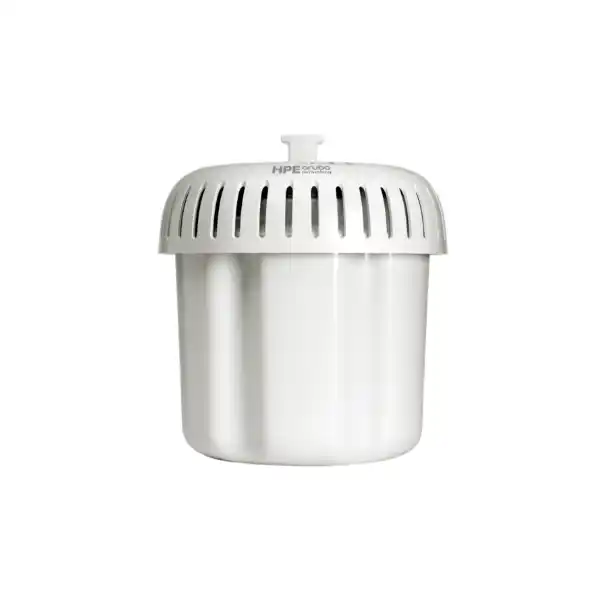
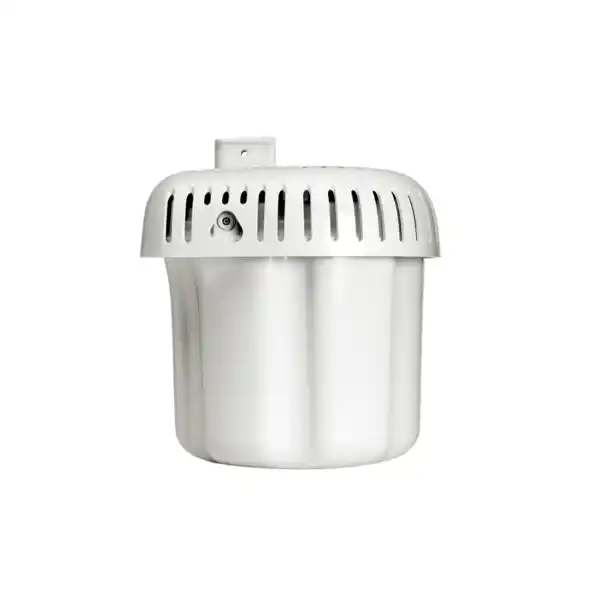
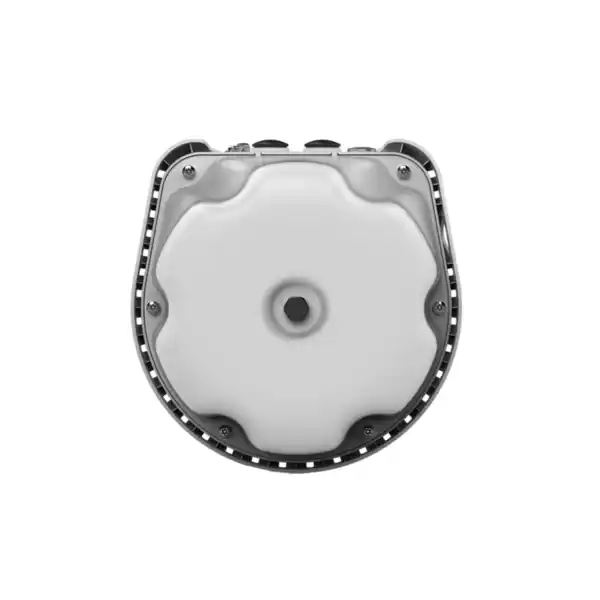
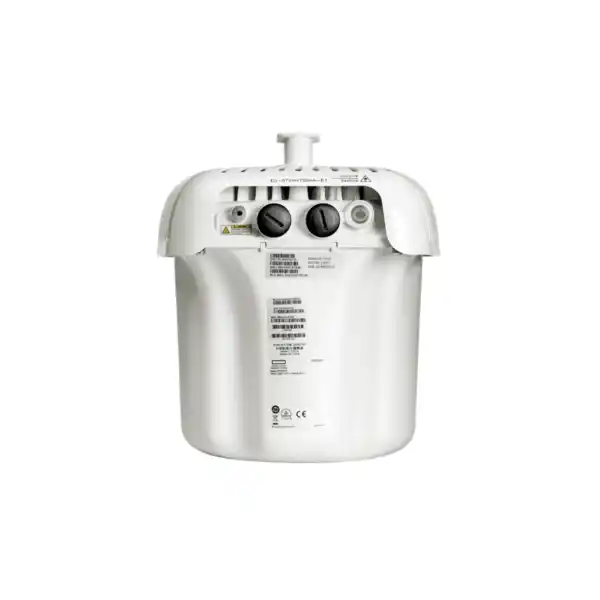
Industrial hazardous-location wireless
HPE Aruba Networking AP-575EX in Dubai, UAE
The AP-575EX is built for organisations that need Wi-Fi 6 coverage in harsh outdoor and classified hazardous-location environments. Its role is not simply to extend a corporate WLAN outdoors; it is to provide an Aruba access point platform engineered for demanding industrial conditions, with integrated omnidirectional antennas, rugged environmental protection and hazardous-location certifications that must be matched carefully to the site design.

Before you request a price
Confirm the hazardous-area requirement, regional ordering code, mounting position, PoE source, cable entry, network architecture and the management or subscription model. These items can materially change the bill of materials.
FourTeck can review these dependencies before quotation so the request is based on a usable deployment design rather than the access point chassis alone.
Direct answer: what is the AP-575EX?
HPE Aruba Networking AP-575EX is an outdoor-hardened, dual-radio Wi-Fi 6 access point in the 570EX hazardous-location family. It is mainly used to extend enterprise wireless connectivity into industrial areas where weather exposure, airborne contaminants and hazardous-location classifications make an ordinary outdoor access point unsuitable. It is most relevant to oil and gas, mining, industrial processing, utilities and similar projects that need omnidirectional coverage. Before proceeding, a buyer should confirm the site’s hazardous-area classification, the correct UAE regional SKU, power and Ethernet design, mounting hardware, Aruba software or management requirements, and whether the AP-575EX antenna pattern is appropriate for the intended coverage zone.
What it does
The AP-575EX provides enterprise WLAN connectivity across 2.4 GHz and 5 GHz radios while using a rugged enclosure and hazardous-location design intended for demanding outdoor industrial settings. HPE’s current QuickSpecs describe the 570EX platform as supporting Wi-Fi 6 features such as OFDMA and MU-MIMO, along with Aruba client optimisation and an integrated Bluetooth/802.15.4 radio for supported IoT and location-related use cases.
For a business, the practical value is the ability to extend managed Wi-Fi into areas where environmental and safety requirements affect hardware choice. The access point should still be treated as part of a larger design that includes switching, power, backhaul, management, security policy, mounting and site engineering.
Who it suits
This model is best suited to organisations with a documented need for hazardous-location capable outdoor wireless and a preference for integrated omnidirectional antennas. Typical environments include process areas, oil-field infrastructure, offshore or onshore industrial zones, mines, refineries, utility compounds and other facilities where the WLAN must operate outdoors under heat, dust, moisture and other challenging conditions.
It may be unnecessarily specialised for a normal office courtyard, school campus or general outdoor hospitality deployment where no hazardous classification applies. In those cases, a standard Aruba outdoor access point can be more appropriate. FourTeck can help compare the requirement before the buyer commits to an EX-series model.
Business problems this model is intended to address
Wireless coverage in classified areas
The EX design gives project teams an Aruba option where the site calls for Class 1 Division 2 or ATEX Zone 2 capable equipment. The facility classification and local engineering requirements must still be validated.
Harsh outdoor exposure
The platform is specified for demanding temperature ranges and carries IP66/67 environmental protection, helping address dust, water and weather exposure in industrial outdoor WLAN designs.
Dense mobile and IoT traffic
Wi-Fi 6 scheduling features help an Aruba WLAN serve modern client populations more efficiently. Actual capacity depends on RF design, channel plan, interference, client mix and application behaviour.
Operational consistency
When incorporated into an Aruba network, the AP can participate in common management, policy and monitoring workflows. The exact controller, software and subscription model should be confirmed for the target architecture.
Product-fit matrix for project teams
| Requirement | Suitable when | Confirm before ordering |
|---|---|---|
| Hazardous-location deployment | The design specifically requires an EX-rated Aruba outdoor AP | Zone/division classification, regional approval and installation method |
| Omnidirectional outdoor coverage | Users and devices are distributed around the AP rather than concentrated in one sector | RF survey, mounting height and antenna orientation |
| PoE-powered infrastructure | The network can provide supported 802.3at/bt power to the AP | Power budget, injector/switch placement and classified-area restrictions |
| Dual-Ethernet resilience | The design benefits from two Ethernet links or LACP | Cabling, switching design, PoE behaviour and software configuration |
| Aruba-managed WLAN | The organisation wants the AP inside an Aruba management and policy architecture | Central subscription, controller/software version and licensing model |
Verified AP-575EX technical information
Values below are based on HPE Aruba Networking 570EX current QuickSpecs. Regional settings and configuration can affect operating values.
| Brand | HPE Aruba Networking |
|---|---|
| Product | AP-575EX hazardous-location outdoor access point |
| Regional ordering reference | R4W33A is listed by HPE as the RW variant for markets outside named country-specific exceptions; confirm the current UAE ordering code when quoting. |
| Regulatory model number | APEX0575 |
| Wireless platform | Outdoor hardened Wi-Fi 6 dual radio; 5 GHz 4×4 MIMO and 2.4 GHz 2×2 MIMO |
| Antennas | Built-in omnidirectional; 5 GHz 5 dBi, 2.4 GHz 3.4 dBi; integrated BLE/Zigbee antenna |
| Current QuickSpecs aggregate rate reference | Up to 3 Gbps aggregate on-air rate in HPE’s HE80/HE40 platform description; client PHY rates vary by channel width, stream count and regulatory domain. |
| Client scale | Up to 512 associated client devices per radio and up to 16 BSSIDs per radio, subject to practical design limits and workload. |
| Ethernet E0 | HPE SmartRate RJ-45, auto-sensing 100/1000/2500BASE-T, PoE-PD 802.3at/bt Class 4 or higher |
| Ethernet E1 | 100/1000BASE-T RJ-45, PoE-PD 802.3at/bt Class 4 or higher |
| Link aggregation | LACP supported between both network ports for redundancy and increased capacity |
| IoT radios | Bluetooth 5 and 802.15.4 radio with Zigbee support |
| PoE power | Supported on E0 and/or E1. 802.3af Class 3 or lower is not supported. Power sources are sold separately. |
| Maximum power consumption | 32.0 W with dual-port PoE; 26.1 W with single-port PoE at full function |
| Dimensions | 24 cm W × 24 cm D × 27 cm H, excluding mount |
| Weight | 2.5 kg, excluding mount |
| Operating temperature | -40°C to +65°C with full solar loading |
| Ingress protection | IP66/67 |
| Environmental references | 5% to 93% non-condensing humidity, 3,000 m operating altitude, ASTM B117-07A salt spray 200 hours, wind survival up to 165 mph |
| Hazardous-location certifications | Class 1 Division 2 and ATEX Zone 2 |
| Mounting | Optional outdoor mounting kits; AP-575EX chassis does not ship with the mounting bracket according to HPE QuickSpecs. |
| Management / software | Aruba operating and management options are software, architecture and subscription dependent. HPE lists Aruba Central AP subscriptions as separate software options. |
| Warranty guidance | HPE states hardware limited lifetime warranty for the 570EX family; confirm terms for the exact regional SKU and purchase channel. |
| UAE availability | Contact FourTeck for current model, quantity, lead time and project coordination. |
Configuration, compliance and compatibility dependencies
Hazardous-location certification is a key reason to select the AP-575EX, but the access point cannot determine whether a proposed mounting point is acceptable for a particular industrial site. The facility owner, consultant or qualified engineer should confirm the zone or division classification, applicable local regulations, installation practices, cable glands, conduit, earthing and any project-specific certification requirements. HPE’s product certification does not replace site engineering.
Power design also deserves attention. HPE specifies PoE on the Ethernet ports and notes that single or dual 802.3af Class 3 or lower sources are not supported. HPE also lists injectors as separate components and states that the listed power injectors are not HazLoc certified and must be located outside classified areas. This detail can materially affect the cable path and location of network equipment.
Management is another dependency. Aruba Central subscriptions appear as separate software options in HPE ordering information, and different controller or operating models have their own software requirements. FourTeck can help align the AP chassis, management choice, switching, PoE, cabling and mounting components before the bill of materials is finalised.
A practical purchase and deployment journey
Confirm the location class
Document the hazardous-area category, outdoor exposure and the exact coverage zone. This decides whether the EX product family is required at all.
Design the RF coverage
Check mounting height, antenna orientation, client distribution, interference, roaming paths and required capacity. Omnidirectional does not mean every physical location will receive equal usable service.
Build the network BOM
Add the correct regional AP variant, mount, PoE source, surge and cable considerations, switching, licenses or subscriptions, and any installation services.
Validate and commission
After installation, validate power, uplink, RF operation, client association, management visibility, security policy and actual coverage against the design assumptions.
Capability focus: Wi-Fi 6 efficiency for industrial client populations
The AP-575EX uses a 5 GHz 4×4 MIMO radio and a 2.4 GHz 2×2 MIMO radio. In practical terms, this gives the access point the radio resources needed to participate in modern Aruba Wi-Fi 6 designs where users, handheld terminals, industrial tablets, scanners, sensors and other mobile endpoints may share the same coverage area. Wi-Fi 6 techniques such as OFDMA divide channel resources into smaller units, allowing compatible clients to be scheduled more efficiently than a simple one-device-at-a-time approach.
The buyer should not translate theoretical PHY or aggregate data rates directly into application throughput. Outdoor industrial environments can have metal structures, moving machinery, reflective surfaces, multipath, non-Wi-Fi interference and changing client positions. The useful design question is whether the proposed AP density, channel plan and backhaul are appropriate for the applications being carried. Voice, telemetry, video, maintenance tools and ordinary web traffic have different latency and capacity characteristics.
FourTeck can help frame the capacity conversation around client count, application mix, expected roaming, critical coverage areas and available uplinks. That is more useful than selecting the AP solely by the highest figure shown in a specification table.
Capability focus: rugged operation does not remove installation discipline
HPE specifies the 570EX platform for all-weather operation, IP66/67 protection and a wide outdoor temperature range. These characteristics are important for UAE industrial sites where heat, direct sun, dust and occasional moisture can all affect outdoor equipment. The AP also has environmental references for wind, salt spray and shock/vibration. Such ratings support demanding use cases, but they should be treated as design inputs rather than a reason to ignore local site conditions.
Cable entry, conduit selection, mounting hardware, grounding, surge protection, installation orientation and maintenance access still matter. A robust enclosure cannot compensate for a poorly planned cable path or an inaccessible mounting point. Industrial sites may also impose work-permit, shutdown-window, certified-installer or inspection requirements that affect deployment scheduling.
For procurement, include the mounting method and installation environment in the quotation request. HPE lists several optional mounts and notes that the AP-575EX chassis does not ship with a bracket. Choosing the bracket after the AP arrives can delay a project unnecessarily.
Capability focus: two Ethernet ports can support a more resilient edge design
The AP-575EX provides an HPE SmartRate E0 interface supporting up to 2.5 GbE and a second E1 interface supporting 1 GbE. HPE also documents LACP support between the two network ports. This can be useful when a design calls for link redundancy or additional uplink capacity, but it introduces planning questions around switch ports, cabling and power.
HPE’s power behaviour changes depending on the PoE source and whether one or both Ethernet ports are powered. With a single 802.3at Class 4 source and IPM disabled, the other Ethernet port is disabled; with IPM enabled, the AP can start unrestricted and apply programmed restrictions based on the power budget. This is the kind of detail that should be reviewed before installation if dual uplinks are part of the design.
A buyer should therefore specify whether the second port is required for redundancy, LACP, a particular cabling topology or not at all. FourTeck can then align the access point with a suitable switch and PoE plan rather than treating the uplink choice as an afterthought.
Where the AP-575EX can make sense
Oil and gas process areas
Where the site design needs wireless in a classified outdoor area, AP-575EX can be evaluated as part of the WLAN. The area classification, mounting method, power source location and cable routing must be approved within the site’s engineering process.
Mining and material handling
Rugged Wi-Fi can support tablets, scanners, maintenance tools and operational devices in exposed areas. RF planning should account for terrain, metal equipment, vehicle movement and changing obstructions.
Industrial plants and utilities
The model may suit outdoor sections of process plants, utility compounds and other harsh locations where standard enterprise indoor access points are unsuitable. The choice between AP-575EX omnidirectional coverage and a directional alternative should be deliberate.
Remote infrastructure compounds
Where field teams need managed wireless access around equipment zones, the AP can form part of a wider backhaul and switching architecture. Availability of power, Ethernet, fibre handoff or upstream connectivity should be assessed separately.
Integration and operational considerations
An AP-575EX deployment touches more than wireless. The upstream switch needs the required PoE capability, VLANs and security configuration. The WLAN management architecture needs the correct Aruba software and subscriptions where applicable. Authentication may rely on existing RADIUS, identity or certificate services. Operational monitoring may need to integrate with the organisation’s alerting and support process. If the AP serves IoT devices, the network team should confirm how those devices are segmented and whether the integrated Bluetooth/802.15.4 radio is actually part of the intended solution.
For sites with existing Aruba infrastructure, software compatibility and minimum supported versions should be checked before adding the AP. For new environments, the project should decide early whether local, controller-based or Aruba Central management is preferred. FourTeck can help map these choices into a bill of materials and configuration scope.
Who should consider a different model?
A buyer may want a different access point if the site does not require hazardous-location certification, if directional rather than omnidirectional RF coverage is needed, if the environment requires a different current Wi-Fi generation, or if the organisation is standardising on another WLAN platform. Within the 570EX family, the AP-577EX uses integrated directional antennas, so it can be more suitable for sector-style coverage where the target clients are concentrated in a particular direction.
The AP-575EX should therefore not be treated as the automatic choice simply because it is rugged. Selecting the model around actual coverage geometry and compliance requirements can reduce unnecessary cost and improve the RF design.
Buyer questions to resolve before ordering
Is the target area actually classified?
Confirm the exact zone or division and the site rules that apply. Hazardous-location hardware should be selected against the engineering requirement, not a general description such as “industrial outdoor”.
Is omnidirectional coverage correct?
The AP-575EX radiates around its mounting area. If users are concentrated in a defined sector or corridor, compare directional designs before finalising the model.
How will PoE be delivered?
Specify the switch or injector, cable length, surge arrangement and whether the power equipment itself must remain outside the classified area.
Which Aruba management model is required?
Decide whether the project will use Aruba Central or another supported architecture, and include any required subscription or controller-related items in the quotation.
What is the mounting structure?
Pole, wall, hanging and tilted installations can require different mounting hardware. Confirm the bracket before purchase because it is not included with the chassis.
What should the quotation include?
Provide quantity, deployment location, regional destination, mounting method, management preference, PoE source, installation scope and desired timeline for a more accurate bill of materials.
Procurement checklist for AP-575EX projects
☐ Confirm AP-575EX is the exact model required.
☐ Confirm the UAE regional ordering code and quantity.
☐ Record the hazardous area zone or division classification.
☐ Validate that omnidirectional antennas fit the RF design.
☐ Define pole, wall, hanging or other mounting method.
☐ Add the correct optional mount to the bill of materials.
☐ Confirm PoE source, class, port budget and cable path.
☐ Decide whether one or two Ethernet uplinks are required.
☐ Confirm Aruba management, software and subscription needs.
☐ Review switch, VLAN, authentication and segmentation requirements.
☐ Include installation, commissioning or configuration scope if needed.
☐ Confirm warranty terms, vendor lead time and delivery coordination at quotation stage.
FourTeck assistance for sizing, quotation and deployment planning
FourTeck can assist by turning the access point request into a more complete project requirement. That can include confirming the exact model, comparing omnidirectional and directional options, reviewing expected coverage, checking the regional ordering reference, identifying mounting and PoE items, and aligning the AP with switching and Aruba management choices. Where the customer needs installation or configuration, the required scope can be added to the quotation discussion rather than assumed to be included with the hardware.
For broader infrastructure projects, visit the FourTeck product portfolio and technology services pages. Organisations that need design or procurement discussion can use the FourTeck contact page to share the project details.
The aim is to reduce the risk of ordering only the chassis and discovering later that the project also needed a different mount, PoE arrangement, software subscription, upstream switch capability or site-specific installation requirement.
UAE availability and project support guidance
Contact FourTeck to confirm current UAE availability for the HPE Aruba Networking AP-575EX, including the appropriate regional SKU, quantity, vendor lead time and any related mounting or software items. Availability can vary because this is a specialised hazardous-location product and because ordering references differ by regulatory market. A useful request should include the deployment destination, number of access points, intended management platform, required mounting approach and whether FourTeck should also quote switching, PoE, installation or configuration support.
For projects across Dubai, Abu Dhabi, Sharjah and Ajman, FourTeck can coordinate requirement review and quotation discussions from one consolidated bill of materials. Delivery timing and service scheduling should be confirmed only after the exact product and scope are agreed. For company information and technology coverage, buyers can also review about FourTeck or the wider FourTeck UAE website.
GCC Availability
For GCC projects, FourTeck can assist organisations that are evaluating the AP-575EX for hazardous-location Wi-Fi in the United Arab Emirates, Saudi Arabia, Kuwait, Qatar, Bahrain and Oman. The first step is to confirm the destination country because regulatory domain, ordering variant, licensing, power accessories and delivery planning can differ by market. Buyers should share the exact deployment location, required quantity, hazardous-area classification, mounting approach, management preference and target timeline. FourTeck can then help review the model selection, quotation structure, configuration scope and any installation planning needed for the project. Product availability, vendor lead time, service visits and software subscription options can vary by country and project conditions, so these should be confirmed rather than assumed. Where a Kuwait requirement is involved, the FourTeck Kuwait resource may also be useful for regional coordination.
Africa Availability
FourTeck can also support AP-575EX requirement review for organisations planning industrial wireless projects in Africa. The evaluation should begin with the destination country, exact operating environment and regional compliance needs rather than assuming that a single ordering code applies everywhere. Project teams should provide quantity, required deployment schedule, hazardous-location classification, power and mounting plan, network management preference and any installation or support expectations. Availability and fulfilment may depend on model variant, license region, shipping arrangements, vendor lead time, regulatory requirements and local site conditions. FourTeck can help structure the bill of materials, compare suitable alternatives and coordinate quotation discussions. Buyers working in East Africa can review the FourTeck Kenya and FourTeck Uganda resources, while broader regional enquiries can use FourTeck Africa.
Related options and services to discuss
HPE Aruba Networking AP-577EX
A related hazardous-location model with integrated directional antennas. Consider it where coverage needs to be concentrated into a defined sector rather than spread omnidirectionally.
Aruba Central subscription
HPE lists Central AP subscriptions separately. The right term and feature tier depend on the management architecture and should be confirmed in the project bill of materials.
Outdoor mounting kits
The AP-575EX chassis does not include a mount. Select the bracket around pole, wall, hanging or tilt requirements and the structural installation plan.
PoE and switching
A suitable PoE source and Ethernet design are part of the solution. Confirm switch port capabilities, uplink speed, redundancy expectations and where injectors can be installed.
Installation and configuration
Where required, include installation planning, AP onboarding, VLAN and SSID configuration, policy integration and post-installation validation in the quotation scope.
What buyers are usually trying to work out before selecting AP-575EX
Most organisations searching for this model are not simply comparing Wi-Fi speed. The central question is whether the AP-575EX is the right hazardous-location access point for a specific outdoor industrial coverage problem. That decision requires several layers of information: the classification of the area, antenna pattern, management architecture, power path, mounting method, regional SKU and total bill of materials. Treating those items together gives a more realistic view of project suitability than comparing access-point data sheets line by line.
AP-575EX versus an ordinary outdoor AP
The important difference is the hazardous-location design and certification. A normal rugged outdoor AP can be weather resistant but still be inappropriate for a classified area. If the project specification cites Class 1 Division 2 or ATEX Zone 2 requirements, the EX family deserves evaluation. If there is no classified-area requirement, the buyer should compare conventional Aruba outdoor models because they may be simpler and less specialised.
AP-575EX versus AP-577EX
Both belong to the hazardous-location 570EX family, but their integrated antenna designs differ. AP-575EX uses omnidirectional antennas, while AP-577EX uses directional antennas. The right choice depends on the shape of the coverage area. A yard with devices distributed around the mounting point can favour omnidirectional coverage; a corridor, face, road or defined sector may benefit from a directional design. An RF survey or predictive design is preferable to choosing by model number alone.
Another common buying question is whether the access point includes everything needed for installation. It does not. HPE’s current ordering information lists mounting brackets separately, and power sources are also separate. That means a complete quotation should normally consider at least the AP, the correct mount, switching or PoE source, cabling and surge requirements, and software or management subscriptions if the selected architecture requires them. On a hazardous site, the physical placement of PoE injectors is especially important because HPE notes that its listed injectors are not HazLoc certified and should be located outside classified areas.
Buyers also search for the AP-575EX data rate and client limits, but these figures need context. HPE’s current QuickSpecs describe the 570EX family as providing up to 3 Gbps aggregate on-air data rate in an HE80/HE40 configuration and list support for up to 512 associated clients per radio. Neither number should be used as a capacity guarantee. Real performance depends on channel width, regulatory domain, RF noise, client capabilities, airtime demand, roaming behaviour and application traffic. Industrial WLAN design should be based on the workload and required service level, not on the highest theoretical number.
A further question is whether the AP can be centrally managed. Aruba management options are available, including Aruba Central subscriptions listed by HPE as separate software items. The exact management model depends on the customer’s existing WLAN architecture and desired operating approach. A new site may prefer cloud-managed operations, while an existing Aruba environment may need compatibility checks against its software version and controller design. Before ordering, identify the current Aruba platform, software version, authentication system, VLAN structure and intended SSID/security policy.
For UAE projects, model availability should be treated as a quotation-time confirmation. HPE publishes country and regional variants, and its worldwide QuickSpecs list an RW ordering code for markets outside several country-specific exceptions. FourTeck can verify the current ordering reference for the project destination rather than assuming a US, Egypt, Israel, Japan or Indonesia variant is appropriate. This matters because regulatory-domain controls influence allowed frequencies, channels and transmit power.
The most useful quotation request therefore reads more like a mini design brief than a one-line product enquiry. Include the number of APs, destination, site type, hazardous classification, coverage objective, mounting structure, estimated cable runs, available switch model, required management platform and whether installation or configuration should be included. With those details, FourTeck can help compare the AP-575EX against related options and identify missing components before the procurement process moves forward.
Decision questions that deserve an answer before the purchase order
Can the AP-575EX be used anywhere outdoors?
It is physically designed for harsh outdoor operation, but “can be installed outdoors” is not the same as “is the best fit for every outdoor project.” The EX model is particularly relevant when hazardous-location certification is part of the site requirement. A standard outdoor Aruba AP may be more appropriate for non-classified areas. Even in a classified zone, the site engineer should validate the exact mounting point and installation practice.
Does one AP cover an entire industrial yard?
Coverage cannot be determined from the model name or antenna gain alone. Yard size, mounting height, obstructions, metal structures, interference, client radio capability and required data rate all matter. AP-575EX’s omnidirectional antennas are useful when coverage should extend around the AP, but a large or irregular area can still require multiple access points or directional designs.
Can an existing PoE switch power it?
Possibly, but check the actual port standard and available power budget. HPE specifies 802.3at/bt Class 4 or higher for the AP’s PoE inputs and states that 802.3af Class 3 or lower is not supported. If two Ethernet ports are used, review the power behaviour, LACP design and available switch ports together.
Is Aruba Central mandatory?
The management choice depends on the intended Aruba architecture and software release. HPE lists Aruba Central AP subscriptions as separate options, which means they should be added deliberately when Central is the chosen platform. Existing customers should check compatibility with their current environment before procurement.
What is the biggest procurement mistake with this model?
Ordering only the AP chassis without confirming the mount, PoE, cable path, software and regional variant is a common avoidable risk. Because the AP-575EX is a specialised industrial device, a complete bill of materials is more important than a quick unit-price comparison.
What should FourTeck receive for a useful quote?
Send the quantity, destination, hazardous classification, required coverage area, mounting type, existing switch or PoE source, management preference, required license term and whether installation, configuration or commissioning support is needed. If drawings or an RF plan are available, mention that as well.
Why businesses contact FourTeck for this type of project
Industrial WLAN procurement often crosses several disciplines: wireless design, switching, power, licensing, physical installation and compliance. FourTeck can help the buyer clarify the requirement, identify the correct model and regional ordering reference, review related mounting and PoE items, and shape a quotation that reflects the actual deployment rather than a bare hardware request. For existing Aruba environments, this can include discussing management and compatibility details; for new deployments, it can include planning the surrounding network components and service scope.
The value is practical coordination. A project owner can use one requirements discussion to cover the access point, supporting infrastructure, optional services and delivery planning. That can make internal procurement approval easier because the bill of materials is tied to a defined deployment scenario. For broader support or consultation, see FourTeck services or contact the UAE technology team.
Frequently asked questions
What is the HPE Aruba Networking AP-575EX designed for?
It is a rugged outdoor Wi-Fi 6 access point designed for hazardous-location and harsh industrial environments. HPE lists Class 1 Division 2 and ATEX Zone 2 certifications for the 570EX family. The actual site classification and installation requirements must still be confirmed by the project team.
What is the difference between AP-575EX and AP-577EX?
The main model-specific distinction is the integrated antenna pattern. AP-575EX uses omnidirectional antennas, while AP-577EX uses integrated directional antennas. Select between them according to the required RF coverage geometry.
Does the AP-575EX include a mounting bracket?
HPE’s QuickSpecs state that the AP-575EX chassis does not ship with a bracket. Several outdoor pole, wall, hanging and tilt mounting kits are listed as separate options, so the installation method should be decided before ordering.
How is the AP-575EX powered?
The AP is powered by PoE through Ethernet port E0 and/or E1. HPE specifies 802.3at/bt Class 4 or higher and states that single or dual 802.3af Class 3 or lower power is not supported. Power sources are separate items.
Does it support 2.5 Gigabit Ethernet?
Yes. The E0 SmartRate RJ-45 interface supports 100/1000/2500BASE-T. The E1 interface supports 100/1000BASE-T. HPE also documents LACP support between the two network ports.
Can the AP-575EX be managed through Aruba Central?
Aruba Central AP subscriptions are listed as separate software options in HPE ordering information. The correct subscription term and feature tier depend on the chosen management architecture and should be confirmed in the quotation.
Which AP-575EX regional SKU should be used in the UAE?
HPE’s current worldwide QuickSpecs list R4W33A as the RW AP-575EX variant for markets outside specified country-specific exceptions. FourTeck should confirm the current UAE ordering code and regulatory domain at quotation time.
Is AP-575EX suitable for every outdoor Wi-Fi project?
No. It is a specialised hazardous-location model. If the site does not require that capability, a standard Aruba outdoor AP may be more appropriate. The RF pattern, Wi-Fi generation, management platform and project budget should all be considered.
What information is needed for an AP-575EX quotation?
Provide quantity, destination, hazardous-area classification, coverage objective, mounting method, PoE or switch details, management preference, license term if applicable, and whether installation or configuration support should be included. This helps FourTeck prepare a more complete bill of materials.
Plan the AP-575EX as a complete industrial WLAN component
Share the site classification, quantity, coverage requirement, mounting plan, PoE source and management preference. FourTeck can help confirm the UAE model, supporting items and quotation scope before procurement.

Reviews
There are no reviews yet.