
High-capacity modular packet transport for UAE networks
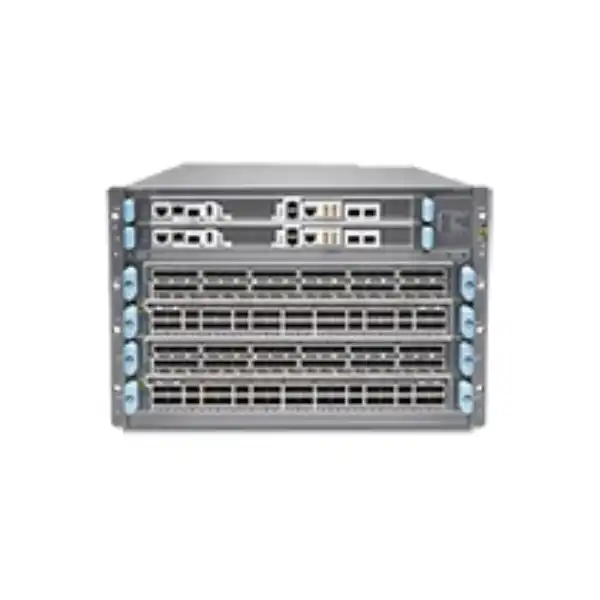
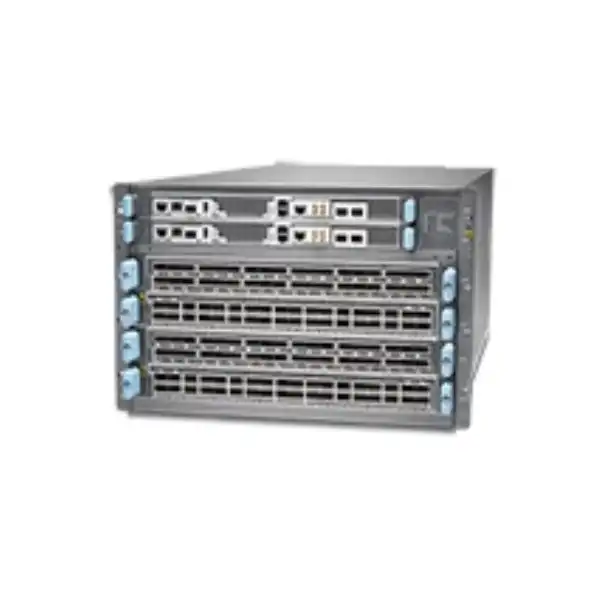
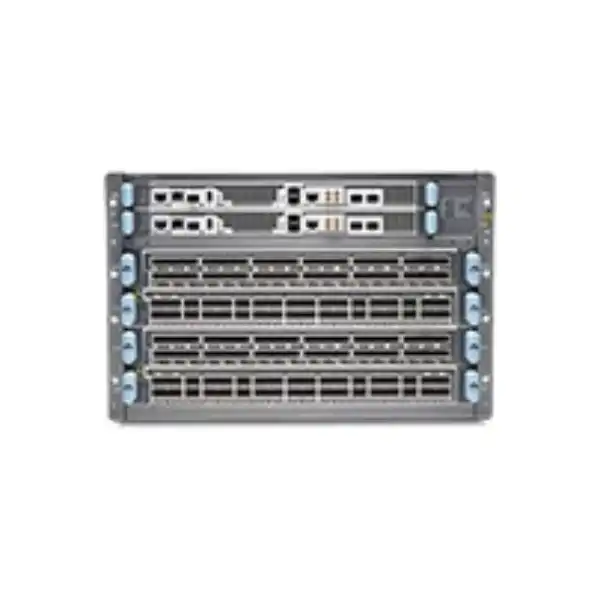
Juniper PTX10004 Packet Transport Router Dubai
A 7RU, four-slot PTX10000 modular platform for organizations building dense core, peering, data center interconnect, metro aggregation and data center edge infrastructure. The key buying decision is not simply the chassis name: the fabric generation, line-card mix, routing scale, optical reach, licensing model, redundancy level and site power design determine what the PTX10004 will actually deliver in production.
7RU modular chassis
Junos OS Evolved
100/400/800GbE design options
Direct answer: what is the Juniper PTX10004?
The Juniper PTX10004 is a four-slot modular packet transport router in the PTX10000 family. It is designed for high-throughput IP and MPLS transport roles where organizations need dense high-speed Ethernet, modular capacity, resilient routing and a compact chassis footprint. It is primarily used in provider and large-enterprise network cores, Internet peering, metro or regional aggregation, data center interconnect, data center edge and other backbone environments where 100GbE, 400GbE or 800GbE connectivity can be relevant.
Who should consider it? Service providers, cloud and data center operators, hyperscale or AI infrastructure teams, large enterprises with substantial inter-site traffic, and organizations consolidating multiple high-capacity transport functions into a modular platform are the most natural candidates. A small branch, conventional office edge or modest campus aggregation requirement normally calls for a very different router class.
The most important point to confirm is the complete architecture, not just the chassis. The selected Switch Interface Boards, line cards, optics, port breakout plan, routing and service scale, WAN or data-center software license, MACsec requirement, routing control redundancy, AC or DC power design and target Junos OS Evolved release all affect the supported design.
FourTeck can help determine the appropriate PTX10004 base or premium chassis configuration, the number and type of line cards, required optics and cables, software and security licensing, rack and power prerequisites, support coverage, migration scope and the bill of materials needed for an accurate UAE quotation.
Why the PTX10004 is a distinct platform
The PTX10004 is the smallest modular chassis in Juniper’s PTX10000 modular family, but “smallest” refers to chassis scale rather than to a low-end routing role. The platform occupies 7 rack units and provides four front-facing line-card slots. That combination is important for buyers who need carrier-class or data-center-class packet transport density but cannot justify the rack height of an eight-slot PTX10008 or sixteen-slot PTX10016. In a standard 42RU rack, the compact physical format makes it possible to achieve substantial aggregate capacity while leaving more rack space available for optical transport equipment, patching, management devices, power distribution and other network infrastructure.
Its modularity changes how it should be specified. A fixed-port router normally has a fairly direct relationship between the model number and the ports a buyer receives. The PTX10004 does not. The chassis provides the mechanical, power, cooling, routing-control and switching-fabric foundation; the network-facing interfaces come from the installed line cards. The same chassis can therefore be built around high-density 400GbE, mixed 100/400GbE, or newer 800GbE-oriented line-card designs. That flexibility is valuable, but it also means a quote that says only “PTX10004” is incomplete for a real deployment.
Current Juniper documentation describes the PTX10004 as supporting up to 57.6 Tbps with established PTX10000 configurations and a higher system-capacity path associated with newer fabric and Express 5 generation designs. Buyers should interpret headline capacity as a platform ceiling tied to specific hardware combinations rather than as a guaranteed throughput number for every chassis bundle. A line card has its own forwarding capacity, a fabric has per-slot bandwidth, and a redundant fabric configuration may have different operational assumptions from a minimum base build. The engineering task is to match those elements so the forwarding path is not unintentionally constrained.
The platform runs Junos OS Evolved, Juniper’s modernized routing operating system for high-scale platforms. For organizations already using Junos, the operating model preserves familiar CLI concepts and routing workflows while the underlying architecture is designed for modern disaggregated and resilient systems. This matters in migrations because the operational skill set can remain recognizably Junos-based even when the chassis hardware and software architecture are substantially newer than legacy transport platforms.
A second differentiator is the PTX10000 family’s focus on high-speed WAN and data-center transport rather than a generic “do everything” branch or campus role. Deep packet-buffering capabilities, high-capacity Ethernet, MPLS and segment-routing functions, EVPN options, timing support, telemetry and high-scale routing are relevant because the router is expected to sit where traffic volumes, route counts, convergence behavior and optical connectivity are major design concerns. For a UAE buyer, the practical value lies in selecting a platform that can carry large regional, cloud, peering or inter-data-center flows with a growth path that fits both current traffic and the next interface-speed transition.
PTX10004 buyer-fit matrix
Core routing
A strong fit when the core needs very high aggregate throughput, resilient routing control, large route tables, MPLS or segment-routing transport and a modular path from 100GbE toward dense 400GbE or 800GbE connectivity. Capacity and software scale should be checked against the actual backbone topology rather than estimated from port count alone.
Internet peering
Appropriate where many high-speed peering links, large BGP tables, fast convergence and traffic-engineering controls are required. The WAN Advanced or Premium licensing tier, BGP peer scale, FIB/RIB scale and port/optic mix should be aligned with present and expected exchange or transit connectivity.
Data center interconnect
Well suited to large east-west inter-site flows, routed DCI, EVPN designs and high-speed optical links between facilities. Distance, fibre type, coherent-optic strategy, encryption needs and the required operational model are as important as nominal Ethernet speed.
Metro aggregation
Useful where many lower-speed services or access-facing links must be aggregated into 100/400GbE uplinks. A mixed-rate line card can be more economical than choosing only the highest-density 400/800GbE option when the access layer still contains substantial 10/25/40/100GbE connectivity.
Data center edge / spine
Can fit routed data-center edge or high-capacity spine roles where BGP, EVPN-VXLAN, high-speed interfaces and substantial traffic scale are required. The Data Center licensing tier has different scale characteristics from WAN licensing, so the intended role must be stated before software is quoted.
When it may be excessive
If the requirement is a small enterprise WAN edge, modest Internet circuit, branch aggregation or a few 10/25GbE links, the PTX10004 may add unnecessary chassis, power, cooling and operational cost. A fixed PTX, MX, ACX or another platform should be evaluated when modular four-slot scale is not needed.
Chassis architecture, capacity and the meaning of “up to”
The PTX10004 is a 7RU chassis with four line-card slots. Its physical dimensions are approximately 17.4 inches wide, 12.2 inches high and 35 inches deep, with greater overall depth when the EMI door is considered. Maximum fully configured weight can exceed 100 kilograms, so rack loading and installation handling are not casual considerations. Juniper specifies front rack mounting and publishes service-clearance guidance for both the front and rear of the chassis. In a professional data center, those details affect rack selection, aisle planning, lifting procedures and whether adjacent equipment will obstruct service access.
System capacity is determined by the combination of switching fabric and line cards. Earlier and widely deployed PTX10004 configurations use JNP10004-SF3 fabric. With the PTX10K-LC1201-36CD, each populated slot can deliver up to 14.4 Tbps, producing 57.6 Tbps across four slots when the required fabric resources are present. Newer Express 5 line-card capability changes the forward-looking capacity discussion. The PTX10K-LC1301-36DD is a 28.8 Tbps, 36-port 800GbE-capable line card, but on a PTX10004 operating with JNP10004-SF3 the fabric can limit that line card to 12.8 Tbps per slot. This is a concrete example of why buyers must verify the whole hardware path rather than multiply physical port speeds by the number of ports.
Juniper’s current PTX10000 specifications also describe a higher PTX10004 system-capacity path with newer fabric capability, indicating up to 115.2 Tbps with SF5 generation fabric. Availability, supported software release, compatible line cards and the exact bill of materials should therefore be treated as configuration-specific. A buyer planning a new 800GbE deployment should request a quotation against the precise desired fabric generation, not assume that an existing SF3-based PTX10004 can expose the full theoretical aggregate of four 28.8 Tbps line cards.
Redundancy affects the engineering as well. Juniper offers base and premium hardware configurations with different counts of routing and control boards and Switch Interface Boards. A minimum base configuration is appropriate only when its availability model matches the environment. Core, peering and DCI sites commonly require control-plane and fabric redundancy so that a single component failure does not create an unacceptable outage or bandwidth loss. The desired failure behavior should be written into the design: for example, whether the network must sustain full intended traffic after one fabric component fails, whether routing-control redundancy is mandatory, and whether maintenance must occur without taking the chassis out of service.
The practical sizing method is therefore to begin with traffic demand and failure scenarios, then derive line-card and fabric requirements. Define day-one aggregate traffic, peak utilization, expected growth, oversubscription policy, required port speeds, optics and breakout combinations, number of diverse upstream paths and the throughput that must remain available after a component failure. Only then should a chassis capacity figure be used to validate the bill of materials. This approach prevents the common procurement error of buying a high-capacity chassis but under-specifying the fabric, line cards or software entitlement needed to use it.
Line-card choices: the decision that defines the interfaces
The PTX10004 line-card decision should be made from the existing and future interface map. Juniper supports multiple PTX10000 line-card families with different port types, throughput ceilings and breakout behaviors. Mixing can be possible for supported combinations, which gives network architects a way to preserve installed 100GbE connectivity while introducing 400GbE or 800GbE in stages. However, interoperability, fabric requirements and Junos OS Evolved release support must be checked for the exact cards being combined.
| Line card | Physical ports | Nominal line-card throughput | Best-fit discussion |
|---|---|---|---|
| PTX10K-LC1201-36CD | 36 QSFP56-DD ports, up to 400GbE each; supported breakout modes provide lower speeds. | Up to 14.4 Tbps | Dense 400GbE transport, core and peering where a high count of uniform high-speed ports is the priority. |
| PTX10K-LC1202-36MR | 32 QSFP28 ports up to 100GbE plus 4 QSFP56-DD ports up to 400GbE. | Up to 4.8 Tbps in mixed 100/400GbE operation | Mixed-rate migration, aggregation and environments with many 100GbE links plus a smaller number of 400GbE uplinks. |
| PTX10K-LC1301-36DD | 36 high-density QSFP-DD ports supporting up to 800GbE with extensive channelization options. | 28.8 Tbps line-card capability; PTX10004 SF3 fabric can constrain a card to 12.8 Tbps per slot | New 800GbE-oriented architecture, high-density future growth and designs where Express 5 capability is required. |
PTX10K-LC1201-36CD for dense 400GbE
The LC1201-36CD is a 36-port QSFP56-DD card with 14.4 Tbps line-rate throughput. Each port can operate at up to 400GbE, and supported breakout combinations allow lower-speed services such as 200GbE, 100GbE, 50GbE, 25GbE and 10GbE depending on the optic, cable and software support. This makes it a straightforward choice when the objective is to maximize 400GbE density without moving immediately to an 800GbE line-card architecture. For peering or core environments, 36 physical high-speed cages per slot can simplify cabling compared with a design that aggregates many lower-speed fixed systems.
Breakout capability should not be interpreted as “any speed on any optic.” The exact transceiver, cable, port mode and software release must be supported in Juniper’s hardware compatibility and port-checking tools. Buyers should provide a port-by-port plan showing local speed, remote device, fibre type, distance and desired optic. This is especially important when a 400GbE physical port will be split into several 100GbE or 25GbE connections, because the breakout harness, patch-panel arrangement and remote-end transceivers have to be ordered consistently.
PTX10K-LC1202-36MR for mixed 100/400GbE environments
The LC1202-36MR is useful when a network still contains substantial 100GbE infrastructure. It provides 32 QSFP28 ports capable of up to 100GbE plus four QSFP56-DD ports capable of up to 400GbE. In a pure 100GbE arrangement, the card has a lower aggregate than in its mixed configuration; with thirty-two 100GbE ports and four 400GbE ports, Juniper specifies up to 4.8 Tbps. This architecture can be attractive for metro or data-center aggregation because it avoids consuming premium 400/800GbE cages merely to terminate a large installed base of 100GbE links.
The card also has detailed channelization rules. Some ports support a wide variety of transceiver and breakout choices, while specific port relationships can affect whether every physical cage is usable in a particular low-speed channelization plan. This is exactly the kind of detail that should be resolved in the design stage, not after the hardware arrives. FourTeck can map the requested 10/25/40/50/100/400GbE connections to supported port modes and identify where QSFP adapters, breakout cables or a different line-card distribution would produce a cleaner deployment.
PTX10K-LC1301-36DD for 800GbE evolution
The LC1301-36DD introduces Express 5 silicon and 36 800GbE-capable QSFP-DD ports with a nominal line-card throughput of 28.8 Tbps. The card supports a broad range of channelized rates, including 2x400GbE and multiple 100GbE combinations, which makes it relevant not only for pure 800GbE deployments but also for phased migrations. However, the chassis fabric is decisive: on a PTX10004 with JNP10004-SF3, Juniper documents a maximum of 12.8 Tbps per LC1301 slot. A design that intends to exploit the full 28.8 Tbps per slot therefore needs the compatible higher-capacity fabric architecture and supported software.
This distinction matters financially. 800GbE-capable line cards and optics represent a substantial investment. If the switching fabric constrains throughput below the physical port aggregate, that may still be acceptable when the goal is port migration, interface flexibility or future readiness, but the oversubscription must be intentional. For networks expecting sustained near-line-rate 800GbE across many ports, the fabric, power and software roadmap should be validated as one solution. A quotation should state both physical port capability and the planned per-slot fabric bandwidth so stakeholders understand the usable capacity.
Routing, MPLS, EVPN and traffic-engineering capabilities
The PTX10004 is designed to participate in modern high-scale routed and transport networks. Juniper’s current PTX licensing documentation lists BGP, IS-IS, OSPF, PIM, segment routing, LDP, RSVP, static MPLS, EVPN-MPLS, EVPN-VXLAN, VPLS, Layer 2 circuits, GRE, timing functions and other transport features within relevant PTX licensing tiers. Feature availability must still be checked against the chosen Junos OS Evolved release and hardware, because a feature being present in a licensing table does not guarantee that every implementation option is available on every line card and software version.
For a backbone, BGP scale and convergence are often central. Internet peering deployments may need full Internet routing tables from multiple transit providers, thousands of peers in larger environments, route-policy complexity and resilient convergence during failures. The current WAN licensing tiers provide different RIB, FIB, VRF, LSP and peer-scale entitlements. This is not a cosmetic distinction. If a buyer chooses a lower scale tier and then grows beyond its intended route or service counts, the software entitlement can become a limiting commercial or operational factor even if the chassis hardware still has unused throughput.
Segment routing is increasingly important for networks simplifying MPLS transport and traffic engineering. The PTX platform supports segment-routing capabilities that allow paths to be steered using segment identifiers, with Junos OS Evolved releases adding functions such as SR-TE, flexible algorithms, telemetry and OAM enhancements. The buyer decision is whether the PTX10004 will operate in an existing RSVP/LDP environment, a transitional architecture, SR-MPLS, SRv6 or a combination. Migration planning should consider controller integration, IGP extensions, label-stack depth, fast-reroute behavior, operational tooling and the capabilities of every node along the path.
EVPN also broadens the role of the chassis beyond a simple IP core. Juniper supports EVPN-MPLS and EVPN-VXLAN functions on the PTX10004, with release-specific additions for service stitching and resilient operation. That makes the router relevant at DCI or data-center edge boundaries where routed IP transport and EVPN services meet. However, a design should avoid assuming that a feature name alone solves interoperability. Route types, encapsulation, multihoming mode, IRB behavior, supported scale, underlay protocol, control-plane redundancy and the capabilities of the remote EVPN devices all need to be aligned.
Timing support such as PTP and SyncE can matter in carrier, mobile transport and other synchronization-sensitive networks. If the requirement includes boundary-clock, transparent-clock or specific synchronization profiles, those requirements should be documented separately and checked against the exact interface and software release. The same principle applies to multicast, OAM, BFD, telemetry and firewall filters. PTX platforms have broad capabilities, but a production design is made from specific scale and feature combinations, not a generic checklist.
For procurement, the most useful input is a service-and-protocol matrix. List each intended function—Internet peering, L3VPN, EVPN, L2VPN, segment routing, RSVP-TE, multicast, PTP, MACsec, telemetry, flow monitoring—and identify the scale and redundancy expected. FourTeck can then match that matrix against the PTX10004 hardware, software tier and current Juniper release support. This is more reliable than choosing a license solely from the words “Advanced” or “Premium.”
Current PTX software licensing: WAN versus Data Center
Juniper changed the current PTX licensing structure in September 2025. New PTX licenses are organized around two primary use cases: WAN and Data Center. The license controls feature access, bandwidth and scale for the chassis, and Juniper provides both subscription and perpetual constructs depending on the SKU family. This is an important change for buyers comparing an older bill of materials with a new 2026 quotation, because legacy license names or assumptions may not map directly to the current model.
WAN A1 / P1
WAN licensing targets core, peering and metro-aggregation roles. Juniper distinguishes Advanced 1 and Premium 1 scale. Both include the broad WAN transport feature set, but Premium provides substantially larger routing, VRF, LSP and filter scale and includes HQoS where the current licensing table shows it as excluded from A1.
A buyer should select from actual route counts, VRFs, BGP peers, MPLS LSPs, tunnels, filter terms and growth expectations. “Core” does not automatically mean Premium if the scale fits A1, while a high-scale peering or service edge may justify P1 even when physical throughput is moderate.
Data Center A2
The Data Center tier targets IP spine and overlay use cases. It includes functions such as BGP, EVPN-VXLAN, VXLAN, ESI-LAG, OSPF, IS-IS, PIM, SRv6 and other listed capabilities, but its scale profile differs from the WAN tiers. In particular, its routing and service limits are designed around data-center requirements rather than a very large service-provider WAN.
If the PTX10004 is being used at a DCI boundary, clarify whether the dominant requirement is a WAN transport role, a data-center IP fabric role or both. That architectural choice can affect the correct license family.
Bandwidth licensing is also relevant. Juniper’s current PTX 800G licensing uses bandwidth-based SKUs and applies entitlements to supported modular chassis and line cards. A design with multiple high-speed ports should be reviewed for the licensed bandwidth required, not only the number of physical interfaces. This matters in phased rollouts: a network might install hardware capacity ahead of traffic growth and expand licensed bandwidth later, but that commercial strategy should be planned deliberately.
MACsec has its own top-up license SKUs for supported PTX hardware. Juniper lists 100G, 400G and 800G MACsec bandwidth licensing options that can be applied according to interface-rate combinations. Therefore, a requirement for line-rate link encryption must be stated at quotation time. It is not sufficient to say “the line card supports MACsec” and assume the desired encrypted bandwidth is automatically included. The hardware capability, software release and MACsec entitlement all need to match.
Support and software subscription terms should be evaluated alongside the feature license. A one-, three- or five-year software subscription can align with a project or refresh cycle, while perpetual licensing may have a different commercial structure and support implications. UAE buyers should decide whether they need vendor customer service bundled with the subscription, what response level is required and whether spares or on-site support are part of the operational plan.
For an accurate quote, provide expected day-one and three-year scale: route count, FIB entries, RIB entries, BGP peers, VRFs, LSPs, filters, tunnel count, multicast scale and required encrypted bandwidth. Those numbers allow the software tier to be selected from evidence. They also expose when another platform or a larger PTX10000 chassis should be evaluated rather than forcing an undersized or overly expensive license choice onto the PTX10004.
Optics, coherent transport and breakout planning
High-speed optics can represent a large portion of the total PTX10004 project cost, so they should never be treated as an afterthought. A chassis and line card only define the electrical and mechanical interface. The actual network link requires compatible transceivers, fibre, connectors, patching and, where applicable, breakout or coherent-optical design. The correct part number depends on speed, reach, fibre type, wavelength, FEC expectations, remote-end compatibility and software support.
At 400GbE and 800GbE, several optical form factors and standards can coexist. A short-reach data-center link between racks may use a very different module from a metro DCI connection. A 400ZR or other coherent optic introduces power, thermal, wavelength and line-system considerations that do not exist in a simple short-reach multimode link. The LC1301 documentation, for example, includes support for 400G-ZR transceivers in appropriate conditions. Whether a specific coherent optic is suitable for a UAE metro span depends on link budget, fibre plant, amplification, ROADM compatibility and the remote device.
Breakout can improve port utilization but adds cabling complexity. A single high-speed physical cage may be channelized into multiple logical interfaces. The engineering benefit is obvious when legacy 100GbE endpoints must be connected to a 400GbE or 800GbE-capable line card, but each breakout branch becomes a real cable path that must be labelled, patched and validated. The line card may also impose group-based bandwidth or channelization restrictions. A port plan should therefore include the physical port number, intended breakout mode, local optic or cable, remote optic, logical interface names and expected traffic.
Low-rate 10GbE and 25GbE connectivity is possible through supported channelization and adapters in PTX10000 designs, but a network with hundreds of low-rate links may be better served by an aggregation platform that concentrates those links before they reach the PTX core. Using premium high-density PTX ports for large numbers of low-speed endpoints can be technically valid yet economically inefficient. The PTX10004 should sit where its forwarding capacity and high-speed interfaces create clear value.
For brownfield migration, remote-end compatibility deserves special attention. Existing routers may use older optics, different FEC defaults or vendor-specific interoperability constraints. A migration plan should distinguish links that can be moved by reusing existing transceivers from links that require new optics at both ends. It should also identify any maintenance window needed to change FEC or port speed, and whether parallel links can be brought up for traffic migration before old hardware is removed.
FourTeck can build the optical portion of the bill of materials from a link inventory. Useful inputs include speed, quantity, approximate distance, fibre type, connector type, single-mode or multimode, whether dark fibre or a managed wavelength service is used, remote device model, breakout requirement, encryption requirement and any coherent-line-system details. This reduces the risk of receiving a chassis that cannot be commissioned because the correct optics or cables were omitted.
Power, cooling, rack and site-preparation requirements
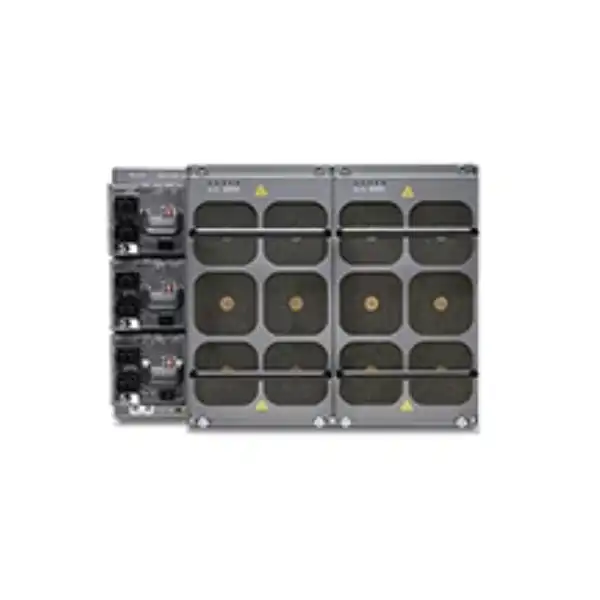
The PTX10004 is a high-capacity transport chassis and should be treated as data-center infrastructure, not as ordinary rack equipment. Juniper specifies AC and DC power options, with power-system ratings that include 200–240VAC and -48VDC families. The exact power-supply modules depend on the selected chassis and line-card generation. Newer Express 5 configurations have component requirements that should be checked against the power supplies, fan trays and fan-tray controllers specified in the current hardware guide.
Power draw is workload and configuration dependent. Juniper’s platform datasheet gives a typical figure around 8 kW for a fully loaded Express 4 PTX10004 configuration, which is a useful planning reference but not a substitute for the exact power calculator and selected bill of materials. A partially populated chassis, a mixed-rate card design and an Express 5 build can have different consumption. Facility engineers should size circuits, PDUs and UPS capacity from the exact hardware configuration plus redundancy policy and safety margin.
Cooling follows from power. Multi-kilowatt routing equipment releases substantial heat, and airflow must remain unobstructed. Juniper warns against placing the chassis where exhaust from neighboring equipment feeds the PTX intake. Hot-aisle/cold-aisle orientation, blanking panels, rack doors and cable routing should therefore be planned as a system. Data-center operators in the UAE will already design for high ambient conditions, but the internal room temperature must remain within the specified equipment envelope; external climate does not change the router’s operating limits.
The published PTX10000 environmental specification allows operation up to 46°C at sea level, with a lower maximum at higher altitude, and relative humidity within the non-condensing range defined by Juniper. In Dubai and other UAE locations, the important point is reliable conditioned data-center air and humidity control. Outdoor or poorly conditioned telecom spaces should not be assumed acceptable merely because the platform has a relatively high maximum operating temperature.
Physical service clearance is another practical requirement. Juniper recommends approximately 30 inches in front of the chassis and 24 inches behind for maintenance. That space allows technicians to remove line cards, routing/control components, power supplies and other FRUs safely. A rack squeezed against a wall or facing obstructive cable trays can make field replacement difficult even if the chassis physically fits in 7RU.
Weight and handling matter because a maximum configured PTX10004 can weigh over 116 kg. Installation should use appropriate mechanical lifting and follow Juniper’s documented unpacking and mounting procedures. Individual line cards and control components are field-replaceable, but they also require ESD-safe handling. A deployment scope should state who is responsible for rack installation, grounding, power cabling, fibre patching, asset labeling and initial hardware inspection.
Before dispatch, a site checklist should confirm rack depth and load rating, free rack units, mounting-kit compatibility, front and rear clearance, AC or DC feeds, circuit capacity, PDU connector types, grounding, cooling capacity, fibre paths and staging space. These details are not administrative overhead. They prevent a high-value router from arriving at a site where it cannot be safely installed or powered.
Resilience, FRUs and maintenance strategy
A modular router is often selected because hardware can be made resilient and serviced without replacing the entire system. The PTX10004 uses field-replaceable line cards, power supplies, fan components, switching fabric components and routing/control boards. Juniper documents line cards as hot-insertable and hot-removable, enabling replacement without powering down the whole router. The operational benefit is significant, but maintenance behavior still depends on the redundancy designed into the chassis and the way traffic is distributed across links.
For example, removing a failed line card does not power down the chassis, but every interface on that card is still lost. A resilient network therefore needs alternate paths at the topology level. Similarly, redundant Routing and Control Boards can protect the control plane, while redundant Switch Interface Boards can protect fabric availability, but the exact number installed and the traffic capacity remaining after failure must be understood. High availability is an architectural property across the chassis, links and network—not merely the presence of duplicate components.
Premium PTX10004 bundles provide more redundancy than the minimum base configuration. A buyer should decide which failure domains are acceptable. A lab, secondary site or non-critical capacity node may tolerate a less redundant chassis. A core or peering router carrying major production traffic often requires duplicate control components, resilient fabric, redundant power feeds and diverse physical links. The desired maintenance model should also be considered: can a software upgrade require traffic draining, or is nonstop operation during planned changes a business requirement?
Software resilience features such as nonstop active routing and graceful-restart mechanisms can reduce control-plane disruption for supported protocols. Their value depends on correct configuration and on peer behavior. Before migration, engineers should test failover scenarios including Routing Engine switchover, link loss, line-card failure, fabric degradation and power-feed loss. Monitoring should be configured to identify partial failures that do not take the router completely offline but reduce forwarding redundancy or available capacity.
Spares policy should match business impact and logistics. A carrier or critical infrastructure operator may keep specific line cards, power supplies or fan components locally so a failure can be recovered quickly. Other organizations may rely on vendor support and advance replacement. In Dubai, a locally held spare can reduce restoration time, but stocking expensive cards that are unlikely to fail may not be economically justified. The decision should consider SLA, installed base, component lead time and whether another chassis can temporarily absorb traffic.
FourTeck can help convert availability goals into a bill of materials by identifying the minimum and redundant quantities of routing/control boards, fabric components, power supplies and line cards. The quotation can also separate mandatory production components from optional recommended spares, giving procurement teams a clear view of what is needed to operate the router and what is being added to reduce recovery time.
Junos OS Evolved, automation and operational integration
The PTX10004 runs Junos OS Evolved. Organizations familiar with Juniper routing gain an operational advantage because the CLI and many configuration concepts remain consistent with the Junos ecosystem. However, Junos OS Evolved should not be treated as simply the same software image used by every older Juniper router. It has a modernized internal architecture and a release train whose platform and line-card support must be respected.
The software release is particularly important when deploying newer line cards. Established LC1201 and LC1202 support dates back to earlier Junos OS Evolved releases, while Express 5 LC1301 support and specific PTX10004 component combinations depend on much newer releases. A migration project must therefore decide whether the target network can standardize on the required Junos OS Evolved version. If adjacent systems, automation tooling or organizational policy is tied to an older release, the new hardware may require a software lifecycle decision as part of the project.
Configuration automation can be integrated through Juniper’s management and automation ecosystem. Juniper documentation references CLI management as well as Routing Director / Paragon Automation capabilities for PTX10004 operations. In practice, many operators also integrate routers into their own configuration management, telemetry, logging and change-control pipelines. The correct approach depends on whether the organization wants device-centric configuration, intent-based automation, controller-driven traffic engineering or an external infrastructure-as-code workflow.
Streaming telemetry is valuable on high-capacity links because periodic polling may not capture short-lived congestion or queue behavior. The design should define which metrics are collected, sampling intervals, destination collectors, retention and alert thresholds. For a peering router, route changes, interface errors, optical power, BGP session state and utilization may be critical. For a DCI router, latency, packet loss, queue occupancy, FEC counters and path changes can be equally important.
Logging and security integration also deserve planning. AAA should be tied into the organization’s authentication system, management traffic should use a controlled out-of-band or management network, and syslog should be forwarded to a central platform. Configuration backups and audit trails should be tested before the router enters production. If the platform will support encrypted MACsec links, key-management procedures and operational ownership should be clear.
Upgrades should be handled as lifecycle events. A release may be needed for hardware enablement, bug fixes or features, but a network core should not be upgraded solely because a later release exists. Use Juniper’s recommended release guidance, validate the exact feature combination, review known issues and test in a representative environment. For networks with two core nodes, traffic can often be shifted so each router is upgraded in sequence while maintaining service, but this must be proved against the routing design and capacity under maintenance conditions.
A useful quotation therefore includes more than hardware installation. Depending on the buyer, implementation may cover baseline Junos OS Evolved configuration, routing-protocol migration, policy conversion, telemetry integration, AAA, SNMP, syslog, NTP/PTP, optical validation, failover testing and handover documentation. Defining these tasks before purchase avoids ambiguity between “hardware supplied” and “production network commissioned.”
Sizing the PTX10004 for a real network
The most reliable way to size a PTX10004 is to begin with traffic and topology, not with a desired number of line cards. Start with the ports that must exist on day one. Record every required Ethernet speed, expected utilization, remote device and redundancy relationship. Then forecast which of those links will be upgraded during the expected chassis life. A network with twelve 100GbE links and four 400GbE uplinks has a different optimal card mix from a network with thirty 400GbE peer connections, even if both have similar aggregate traffic today.
Next, calculate traffic under failure. If two core routers normally split traffic 50/50, each router may need to sustain close to the combined load during a peer failure. If a fabric component or one line card can fail, the remaining paths must still carry critical services. A design that looks comfortable at average utilization may become oversubscribed during failure or maintenance. Target utilization should leave room for traffic bursts, route reconvergence and growth, not just normal daily averages.
Then size routing and service state. Count Internet routes, internal routes, VPN routes, EVPN routes, BGP peers, VRFs, MPLS LSPs, tunnels, multicast groups and firewall filter terms. Compare those figures with the selected software tier and hardware capability. Include a growth factor. A route table that is comfortably inside a license limit today may not be in three years if new customers, sites or cloud connections are added.
Optical reach and interface composition come next. If most links are short data-center runs, high-density 400/800GbE optics may be straightforward. If the router terminates metro dark fibre or long-haul wavelengths, coherent optics and optical line systems can become the main technical dependency. If many low-rate links must be preserved, consider whether the LC1202 mixed-rate card or an external aggregation layer provides the best operational and commercial outcome.
Power and rack constraints can force a different design even when forwarding calculations suggest the PTX10004. A site may not have enough power density for a fully loaded chassis or enough rear clearance for service. In that case, distributing traffic across smaller fixed systems, upgrading the rack and PDU infrastructure, or placing the router in a different facility may be more practical. The router should fit the facility, not merely the network diagram.
Finally, decide the growth philosophy. One option is to buy a chassis with spare line-card slots and add capacity later. Another is to install all required cards at the outset but use only part of their port capacity. A third is to select newer 800GbE-capable cards for future migration even if current traffic is mostly 100/400GbE. Each approach trades capital cost, future disruption, software entitlement and technology risk differently.
A well-sized PTX10004 quotation should therefore show current requirements, design headroom and the trigger for expansion. For example, it might state that two line cards satisfy day-one ports, a third is planned for year two, and the fourth slot remains available for 800GbE migration. This creates a procurement roadmap rather than a one-time hardware list.
Migration planning from an existing core or transport router
Replacing or augmenting a core router is primarily a migration project. The PTX10004 may be new hardware, but the network services already exist and must be moved without breaking routing, optical links or customer traffic. The first step is to inventory the existing router: interfaces, optics, VLANs, bundles, routing protocols, BGP policy, MPLS labels, VPNs, EVPN instances, multicast, QoS, filters, telemetry and management dependencies.
Configuration should then be classified into what can be translated directly, what needs redesign and what is no longer required. Junos-to-Junos migration can reduce syntax change, but hardware interfaces, queue structures, licensing and feature behavior may differ. Migrating from another vendor adds policy-language and operational differences. Automated configuration conversion can accelerate the process but should not replace design review; old workarounds and obsolete policy should not be blindly copied into a new architecture.
Physical links should be grouped into migration waves. Links that can be moved one at a time with redundant paths available are low risk. Single-homed links, coherent optical circuits, Internet transit and high-value peerings may need explicit provider coordination and maintenance windows. Breakout changes can alter interface numbering and cabling, so patch schedules should be created in advance rather than improvised in the data hall.
Routing adjacency migration needs similar discipline. For BGP, determine whether sessions will be re-established from the same addresses, moved to new loopbacks or temporarily run in parallel. For IGP and MPLS, consider metric changes, label distribution and traffic-engineering tunnels. If the PTX10004 is entering a segment-routing architecture, the migration may involve coexistence with LDP or RSVP during transition. The network should be able to roll back to the old path if unexpected behavior appears.
Testing before cutover should include basic forwarding and feature validation as well as resilience. Confirm optics, FEC, MTU, LAG behavior, BFD, route policy, MPLS/EVPN service reachability, multicast where relevant, telemetry and management access. Then test failure scenarios. A new router that works only when every component and link is healthy is not ready for a core role.
Post-migration validation should compare route counts, traffic volumes, error counters and latency against the baseline. Old equipment should remain available until stability is confirmed and rollback is no longer needed. Documentation should be updated with rack position, serial numbers, optics, cabling, software version, licenses and support contracts.
FourTeck can scope supply only, installation, or a broader migration engagement. For a complex PTX10004 project, the most useful starting documents are the existing topology, interface inventory, current platform configuration, target architecture, traffic graphs and maintenance constraints. These allow the implementation effort to be estimated realistically rather than bundled into an undefined “installation” line item.
PTX10004 versus nearby alternatives
The PTX10004 should be compared with alternatives when the design is near a boundary. Juniper’s PTX10008 and PTX10016 use the same broader modular family concept but provide more line-card slots and higher total chassis capacity. A buyer expecting rapid growth beyond four slots may find the larger chassis more economical than deploying multiple PTX10004 systems. Conversely, the PTX10004 can be a better fit where rack space, smaller failure domains or distributed sites favor compact modularity.
| Platform | Modular slots | Rack height | When to evaluate |
|---|---|---|---|
| PTX10004 | 4 | 7RU | Compact modular core, peering, DCI or aggregation with four-slot growth. |
| PTX10008 | 8 | 13RU | Higher single-chassis capacity, more line-card diversity and stronger expansion runway. |
| PTX10016 | 16 | 21RU | Very large backbone nodes where maximum modular scale is more important than compact footprint. |
Fixed PTX platforms should also be considered when modularity is not needed. A fixed system can reduce chassis complexity, power and entry cost for a site that needs a known set of high-speed ports and has a predictable capacity ceiling. The trade-off is less internal expansion. A network with many regional sites may prefer several fixed routers while reserving PTX10004 or larger modular systems for central hubs.
Juniper MX platforms may be more appropriate when the service edge requires a different mix of broadband, subscriber, service or edge functions beyond the PTX transport focus. ACX systems may fit access and metro roles with different port density, scale and price. The correct comparison therefore depends on service function, not simply throughput. Buying PTX10004 because it has a high Tbps figure can be the wrong decision if the needed features belong more naturally on another platform family.
FourTeck can include alternatives in the same consultation. A useful outcome is often a three-way shortlist: the smallest platform that meets the requirement, the PTX10004 target configuration and the next larger option that provides extra growth. This makes the cost of headroom visible and helps procurement decide whether to invest for future expansion or optimize for current demand.
Use cases in Dubai and the wider UAE
Data center interconnect
Organizations operating workloads across multiple UAE facilities can use a PTX10004 at the routed DCI layer where large 100/400/800GbE links, EVPN or segment-routing transport and high route scale are required. Fibre distance and optical service design must be established before transceivers are selected.
Internet and cloud peering
Large networks connecting to exchanges, transit providers and cloud on-ramps may need high BGP scale, traffic engineering and resilient high-speed ports. WAN license scale, interface diversity, optics and DDoS architecture should be part of the same design discussion.
Carrier and service-provider core
The PTX10004 can provide a compact modular backbone node for MPLS, segment routing, high-speed aggregation and peering. Redundant fabric, control-plane design, timing, multicast and software scale should be specified from the operator’s service model.
Large enterprise backbone
Enterprises with exceptionally large inter-campus, cloud and data-center traffic can use the chassis as a routed backbone platform. It is most justified when capacity and modular growth exceed what conventional enterprise edge routers can deliver.
AI and high-performance infrastructure
AI clusters can generate very large north-south and inter-site traffic. The PTX10004 may serve at a data-center edge or DCI layer where 400/800GbE capacity is needed, while the internal AI fabric may use purpose-built switching. The boundary between those layers should be clearly defined.
Availability in the UAE should be confirmed by quotation because enterprise routing platforms are commonly supplied against a specific bill of materials rather than held as a single universal shelf SKU. Lead time can vary by chassis bundle, line cards, optics, power supplies, licenses and support. If a project has a fixed commissioning date, procurement should begin with the complete design and desired delivery window so any long-lead components are identified early.
Procurement details that should appear on the quotation
A PTX10004 quotation should be auditable. Procurement teams should be able to see what each hardware and software item contributes and which items are optional. At minimum, the quote should identify the exact chassis bundle, AC or DC power type, routing and control boards, number and type of Switch Interface Boards, fan components, line cards, blanking panels where required, rack and cable-management kits, optics, breakout cables, software licenses and support terms.
The line-card part numbers are especially important. “36-port 400G card” is not a sufficiently precise description when different generations and mixed-rate cards exist. Use the exact Juniper model such as JNP10K-LC1201, JNP10K-LC1202 or JNP10K-LC1301 as applicable. The quote should also state how many cards are day-one requirements and whether additional cards are planned for future phases.
Optics should be itemized rather than hidden in a generic accessory amount. The buyer should be able to reconcile each transceiver or breakout cable with a link in the design. If third-party compatible optics are being considered, support implications and interoperability testing should be discussed explicitly. For core infrastructure, many organizations prefer vendor-supported optics for critical links even if acquisition cost is higher.
Software should include the exact license family, tier, bandwidth and term. Since the current PTX model distinguishes WAN and Data Center use cases, the intended role should be written into the commercial proposal. Any MACsec top-up, FIB scale expansion or other feature-specific entitlement should be listed separately so the buyer understands which functionality drives added license cost.
Services should also be separated by deliverable: rack-and-stack, base configuration, routing migration, optical turn-up, testing, documentation, training and post-cutover support. This allows organizations with in-house network teams to purchase only what they need while giving buyers that require a turnkey deployment a clear scope. Vague “installation included” wording can create disputes when a project actually requires complex routing-policy migration and carrier coordination.
Finally, warranty and support should name the service level and duration. If the operation requires advance replacement, software support or 24×7 vendor assistance, these should be part of the procurement decision rather than added after a failure. For critical PTX10004 deployments, support is part of the architecture because recovery time depends on access to software fixes, hardware replacement and vendor escalation.
Frequently asked buyer questions
Is the PTX10004 a 57.6 Tbps or 115.2 Tbps router?
Both figures can appear in current PTX10004 context because capacity depends on fabric and line-card generation. Established SF3-based configurations can provide up to 57.6 Tbps across four 14.4 Tbps slots with LC1201 cards. Juniper’s current platform specifications also describe up to 115.2 Tbps with SF5 generation fabric. The correct number for a quotation is the capacity of the exact fabric and line-card combination being ordered.
Can the PTX10004 support 800GbE?
Yes, current Juniper documentation supports the PTX10K-LC1301-36DD 800GbE-capable line card in the PTX10004 with specified supporting components and software. The card itself has 28.8 Tbps capability, but an SF3-based PTX10004 can constrain it to 12.8 Tbps per slot. Buyers who need full 800GbE density should verify fabric generation and supported software rather than ordering the line card in isolation.
Does the chassis include line cards?
The PTX10004 is a modular system and should not be assumed to include the network-facing line cards needed for a deployment. Base and premium chassis bundles contain different infrastructure components, while line cards are selected separately according to the required interfaces. Always review the full BOM.
Can 400GbE ports be broken out to lower speeds?
Supported line cards provide multiple channelization modes, but exact combinations depend on the card, port, transceiver or cable and software release. A port-checking exercise is recommended before ordering. Some mixed-rate cards also have relationships between adjacent ports that affect low-speed channelization.
Is MACsec automatically included?
Hardware support and software entitlement are separate questions. Juniper publishes MACsec bandwidth top-up licenses for PTX platforms at 100G, 400G and 800G levels. If encrypted links are required, specify the total encrypted bandwidth and interface rates so the correct licenses can be included.
Which license should a UAE buyer choose?
Current PTX licensing distinguishes WAN and Data Center use cases. WAN A1/P1 is oriented to core, peering and metro aggregation, while Data Center A2 targets IP spine and overlay use cases. The correct choice depends on feature and scale requirements, not geography. Provide route, VRF, peer, LSP, tunnel and bandwidth estimates for accurate selection.
Can the PTX10004 mix different line cards?
Juniper documents interoperability between several supported PTX10000 line cards, including LC1201, LC1202 and LC1301 in defined PTX10004 combinations. The software release and supporting fabric, fan and power components still need validation. Mixed cards can be useful for phased migrations.
Is the PTX10004 suitable for a normal enterprise Internet edge?
Only when the enterprise has unusually high throughput, routing scale or modularity requirements. Many enterprise Internet edges are better served by smaller MX, ACX, fixed PTX or other routing platforms. The PTX10004 becomes compelling when multiple 100/400/800GbE links, very high aggregate capacity or modular growth justify its power, rack and licensing footprint.
What information is needed for a Dubai quotation?
Provide required port speeds and quantities, expected traffic, routing/service scale, line-card preference if known, optics and link distances, AC or DC power, redundancy requirements, MACsec needs, software term, support level, installation location and whether migration services are required. FourTeck can convert those inputs into a detailed BOM.
Decision recap before ordering
1. Confirm model fit
Validate that a four-slot, 7RU modular transport chassis is justified. If expected growth exceeds four slots, compare PTX10008. If the requirement is smaller and fixed, compare lower-cost alternatives.
2. Match fabric and cards
Do not quote line-card capacity independently of switching fabric. Specify SF3 or newer fabric architecture and verify per-slot bandwidth for the selected cards.
3. Build a port map
List every 10/25/40/50/100/400/800GbE connection, breakout mode, optic, distance and remote endpoint. This determines line-card mix and accessory count.
4. Size software scale
Choose WAN or Data Center licensing from actual RIB, FIB, VRF, BGP peer, LSP, tunnel, filter and bandwidth requirements, with growth included.
5. Engineer resilience
Define control, fabric, power and network-path redundancy plus capacity after failure. Premium component counts may be appropriate for critical production nodes.
6. Validate the site
Check rack load, depth, service clearance, power feeds, PDU connectors, cooling, grounding and fibre paths before shipping the chassis.
What FourTeck needs for an accurate PTX10004 quotation
A useful quotation starts with engineering inputs. The following information lets the chassis, line cards, optics, licenses, support and services be sized together instead of quoted as disconnected parts.
Core, peering, metro aggregation, DCI, data center edge or another defined architecture.
Quantity and speed of day-one and future Ethernet interfaces, including breakout requirements.
Peak and average throughput, failure-state traffic, expected annual growth and target headroom.
RIB/FIB size, BGP peers, VRFs, MPLS LSPs, tunnels, filters, multicast and EVPN scale.
Distance, fibre type, coherent or client optic, remote device, connector and required FEC.
Required control-plane, switching-fabric, power-feed and network-link redundancy.
Encrypted port speeds and aggregate encrypted bandwidth, plus key-management expectations.
AC or DC power, rack location, available RU, PDU type, cooling and desired installation date.
Supply-only, installation, migration, commissioning, training, support duration and SLA expectations.
Plan the right Juniper PTX10004 configuration for Dubai
The PTX10004 is most valuable when chassis capacity, fabric, line cards, optics, software scale and site infrastructure are designed as one system. Send FourTeck your port plan, traffic estimates, routing scale, optical distances, redundancy target and deployment location. We can build a UAE-ready bill of materials and identify where a different line card, license tier or larger/smaller platform would produce a better technical and commercial fit.

Reviews
There are no reviews yet.