
OUTDOOR WI‑FI 7 • MULTI-GIGABIT ETHERNET • RUCKUS BEAMFLEX
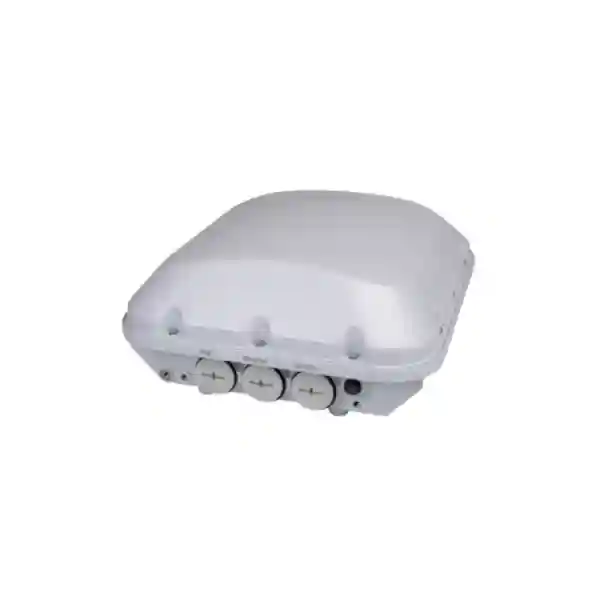
RUCKUS T670 Outdoor Access Point
The RUCKUS T670 is a high-performance outdoor Wi‑Fi 7 access point created for dense, demanding wireless environments where coverage quality, client capacity, interference control and wired backhaul all matter. Manufacturer information describes the T670 as a tri-radio platform with six spatial streams, BeamFlex adaptive antenna technology, SmartMesh, a 5 GbE primary Ethernet interface and a 1 GbE auxiliary interface. For global deployments outside the United States and Canada, RUCKUS lists a dual-band 2.4 GHz + 5 GHz Wi‑Fi 7 configuration with a maximum physical data rate of 6.454 Gbps; 6 GHz operation is regulatory-domain dependent and must be confirmed for the destination country rather than assumed from the hardware headline.
Wi‑Fi generation
IEEE 802.11be Wi‑Fi 7, with regional feature and band availability subject to local rules and firmware.
Wired uplink
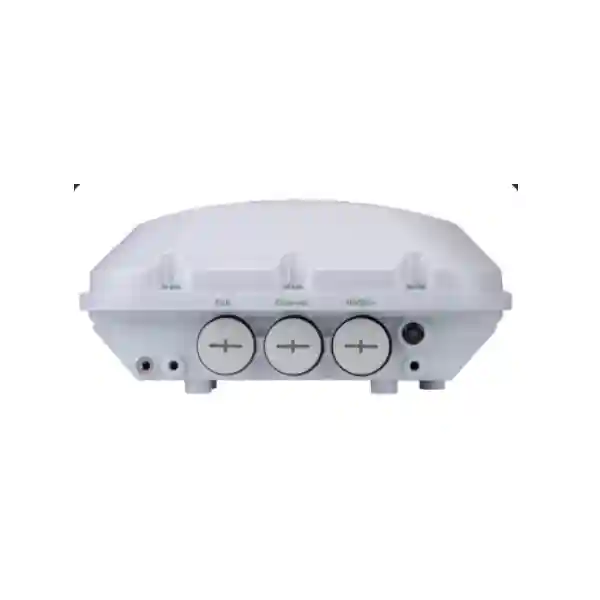
One 1/2.5/5 GbE interface plus one 1 GbE interface, helping avoid a low-speed wired bottleneck.
Outdoor resilience
IP67-rated enclosure and a published operating range from -40°C to +65°C for outdoor installation planning.
Management
RUCKUS One, SmartZone and Unleashed are listed management options, allowing different operational models.
What the RUCKUS T670 Outdoor Access Point is designed to solve
Outdoor wireless design becomes difficult when many users share the same area, clients move between coverage zones, neighboring networks create interference, weather limits hardware choices, and the access layer must still carry large amounts of traffic back to the wired network. The RUCKUS T670 addresses that class of project by combining Wi‑Fi 7 radio capabilities with RUCKUS RF technologies such as BeamFlex, ChannelFly, PD-MRC and SmartMesh. The manufacturer lists more than 4,000 antenna patterns per band and support for up to 768 concurrent users. That client figure is a platform maximum rather than a recommended design target: real capacity depends on application mix, airtime, channel plan, client radio capability, interference, backhaul, security policy and acceptable user experience.
The most important buying question is therefore not simply “how fast is the T670?” It is whether the access point is being placed into a network that can use its capabilities. A 5 GbE access interface is valuable only when the switch port, cabling, PoE budget and upstream switching capacity are aligned. Outdoor RF performance is valuable only when mounting height, obstruction, orientation, client density and neighboring radio activity have been reviewed. Wi‑Fi 7 features are valuable only when client devices and the local regulatory domain allow them. FourTeck can help buyers structure these questions before procurement so the quotation includes the access point, power method, mounting requirements, switching readiness, management platform and security architecture instead of treating the AP as an isolated box.
Verified RUCKUS T670 specifications and buyer implications
Radio architecture
RUCKUS lists the T670 as a six-spatial-stream platform. The US/Canada tri-band profile uses 2×2:2 on 2.4, 5 and 6 GHz. The global profile is dual-band 2.4 GHz + 5 GHz and can operate with 2×2 on 2.4 GHz plus 4×4 on 5 GHz. Procurement should specify the destination region so the correct regulatory variant is quoted.
Physical data rate
The manufacturer publishes a combined maximum PHY rate of about 9.34 Gbps for the tri-band configuration and 6.454 Gbps for the global dual-band configuration. These are physical-layer maxima, not guaranteed application throughput. Design calculations should include protocol overhead, contention, client capabilities and real traffic patterns.
RF optimization
BeamFlex adaptive antennas, ChannelFly, PD-MRC and SmartMesh are listed capabilities. These technologies can help with signal quality, interference avoidance and deployment flexibility, but they do not replace a site survey or a channel and power plan for dense venues.
Power and protection
The T670 supports PoE input on its multi-gigabit Ethernet interface and an external 48 V DC option. RUCKUS documentation also references 802.3at/802.3bt-class PoE support depending on operating mode. Confirm the exact switch or injector power budget and region-specific deployment profile before purchase.
Important regional radio note before ordering
The T670 hardware family is associated with tri-band Wi‑Fi 7 marketing, but RUCKUS explicitly separates radio configurations by regulatory domain. Its public product information states that tri-band 2.4 GHz + 5 GHz + 6 GHz operation is for the United States and Canada, while the global configuration uses 2.4 GHz + 5 GHz. Buyers in Dubai, the wider UAE, Uganda, Kenya, Kuwait, Ghana, Nigeria and Seychelles should therefore base planning on the supported local regulatory configuration and request confirmation of the destination-region part number. Do not build a coverage plan, client-capacity model or commercial proposal around outdoor 6 GHz unless the exact country, firmware and authorization status have been confirmed for the deployment.
RUCKUS T670 deployment and procurement checklist
1. Site and density
Map coverage zones, expected concurrent devices, high-density gathering points, roaming paths, obstructions and mounting locations.
2. Switching and PoE
Confirm 2.5/5 GbE capability where required, PoE class, switch power budget, uplink capacity and outdoor-rated cabling practices.
3. Management
Choose between RUCKUS One, SmartZone or an applicable Unleashed design based on scale, operations, licensing and centralized visibility needs.
4. Security
Plan SSIDs, VLANs, guest isolation, authentication, firewall policy, management access and logging before AP deployment.
RUCKUS T670 Outdoor Access Point Dubai
Customers searching for a RUCKUS T670 Outdoor Access Point in Dubai are usually planning wireless coverage for a location where normal indoor access points are not suitable: hotel outdoor areas, large courtyards, event venues, transport and logistics facilities, campus walkways, parking areas, mixed indoor-outdoor hospitality zones, commercial compounds or other high-traffic spaces. Dubai projects also have a practical environmental dimension. Outdoor hardware may face strong heat, dust and exposed mounting conditions, which makes the T670’s IP67 rating and published -40°C to +65°C operating range relevant. Those ratings do not remove the need for correct installation. Cable glands, outdoor-rated cabling, grounding, surge protection, mounting hardware, shade and exposure to direct solar load should still be reviewed during project planning.
A Dubai buyer should pay particular attention to the difference between headline Wi‑Fi 7 capability and the permitted radio configuration for the destination market. RUCKUS describes the global T670 configuration as dual-band 2.4 GHz + 5 GHz, while the tri-band 6 GHz profile is identified for the United States and Canada. For a UAE project, the correct procurement approach is to request the destination-region model and confirm supported bands through the authorized supply chain. That prevents a specification sheet from being interpreted as a promise that every advertised frequency is usable in every country. The same caution applies to Wi‑Fi 7 functions whose usefulness depends on client devices and channel availability.
Dubai sites also tend to benefit from careful wired planning. A 5 GbE access port can protect the AP from an unnecessary 1 GbE uplink ceiling, but the switch must provide the required multi-gigabit interface, adequate PoE and sufficient upstream capacity. For new installations, check cable category, run length, switch location and lightning/surge considerations. For upgrades, verify whether the existing access switch can power and feed the T670 without replacing the entire distribution layer. FourTeck’s network and firewall service planning can be used to align wireless VLANs, guest access, security policy and internet-edge design, while the Firewall Dubai product catalogue provides security options for separating staff, guest, CCTV and operational traffic. Before quotation, share the outdoor area, expected users, application mix, existing switch model, controller preference and mounting environment so the bill of materials can be built around the real Dubai site.
RUCKUS T670 Outdoor Access Point UAE
For a UAE-wide RUCKUS T670 Outdoor Access Point deployment, the project may extend beyond a single Dubai venue into Abu Dhabi, Sharjah, Ajman, Ras Al Khaimah, Fujairah or multi-emirate operations. That changes the procurement conversation from one access point to a repeatable wireless design. Organizations with branches, outdoor service areas, industrial yards, education campuses, hospitality properties or logistics operations should define a standard for mounting, switching, PoE, management, VLANs, firmware, authentication and documentation. A consistent design makes support easier, but each location still needs its own RF review because building density, outdoor geometry, interference and user distribution are different.
The T670’s BeamFlex and ChannelFly technologies are relevant where interference changes during the day or where users gather in different parts of a venue. SmartMesh can add flexibility where Ethernet is difficult, although wired backhaul remains preferable whenever predictable capacity is the priority. If mesh is considered, model the wireless backhaul path separately from client access and confirm that the chosen topology matches the supported regional bands. The manufacturer’s global radio note matters across the UAE: buyers should not assume the 6 GHz band is available simply because the T670 family can support it in other regulatory domains. Request a destination-specific part number and confirm the operational radio profile before finalizing the design.
For enterprise UAE deployments, management choice is equally important. RUCKUS One can suit organizations that want cloud-based assurance and centralized operations, while SmartZone is designed for centralized controller-based environments and Unleashed may fit selected deployments that want a different operational model. Licensing, support and firmware policy should be discussed together rather than after hardware purchase. Security must also be part of the WLAN architecture. Staff wireless, guest access, IoT devices, CCTV, voice endpoints and operational systems should not automatically share one trust zone. FourTeck’s Firewall Dubai network-security overview explains the role of segmentation and policy at the perimeter, and its company information page provides context for the broader infrastructure support approach. UAE procurement teams should request a quotation that clearly identifies AP model, region code, mounting, power method, controller or cloud requirement, switching assumptions and any required security integration.
RUCKUS T670 Outdoor Access Point Uganda
Organizations researching the RUCKUS T670 Outdoor Access Point Uganda are often looking beyond normal office Wi‑Fi and toward campuses, hotels, compounds, industrial sites, schools, hospitals, public spaces or business properties with outdoor coverage requirements. In Uganda, procurement should begin with the physical site and the available network infrastructure. Some locations already have managed PoE switching and fiber between buildings; others may have long cable paths, limited switch power, or separate facilities connected through point-to-point links. Because the T670 includes a multi-gigabit Ethernet interface, the switching layer should be checked so the AP is not purchased into a design that can only deliver a small fraction of its wired capacity.
Power reliability and surge exposure are practical considerations for outdoor equipment. Confirm whether the AP will be powered from a centrally protected PoE switch, a suitable injector or an approved DC design, and verify the power class required for the intended configuration. Outdoor cable routes should be documented and protected. The IP67 enclosure helps the AP tolerate demanding conditions, but the network still depends on correctly weatherized connectors, cable glands, grounding practices and protected upstream equipment. Where the AP will cover a compound or campus, identify the actual client zones rather than simply mounting the device at the highest available point. Coverage, capacity and roaming depend on the relationship between the AP and the users, not height alone.
Ugandan buyers should also treat the 6 GHz question carefully. RUCKUS publicly describes its global T670 profile as 2.4 GHz + 5 GHz, so a Uganda deployment should be planned around the supported local regulatory configuration unless the vendor confirms otherwise for the exact destination-region unit. For organizations already running multiple sites, centralized management with RUCKUS One or SmartZone may make configuration, monitoring and firmware operations easier. FourTeck’s Uganda IT solutions site covers networking and structured-cabling requirements that can support the surrounding infrastructure. Before requesting a price, prepare the site count, outdoor area, expected concurrent users, application types, existing switch models, internet capacity, preferred management platform and whether guest, staff or device traffic must be separated. These details create a more useful procurement discussion than asking for the access-point price alone.
RUCKUS T670 Outdoor Access Point Kampala
A Kampala search for the RUCKUS T670 Outdoor Access Point usually points to a project in a dense commercial, hospitality, education or institutional environment where outdoor users still expect business-grade wireless access. Kampala sites may combine offices, courtyards, parking areas, reception zones, restaurants, conference facilities and multi-building compounds. These mixed spaces are challenging because the AP has to serve moving clients while coexisting with indoor networks, neighboring Wi‑Fi and non-Wi‑Fi interference. A T670 deployment should therefore begin with a simple map of where people actually use devices, the number of devices expected at peak times, and whether high-bandwidth applications such as cloud collaboration, media upload, guest internet or operational applications are important.
The T670’s BeamFlex system can adapt antenna patterns, but physical placement remains decisive. Mounting the AP behind metal, signage, dense vegetation or structural elements can reduce the value of advanced RF features. A site walk should identify line-of-sight opportunities, cable-entry points, weather exposure and locations where service staff can safely reach the unit. If the AP is being added to an existing campus, review channel use from nearby indoor and outdoor APs before deciding on transmit power. High transmit power is not automatically better: client devices must also transmit back to the AP, and excessive cell size can create roaming and interference problems.
For Kampala procurement, confirm the global radio profile and destination part number rather than assuming outdoor 6 GHz. RUCKUS currently presents the global T670 configuration as dual-band 2.4/5 GHz Wi‑Fi 7. Also confirm whether the current network has 2.5/5 GbE ports and the required PoE budget. If not, decide whether a switch upgrade is justified or whether the deployment should be staged. Network security should be designed at the same time: staff access, public guest access, building systems and management interfaces should use defined VLANs and policy boundaries. FourTeck’s Uganda regional resource can support the surrounding discussion on cabling and business networking, while the target site’s compact firewall example illustrates how smaller perimeter appliances can form part of segmented branch designs. The final Kampala bill of materials should reflect site geometry, switch capability, power, management and security rather than an AP-only purchase.
RUCKUS T670 Outdoor Access Point Arua
For customers evaluating the RUCKUS T670 Outdoor Access Point Arua, infrastructure planning may be as important as the access point itself. Outdoor Wi‑Fi at a hotel, education site, NGO compound, healthcare facility, logistics location or larger business property can be limited by cable distance, power availability, internet capacity and the location of network rooms. Before choosing a mounting point, measure the route back to the nearest managed switch and confirm whether copper Ethernet can stay within design limits. If the AP is beyond a practical copper path, the project may require a nearer access switch, fiber extension or a revised topology. Treating these supporting elements early prevents an expensive outdoor AP from being connected through an unsuitable bottleneck.
The T670’s weather-resistant enclosure and wide operating-temperature range are useful for exposed environments, but installation workmanship remains critical. Outdoor Ethernet should be protected against water ingress and electrical surges, connectors should be sealed according to the manufacturer’s mounting instructions, and the support structure should be stable. If a pole is used, consider wind, access for maintenance and the direction of the intended client area. If the AP is mounted on a building, check whether the wall creates a shadow for users on the opposite side. Wireless design should follow actual client distribution instead of visual symmetry.
Arua buyers should request a region-correct T670 and confirm the supported band plan. The public RUCKUS specification distinguishes the US/Canada tri-band profile from the global dual-band profile, so local design should not depend on 6 GHz without explicit confirmation. At the network layer, the 5 GbE interface creates an opportunity for high wired throughput, but only if the switch, cabling and upstream links can support it. If the site’s internet service is much slower, the multi-gigabit port can still help with local traffic and future growth, but capacity expectations should remain realistic. For organizations connecting several facilities, use a consistent management model and configuration baseline so WLAN names, security, firmware and monitoring do not drift between sites. FourTeck’s Uganda portal can help frame regional procurement, while the branch firewall reference page shows the kind of perimeter-security element that may accompany a distributed site. A useful quotation request should include user count, site type, current switch, network-room location and required coverage zones.
RUCKUS T670 Outdoor Access Point Mbarara
The RUCKUS T670 Outdoor Access Point Mbarara is relevant to organizations planning outdoor connectivity across hospitality properties, education environments, business campuses, healthcare facilities, public-facing spaces or operational compounds. Mbarara projects may include a mix of buildings and open areas rather than one uniform wireless zone. That makes capacity planning more useful than simple distance estimates. An outdoor AP can radiate far, but usable Wi‑Fi depends on the client device, interference, application requirement and how much airtime is shared by everyone connected to the same radio. The design should therefore identify high-use areas such as entrances, dining spaces, event zones, walkways or work areas and allocate AP capacity around them.
The T670 gives designers several tools for this job. BeamFlex can select among many antenna patterns, ChannelFly can help choose channels based on observed conditions, and SmartMesh can support wireless connectivity where Ethernet cannot be provided. Mesh should still be treated as a design choice rather than a default. Every wireless backhaul path consumes spectrum and depends on RF conditions, so wired backhaul is preferred where stable high capacity is required. If mesh is necessary, test the path and preserve a clear line of communication between nodes.
For procurement, verify the local regional configuration and avoid assuming outdoor 6 GHz. RUCKUS identifies the global T670 profile as dual-band 2.4 GHz + 5 GHz with a published maximum physical rate of 6.454 Gbps. The AP’s multi-gigabit wired port means the access switch should be reviewed for 2.5/5 GbE and adequate PoE. If the existing switch is 1 GbE only, calculate whether it is a practical temporary limitation or whether the WLAN project should include a switching upgrade. Security and operations are equally important: define guest and staff separation, management access, logging, controller or cloud ownership, configuration backup and firmware responsibility. In larger organizations, a cloud or centralized controller can reduce inconsistent settings between sites. A Mbarara quotation should state whether the requirement is one AP, a multi-AP outdoor system or part of a campus refresh, and should include floor/site plans, switch information, coverage zones and the expected number of simultaneous users. This allows FourTeck to structure the project around the real deployment rather than a generic outdoor Wi‑Fi specification.
RUCKUS T670 Outdoor Access Point Gulu
A RUCKUS T670 Outdoor Access Point Gulu deployment can suit organizations that need dependable wireless access across compounds, campuses, outdoor hospitality areas, institutional facilities, logistics locations or public-use spaces. In this type of environment, the most important early decision is often not the AP model but the coverage objective. Some projects require general internet access across a broad area; others need capacity around a reception zone, classroom cluster, restaurant area, event space or loading yard. The same access point can perform very differently depending on where users gather, what applications they run and how much interference exists from neighboring networks.
The T670’s outdoor construction and adaptive antenna system make it a strong technical candidate for challenging RF conditions, but mounting discipline still matters. Avoid placing the AP where metal roofing, containers, heavy machinery, large walls or trees obstruct the intended client area. Survey the actual mounting height and cable route. Plan for water sealing, grounding and surge protection. If the AP is powered from a building switch, confirm the entire electrical and network path, not just the endpoint. A modern outdoor AP can stay operational while the upstream switch or unprotected cable path becomes the weak point.
Gulu buyers should also verify regional radio configuration. RUCKUS’s public product page identifies a global 2.4/5 GHz profile for the T670, with tri-band 6 GHz operation tied to the United States and Canada. For Uganda, request confirmation of the destination-region unit and do not base project expectations on a band that may not be enabled. The wired side deserves similar attention: the primary Ethernet port supports up to 5 GbE, so confirm whether the selected PoE switch can provide both the required power and the desired multi-gigabit link. For multi-site organizations, use a defined management platform, SSID policy, VLAN structure and firmware process so the Gulu installation is not maintained as an isolated exception. The midrange firewall reference is an example of how perimeter control can scale alongside wireless networks, while Uganda-specific infrastructure discussions can be started through FourTeck’s regional portal. Provide expected device count, peak usage, building layout and switching details when requesting a quote.
RUCKUS T670 Outdoor Access Point Kenya
Customers searching for the RUCKUS T670 Outdoor Access Point Kenya may be planning high-density outdoor Wi‑Fi for hotels, education campuses, business parks, warehouses, logistics yards, public venues, transport environments or multi-building enterprise sites. Kenya deployments can vary widely between dense urban properties and larger distributed sites, so the selection should be based on RF conditions and infrastructure rather than only coverage distance. Start by identifying the number of users and devices expected at peak times, then classify applications. Guest browsing has different airtime behavior from live video, cloud collaboration, payment systems, operational tablets or large file transfers. Capacity planning is more reliable when those workloads are known.
The T670 supports RUCKUS BeamFlex and ChannelFly, which can help adapt to changing wireless conditions, while SmartMesh can extend deployment options where Ethernet is difficult. For a large campus, however, backhaul should be designed deliberately. Fiber to outdoor cabinets with local PoE switching may provide a better long-term architecture than relying on long copper runs or multi-hop mesh. When copper is used, validate cable quality, distance, grounding, surge protection and weather sealing. The AP’s 5 GbE interface is valuable when the access switch supports multi-gigabit Ethernet and sufficient upstream bandwidth. If the rest of the access layer is 1 GbE, the project team should decide whether to accept that ceiling temporarily or include a switching refresh.
For Kenya, confirm the destination-region radio configuration. RUCKUS currently identifies the global T670 profile as 2.4 GHz and 5 GHz Wi‑Fi 7, with the 6 GHz tri-band mode described for the US and Canada. Procurement documents should therefore state the region and ask for an exact part number rather than using a generic global datasheet. Management can be based on RUCKUS One, SmartZone or an applicable Unleashed design, depending on scale and operational preference. FourTeck’s Kenya IT solutions portal includes enterprise networking and security context that can support wider projects. For sites where guest Wi‑Fi or operational networks must be segmented, review firewall capacity, VLAN policy and internet bandwidth alongside the AP purchase. A useful Kenya quotation request includes site count, city, installation type, expected users, existing switches, controller preference, coverage drawings and required support scope.
RUCKUS T670 Outdoor Access Point Kuwait
The RUCKUS T670 Outdoor Access Point Kuwait is suited to buyers researching business-grade wireless for outdoor hospitality, education, retail, transport, industrial compounds, event areas and enterprise campuses. Kuwait’s climate makes environmental planning especially visible in the specification process. The T670 is IP67-rated and RUCKUS publishes an operating temperature range reaching +65°C, but outdoor design still needs attention to direct sun, enclosure orientation, mounting hardware, cable protection and the thermal environment around nearby network equipment. The AP may tolerate harsh conditions while a standard indoor switch, injector or unprotected cable connection does not, so the complete power and backhaul path must be evaluated.
High outdoor temperatures also make installation access and maintenance planning important. Choose mounting positions that provide the intended RF coverage while still allowing safe inspection. If the AP is pole-mounted, confirm mechanical stability and cable strain relief. If mounted on a building, check whether the structure blocks part of the required coverage. Wi‑Fi design should also account for client density and channel reuse. In a hotel or public venue, one powerful outdoor AP should not be expected to serve every user across a large area. Several carefully placed cells may deliver better capacity, roaming and interference control than one oversized coverage cell.
RUCKUS’s regional-radio guidance must be respected in Kuwait. Its global T670 profile uses 2.4 GHz + 5 GHz, while the tri-band 6 GHz profile is identified for the United States and Canada. Request the destination-region part number and confirm the enabled radio configuration before ordering. On the wired side, confirm that the access switch provides the required PoE and a multi-gigabit Ethernet interface if the project intends to use the 5 GbE capability. The FourTeck Kuwait technology portal already covers enterprise networking, Wi‑Fi and security planning, making it a useful regional path for quotations. For perimeter segmentation, the target site’s high-capacity firewall reference illustrates how large sites may integrate wireless traffic with a substantial security gateway. Kuwait buyers should provide building type, outdoor area, client density, switching model, available PoE, required SSIDs and management preference when requesting pricing.
RUCKUS T670 Outdoor Access Point Ghana
For organizations researching the RUCKUS T670 Outdoor Access Point Ghana, the model is most relevant when a normal indoor AP cannot satisfy the environmental or capacity requirements of the site. Potential projects include hospitality properties, university and school campuses, large offices with outdoor common areas, industrial and logistics sites, public-facing venues and multi-building compounds. The first step should be to separate coverage requirements from capacity requirements. A broad open area might be reachable from a small number of radios, but a dense gathering point can require more APs simply because many devices must share airtime. Wi‑Fi design should therefore use expected concurrent users and application demand, not only square-meter estimates.
The T670 offers BeamFlex adaptive antennas, ChannelFly and SmartMesh, giving designers tools to manage changing RF conditions and difficult cable locations. These features work best when supported by a clear site plan. Identify building materials, metal structures, trees, open courtyards, seating areas, vehicle zones and elevated mounting points. Where a site has frequent storms or exposed cable runs, surge protection and grounding should be part of the network design. Outdoor-rated cable and correct connector weatherization remain necessary even though the AP itself is IP67-rated.
Ghana procurement should also verify the regional radio configuration. RUCKUS describes the global T670 profile as 2.4 GHz + 5 GHz Wi‑Fi 7. That means project documentation should not promise outdoor 6 GHz or 320 MHz-channel benefits without country-specific confirmation. The primary Ethernet interface can negotiate up to 5 GbE, so the selected access switch and uplink should be sized appropriately. Power planning is equally important: confirm the switch’s PoE class and total budget when multiple APs are installed. Management choice should reflect the organization’s operational model, whether cloud-based through RUCKUS One, centralized via SmartZone, or an applicable Unleashed deployment. FourTeck’s Ghana technology portal provides a regional route for discussing networking and supply requirements. A productive request for quotation should include the city, site type, quantity estimate, expected client count, switch model, internet capacity, cabling status and whether installation, configuration or support services are required.
RUCKUS T670 Outdoor Access Point Nigeria
Buyers searching for the RUCKUS T670 Outdoor Access Point Nigeria may be comparing solutions for hospitality, education, corporate campuses, oil and gas support environments, warehouses, logistics facilities, public venues, estates or other outdoor business locations. In a large Nigerian deployment, wireless capacity and power resilience should be considered together. A high-performance AP can serve demanding users only when the switching, upstream network and power path are stable. Central PoE from protected network rooms can simplify operations because the AP can be backed by UPS infrastructure, but the switch must deliver the required PoE class and enough total power for all connected devices. Confirm this before finalizing AP quantities.
The T670’s 5 GbE port provides useful headroom for busy wireless cells, yet many existing networks still use 1 GbE access switches. This does not automatically make the AP unsuitable, but it changes the value proposition. If the project is a strategic Wi‑Fi 7 upgrade, multi-gigabit switching may be justified. If the immediate requirement is coverage with moderate traffic, the network team may choose to phase the switching upgrade. Document that decision so future engineers understand why the AP is connected below its maximum wired capability. For outdoor cable runs, use correct weatherproofing, surge protection and grounding. The IP67 AP enclosure does not protect the rest of the Ethernet path.
Nigeria buyers should request the correct global regional model and confirm enabled bands. RUCKUS publicly describes the global T670 as dual-band 2.4/5 GHz, with 6 GHz tri-band operation tied to the United States and Canada. That distinction is important when comparing reseller pages that may repeat the highest 9.34 Gbps headline without explaining regional configuration. The FourTeck Nigeria site provides a regional technology channel for networking and security enquiries. At the network edge, guest access, corporate users, cameras and operational devices should be separated through VLAN and firewall policy. For multi-site organizations, use standardized SSID names, authentication, firmware processes and centralized management so every branch is not configured differently. A Nigeria quotation request should include site city, outdoor layout, expected user density, switch model, controller choice, power requirements and whether the project includes installation or only supply.
RUCKUS T670 Outdoor Access Point Seychelles
The RUCKUS T670 Outdoor Access Point Seychelles is especially relevant to hospitality, resort, marina, education, public-space and multi-building business environments where outdoor connectivity is part of the customer or operational experience. Island and coastal sites introduce practical considerations that are less important in a conventional indoor office. Salt-laden air, wind, driving rain, exposed cable routes and long distances between network rooms can influence the life of mounting hardware and cabling even when the access point itself carries an IP67 rating. A good project should therefore specify corrosion-aware mounting choices, cable protection, sealed connectors, surge protection and an inspection schedule suitable for the physical environment.
Resort and hospitality environments also need careful capacity planning because users may gather around pools, restaurants, beach areas, event spaces and common zones at predictable times. A single outdoor AP chosen only for range can create an oversized cell with too many clients. Several smaller, intentionally placed cells may improve throughput and roaming. BeamFlex can help adapt RF patterns, and ChannelFly can assist channel selection, but the network still needs a plan for channel reuse, transmit power and client steering. If SmartMesh is considered for areas where cabling is difficult, verify backhaul quality and avoid unnecessary wireless hops where high guest traffic is expected.
For Seychelles procurement, confirm the destination-region configuration and regulatory bands. RUCKUS describes the global T670 profile as 2.4 GHz + 5 GHz, so outdoor 6 GHz should not be presented as a guaranteed feature for the destination. The 5 GbE uplink can be valuable for high-density zones, but only when the local switch and upstream links support that capacity. In resort environments, guest wireless should be separated from payment systems, staff applications, building management, CCTV and voice services. Firewall policy, captive portal or guest onboarding, DNS, bandwidth control and monitoring should be designed with the WLAN rather than added after installation. Where centralized operations cover multiple properties, RUCKUS One or SmartZone may reduce configuration drift and improve visibility. Buyers should send site plans, building-to-building distances, expected guest numbers, switch locations, internet capacity, management preference and installation constraints when requesting a T670 quotation for Seychelles.
Compatibility, integration and network-security guidance
A RUCKUS T670 project should be designed as part of the broader LAN. The AP needs an appropriate Ethernet and power source, an IP addressing method, VLAN and SSID definitions, DNS and DHCP, authentication, management reachability and a security policy at the gateway. If the organization uses 802.1X or centralized identity, confirm the RADIUS or cloud authentication workflow before deployment. If the site offers guest access, decide whether registration, voucher, portal or open access is required and how guest traffic is isolated from business systems. The access point alone cannot define the entire security boundary; switching and firewall policy remain important.
For networks using a dedicated firewall, create clear segments for corporate users, guests, cameras, IoT devices, voice and management where the business requirement justifies it. FourTeck’s target site includes product references for different gateway scales, from the Barracuda F12 branch-class platform and Barracuda F18 through the Barracuda F180 and F1000 data-center class platform. These are not claimed as mandatory companions for the T670; they illustrate the wider firewall sizing range that may be considered when wireless traffic is part of a larger security architecture.
Frequently asked questions about the RUCKUS T670 Outdoor Access Point
Is the RUCKUS T670 a Wi‑Fi 7 access point?
Yes. RUCKUS identifies the T670 as an IEEE 802.11be Wi‑Fi 7 outdoor access point. The exact radio bands and feature set available in a deployment depend on the destination regulatory domain and firmware.
Does the T670 use 6 GHz everywhere?
No. RUCKUS publicly distinguishes a US/Canada tri-band profile from a global dual-band 2.4/5 GHz profile. Buyers should confirm the local variant instead of assuming 6 GHz operation.
How many clients can it support?
RUCKUS lists up to 768 concurrent users. That is a platform maximum, not a recommended design target. Practical client density depends on applications, airtime, channel width, interference, client capability and performance expectations.
What Ethernet connection does it use?
The T670 includes one multi-gigabit Ethernet interface supporting 1/2.5/5 GbE and one additional 1 GbE interface. Confirm the switch port, cable and upstream capacity if the design aims to use multi-gigabit backhaul.
Can it be used outdoors in hot climates?
RUCKUS publishes IP67 protection and an operating range from -40°C to +65°C. Correct mounting, weather sealing, cable protection, grounding and surge planning are still required.
Which management platforms are supported?
The RUCKUS product page lists RUCKUS One, SmartZone and Unleashed. The right choice depends on deployment scale, licensing, cloud policy, operational workflow and existing RUCKUS environment.
Does the T670 support mesh?
Yes, SmartMesh is listed. Mesh can help where Ethernet is difficult, but capacity and reliability should be tested because wireless backhaul shares the RF environment.
What information is needed for a quotation?
Provide country and city, site type, outdoor area, expected user count, AP quantity if known, existing switch model, preferred management platform, cabling status, mounting environment and whether supply-only or deployment support is required.
Decision recap: when the RUCKUS T670 makes sense
The T670 is a strong candidate when the project requires an enterprise outdoor AP, Wi‑Fi 7 capability, adaptive RUCKUS RF technology, multi-gigabit Ethernet and a management path that can scale from individual environments to centralized operations. It is especially relevant where client density, outdoor durability and interference management matter more than simply extending a small office SSID outside. The model should not be selected from the 9.34 Gbps marketing headline alone. Global deployments need the correct regional radio profile, and the surrounding switch, PoE, cabling, security and internet capacity determine how much value the AP can deliver.
Choose a T670 project when the organization is prepared to treat outdoor wireless as infrastructure: survey the site, identify the high-use zones, confirm switching and power, select management, create a security design and document the regional SKU. If the requirement is light outdoor coverage with few users, a smaller outdoor AP may be more economical. If the requirement is a stadium or very high-density sectorized design, compare the T670 with directional or sectorized RUCKUS options. The right decision comes from user density, RF geometry, application demand and operational model.
Quotation checklist
- Destination country and city so the correct regulatory-domain unit can be confirmed.
- Outdoor site plan or approximate dimensions, plus the areas where users gather.
- Expected peak concurrent users and main applications such as browsing, video, voice, cloud tools or operational systems.
- Existing switch make/model, available PoE budget and whether 2.5/5 GbE ports are available.
- Cabling type, distance to the nearest network room and any fiber or outdoor-cabinet requirements.
- Preferred management platform: RUCKUS One, SmartZone, Unleashed or guidance required.
- SSID, VLAN, guest access, authentication and firewall segmentation requirements.
- Need for mounting, surge protection, configuration, installation, testing or ongoing support.
Related FourTeck resources
For regional procurement and infrastructure discussions, use the dedicated FourTeck resources for Uganda networking, Kenya IT and enterprise networking, Kuwait Wi‑Fi and network infrastructure, Ghana IT product enquiries and Nigeria IT services and product sourcing. These regional portals can be used to frame the broader switching, cabling, security and deployment requirements around the access point.
On the target website, review available firewall product pages when the wireless project also requires a new security gateway, or visit the services section for consultation, segmentation, VPN and deployment planning. For organization details, use the About FourTeck page. These links are intended to support a complete network design rather than imply that any specific firewall appliance is mandatory for the T670.
Consult FourTeck before finalizing the RUCKUS T670 bill of materials
A useful T670 quotation should confirm more than quantity. It should identify the destination-region model, management approach, mounting method, power source, Ethernet capability and any accessories required for the environment. For multi-AP projects, provide a plan or photos of the site so coverage and capacity assumptions can be discussed before ordering. For existing RUCKUS networks, include the current controller or cloud platform and software version. For new deployments, specify whether you want hardware only or support with switching, VLANs, security policy, configuration and commissioning. This information reduces compatibility surprises and helps procurement compare proposals on the complete solution rather than on unit price alone.

Reviews
There are no reviews yet.