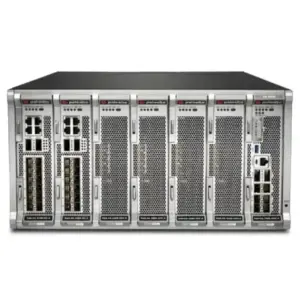
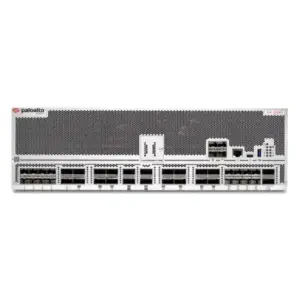
Direct answer: what is a malware analysis appliance?
A malware analysis appliance is a security platform that examines suspicious files, URLs or payloads in an isolated environment so their behaviour can be observed without exposing normal business systems. It is mainly used to identify unknown, evasive or previously unseen threats that may pass basic signature checks. Organisations with security operations teams, sensitive data, regulated workloads, high email volumes or complex network traffic may consider this category. Before proceeding, buyers should confirm sample sources, daily submission volume, supported operating environments, privacy and data-residency rules, integration points, reporting expectations, retention, high-availability needs, license terms and who will operate the platform. These details determine whether a physical appliance, virtual deployment, private analysis environment or cloud-assisted service is the better fit.
What the platform does
The platform receives suspicious objects from connected security controls or analyst submissions, applies static inspection, reputation checks, machine-learning methods and controlled execution where supported, then produces a verdict and investigation report. Depending on the chosen vendor and configuration, it may send detection intelligence back to firewalls, secure email gateways, endpoint controls, web gateways or orchestration systems.
The appliance does not replace the entire security stack. It adds a specialised analysis layer that can improve understanding of files and behaviours which ordinary preventive controls cannot confidently classify.
Who should consider it
The category is relevant to enterprises operating a SOC, organisations handling confidential or regulated information, managed security providers, financial institutions, healthcare environments, government departments, education networks, data centres and businesses that receive a high volume of files or links from external parties.
Smaller organisations may be better served by a cloud sandbox subscription already integrated with their firewall, email or endpoint platform. A dedicated appliance is most useful when there is a clear operational reason for local control, higher submission capacity, private analysis, deeper investigation or broader integration.
Business challenges a malware-analysis platform can address
Unknown-file uncertainty
Security teams regularly encounter attachments, downloads and payloads that are neither clearly safe nor already known to be malicious. Sandboxed execution can add behavioural evidence to the decision.
Fragmented security signals
A central analysis platform can enrich alerts from multiple controls, giving analysts a more consistent verdict, behavioural timeline and evidence set for investigation.
Sample-privacy concerns
Some organisations cannot send documents, executables or URLs to a public service. A private or local analysis design may provide greater control, subject to the selected platform and configuration.
Slow manual triage
Automated detonation, scoring and report generation can reduce repetitive analyst work, although expert review is still needed for ambiguous results and high-impact incidents.
Core capability areas to compare
Static inspection
File structure, metadata, signatures, embedded content, packers and known indicators may be examined before execution. Coverage differs by file type and vendor.
Dynamic analysis
Suspicious objects may be executed in controlled virtual environments to observe process, file, registry, memory and network behaviour.
Verdict and reporting
Reports should explain why an object was classified, show observed behaviour and provide indicators that analysts can use in response workflows.
Security integration
Connectors, APIs and native ecosystem links determine how quickly analysis results can improve blocking, triage and investigation across the environment.
Product-fit matrix for buyers
| Requirement | Suitable when | Confirm before ordering |
|---|
| Physical appliance | Local processing, dedicated resources, controlled network placement or predictable capacity is required. | Rack space, power, interfaces, redundancy, lifecycle, support and regional availability. |
| Virtual appliance | The organisation prefers existing virtual infrastructure and can allocate the required compute, storage and network resources. | Supported hypervisor or cloud, resource reservation, license model, scaling and snapshot restrictions. |
| Private analysis environment | Files must remain under organisational control or public-cloud submission is restricted. | Which telemetry may leave the environment, update path, signature sharing and data-retention policy. |
| Cloud-assisted sandbox | Rapid deployment, elastic analysis or integration with an existing security subscription is preferred. | Data residency, sample handling, service limits, supported regions and subscription term. |
| High-volume SOC use | Many sources submit samples and analysts need central investigation and automation. | Daily capacity, concurrent analysis, queue behaviour, retention, clustering and API limits. |
Buyer information table
| Topic | Malware analysis appliances and sandboxing platforms |
|---|
| Main purpose | Controlled inspection and behavioural analysis of suspicious files, URLs and payloads. |
|---|
| Suitable for | Enterprises, regulated organisations, SOC teams, service providers and environments with significant unknown-file risk. |
|---|
| Deployment types | Physical appliance, virtual appliance, private-cloud analysis and cloud-assisted service; model and vendor dependent. |
|---|
| Common integrations | Next-generation firewalls, secure email, endpoint protection, web security, SIEM, SOAR, NDR and ticketing systems; compatibility must be confirmed. |
|---|
| Licensing guidance | Subscription, support, update, capacity and feature entitlements vary by platform and term. |
|---|
| Customer inputs required | Sample sources, daily volume, file types, privacy policy, retention, integrations, sites, availability design and support expectations. |
|---|
| Availability guidance | Contact FourTeck to confirm current UAE options, licensing, quantity and vendor lead time. |
|---|
| Important note | Capabilities are model, version, configuration, license, region and integration dependent. |
|---|
Dependencies that shape the final design
A malware analysis appliance is not purchased in isolation. Its value depends on how samples reach it, how verdicts return to preventive controls, how analysts consume reports, and how the organisation handles sensitive data. Native integration with an existing firewall or email platform may simplify the workflow, while a multi-vendor SOC may place greater importance on standards-based APIs, syslog, STIX/TAXII support where available, SIEM parsing and SOAR playbooks.
Licensing may affect the number of submissions, virtual-machine images, operating systems, analysis techniques, retention, threat-intelligence updates, support access or clustered deployment. Buyers should request a written bill of materials that separates the appliance or virtual entitlement from subscriptions, support, optional modules, installation, configuration and training. This prevents an apparently complete quotation from missing an operational dependency.
A practical purchase and deployment journey
1Map submission sources
Identify firewalls, email gateways, endpoints, analyst portals, web controls, APIs and branch systems that will submit objects for analysis.
2Define capacity and privacy
Estimate daily and peak submissions, expected file sizes, retention, sensitive-data handling and whether samples may use external services.
3Shortlist deployment options
Compare hardware, virtual, private and cloud-assisted approaches against infrastructure, governance, scaling and operating requirements.
4Confirm bill of materials
Document the exact model or entitlement, subscriptions, support, accessories, virtual resources, implementation tasks and renewal terms.
5Implement and validate
Install or deploy, connect approved sources, apply handling policies, test benign samples, verify verdict flow and confirm logging.
6Operate and review
Assign owners, tune policies, monitor queues, maintain licenses, review reports and update incident-response procedures as the environment changes.
Capability focus: analysis depth without losing operational context
A strong platform should do more than label a sample as malicious or benign. Analysts need context showing what the object attempted to do, which processes were created, whether persistence was established, which network destinations were contacted, what files or registry items changed and which indicators can be used for containment. The exact evidence available depends on the analysis engines, operating images, file coverage and software version.
Static and dynamic techniques complement each other. Static inspection can be fast and useful for structure, metadata and known patterns, while dynamic analysis observes behaviour during controlled execution. Machine-learning methods and reputation services may add further scoring. Buyers should ask how the platform handles encrypted, password-protected, packed or evasive files, but they should not assume every sample can be fully detonated or that every malicious behaviour will appear during a limited analysis window.
Operational context also includes mapping a sample back to the user, email, endpoint, URL or network session that introduced it. This linkage can shorten investigation time and support containment. Confirm whether that context is preserved natively, requires integration with another product in the vendor ecosystem, or must be assembled in a SIEM or SOAR workflow.
Capability focus: privacy, residency and controlled submission
Sample handling is a procurement and governance decision, not merely a technical setting. Files submitted for malware analysis can contain business documents, personal information, source code, credentials or confidential attachments. Organisations should define which object types may be sent to a public cloud, which must remain within a private environment, how long samples and reports are retained, who can access them and whether discovered indicators may be shared with a wider threat-intelligence community.
A private appliance may support local analysis, but the exact behaviour of telemetry, reputation lookups, update services and optional cloud intelligence must be reviewed in the product documentation and proposed configuration. “On-premises” does not automatically mean that no metadata leaves the network. Similarly, a cloud service may have regional processing or privacy controls that meet the organisation’s requirements, but those conditions must be confirmed for the selected subscription and region.
FourTeck can help translate policy requirements into practical questions for vendors and implementation teams. Buyers should involve security, privacy, legal and infrastructure stakeholders early so that the final design supports both detection objectives and information-governance obligations.
Capability focus: integration and response automation
The appliance becomes more useful when analysis results influence the controls that protect users and systems. In a tightly integrated architecture, a secure email gateway may hold a suspicious attachment until a verdict is returned, a firewall may block a discovered destination, an endpoint platform may quarantine a host, and a SIEM may enrich an incident with behavioural evidence. However, such workflows depend on supported versions, licenses, connectors, policies and network reachability.
Buyers should distinguish between native integration, API-based integration and manual export. Native integration can be simpler but may work best within one vendor ecosystem. API-based integration provides flexibility but requires design, authentication, error handling and ongoing maintenance. Manual workflows may be acceptable for a low-volume research team but can become a bottleneck in a busy SOC.
Automation should be introduced carefully. A false or incomplete verdict can affect business traffic if it triggers immediate blocking. Many organisations begin with monitor-and-alert workflows, review the quality of verdicts, and then automate selected actions according to confidence level, asset criticality and incident severity.
Ideal business environments and use cases
Security operations centres
SOC analysts can submit suspicious objects, enrich alerts, extract indicators and support incident triage. High-volume teams should confirm capacity, queues, role-based access, API limits and report retention.
Secure email environments
Attachments and links can be analysed before delivery or after detection, depending on the email-security workflow. Confirm hold times, supported file types and the effect on user experience.
Regulated and confidential workloads
Private analysis may suit organisations with restrictions on sample sharing. Data handling, telemetry, updates and administration access must be documented rather than assumed.
Managed security services
Service providers may need tenant separation, scalable submission, central management, reporting and automation. Confirm whether the platform’s licensing supports the intended commercial use.
OT and isolated networks
Controlled environments may need analysis of files moving through transfer points. Supported file types, offline operation, update methods and safe network architecture require specialised planning.
Threat research teams
Researchers may value interactive analysis, detailed artefacts and custom workflows. A commercial appliance may complement, rather than replace, specialised reverse-engineering tools and laboratory controls.
Integration and operational considerations
Network design should separate the analysis environment from production resources while still permitting the controlled services needed for detonation, updates, reputation checks and report access. The selected platform may simulate internet services, provide controlled outbound connectivity or require specific DNS and routing arrangements. These details must follow vendor guidance and the organisation’s security policy.
Capacity planning should consider average and peak submissions, not only user count. A business with relatively few users can generate a high volume of email attachments, while a large organisation may submit only carefully selected objects. File size, analysis time, supported virtual environments, concurrency and duplicate-sample handling all influence practical throughput. Ask how the platform behaves when the queue is full and whether connected controls fail open, fail closed or defer delivery.
Operational ownership is equally important. Someone must monitor platform health, maintain licenses, apply updates, review failed analyses, tune submission policies, manage accounts, validate integrations and respond to detected threats. A product can generate excellent reports yet provide limited value if no process exists to review and act on them.
For broader architecture support, buyers can review FourTeck’s security and infrastructure services, browse the business security product portfolio, or discuss a specific requirement through the FourTeck contact team.
Buyer questions to resolve before requesting a quote
What will submit samples?
List every firewall, email gateway, endpoint tool, web control, analyst portal and external source, including model and software version.
How private are the samples?
Define whether files may leave the network, what metadata can be shared, how long artefacts may be retained and who may access reports.
What analysis capacity is needed?
Estimate average and peak submissions, file sizes, required verdict time, retention and growth over the planned service life.
Which actions should follow a verdict?
Decide whether results only inform analysts or automatically update blocking, quarantine, email release, case management or orchestration workflows.
Procurement checklist
✓ Exact vendor family and model or virtual entitlement
✓ Required quantity and deployment locations
✓ Expected daily and peak sample volume
✓ File, URL and payload types to be analysed
✓ Physical, virtual, private or cloud-assisted design
✓ Source-product versions and compatibility
✓ Subscription tier and required term
✓ Support level and renewal expectations
✓ Rack, power, compute, storage and network resources
✓ Sample privacy, residency and retention policy
✓ SIEM, SOAR, email, endpoint and firewall integration
✓ Installation, configuration and testing scope
✓ Administrator training and handover documentation
✓ Delivery coordination and warranty confirmation
How FourTeck supports selection and implementation planning
FourTeck can help convert a broad interest in malware analysis into a structured requirement. The process may include reviewing sample sources, understanding the existing security stack, identifying privacy constraints, estimating capacity, comparing deployment models and preparing questions for the selected vendor. This is especially useful when several teams are involved and each has different priorities around security, infrastructure, procurement and compliance.
For an accurate quotation, FourTeck can coordinate model or entitlement selection, licensing terms, support options, accessories and implementation services. The final scope should clearly state what is included: hardware or virtual licensing, subscriptions, delivery, installation, initial configuration, integration, testing, documentation, training and post-deployment support. Not every activity is automatically included in every quotation.
Organisations evaluating a broader security refresh may also review Fortinet firewall options in Dubai or explore the FourTeck firewall and cybersecurity portal. Product compatibility and licensing should always be confirmed against the exact proposed design.
UAE availability and support guidance
Contact FourTeck to confirm current UAE availability for the specific malware analysis appliance, virtual license, subscription term or related service required. Availability may depend on vendor, model, quantity, hardware revision, license region and current lead time. Because this page covers a product category rather than one fixed model, no stock or delivery commitment should be inferred.
Delivery and project coordination can be discussed after the exact requirement is confirmed. Where installation or configuration is needed, include that scope in the quotation and identify the destination site, rack or virtual environment, integration points, planned maintenance window and responsible customer contacts. Warranty and support terms should be checked for the selected model and service level.
Dubai, Abu Dhabi, Sharjah and Ajman coverage
FourTeck can coordinate requirement review, quotation preparation and project discussions for organisations in Dubai, Abu Dhabi, Sharjah and Ajman. The appropriate engagement may involve remote discovery, site information, architecture review and coordination with customer IT or security teams. On-site activity, delivery arrangements and implementation scope depend on the selected product, location, access conditions and agreed quotation. Buyers should share the exact deployment address, number of sites, rack or virtual-platform details, network dependencies and preferred project schedule so that practical requirements are considered before procurement.
GCC availability
FourTeck can assist organisations planning malware-analysis and sandboxing projects across GCC markets, including the United Arab Emirates, Saudi Arabia, Kuwait, Qatar, Bahrain and Oman. Assistance can cover requirement review, deployment-model comparison, appliance or license selection, quotation coordination, configuration scope, installation planning and renewal guidance. Regional projects often require early confirmation of where samples will be processed, whether cloud submission is permitted, which security products must integrate and who will operate the platform after deployment.
Product availability, licensing, delivery schedules, service visits, project scope and vendor lead times can vary by country, model, quantity and requirement. Buyers should provide the destination country, chosen vendor family where known, expected quantity, license term, deployment location and preferred timeline. FourTeck can then help structure a suitable request, but local stock, customs outcomes, fixed delivery dates and country-specific certifications should not be assumed unless they are confirmed in writing for the exact order.
Africa availability
Organisations in Africa evaluating malware analysis appliances can work with FourTeck on product comparison, licensing, subscriptions, accessories, deployment requirements, configuration scope, support needs and regional procurement planning. Requirements may differ between a central SOC, a financial institution, a government environment, a managed security provider or a distributed enterprise. Buyers in East Africa, including Kenya and Uganda, as well as other African regions, should define whether analysis must remain local, which sources will submit samples and what level of integration is needed.
Availability and fulfilment can depend on the destination, exact model, quantity, license region, power and regulatory requirements, shipping arrangements, vendor lead time, installation scope and local project conditions. Share the destination country, exact product or service requirement, expected quantity, preferred deployment schedule and support expectations so FourTeck can provide appropriate guidance. Local inventory, immediate shipment, customs outcomes and country-wide on-site coverage are not guaranteed. Regional information is also available through FourTeck Africa and FourTeck Kenya.
Related products and services to consider
Next-generation firewalls
Firewalls may submit suspicious objects and consume verdicts or signatures. Confirm native integration and required subscriptions.
Secure email gateways
Email security can hold or analyse attachments and links. Check supported workflows, release policies and expected verdict time.
Endpoint detection and response
Endpoint platforms can contribute samples and use analysis intelligence for investigation or containment, subject to ecosystem support.
SIEM and SOAR integration
Central logging and orchestration can enrich incidents, automate submissions and coordinate approved response actions.
Implementation services
Deployment planning, configuration, integration testing, policy tuning and administrator handover can be included as a defined service scope.
Renewal and lifecycle review
Subscriptions, support and platform versions require ongoing review so analysis coverage and integrations remain operational.
Why businesses contact FourTeck
Buyers often contact FourTeck when the requirement is clear at a business level but not yet translated into an exact model, license and implementation scope. Malware-analysis products involve more than choosing a chassis or virtual machine. The decision includes sample sources, privacy, capacity, retention, integration, administration, support and renewal planning.
FourTeck can assist with requirement clarification, product-family comparison, bill-of-material guidance, compatibility questions, quotation coordination and installation planning. For organisations replacing an existing platform, the discussion can also cover migration considerations, parallel testing, policy transfer, integration changes and operational handover. Any migration scope depends on the source and target platforms and should be assessed before a commitment is made.
To understand the company and its broader technology focus, visit About FourTeck. For a project-specific discussion, use the business technology contact page.
Frequently asked questions
Is a malware analysis appliance the same as antivirus?
No. Antivirus and endpoint protection focus on detecting and preventing threats on systems. A malware analysis appliance specialises in examining suspicious objects in an isolated environment and producing behavioural evidence. The technologies can complement each other, and integration varies by product.
Should we choose hardware, virtual or cloud analysis?
The choice depends on sample privacy, infrastructure, submission volume, scaling, management preference and integration. Hardware can provide dedicated local resources, virtual deployment can use existing infrastructure, and cloud services can simplify scaling. Confirm exact regional and licensing conditions.
Can all suspicious files be analysed?
No platform analyses every object perfectly. Coverage depends on supported file types, operating images, encryption, file size, analysis time and evasion techniques. Buyers should compare coverage against the files most common in their environment.
Do samples have to leave our network?
Not always. Some platforms support local or private analysis, while others use cloud services or optional intelligence sharing. Review sample, metadata, telemetry and update flows for the exact design rather than relying only on the deployment label.
What licenses are normally required?
Licensing can include appliance support, threat-intelligence updates, analysis capacity, virtual environments, cloud services, management features or premium support. The structure is vendor and model dependent, so request an itemised bill of materials.
Can the appliance integrate with our firewall and email security?
Possibly, but compatibility must be confirmed using the exact product models, software versions, subscriptions and connector requirements. Native ecosystem integration may differ from API-based multi-vendor integration.
How do we size a malware analysis platform?
Sizing should consider average and peak submissions, file sizes, analysis duration, concurrent jobs, retention, source systems, expected growth and high-availability needs. User count alone is not sufficient.
Does FourTeck provide installation and configuration?
Installation, configuration, integration and testing can be discussed and included as a defined quotation scope where required. The work depends on the selected platform, customer environment, access, integrations and project responsibilities.
Is the appliance currently available in Dubai?
Availability depends on the vendor, model, license, quantity and current lead time. Contact FourTeck with the exact requirement to confirm UAE options and delivery coordination.
What information is needed for a quotation?
Provide the preferred vendor if known, sample sources, daily volume, deployment type, privacy rules, integration list, quantity, sites, license term, support level and required services. These details help produce a more accurate proposal.
Plan the right malware-analysis architecture
Share your security stack, sample volume, privacy requirements and preferred deployment model. FourTeck can help structure the requirement, review suitable options and prepare a quotation with the necessary licenses and implementation scope.