

INDOOR WI-FI 6 • 2×2:2 • BUSINESS WIRELESS
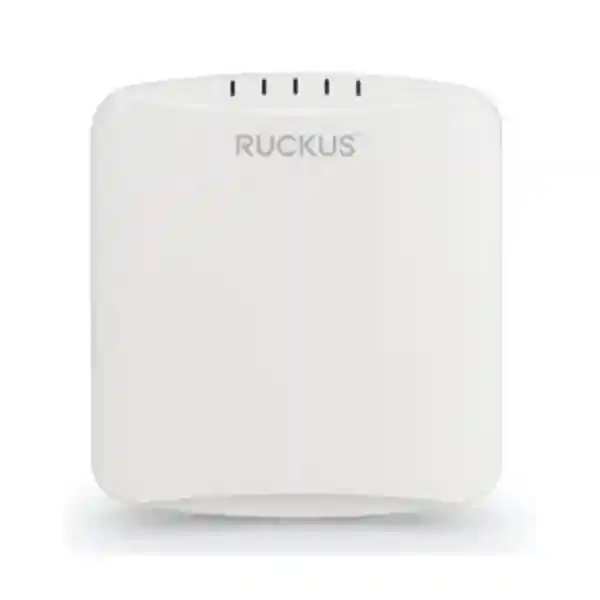
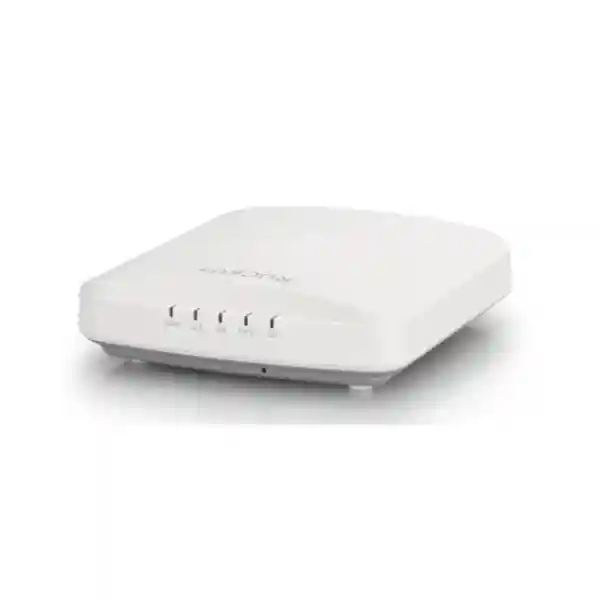
RUCKUS R350 Indoor Access Point
The RUCKUS R350 is an entry-level indoor Wi-Fi 6 access point designed for smaller venues that still expect business-class wireless performance. It combines dual-band 802.11ax connectivity with RUCKUS BeamFlex adaptive antenna technology, ChannelFly channel selection, SmartMesh support and flexible management choices. FourTeck helps buyers turn those capabilities into a practical deployment plan by checking coverage goals, device density, uplink design, power method, management platform, security segmentation, installation scope and regional procurement requirements before a quotation is finalized.
Direct answer for buyers
Choose the R350 when you need a compact indoor Wi-Fi 6 AP for a smaller office, retail area, remote workplace, meeting zone or similar site and a 2×2:2 radio design with a single Gigabit Ethernet uplink fits the expected load. For larger client populations, multi-gigabit uplinks, higher spatial-stream capacity or more demanding high-density environments, compare higher RUCKUS models before standardizing the design.
What the RUCKUS R350 is designed to do
The RUCKUS R350 Indoor Access Point is a dual-radio Wi-Fi 6 access point for indoor environments. RUCKUS lists it as a 2×2:2 platform supporting the 2.4 GHz and 5 GHz bands, with maximum PHY rates of 574 Mb/s on 2.4 GHz and 1,200 Mb/s on 5 GHz for a combined maximum PHY rate of 1,774 Mb/s. The manufacturer also lists up to 256 concurrent users, one 1 GbE Ethernet port, BeamFlex, ChannelFly, SmartMesh, IoT-ready positioning and support for several management modes. These are platform capabilities, not promises that every user will experience the headline PHY rate. Real throughput depends on client capability, channel width, interference, distance, walls, airtime utilization, neighboring networks, uplink capacity, traffic mix and configuration.
The product is especially relevant to buyers who want to replace consumer-style wireless with a centrally manageable business access point without moving immediately to a higher-tier radio platform. Typical questions include: Is one R350 enough for the site? How many access points are required? Should the installation use RUCKUS Unleashed, SmartZone, cloud management or another supported method? Is existing Ethernet suitable? Does the PoE source match the selected unit and installation? Where should the AP be mounted? How will staff, guest and device networks be separated? These questions matter more than simply comparing a maximum wireless rate.
FourTeck can help structure the pre-sales review so the quotation reflects the complete requirement rather than only an access point part number. A useful enquiry should include floor size, layout, wall construction, expected users and devices, existing switches, available PoE, internet bandwidth, desired SSIDs, guest access requirements, existing RUCKUS management environment if any, target installation location and whether configuration or deployment support is required.
Wi-Fi generation
Wi-Fi 6 using IEEE 802.11ax, with backward support for listed earlier 802.11 a/b/g/n/ac standards.
Radio design
Dual-radio, 2×2:2 on 2.4 GHz and 5 GHz, aimed at smaller indoor business environments.
Wireless optimization
BeamFlex adaptive antenna patterns, ChannelFly channel selection and SmartMesh support.
Wired uplink
One 1 GbE Ethernet port; switching, cabling and PoE planning should be checked before deployment.
Verified RUCKUS R350 specifications
| Item | Manufacturer-listed specification | Buying implication |
|---|---|---|
| Product type | Indoor access point | Use indoors within the stated environmental range; do not treat it as an outdoor-rated AP. |
| Wi-Fi | Wi-Fi 6; IEEE 802.11a/b/g/n/ac/ax | Suitable for mixed client fleets while giving Wi-Fi 6 clients access to 802.11ax capabilities. |
| Bands | 2.4 GHz and 5 GHz | Plan channel use and client steering around local RF conditions rather than treating both bands identically. |
| Radio chains / streams | 2×2:2 | Good fit for compact business areas; higher-tier APs may suit denser or more demanding zones. |
| Maximum PHY rate | 574 Mb/s at 2.4 GHz; 1,200 Mb/s at 5 GHz; 1,774 Mb/s combined | PHY rates are signaling figures, not guaranteed application throughput. |
| Concurrent users | Up to 256 | Do not size only by the published maximum; active application demand and airtime determine practical density. |
| Ethernet | 1 x 1 GbE | Confirm switching, VLANs, PoE source and cable quality before installation. |
| Antenna technology | BeamFlex; up to 64 antenna patterns per band; up to 3 dBi gain | Adaptive patterns can help optimize RF paths, but site design still matters. |
| Other RUCKUS features | ChannelFly, SmartMesh, PD-MRC, IoT Ready | Check the intended management, mesh and IoT architecture before purchasing accessories or licenses. |
| Management support | RUCKUS Cloud, SmartZone, Unleashed, ZoneDirector and standalone listed by the manufacturer | Confirm current software compatibility and entitlement for the exact deployment. |
| Operating temperature | 0°C to 40°C | Install in a suitable controlled indoor location and avoid heat-trapping enclosures. |
Coverage, capacity and AP quantity planning
A buyer searching for “RUCKUS R350 coverage,” “how many R350 access points do I need,” or “R350 for office Wi-Fi” usually needs a design answer rather than a single distance figure. Indoor coverage changes with walls, glass, shelving, lift cores, doors, ceiling construction, adjacent networks and the transmit capability of the client device. A phone at the edge of coverage may become the practical limit even when the access point itself can transmit farther. The correct quantity should therefore be based on the floor plan, required signal quality, expected concurrent activity and roaming requirement.
For a small site, one AP may be enough when the layout is open and demand is modest, but that should not be assumed from square metres alone. Multi-room offices, long corridors, dense meeting areas, guest zones, training rooms or sites with heavy masonry may require more access points at lower power rather than one device trying to cover everything. Where voice over Wi-Fi, real-time collaboration or roaming matters, placement and cell overlap should be planned deliberately. FourTeck can review available drawings and site information to help estimate an initial AP count, while larger or RF-sensitive projects may benefit from a formal wireless survey or post-install validation.
RUCKUS R350 management and integration guidance
The R350 supports multiple RUCKUS management approaches, which is useful but also creates an important procurement question. A buyer adding one AP to an existing RUCKUS estate should identify the current platform, software version and licensing before ordering. A buyer starting a new small wireless deployment may prefer a simpler management model, while a larger multi-site organization may prioritize centralized policy, monitoring and lifecycle operations. The access point hardware should not be selected in isolation from that management decision.
Integration planning should also include VLAN design, DHCP, DNS, authentication, guest access, firewall policy, switching and PoE. A secure deployment normally separates corporate users, guests and unmanaged devices according to business policy instead of placing every wireless device on one flat LAN. The AP uplink should connect to a switch port configured for the required VLANs, and upstream firewall rules should control traffic between segments. Customers building this wider architecture can review FourTeck’s firewall product portfolio and network security deployment services when wireless segmentation is part of a broader secure-network project.
Where a compact firewall is also being evaluated for the same branch, the Palo Alto Networks PA-410 illustrates a small-site security gateway that uses separate access points for wireless, while the Palo Alto Networks PA-415 adds PoE-capable ports that may be relevant in selected compact designs. These links are not claims of direct RUCKUS certification; they are adjacent infrastructure references for buyers planning the full branch network.
RUCKUS R350 Indoor Access Point Dubai
Organizations searching for a RUCKUS R350 Indoor Access Point in Dubai are often comparing three things at the same time: whether the model is technically suitable, what is required to install it correctly, and how to obtain a reliable commercial quotation. The R350 fits smaller indoor business areas where a 2×2:2 Wi-Fi 6 platform, one Gigabit Ethernet uplink and RUCKUS wireless optimization technologies are appropriate. That can include professional offices, reception areas, small retail spaces, clinics, meeting zones, training rooms, branch locations and other indoor areas where users expect stable Wi-Fi for cloud applications, web access, messaging, video meetings, business systems and mobile devices. The correct design depends on the site rather than the city name alone.
For a Dubai project, the useful pre-sales conversation should begin with floor plans, wall construction, ceiling access, cabling routes, switch location, existing PoE capacity, expected client devices and the number of SSIDs required. If the office already has structured Cat5e or better cabling, the cable condition and termination still need to be checked before relying on it for both data and power. If the AP will be ceiling mounted, mounting position should avoid obstructions and should support service access later. Buyers should also decide whether the R350 joins an existing RUCKUS management platform or forms part of a new wireless environment. That choice can affect software planning, configuration and support.
Dubai buyers frequently search for “RUCKUS R350 price Dubai,” “RUCKUS R350 supplier UAE,” “R350 Wi-Fi 6 access point Dubai” and “RUCKUS access point installation Dubai.” A product page should not invent a fixed price or stock status because the final commercial offer may vary with quantity, sourcing, regional part selection, accessories, power requirements and service scope. FourTeck can instead prepare a current quotation after the requirement is defined. For projects that also need secure internet access, VLAN policy or guest-network separation, the wider FourTeck UAE technology platform can be used as a regional reference while the final wireless and security design is confirmed.
RUCKUS R350 Indoor Access Point UAE
A UAE buyer evaluating the RUCKUS R350 Indoor Access Point may be planning a single office, a group of branches, a retail rollout or a replacement for older wireless hardware. The first question is whether the R350’s role matches the environment. It is a compact indoor Wi-Fi 6 AP with 2×2:2 streams, dual 2.4 GHz and 5 GHz radios, a single 1 GbE uplink, BeamFlex, ChannelFly and SmartMesh. That specification is useful for many smaller sites, but it should not be stretched into a high-density requirement simply because the published concurrent-user figure is high. User count, active traffic, room layout, channel reuse, application demand and client capabilities all affect practical capacity.
For a multi-emirate organization, standardization can simplify support. The same SSID naming, VLAN design, authentication method, switch configuration and management platform can be repeated where sites have similar requirements. However, each location still needs a coverage check because building materials and layouts vary. One branch may need one R350 while another may require several APs or a higher-tier model in meeting areas. Procurement should therefore separate the standard design from site-specific exceptions. The bill of materials should identify access points, brackets or mounting needs, PoE source, switching, any licenses or management entitlement, configuration services and acceptance testing.
Common UAE search intent includes RUCKUS R350 supplier UAE, R350 wireless access point quotation, business Wi-Fi 6 access point UAE and RUCKUS deployment support. FourTeck can review these requirements without assuming inventory, delivery date or warranty terms before a formal quote is issued. If the access points will sit behind a new security gateway, compare the branch firewall design at the same time. The Barracuda CloudGen Firewall F12 and Barracuda CloudGen Firewall F18 Revision B are examples of security products on the same site that can help buyers think about the protected edge alongside Wi-Fi, while compatibility and sizing must be assessed independently for the final network.
RUCKUS R350 Indoor Access Point Uganda
Customers searching for the RUCKUS R350 Indoor Access Point in Uganda may be upgrading a business network, opening a branch, replacing consumer Wi-Fi or standardizing wireless across several sites. The R350 is best approached as part of the whole LAN rather than as an isolated radio. Its one Gigabit Ethernet uplink needs a dependable wired path, and the chosen PoE method must be compatible with the deployment. Switch capacity, cable quality, rack power, internet bandwidth, firewall policy and IP addressing all influence the experience users receive. If any of those foundations are weak, a newer Wi-Fi 6 access point cannot compensate for them.
For Uganda deployments, a useful quotation request should identify the city, number of sites, quantity, floor layout, expected user population, device mix and whether the project is a new installation or an addition to an existing RUCKUS environment. Organizations with several branches should decide whether centralized monitoring is important and whether the management method is already standardized. If links between sites have different internet capacities, wireless configuration can still be standardized while bandwidth policies and local service expectations remain site-specific. Guest access, employee access and device networks should be separated where the business requires controlled traffic boundaries.
Searches such as RUCKUS R350 Uganda price, RUCKUS access point Kampala, Wi-Fi 6 access point Uganda and business wireless supplier Uganda usually indicate both procurement and deployment intent. Instead of relying on an unverified online price, buyers should request a quote that states the exact unit, quantity, regional part requirement, accessories, service scope and commercial terms. FourTeck’s Uganda IT solutions site provides local-market context for networking and business technology enquiries. For the R350 specifically, the technical review should still be anchored to the manufacturer’s published capabilities and the actual site conditions rather than broad assumptions about wireless range.
RUCKUS R350 Indoor Access Point Kampala
A Kampala buyer looking for the RUCKUS R350 Indoor Access Point is often solving a more specific problem than “need Wi-Fi.” The requirement may be an office with dead zones, a reception and meeting area that needs better capacity, a growing business that wants centrally managed wireless, or a branch that needs the same network experience as headquarters. The R350 can fit compact indoor deployments where 2×2:2 Wi-Fi 6 is enough and the wired infrastructure can supply a stable Gigabit uplink. The important design question is how many cells the site needs and where those cells should be placed to provide coverage without excessive overlap or interference.
In Kampala offices with multiple rooms, the number of walls between the access point and users can matter more than the straight-line distance. Mounting the AP in a corridor simply because cabling is easy may leave meeting rooms or enclosed work areas with weaker performance. A better planning process marks where people actually work, which rooms carry the heaviest traffic, where guests connect and where roaming should be seamless. The AP count can then be estimated around those user areas. After installation, signal and performance testing should verify assumptions, especially when real-time voice or video is important.
Commercially, buyers should ask for more than the R350 unit price. Confirm whether the quotation includes the correct regional part, mounting hardware supplied with the selected package, required power option, management entitlement if applicable, configuration, installation, cabling work, travel or site access and post-deployment support. If the R350 will connect to an existing managed switch, provide the switch model and available PoE information in advance. If the network is being built from scratch, include switching, firewall, DHCP and VLAN requirements in the design so the access point is not installed on an unplanned flat network. This approach produces a Kampala deployment that is easier to support and expand than a simple device-for-device replacement.
RUCKUS R350 Indoor Access Point Arua
Organizations evaluating a RUCKUS R350 Indoor Access Point in Arua should start by defining what “good Wi-Fi” means for the site. A small administration office may prioritize dependable access to cloud applications and email. A training space may have bursts of many connected laptops or phones. A guest-facing environment may need a separate visitor SSID and controlled internet access. A branch may need reliable wireless for staff while business applications remain hosted elsewhere. The R350 can support these types of indoor use cases when its coverage and capacity fit the layout, but the design should be based on active demand rather than only the number of devices that might connect.
For an Arua deployment, infrastructure readiness deserves particular attention before equipment is ordered. Confirm that the access point position can be reached with suitable Ethernet, that the switch can provide the required network and power connection, and that the equipment location is protected from heat, moisture and uncontrolled physical access. If power interruptions are a business concern, the wireless design should be considered together with the switch and upstream router or firewall because powering only the AP does not preserve connectivity when the rest of the network is offline. A UPS strategy, where required, should therefore cover the complete critical path according to the organization’s continuity needs.
Buyers searching for RUCKUS R350 Arua, RUCKUS Wi-Fi 6 access point Arua or enterprise wireless Arua should also verify the after-sale operating model. Who will administer SSIDs, passwords, VLANs and firmware? Who can access the management platform? How will configuration backups or documentation be maintained? Who will troubleshoot a problem that appears to be Wi-Fi but is actually an ISP, switch, DHCP or firewall issue? Defining ownership before installation prevents the access point from becoming an unmanaged device after handover. FourTeck can use the site details, intended management approach and required support scope to prepare a clearer quotation and deployment discussion without making unsupported assumptions about local stock or delivery time.
RUCKUS R350 Indoor Access Point Mbarara
A RUCKUS R350 Indoor Access Point project in Mbarara can be planned efficiently when the buyer separates three layers: radio coverage, wired infrastructure and network policy. Radio coverage concerns where the APs are mounted and how clients move between them. Wired infrastructure covers Ethernet cabling, switching, PoE, uplinks and internet connectivity. Network policy covers staff access, guest access, device isolation, authentication and the traffic permitted between VLANs. Many Wi-Fi complaints originate outside the radio layer, so treating all three together gives the project a stronger starting point.
The R350’s 2×2:2 Wi-Fi 6 design can suit smaller offices, retail zones, consultation rooms, reception spaces and branch environments when the capacity requirement is moderate. For locations with several busy meeting rooms, dense classrooms, larger public areas or many simultaneous high-bandwidth users, the design should compare whether additional R350 units or a higher-tier RUCKUS model provides the better result. Simply increasing transmit power is not a substitute for capacity planning because clients also need to transmit back to the AP, and large cells can create roaming and airtime problems.
Procurement teams in Mbarara should request a bill of materials rather than a one-line access point price. The quotation should state quantity, exact model or regional ordering requirement, included accessories, external power or PoE items if needed, management or licensing items where applicable, installation services, configuration scope and support assumptions. If the wireless network must integrate with existing authentication, firewall policies or IP addressing, provide those details before configuration is scheduled. A short design worksheet with floor size, wall layout, expected users, existing switch model, internet speed and preferred SSIDs can prevent repeated revisions later. This makes the commercial comparison more meaningful because competing quotes can be evaluated on equivalent scope rather than on an apparently low hardware price that omits required components.
RUCKUS R350 Indoor Access Point Gulu
Businesses and institutions considering the RUCKUS R350 Indoor Access Point in Gulu should focus on predictable coverage and maintainable installation. An AP installed in the easiest ceiling position is not always installed in the best RF position. The preferred location should consider where people work, which walls attenuate signals, whether ceilings conceal metal or services, how far the cable run is from the switch and whether technicians can access the unit later. If several APs are used, cell boundaries and channel planning matter as much as the individual device specification.
The R350 supports the 2.4 GHz and 5 GHz bands, but the two bands behave differently in real buildings. 5 GHz can provide useful capacity and wider channel choices, while 2.4 GHz may reach farther through some obstacles but has fewer non-overlapping channels and often more interference. A good deployment does not force every client onto one band blindly. The design should allow capable clients to use 5 GHz where appropriate while keeping 2.4 GHz available for devices that need it. RUCKUS features such as BeamFlex and ChannelFly support radio optimization, yet they do not remove the need for a clean physical design.
For Gulu procurement, buyers can reduce uncertainty by providing exact quantities only after a preliminary coverage review. If the building is not yet cabled, define AP positions before the cabling contractor finishes the ceiling so data outlets appear where the radios are needed rather than where installation is merely convenient. If the project is an upgrade, document the current problems: dead zones, slow rooms, frequent disconnects, guest-network limitations, congestion or management difficulty. Those symptoms help distinguish a placement problem from a capacity or upstream network problem. A FourTeck quotation can then address the access points, switching and power assumptions, configuration and deployment scope together, while final availability and lead time remain subject to confirmation rather than being implied by the page.
RUCKUS R350 Indoor Access Point Kenya
Kenya buyers searching for the RUCKUS R350 Indoor Access Point often compare local pricing, wireless generation, management options and suitability for offices or branches. The verified hardware profile is straightforward: indoor Wi-Fi 6, dual-radio operation on 2.4 GHz and 5 GHz, 2×2:2 streams, one Gigabit Ethernet port, BeamFlex, ChannelFly, SmartMesh and manufacturer support for multiple RUCKUS management approaches. The decision becomes more nuanced when the site is larger, users are highly active or the organization needs consistent roaming across several zones. In those cases the AP model and AP count should be compared together rather than choosing one device first and trying to stretch it across the building.
A Kenya project should document the existing LAN before ordering. Managed PoE switching is often useful because it can power the access points, carry multiple VLANs and provide visibility into uplink status from a central point. If the network already has switches, confirm their PoE capability, available power budget, software support and port configuration. If several APs share the same switch, the total PoE draw and uplink utilization should be considered as a group. Cabling should be tested where its condition is uncertain, because intermittent Ethernet faults can appear to users as random wireless failures.
Search intent around RUCKUS R350 Kenya price, RUCKUS access point Nairobi, enterprise Wi-Fi Kenya and R350 supplier Kenya usually also includes installation and support questions. FourTeck’s Kenya technology site can support regional product and networking enquiries. For an accurate R350 quotation, include the destination, quantity, whether the APs are new or joining an existing controller, the switch model, required SSIDs, expected users and preferred deployment date. Final commercial terms should be confirmed against the accepted quote because regional sourcing, quantity, service scope and accessories can change the total project cost.
RUCKUS R350 Indoor Access Point Kuwait
The RUCKUS R350 Indoor Access Point can be considered for Kuwait offices, professional environments, branches and smaller indoor business areas that need Wi-Fi 6 without moving to a larger high-density platform. The manufacturer lists an operating range up to 40°C, which reinforces an important deployment principle: the AP is an indoor device and should be mounted in a suitable conditioned environment rather than in uncontrolled hot spaces, roof voids or enclosures that trap heat. Ceiling position, surrounding airflow and access for maintenance should be reviewed before installation.
Kuwait buyers frequently search for RUCKUS R350 price Kuwait, business Wi-Fi access point Kuwait, RUCKUS supplier Kuwait and Wi-Fi 6 office installation. The useful comparison should cover more than hardware price. Check whether the proposed quantity is based on the floor layout, whether the existing switch can power all APs, whether VLANs and guest access are included, and whether configuration is delivered through a suitable management platform. If an organization has multiple sites, centralized management can simplify policy consistency, but internet connectivity and local switch architecture should still be checked at each location.
The FourTeck Kuwait business IT site provides regional context across networking, Wi-Fi and security. For a R350-specific enquiry, send the number of sites, floor plans where available, estimated active users, existing switch details, preferred SSIDs, authentication requirement and target installation scope. If the buyer needs only hardware, say so clearly. If configuration, mounting, cabling, testing or handover documentation is required, include those services in the request so the quotation can distinguish equipment cost from professional work. Final availability, warranty handling and delivery expectations should be documented in the commercial offer rather than assumed from a generic product listing.
RUCKUS R350 Indoor Access Point Ghana
A Ghana customer evaluating the RUCKUS R350 Indoor Access Point may be looking for stronger coverage, easier Wi-Fi administration or a more professional wireless design than standalone consumer routers can provide. The R350 is suitable for compact indoor environments where its 2×2:2 Wi-Fi 6 radios and single Gigabit Ethernet connection match the expected workload. That can be useful for business workspaces, reception areas, meeting rooms, service counters and branch offices, provided the AP count is based on the actual plan rather than a generic coverage radius.
For a Ghana project, the network should be designed as one system. The firewall controls internet and inter-network policy, the switch carries VLANs and may provide PoE, the cabling connects the AP reliably, and the access point delivers the wireless service. A fault or bottleneck in any layer can affect the user experience. Before purchasing, verify that DHCP can supply addresses to each SSID, DNS is reachable, required VLANs exist end-to-end and firewall rules allow only the intended traffic. Guest access should normally be isolated from internal business resources according to organizational policy, while management access to network devices should be restricted to authorized administrators.
Searches such as RUCKUS R350 Ghana, Wi-Fi 6 access point Accra, RUCKUS business wireless Ghana and enterprise access point price Ghana show that buyers often want both technical and commercial clarity. A strong quotation should identify exact model, quantity, regional ordering requirement, included or optional accessories, power arrangement, management platform, service scope and support assumptions. The wider FourTeck Africa technology platform provides regional networking and Wi-Fi context for organizations planning projects across several African markets. For Ghana specifically, the R350 deployment should still be reviewed around local site conditions, destination, quantities and existing infrastructure so that no unsupported delivery or stock promise is built into the project plan.
RUCKUS R350 Indoor Access Point Nigeria
Nigeria buyers considering the RUCKUS R350 Indoor Access Point may be dealing with anything from a compact professional office to a multi-site branch program. The R350 can serve as a standardized small-site AP where 2×2:2 Wi-Fi 6 is sufficient, but standardized hardware should not mean identical AP counts at every location. A larger branch with enclosed rooms, busy waiting areas or heavy meeting-room demand may need more access points than a similarly sized open office. Capacity and coverage are different design problems, and both should be considered before quantities are fixed.
For multi-site deployments, central configuration can reduce variation. SSIDs, security methods, VLAN identifiers, management access, naming conventions and monitoring can follow one template while local IP subnets and uplink details remain site-specific. This approach is easier to troubleshoot than allowing every branch to be installed differently. The organization should also document the replacement process for a failed AP, administrative credentials, firmware policy and the person or team responsible for changes. Operational ownership matters because wireless networks evolve as new devices, applications and security requirements are introduced.
Common commercial searches include RUCKUS R350 Nigeria price, RUCKUS supplier Lagos, RUCKUS access point Abuja, enterprise Wi-Fi Nigeria and Wi-Fi 6 access point for office. Buyers should be careful when comparing online listings because model descriptions can contain incorrect port counts, speeds or accessory assumptions. Use the manufacturer specification as the technical baseline and request a formal quote for the exact requirement. FourTeck can review destination, quantity, management choice, PoE and switching, configuration scope and support expectations before presenting commercial terms. If a site also needs new cabling or switching, include that in the project rather than purchasing the AP first and discovering later that the existing LAN cannot support the intended design.
RUCKUS R350 Indoor Access Point Seychelles
The RUCKUS R350 Indoor Access Point can fit Seychelles organizations that need reliable indoor wireless for smaller office, hospitality-support, professional or branch spaces, subject to site-specific design. Because the R350 is an indoor AP, deployment planning should keep it in a suitable interior environment and avoid treating it as an outdoor or exposed device. Where wireless coverage must extend to terraces, external walkways or outdoor public areas, an appropriately rated outdoor access point should be evaluated instead of mounting the R350 where humidity, direct weather exposure or heat may exceed the product’s intended use.
For island or remote-site procurement, clarity in the bill of materials is especially useful because missing accessories can delay commissioning. Confirm the exact AP quantity, mounting requirement, PoE source, switch ports, cabling, management platform and any spare units or support items the organization wants to hold. If the business has several properties or locations, a consistent wireless standard can simplify administration, but each building should still be checked for floor layout, construction materials, user density and internet service. Wireless performance cannot exceed the limitations of the upstream connection, so high-quality Wi-Fi inside the building should be planned together with the available WAN service.
Search terms such as RUCKUS R350 Seychelles, RUCKUS access point price Seychelles, business Wi-Fi Seychelles and indoor Wi-Fi 6 AP Seychelles typically combine purchase intent with questions about support and delivery. FourTeck can prepare a requirement-led quotation after the destination, quantity and installation scope are known. The quotation should make clear what is included and should not imply immediate stock, fixed lead time or a universal warranty condition unless those items are verified for the proposed supply route. Buyers can also ask for a deployment checklist covering switch configuration, VLANs, SSIDs, security settings, testing and handover so the product arrives as part of a workable wireless project rather than as a standalone box.
How to decide whether the R350 is the right RUCKUS model
The R350 is positioned as an entry-level Wi-Fi 6 indoor access point. That makes it attractive when the project values compact form factor, Wi-Fi 6 capability, RUCKUS adaptive antenna technology and management flexibility without requiring the capacity of a higher-tier AP. It should be compared against the real workload, not against a marketing label. If a location has dense lecture-style seating, large event areas, many simultaneous video users, heavy scanning or voice mobility, multi-gigabit wired requirements or a very high number of active clients per cell, a higher RUCKUS model may provide more radio or uplink headroom.
Conversely, buying a larger AP does not automatically fix poor placement, congested channels or weak cabling. A well-placed R350 in a suitable small office can outperform an over-specified AP installed behind obstacles or connected to an unreliable switch. Model selection and RF design therefore belong in the same conversation. Buyers should map each area by expected activity: low-use offices, meeting rooms, shared spaces, guest areas, training rooms and high-traffic zones. The selected AP can then match each zone rather than forcing one model across every use case without review.
When comparing quotes, ask whether each supplier is quoting the same R350 variant, the same management assumption, the same power method and the same service scope. A lower hardware price can become more expensive if required PoE, licenses, brackets, cabling or configuration are omitted. FourTeck’s role is to help turn the wireless requirement into a bill of materials that can be evaluated technically and commercially before purchase.
PoE, switching and cabling checklist
Switch capacity
Confirm enough Ethernet ports, the correct PoE capability for the exact R350 ordering configuration, sufficient total PoE budget for all connected devices, and uplink capacity from the access switch toward the core or firewall.
Cabling
Use suitable Ethernet cabling, keep runs within standards, test questionable existing links and label both ends. A cable that passes basic connectivity can still create errors under load or PoE.
VLANs and security
Define staff, guest and device networks before deployment. Configure the switch trunk and firewall policy so SSIDs map to the intended network boundaries with controlled access.
Resilience
If uptime matters, protect the switch, firewall/router and internet equipment together. A powered AP cannot provide business connectivity when the upstream network is unavailable.
Related secure-network resources on Firewall Dubai
Wireless access points depend on the rest of the network. Buyers planning the R350 alongside firewall renewal, VLAN segmentation or secure branch connectivity can use these same-site resources as supporting references. They are not presented as RUCKUS accessories; they cover the security layer that commonly sits upstream from business Wi-Fi.
- Firewall products — compare security gateway categories when wireless users and guest networks need controlled internet access.
- Firewall and network security services — useful where VLAN policy, VPN, routing or secure network configuration is part of the project.
- Palo Alto Networks PA-410 — a compact firewall reference for sites that use separate access points.
- Palo Alto Networks PA-415 — a branch firewall example with PoE-capable interfaces, relevant when evaluating compact edge designs.
- Barracuda CloudGen Firewall F12 — another compact security reference for branch network planning.
- Barracuda CloudGen Firewall F18 Revision B — a related security gateway option for buyers comparing branch edge architectures.
- About FourTeck Firewall Dubai — background on the site’s security and infrastructure focus.
Frequently asked questions about the RUCKUS R350
Is the RUCKUS R350 Wi-Fi 6?
Yes. RUCKUS lists the R350 as an indoor Wi-Fi 6 access point supporting IEEE 802.11ax along with earlier listed Wi-Fi standards.
What is the maximum wireless rate?
RUCKUS lists maximum PHY rates of 574 Mb/s on 2.4 GHz and 1,200 Mb/s on 5 GHz, with a 1,774 Mb/s combined maximum. Real application throughput is lower and depends on the environment and clients.
How many users can the R350 support?
The manufacturer lists up to 256 concurrent users. Practical design should be based on active traffic and airtime demand rather than using that figure as a guaranteed planning target.
Does the R350 have a multi-gigabit Ethernet port?
No. The manufacturer lists one 1 GbE Ethernet port. If multi-gigabit wired uplink is a requirement, compare other models.
Can the R350 be managed with RUCKUS Unleashed?
RUCKUS lists Unleashed among supported management options. Confirm the exact product variant, current software compatibility and deployment architecture before ordering.
Does BeamFlex replace a Wi-Fi site survey?
No. BeamFlex can dynamically select antenna patterns to optimize connections, but AP placement, interference, walls, user density and cabling still need planning.
Can I use the R350 outdoors?
The R350 is listed as an indoor access point. Outdoor or exposed areas should use an appropriately rated product selected for the environment.
How do I request a price?
Send the destination, quantity, management preference, existing switch details, installation requirements and any accessories or service scope. FourTeck can then prepare a current quotation instead of relying on a generic price.
Quotation checklist
A complete RUCKUS R350 enquiry helps sales and technical teams produce a more accurate bill of materials. Include the following details where available:
- Target country, city and final delivery location.
- Number of sites and estimated R350 quantity.
- Floor plan, approximate area and main wall or ceiling constraints.
- Expected active users, device types and high-bandwidth applications.
- Existing switch make/model, available PoE and cabling status.
- Existing RUCKUS controller or management platform, if any.
- Required SSIDs, guest access, VLANs and authentication method.
- Whether installation, configuration, testing or documentation is required.
- Target project date and any procurement documentation requirements.
Decision recap
The RUCKUS R350 is a compact indoor Wi-Fi 6 AP for smaller business environments. Its strengths are a straightforward 2×2:2 design, dual-band operation, RUCKUS BeamFlex and ChannelFly technologies, SmartMesh and flexible management support. Its single 1 GbE uplink and entry-level radio profile mean buyers should compare higher models where density, multi-gigabit uplinks or heavier traffic demand more headroom.
What FourTeck can help review
Model fit, quantity, floor-plan assumptions, switching and PoE, cabling, management choice, VLAN design, guest access, installation scope, deployment sequencing, regional sourcing and quotation structure. Availability and commercial terms are confirmed through the quote rather than assumed on this page.
Request a RUCKUS R350 consultation
Send FourTeck your destination, quantity, floor layout, current switching, expected users and required management approach. The team can use those details to review whether the R350 fits the project, identify supporting infrastructure requirements and prepare a commercial quotation with clearer assumptions.
For regional network planning beyond the individual access point, FourTeck’s approved country and regional technology sites can support coordinated discussions across the UAE, Uganda, Kenya, Kuwait and wider Africa. The objective is to keep model selection grounded in verified product capabilities while adapting the installation and procurement plan to the actual site.

Reviews
There are no reviews yet.